18 Jul 2025 | Afghanistan, Africa, Asia and Pacific, Benin, China, Côte d'Ivoire, Europe and Central Asia, Middle East and North Africa, News, Palestine, Russia, United Kingdom
In the age of online information, it can feel harder than ever to stay informed. As we get bombarded with news from all angles, important stories can easily pass us by. To help you cut through the noise, every Friday Index publishes a weekly news roundup of some of the key stories covering censorship and free expression. This week, we look at how UK police are interpreting the proscription of Palestine Action, and the detention and extradition of a Beninese government critic.
An oppressive interpretation: Kent woman threatened with arrest over Palestine flags
On 1 July 2025, UK Home Secretary Yvette Cooper proscribed Palestine Action, a pro-Palestinian activist group founded in 2020, calling it a “dangerous terrorist group”. The move, which sees PA’s name added to this list, was made after two members of the organisation broke into RAF Brize Norton airbase on scooters and defaced two military planes with red paint, the latest in a long line of actions taken by the group to halt proceedings at locations and factories they believe to be aiding Israel’s offensive in Gaza. Proscription means that joining or showing support for Palestine Action is punishable by up to 14 years in prison.
The Home Secretary’s decision has provoked controversy. The move has been described by Amnesty International as “draconian” and a “disturbing legal overreach”. Since the ruling, over 70 protesters have been arrested for displaying signs showing direct support for Palestine Action, and numerous lawyers, UN experts and human rights groups have voiced concerns that the vague wording of the order could be a slippery slope into more general support for the pro-Palestinian cause being punished.
On Monday 14 July, peaceful protester Laura Murton was holding a Palestinian flag as well as signs that read “Free Gaza” and “Israel is committing genocide”, when she was threatened with arrest under the Terrorism Act by Kent police. Despite showing no support for Palestine Action, she was told by police that the phrase “Free Gaza” was “supportive of Palestine Action”; police were recorded by Murton stating that “Mentioning freedom of Gaza, Israel, genocide, all of that all come under proscribed groups, which are terror groups that have been dictated by the government.” She was made to provide her name and address, and was told that if she continued to protest, she would be arrested.
Murton told the Guardian that it was the most “authoritarian, dystopian experience I’ve had in this country”. Labour’s Minister of State for Security Dan Jarvis seemed to condemn the incident, stating “Palestine Action’s proscription does not and must not interfere with people’s legitimate right to express support for Palestinians.”
Defying refugee status: Beninese journalist forcibly detained and extradited
On 10 July, Beninese journalist and government critic Hughes Comlan Sossoukpè was arrested in a hotel room in Abidjan, Cote d’Ivoire and swiftly deported back to Benin, in violation of his status as a refugee.
Sossoukpè, who is the publisher and director of online newspaper Olofofo, had been living in exile in Togo since 2019 due to threats received regarding his work criticising the Beninese government and has held refugee status since 2021. He had reportedly been invited to Abidjan by the Ivorian Ministry of Digital Transition and Digitalisation to attend a forum on new technologies – one of Sossoupkè’s lawyers accused Cote d’Ivoire of inviting him for the purpose of his capture.
Another of his lawyers, speaking to the Committee to Protect Journalists (CPJ), reported that Sossoupkè recognised two of the five police officers that arrested him as being Beninese officers rather than Ivorian. They allegedly ignored his request to see a judge, confiscated his personal devices and escorted him to a plane back to Benin.
On 14 July, Sossoukpè was brought before the Court for the Repression of Economic Offences and Terrorism (CRIET) in Cotonou, Benin, and charged with “incitement to rebellion, incitement to hatred and violence, harassment by electronic means, and apology of terrorism”. He has been placed in provisional detention in a civil prison, and numerous groups such as CPJ, Frontline Defenders, and the International Federation of Journalists have called for his unconditional release.
The crime of a Google search: Russia ramps up dissent crackdown under guise of “anti-extremism”
Russia’s lower chamber of parliament, the State Duma, passed legislation on 17 July that greatly extends the state’s ability to crack down on dissenters. Starting in September, in addition to criminalising taking part in activities or groups that the Kremlin deems “extremist”, you can be fined just for looking them up online.
Anti-extremism laws in Russia have long been used to crack down on organisations whose views do not align with the state’s; There have been over 100 extremism convictions for participating in the “international LGBT movement”, and lawyers who defended opposition leader Aleksei Navalny were also arrested and imprisoned on extremism charges. But with the new changes passed on Thursday, those who “deliberately search for knowingly extremist materials” will face fines of up to 5000 roubles, or around £47.
Extremist materials are designated by the justice ministry via a running list of over 5000 entries which includes books, websites and artworks. Other materials that could result in a fine include music by Russian feminist band Pussy Riot, articles related to LGBTQ rights, Amnesty International and various other human rights groups, pro-Ukraine art or works..
The ruling has been met with a backlash from politicians and organisations from across Russia’s political spectrum; the editor-in-chief of pro-Kremlin broadcaster Russia Today said she hopes amendments will be made to the legislation, as it would be impossible to investigate extremism if online searches are prohibited, while Deputy State Duma speaker Vladislav Davankov reportedly called the bill an “attack on the basic rights of citizens”.
The Taliban vs journalism: Local Afghan reporter detained
In the most recent case of the Taliban’s crackdown on journalism in Afghanistan, journalist Aziz Watanwal was arrested and taken from his home on 12 July alongside two of his friends in a raid by intelligence forces.
A local journalist of the Nangarhar province of eastern Afghanistan, Watanwal had his professional equipment confiscated. Despite his friends being released in the hours following his arrest, Watanwal is still in custody with no information regarding his whereabouts, and the Taliban reportedly gave no reason for his detention.
Since the Taliban seized power in Afghanistan in August 2021, journalistic freedoms have taken a sharp decline. Afghanistan Journalists Centre have reported that in the first half of 2025, press freedom violations increased by 56% compared to the same period in 2024. In the three years following the Taliban’s return to rule, Reporters Without Borders (RSF) reported that 141 journalists had been arrested for their work, and the country currently sits 175th out of 180 countries on RSF’s Press Freedom Index.
Censorship of an archive: Chinese tech corporation seeks closure of crucial social media archive
Chinese multinational tech conglomerate Tencent has launched legal action against censorship archive organisation GreatFire to take down FreeWeChat, a platform run by GreatFire that aims to archive deleted or blocked posts on prominent Chinese messaging and social media app WeChat.
WeChat is one of the most popular apps for Chinese citizens and diaspora, and posts on the platform critical of the government are frequently subject to censorship. FreeWeChat was created in 2016 in an effort to catalogue posts taken down by Chinese authorities, but it is now under threat from this legal attack by Tencent.
Tencent’s claim is that FreeWeChat’s use of “WeChat” in the domain is a trademark and copyright infringement, submitting a takedown complaint with this reasoning on 12 June. GreatFire rebutted the allegations, stating that they do not “use WeChat’s logo, claim affiliation, or distribute any modified WeChat software”, and claim that Tencent’s intent is to “shut down a watchdog”.
Martin Johnson, lead developer of GreatFire, stated that the organisation have previously dealt with state-sanctioned DDoS attacks, but they have outlined their intent to keep FreeWeChat up and running despite a takedown order from the site’s hosting provider.
5 Sep 2017 | Campaigns -- Featured, Statements
[vc_row][vc_column][vc_column_text]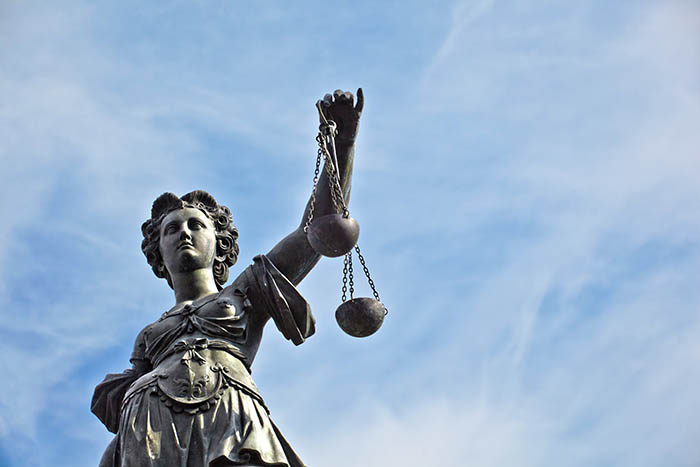
The Hague, 5 September 2017
Dear members of the International Association of Prosecutors members, executive committee and senate,
In the run-up to the annual conference and general meeting of the International Association of Prosecutors (IAP) in Beijing, China, the undersigned civil society organisations urge the IAP to live up to its vision and bolster its efforts to preserve the integrity of the profession.
Increasingly, in many regions of the world, in clear breach of professional integrity and fair trial standards, public prosecutors use their powers to suppress critical voices.
In China, over the last two years, dozens of prominent lawyers, labour rights advocates and activists have been targeted by the prosecution service. Many remain behind bars, convicted or in prolonged detention for legal and peaceful activities protected by international human rights standards, including the Universal Declaration of Human Rights. Azerbaijan is in the midst of a major crackdown on civil rights defenders, bloggers and journalists, imposing hefty sentences on fabricated charges in trials that make a mockery of justice. In Kazakhstan, Russia and Turkey many prosecutors play an active role in the repression of human rights defenders, and in committing, covering up or condoning other grave human rights abuses.
Patterns of abusive practices by prosecutors in these and other countries ought to be of grave concern to the professional associations they belong to, such as the IAP. Upholding the rule of law and human rights is a key aspect of the profession of a prosecutor, as is certified by the IAP’s Standards of Professional Responsibility and Statement of the Essential Duties and Rights of Prosecutors, that explicitly refer to the importance of observing and protecting the right to a fair trial and other human rights at all stages of work.
Maintaining the credibility of the profession should be a key concern for the IAP. This requires explicit steps by the IAP to introduce a meaningful human rights policy. Such steps will help to counter devaluation of ethical standards in the profession, revamp public trust in justice professionals and protect the organisation and its members from damaging reputational impact and allegations of whitewashing or complicity in human rights abuses.
For the second year in a row, civil society appeals to the IAP to honour its human rights responsibilities by introducing a tangible human rights policy. In particular:
We urge the IAP Executive Committee and the Senate to:
- introduce human rights due diligence and compliance procedures for new and current members, including scope for complaint mechanisms with respect to institutional and individual members, making information public about its institutional members and creating openings for stakeholder engagement from the side of civil society and victims of human rights abuses.
We call on individual members of the IAP to:
- raise the problem of a lack of human rights compliance mechanisms at the IAP and thoroughly discuss the human rights implications before making decisions about hosting IAP meetings;
- identify relevant human rights concerns before travelling to IAP conferences and meetings and raise these issues with their counterparts from countries where politically-motivated prosecution and human rights abuses by prosecution authorities are reported by intergovernmental organisations and internationally renowned human rights groups.
Supporting organisations:
Amnesty International
Africa Network for Environment and Economic Justice, Benin
Anti-Corruption Trust of Southern Africa, Kwekwe
Article 19, London
Asian Forum for Human Rights and Development (FORUM-ASIA)
Asia Justice and Rights, Jakarta
Asia Indigenous Peoples Pact, Chiang Mai
Asian Human Rights Commission, Hong Kong SAR
Asia Monitor Resource Centre, Hong Kong SAR
Association for Legal Intervention, Warsaw
Association Humanrights.ch, Bern
Association Malienne des Droits de l’Homme, Bamako
Association of Ukrainian Human Rights Monitors on Law Enforcement, Kyiv
Associazione Antigone, Rome
Barys Zvozskau Belarusian Human Rights House in exile, Vilnius
Belarusian Helsinki Committee, Minsk
Bir-Duino Kyrgyzstan, Bishkek
Bulgarian Helsinki Committee, Sofia
Canadian Human Rights International Organisation, Toronto
Center for Civil Liberties, Kyiv
Centre for Development and Democratization of Institutions, Tirana
Centre for the Development of Democracy and Human Rights, Moscow
China Human Rights Lawyers Concern Group, Hong Kong SAR
Civil Rights Defenders, Stockholm
Civil Society Institute, Yerevan
Citizen Watch, St. Petersburg
Collective Human Rights Defenders “Laura Acosta” International Organization COHURIDELA, Toronto
Comunidad de Derechos Humanos, La Paz
Coordinadora Nacional de Derechos Humanos, Lima
Destination Justice, Phnom Penh
East and Horn of Africa Human Rights Defenders Project, Kampala
Equality Myanmar, Yangon
Faculty of Law – University of Indonesia, Depok
Fair Trials, London
Federation of Equal Journalists, Almaty
Former Vietnamese Prisoners of Conscience, Hanoi
Free Press Unlimited, Amsterdam
Front Line Defenders, Dublin
Foundation ADRA Poland, Wroclaw
German-Russian Exchange, Berlin
Gram Bharati Samiti, Jaipur
Helsinki Citizens’ Assembly Vanadzor, Yerevan
Helsinki Association of Armenia, Yerevan
Helsinki Foundation for Human Rights, Warsaw
Human Rights Center Azerbaijan, Baku
Human Rights Center Georgia, Tbilisi
Human Rights Club, Baku
Human Rights Embassy, Chisinau
Human Rights House Foundation, Oslo
Human Rights Information Center, Kyiv
Human Rights Matter, Berlin
Human Rights Monitoring Institute, Vilnius
Human Rights Now, Tokyo
Human Rights Without Frontiers International, Brussels
Hungarian Civil Liberties Union, Budapest
IDP Women Association “Consent”, Tbilisi
IMPARSIAL, the Indonesian Human Rights Monitor, Jakarta
Index on Censorship, London
Indonesian Legal Roundtable, Jakarta
Institute for Criminal Justice Reform, Jakarta
Institute for Democracy and Mediation, Tirana
Institute for Development of Freedom of Information, Tbilisi
International Federation for Human Rights (FIDH)
International Partnership for Human Rights, Brussels
International Service for Human Rights, Geneva
International Youth Human Rights Movement
Jerusalem Institute of Justice, Jerusalem
Jordan Transparency Center, Amman
Justiça Global, Rio de Janeiro
Justice and Peace Netherlands, The Hague
Kazakhstan International Bureau for Human Rights and Rule of Law, Almaty
Kharkiv Regional Foundation Public Alternative, Kharkiv
Kosovo Center for Transparency, Accountability and Anti-Corruption – KUND 16, Prishtina
Kosova Rehabilitation Center for Torture Victims, Prishtina
Lawyers for Lawyers, Amsterdam
Lawyers for Liberty, Kuala Lumpur
League of Human Rights, Brno
Macedonian Helsinki Committee, Skopje
Masyarakat Pemantau Peradilan Indonesia (Mappi FH-UI), Depok
Moscow Helsinki Group, Moscow
National Coalition of Human Rights Defenders, Kampala
Netherlands Helsinki Committee, The Hague
Netherlands Institute of Human Rights (SIM), Utrecht University, Utrecht
NGO “Aru ana”, Aktobe
Norwegian Helsinki Committee, Oslo
Pakistan Rural Workers Social Welfare Organization (PRWSWO), Bahawalpur
Pensamiento y Acción Social (PAS), Bogotá
Pen International, London
People’s Solidarity for Participatory Democracy (PSPD), Seoul
Philippine Human Rights Advocates (PAHRA), Manila
Promo-LEX Association, Chisinau
Protection International, Brussels
Protection Desk Colombia, alianza (OPI-PAS), Bogotá
Protection of Rights Without Borders, Yerevan
Public Association Dignity, Astana
Public Association “Our Right”, Kokshetau
Public Fund “Ar.Ruh.Hak”, Almaty
Public Fund “Ulagatty Zhanaya”, Almaty
Public Verdict Foundation, Moscow
Regional Center for Strategic Studies, Baku/ Tbilisi
Socio-Economic Rights and Accountability Project (SERAP), Lagos
Stefan Batory Foundation, Warsaw
Suara Rakyat Malaysia (SUARAM), Petaling Jaya
Swiss Helsinki Association, Lenzburg
Transparency International Anti-corruption Center, Yerevan
Transparency International Austrian chapter, Vienna
Transparency International Česká republika, Prague
Transparency International Deutschland, Berlin
Transparency International EU Office, Brussels
Transparency International France, Paris
Transparency International Greece, Athens
Transparency International Greenland, Nuuk
Transparency International Hungary, Budapest
Transparency International Ireland, Dublin
Transparency International Italia, Milan
Transparency International Moldova, Chisinau
Transparency International Nederland, Amsterdam
Transparency International Norway, Oslo
Transparency International Portugal, Lisbon
Transparency International Romania, Bucharest
Transparency International Secretariat, Berlin
Transparency International Slovenia, Ljubljana
Transparency International España, Madrid
Transparency International Sweden, Stockholm
Transparency International Switzerland, Bern
Transparency International UK, London
UNITED for Intercultural Action the European network against nationalism, racism, fascism and in support of migrants, refugees and minorities, Budapest
United Nations Convention against Corruption Civil Society Coalition
Villa Decius Association, Krakow
Vietnam’s Defend the Defenders, Hanoi
Vietnamese Women for Human Rights, Saigon
World Organisation Against Torture (OMCT)
Zimbabwe Lawyers for Human Rights, Harare[/vc_column_text][/vc_column][/vc_row][vc_row][vc_column][vc_basic_grid post_type=”post” max_items=”4″ element_width=”6″ grid_id=”vc_gid:1504604895654-8e1a8132-5a81-8″ taxonomies=”8883″][/vc_column][/vc_row]
