19 Oct 2016 | Americas, Europe and Central Asia, mobile, News, United Kingdom, United States
[vc_row][vc_column][vc_column_text]
|

Battle of Ideas 2016
A weekend of thought-provoking public debate taking place on 22 and 23 October at the Barbican Centre. Join the main debates or satellite events.
Comedy and censorship: Are you kidding me?
Is the fear of offence killing comedy? Jodie Ginsberg, Timandra Harkness, Will Franken, Tom Walker and Steve Bennett with chair Andrew Doyle.
When: 23 October, 10-11:30am
Where: Cinema 2, Barbican, London
Tickets: Available from the Battle of Ideas
From hate speech to cyber-bullying: Is social media too toxic?
What of the free speech of those harassed into silence by a stream of abuse? And what of the abuse itself, consisting, as it so often seems to, of fantasy punishments and name-calling? Is that speech worth defending?
When: 22 October, 4-5:15pm
Where: Pit Theatre, Barbican, London
Tickets: Available from the Battle of Ideas |
Earlier this year, Labour MP Yvette Cooper kicked off #ReclaimTheInternet, a cross-party campaign against misogynist abuse online.
The reception was mixed at best. Many people were excited and thankful for the initiative, and it isn’t hard to see why when you look the racist abuse and threats of violence being thrown at people for expressing an opinion online. Right on cue, the MPs behind the campaign have been subjected to a barrage of abuse (some legal, some not).
The impact of online abuse is poorly understood, and perhaps most poorly understood by those who do it, but the harm it can do is unquestionable. Research by The Guardian into abusive comments included interviews with journalists who spoke about an emotional and physical toll, though this can only scratch the surface. It isn’t difficult to find examples of people who have taken their own lives after campaigns of online harassment. Tragically, it is when the person subjected to abuse doesn’t have the platform to speak out against their harassment that we tend only to hear about it when headlines become epitaphs.
But for many, there was something sinister about #ReclaimTheInternet. The thought police were back. It’s one of the internet’s favourite narratives. There is a strong libertarian tradition online, particularly on social media, always watchful for attempts by overbearing states to impinge on free speech online.
One well-followed advocate for free speech on Twitter, @SkipLicker, was vehement in his opposition. “Free speech means freedom from Government censorship,” he tweeted. “Not freedom from ridicule because you talk bollocks.”
The thing is, he’s absolutely right: social media as a public forum has a vital role in our democracy. It is a public forum for debate, where hundreds of thousands of British citizens engage in politics. It is a platform for users to voice their political opinions, whatever the shade. It is a channel through which those who govern us can be taken to task. If you need more evidence about the democratic role social media can play, take a look at the countries which suppress it.
Ridicule, though. Not harassment.
A favourite cartoon that emerges whenever someone mentions abuse online is of a woman shovelling manure over a wall and then complaining when manure comes the other way. It’s quite funny, but it misses the point because frequently it isn’t an eye for an eye. If only it was: if for every opinion somebody saw online that they disagreed with, they responded in kind, the internet would be an (even more) brilliant place. But death threats aren’t responding in kind, and death threats aren’t “trolling”.
Over the last couple of years, the “internet troll” has emerged as a catch-all term for unpleasantness on the internet. Everything from sustained, sexually aggravated harassment to posting atheist arguments in a Christian chatroom is lumped together under an evocative, easily digestible insult.
This wasn’t always the case.
Plenty of the most dedicated trolls themselves lament the good old days when trolling was really trolling. Cleverly crafted images or phrases – offensive, controversial, but legal – stirred up horrified reactions. Trolls might work for weeks at a time, lurking in a forum or comments section, perfecting the perfect taunt that might start the biggest argument, then sit back and watch the carnage unfold. The very word emerged in the early 1990s from the idea of “trolling” a line with some juicy bait and seeing who bites.
Trolling is, in many ways, a firmly established British tradition. An episode of Brass Eye or a copy of the Private Eye should be enough to convince you of that. Nobody does satire like us Brits, and there’s still plenty of it online.
@GeneralBoles is a photoshop supremo who rose to prominence during last year’s general election, a newspaper cartoonist for the Twitter generation. @WeahsCousin attributes fake quotes to footballers, some of which end up copied into print by journalists lax in checking their sources.
The examples of clever trolling are endless. In 2010, a neo-nazi march in Bavaria found themselves being “sponsored” for their walk with all the money going to anti-extremist organisations. Bananas were served as refreshments: “Mein Mampf! (My Munch!)”.
More recently, supporters of Bernie Sanders found themselves facing placard-touting trolls raising money for the victims of socialism at one of his rallies.
I have previously written in defence of trolling. It might be satirical. It might be expressing a controversial opinion or offensive remark, hoping to provoke a reaction. It might be Sunderland fans flying a 30ft banner over St James’ Park gloating at their rivals’ relegation.
I spoke to Old Holborn, one of Twitter’s longest-standing and most highly-followed free speech advocates once described by the Daily Mail as “Britain’s vilest troll”. Trolling, according to Old Holborn, “is the (not so) gentle art of carefully selecting an irresistible morsel of bait to seduce a willing prey into breaking their own freedom of speech censorship or personal values of good taste. It exposes hypocrisy, self-denial and the inner soul and values of the individual. If your opinions are laughable to some, expect some to publicly laugh at them.”
But trolling isn’t rape threats.
“Threats are not trolling,” writes Old Holborn. “Rape, violence and murder remain the basis of intimidation and are designed to silence. We worship robust banter, not the cold, obedient silence of terror. Laugh a little, prod, poke and provoke. We’re all the richer for genuine trolling.”
What happened to the trolls of yore? They’re still out there and they still play an important role in reminding us that offensive or unpleasant opinions that test the limits of free speech are vital in a society that prides itself on free public debate. In an age where students are demanding safe zones from opinions they disagree with and algorithms ensure we only see content we like, it’s vital we encounter stuff we don’t agree with.
But we have plenty of people who don’t deserve the title of troll. Hangers-on – wannabe trolls, perhaps – whose recourse to crude threats of violence or recourse to racist or misogynistic abuse bear no resemblance to the trolling of old. It’s a shame that trolling has come to mean this because it has muddied the waters on what is OK to say online and what isn’t. I would be surprised if those trolls who do look to provoke, ridicule and satirise didn’t feel the same, particularly as I know some have been the subject of death threats and threats to their families and children.
Free speech has been debated for centuries but it has never been an absolute right. Even the First Amendment, the Holy Grail, has limitations on what you’re allowed to say. Our own British law says that the standards of an “open and just multi-racial society” has no space for racially-aggravated abuse.
The free speech absolutist is out of step with the society they claim to advocate for.
And yet what do we do about encroachments? What do we do when justified criticism is silenced as “bullying” or “abusive” or “offensive”? How about when an epidemic of safe spaces outgrow any pretence to protection and become tools of censorship and suppression? Or when sharing a platform with somebody is suddenly tantamount to endorsing them, perhaps the most ludicrous and contradictory charge levelled at public figures lately?
We must call it out. We ought to continue to push against the borders of acceptability, embrace the offensive and celebrate the satirical. We must seek out and confront opposing viewpoints, ever more difficult in a world where algorithms and laziness drive us into echo chambers of consenting views.
But we ought to pick our battles.
We live in a world where the young are less comfortable than ever with free speech. Convincing them that we need to be allowed to racially abuse people online is a waste of breath and it risks alienating them further.
Instead, we need to speak to them of the importance of dissenting opinion. We need to explain how it differs from abuse. We need to stress the importance of the offensive and being offended. We need to encourage them to actually engage with something they disagree with and reject it, not stifle it before it speaks a word. Rather than reacting angrily to any attempt to make the internet a better place, those with libertarian beliefs might do well to pick their battles, to protect that which is most important.
We need to stand up for satire, for controversial opinions, for being offensive, for the good trolls. We don’t need to stand up for rape threats.
Alex Krasodomski-Jones is a researcher for the Centre for the Analysis of Social Media CASM at Demos, a British cross-party think tank.[/vc_column_text][vc_basic_grid post_type=”post” max_items=”4″ element_width=”6″ grid_id=”vc_gid:1485724379379-f195b0d0-ae74-5″ taxonomies=”8826″][/vc_column][/vc_row]
10 Oct 2016 | mobile, News, Turkey, Turkey Reports
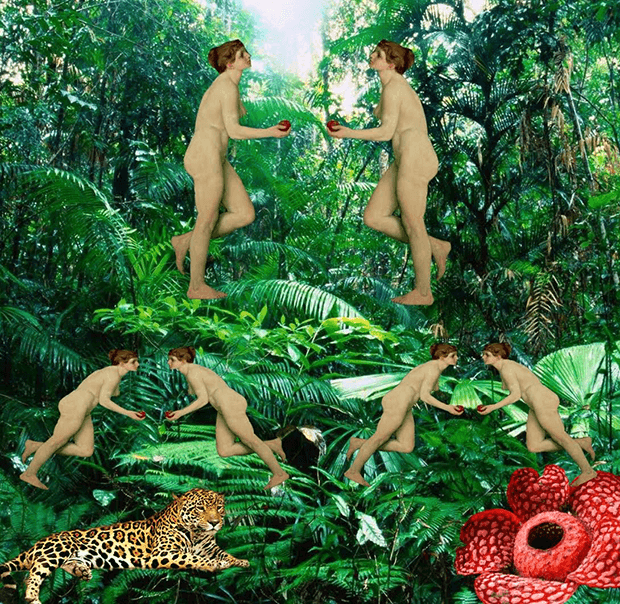
Yeni Bir Şarkı Söylemek Lazım, Video, 2016, Işıl Eğrikavuk
Asena Günal is the program coordinator of Depo which is a center for arts and culture at Tophane, Istanbul. She is one of the co-founders of Siyah Bant, a research platform that documents censorship in the arts in Turkey.
“Is it just me? I don’t think so, but these days I’m in a state where I don’t know what to hold on to, what to do. I push myself to continue my work. Should I continue with art, or should I channel myself to more urgent things; that’s how suffocated I feel,” Hale Tenger, a prominent contemporary artist from Turkey, said in a roundtable discussion published in the Istanbul Art News.1 This pessimism reflects the general mood of artists and many other intellectuals in Turkey, a country that has experienced incidents so numerous in the past year that they could fill decades.
Since July 2015, almost 300 people have been killed and thousands wounded in various attacks by IS and the Kurdistan Freedom Eagles (TAK). After the elections in June 2015, in which the Kurdish party passed the 10% threshold and AKP lost its single party position, president Erdoğan pushed for another election. In November 2015, the AKP won the election and ended the peace process with the Kurdistan Workers Party (PKK). The government put severe limitations on the Kurdish and pro-peace opposition. A total of 2,212 academics, who signed a petition to condemn the state violence in the southeast of Turkey, have been targeted by Erdoğan, received threats, have been faced with criminal and disciplinary investigations, and four of them were detained and jailed for about a month. A growing number of academics have been dismissed or suspended, some were forced to resign and had to leave the country. Almost two thousand lawsuits have been filed against people alleged to have insulted the president online or offline.2
In January 2016, two members of the art community were arrested and then sued for participating in the peaceful demonstration “I am Walking for Peace” in Diyarbakır. The march was organised to protest state violence in the Kurdish region and ask for the restarting of the peace process. Artists Pınar Öğrenci and Atalay Yeni were arrested and then released conditionally. Their court cases still continue.
The impact of the recommencement of the war has made itself felt in various fields and ways. The cancellation of the exhibition “Post-Peace” in February 2016 shows the difficulty of expressing critical views on state policies. The exhibition curated by an Amsterdam-based curator Katia Krupennikova was cancelled by the institution Aksanat just five days before the opening, with the director citing the rising tension and the mourning after another bombing in Turkey as the reason. Given that other events went on as scheduled, many thought one of the video works in the exhibition, critical of the dirty war policies of the Turkish state against the Kurdish guerilla was considered risky by Aksanat.3 This was one of the incidents in which the state itself did not act, and actors in the artistic community took on this role. It created a discussion in the art scene about how to struggle in times of repression.4
Ayhan ve ben (Ayhan and me) from belit on Vimeo.
In April 2016, the screen of the public art project YAMA on a hotel roof was shut down by the Istanbul municipality on the basis of an anonymous complaint, claiming that the work of artist Işıl Eğrikavuk, a video animation, projecting the slogan “Finish up your apple, Eve!”, insulted religious sensibilities. When pressed, the municipality cited “visual pollution” as the reason for discontinuing the screening. This turn illustrates a strategy by the national and local government to legitimise their acts of censorship as purely procedural and administrative actions. After Eğrikavuk made a statement, YAMA’s curator Övül Durmuşoğlu declared the project’s support for the artist. Durmuşoğlu organised a meeting to discuss the case and invited Egrikavuk, legal consultants and people from the art scene. In the following days, Eğrikavuk did a performance based on this restraint. Both the meeting and the performance attracted a wide audience.
Even before the coup attempt of 15 July, there was such an atmosphere where people were worried about terrorist attacks, human rights violations, and limitations on freedom of expression. The coup attempt left 246 citizens and 24 coup planners dead and a nation deeply traumatised. The Gülen movement is accused of being behind the last coup attempt. The coup attempt was followed by a State of Emergency which allowed the cabinet under the chairmanship of the president to issue decrees that have the force of law.5 Unsurprisingly, Erdoğan has been using the attempt as an opportunity to eliminate critical voices.
In the five days between the coup attempt and the declaration of State of Emergency on 20 July, many festivals, biennials and concerts were postponed or cancelled by their organisers. The Sinop Biennial (Sinopale) was postponed “due to recent events in Turkey”, the One Love Festival was cancelled “due to availability problems on the schedules of artists and groups”, many concerts of the Istanbul Jazz festival including a performance by Joan Baez was cancelled6, Muse cancelled its concert“due to recent capricious events” and Skunk Anansie did the same “in light of the recent extraordinary events”. One issue of the satirical magazine Leman was banned as it suggested that both soldiers and civilians involved in the country’s recent unsuccessful coup were pawns in a larger game.
After the coup attempt, Erdoğan called the people to “Democracy Watch”-meetings. The biggest and final meeting, was the one at Yenikapı on 7 August 2016.7 Erdoğan invited popular figures, like singers, actors, and actresses to join the meeting. Pop singer Sıla announced on social media that although she was against the coup she would not be part of such a “show” and would not participate in the big meeting in Yenikapı. Sıla was the only figure brave enough to make such a declaration and not step back. But this resulted in the cancellation of her concerts in five different cities. Many people supported her by sharing her music videos and their own photos with an album of Sıla online.
Theatre actor Genco Erkal’s company “Dostlar Tiyatrosu” was banned from performing a play based on the writings of Turkish communist poet Nazim Hikmet and Bertolt Brecht. It was going to be performed in the garden of Kadıköy High School but the school cancelled the contract due to security reasons. It was obvious that security was not the issue and the school was under pressure from the Ministry of Education because of Genco Erkal’s critical stance. After protests of the theater company and members of the main opposition party (CHP), who brought the case to the Parliament, the Governorate lifted the ban.
Municipal and state theaters have been under a tight grip for some time and there have been ongoing discussions about privatisation of these institutions. The State of Emergency not only aimed at Gülenists who were accused of being part of the planning of the coup but also many artists with apparent oppositional stance were affected. On 1 August, the Istanbul Municipality fired 20 people, including director Ragıp Yavuz, actor Kemal Kocatürk, and actress Sevinç Erbulak from the Municipal Theatre based on the decree law number 667 which was announced after the declaration of the State of Emergency. They were not even granted an explanation for why they lost their jobs, but only received a vague reference to supposedly having failed “the evaluation criteria”8. Obviously, they did not have any connection with coup plotters. Eleven of them have been reinstated in their former positions.
Besides bans and purges, the State of Emergency has enabled the government to re-regulate the organisational structure of the state. A new law that would bring the privatisation of State Theatre, State Opera and Ballet, Atatürk Cultural Center, and Turkish Historical Society was discussed in Parliament. Many people from the field of theatre, opera and ballet expressed their concern that the State of Emergency might be utilised to bring privatisation after years of discussion on instating an independent arts council.
It is now common for the members of the ruling party to randomly target artists, writers, or academics in order to intimidate wider cultural milieu. A recent example is from the field of contemporary arts: In September 2016, an AKP MP Bülent Turan targeted the curator of the Çanakkale Biennial Beral Madra and called on the Çanakkale Municipality (run by CHP) not to work with her. The accusation was being critical of Erdoğan, and hence -so the argument went further- being “pro-coup”. Madra became a target because of her critical tweets and Facebook posts. Being critical of Erdoğan has long been risky but now it is associated with being “pro-coup”. Beral Madra withdrew from her position as to not put the Biennial at risk. Then the organising institution announced that the biennial would be cancelled altogether. They were saddened by the current political atmosphere, which did not place art as a primary point of concern. The CHP-run municipality and many people from the art scene expressed concern over the cancellation, highlighting instead the potential of art to counter the authoritarian discourse of AKP and expressing their wishes for the Biennial to go ahead as planned.
Despite this rising authoritarianism and the pessimistic atmosphere, Turkey’s culture and art scene will continue its struggle. Last week there were many openings in different galleries around Istanbul and almost all of them were crowded. People from the art scene are in need of each other more than ever, aware of the vital importance of solidarity in times of hardship. Film, music, dance and performance festivals started to take place, their posters filling the streets. So I would like to finish with another quote from the same issue of Istanbul Art News, by Deniz Artun,9 the director of Ankara Galeri Nev, as I tend to share its optimistic sentiment: “I guess that art history has shown us time and again just how deep the traces left by exhibitions, artworks, artists emerging with ‘pertinacity’ will be; not those amidst freedoms and prosperity, but those coming forth among fears and uncertainties that are burdensome for all of us.”
- September 2016, no. 34.
- Although many have been dropped after the attempted coup d’état in a show of good will they nonetheless can be said to have had a chilling effect on oppositional voices.
- See https://www.indexoncensorship.org/2016/05/75504/ for the open letter of belit sağ, the artist of that particular video work, and the artists’s response to the cancellation. Sara Whyatt elaborates the case in detail, http://artsfreedom.org/?p=11374.
- Özge Ersoy discusses this incident in terms of the different approaches to responsibility, transparency, sensitivity, institutional self-censorship, and institutional sustainability. See her report on the relationship between artists, curators, and institutions in the context of artistic freedom in Turkey: http://www.siyahbant.org/wp-content/uploads/2016/07/SiyahBant_Arastirma_KuratoryelPratikler-1.pdf.
- According to the Turkish Constitution, the Council of Ministers, which is led by the President, can declare a State of Emergency based on “widespread acts of violence aimed at the destruction of the free democratic order.” It must be approved by Parliament and allows the ministers to pass decrees that have the force of law, although they can be overruled by Parliament. It gives the state the right to derogate certain rights, including freedom of movement, expression and association, during times of war or a major public emergency.
- Joan Baez gathered reactions from Turkey with her statement that “I’m not sure I’ve seen anything like the immense and unpredictable danger which presents itself in today’s Turkey”. Istanbul Jazz Festival Director Pelin Opçin expressed her disappointment as Baez made them feel alone and punished by way of isolation: http://www.hurriyetdailynews.com/turkish-fans-let-down-by-joan-baez-remarks.aspx?pageID=238&nID=101923&NewsCatID=383
- Two opposition parties (CHP and MHP) were invited but the Kurdish opposition party (HDP) was not, showing the problematic character of the rhetoric of “democracy” and “national unity”.
- “As well as not being able to get an answer as to who, on what criteria judged our performance we could not reach any official explanation for our dismissal”, stated the theatre actors; https://twitter.com/oyuncusendika/status/763749835094822912?lang=tr
- September 2016, no. 34.
More about the arts in Turkey:
Belit Sağ: Refusing to accept Turkey’s silencing of artistic expression
Life is getting harder for objective journalists in Turkey, says cartoonist sued by Erdogan
Turkey: Artistic freedom and censorship
Turkey: Artists engaged in Kurdish rights struggle face limits on free expression
6 Oct 2016 | Awards, Bahrain, Campaigns, Campaigns -- Featured, mobile
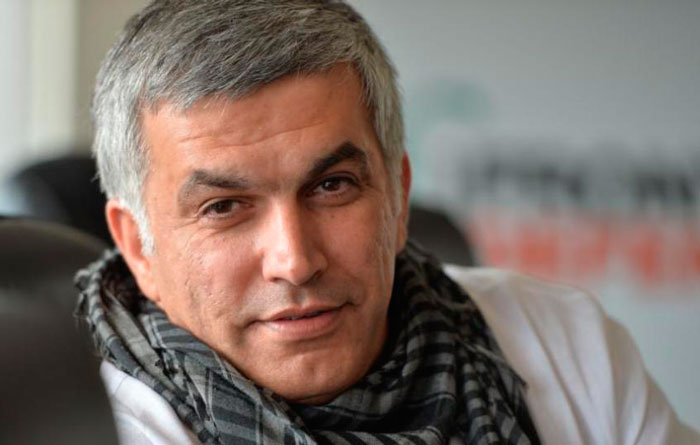
A Bahraini high criminal court has postponed the sentencing of leading human rights defender Nabeel Rajab, who faces up to 15 years in prison for messages posted on Twitter.
Rajab, the president of the Bahrain Center for Human Rights, is on trial on multiple charges of “disseminating false rumors in time of war”, “insulting a neighboring country” and “insulting a statutory body” under articles 133, 215 and 216 of the penal code. The charges collectively carry up to 15 years in prison. These are in relation to remarks he tweeted and retweeted on Twitter in 2015 about the humanitarian crisis caused by the Saudi-led war in Yemen – with Saudi Arabia the “insulted” country – and documenting torture in Bahrain’s Jau prison.
In September, Bahrain’s prosecution brought new charges against him for “undermining the prestige of the state” after the New York Times published his opinion piece, Letter from a Bahraini Jail. This charge could carry an additional year.
Back in January 2014, when Stephen Colbert asked Human Rights Watch executive director Ken Roth who the next Nelson Mandela would be, Roth named Nabeel Rajab. This week, Human Rights Watch writes: “Is it right or trite to compare Rajab to Mandela? That’s a matter for debate, but it’s certainly reasonable to compare states’ deification of one activist with their silence over another, and Mandela – a vocal supporter of free expression – would surely have seen the double standard.”
HRW’s Roth hit out again on Twitter yesterday: “He’s Bahrain’s Nelson Mandela but the West doesn’t show anywhere near the same concern for his plight.”
Last month, 22 rights groups wrote to 50 countries urging them to call for Rajab’s release. All 50 states, including the UK, had previously raised concerns over Bahrain’s human rights situation. However, until now only the United States has called for Nabeel Rajab’s release. The EU’s Special Representative for Human Rights Stavros Lambrinidis said yesterday on Twitter: “In Bahrain, the EU closely follows tomorrow Nabeel Rajab’s trial. Hope for his release from jail and commencement of national reconciliation efforts.”
Husain Abdulla, Executive Director, Americans for Democracy & Human Rights in Bahrain: “When countries go silent on Nabeel Rajab’s imprisonment because of the Gulf’s strategic importance, that is short-sighted and shameful. The US has talked a good talk on Nabeel: now let’s see them act on it.”
The UK has made no clear statement on Nabeel Rajab, apart from expressing “concern”. In November, Prince Charles will be visiting Bahrain, as well as Oman and the United Arab Emirates, to improve bilateral relations.
Sayed Ahmed Alwadaei, Director of Advocacy, Bahrain Institute for Rights and Democracy: “British silence will consign Rajab to this fate. The UK could have intervened, criticised the situation or called for an end to this flagrantly unfair trial on countless occasions, and so far they have failed to step up every single time. This act of repression is not just the fault of Bahrain, but the fault of every ally which enables Bahrain to continue in this way.”
In September, the UN High Commissioner for Human Rights used his opening statement at the 33rd session of the Human Rights Council (HRC) to warn Bahrain: “The past decade has demonstrated repeatedly and with punishing clarity exactly how disastrous the outcomes can be when a Government attempts to smash the voices of its people, instead of serving them.” Today’s sentencing is yet another case of the Bahraini government attempting to smash those voices.
Rajab has been held in pre-trial detention since his 13 June 2016 arrest, which coincided with the opening of the June session of the HRC. He was initially held in East Riffa, where police kept him in solitary confinement. After 15 days in solitary – which the UN’s top expert judges may amount to torture – he required urgent medical attention. Rajab was rushed to the Bahrain Defence Force hospital with breathing difficulties, an irregular heartbeat and a weak immune system. He was transferred back to a police station for detention the following day.
Since 2011, Rajab has faced multiple prosecutions and prison sentences for his vocal activism. The state banned him from travel in 2014, preventing him from leaving the country.
More about Nabeel Rajab:
6 Oct: Join us to tell the UK to help free Bahraini Nabeel Rajab
Bahrain: Nabeel Rajab put in isolation ahead of 6 October trial
Rights groups urge 50 nations to call for Nabeel Rajab’s release
28 Sep 2016 | mobile, News
Monday marked the beginning of Banned Books Week. To celebrate the freedom to read, Index on Censorship staff explore some of their favourite, and some of the most important, banned or challenged books.
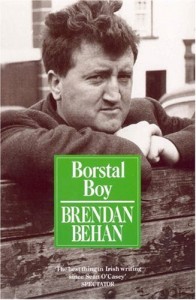
Ryan McChrystal – Borstal Boy by Brendan Behan
Brendan Behan’s autobiographical work Borstal Boy was banned in Ireland in December 1958. His London publisher, Hutchinson’s, had sent a batch of copies to Dublin to be sold at a Christmas market but they were confiscated at the port. Behan was outraged that a group of “country yobs” could prevent the distribution of his book.
Borstal Boy is the story of how a 16-year-old Behan landed himself in a series of institutions for young offenders in Kent, having been charged with membership of the IRA, and what happened to him after that.
Although Ireland’s Censorship of Publications Board never explained why the book was banned, it probably had something to do with its depictions of adolescents talking about sex and its pillorying of Irish social attitudes, republicanism and the Catholic Church. The board is, after all, known for its stringent adherence to Roman Catholic values.
When Behan later learned that the book was also banned in Australia and New Zealand, he took solace in song and humour as he went around Dublin singing:
“My name is Brendan Behan, I’m the latest of the banned
Although we’re small in numbers we’re the best banned in the land,
We’re read at wakes and weddin’s and in every parish hall,
And under library counters sure you’ll have no trouble at all.”
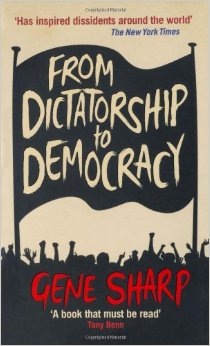
David Heinemann – From Dictatorship to Democracy by Gene Sharp
Running the Freedom of Expression Awards’ Fellowship and helping brave people who are often fighting totalitarian regimes can sometimes feel like an uphill battle. How can one person or organisation ever hope to defeat an entire dictatorship?
They can’t, of course, but Gene Sharp’s little book reminds me that “the deliberate, non-violent disintegration of dictatorships” is possible when people work together in certain ways. Part handbook, part political pamphlet, it’s an invaluable toolbox for any serious democratic activist. Its potency was illustrated last year when a group of young Angolans were imprisoned simply for trying to get together and discuss it at a book club.
The fact that I could read it on my commute home reminded me never to take my freedoms for granted.
Vicky Baker – The Bible
The Bible is not an obvious choice for me as I’m an atheist, but loosely picking up on that misattributed Voltaire quote, I would defend anyone’s right to read it – or indeed any other religious book.
Pope Francis has called The Bible “an extremely dangerous book”. Owning it or reading it can get you still get you imprisoned or killed in certain parts of the world. This is the sort of book banning that we should all be extremely worried about, whatever your religion.
These days I don’t even have a copy in my house, but its stories formed part of my childhood. When I grew up I learnt that my hometown, Amersham in Buckinghamshire, also had an important connection to censorship of The Bible. In the 16th century a group of local Lollards were burned at the stake for wanting to translate the book from Latin to English; some of their children were forced to light the pyre.
Known as the Amersham Martyrs, they have since been honoured in a memorial stone, costumed walking tours, and through occasional community plays about their lives, staged in a local church. (Imagine if the bishop who sentenced them saw this today.)
Sadly, we live in a world where censorship of the Bible is not ancient history. In 2014, an American man was sent to labour camp in North Korea for leaving a Bible in a restaurant’s bathroom when visiting as a tourist. It was deemed a crazy act – and, indeed, the move also endangered his local tour guides – but it is outrageous that simply leaving a book behind, so readers can choose to pick it up or not, can still lead to such punishments.
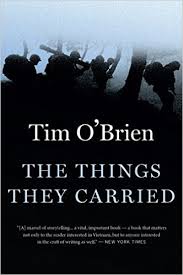
David Sewell – The Things They Carried by Tim O’Brien
One of those cases in the USA where the pressure to ban comes not from the authorities, but from citizens wanting it pulled from libraries or schools. Complaints were made about its sweary language and its graphic depictions of violence and death. But there again it’s about a grunt’s eye view of the Vietnam war, so go figure.
Only this is really a remarkable work of fiction, which is highly literary in its narrative form. It uses stories to try and construct the extreme experience of war, but also uses war to explore the drive to create stories for ourselves. Language is used to defang terror on the battlefield, stories are invented (and embellished through the re-telling) to keep dead comrades alive, because if they are allowed to die, then it brings death one step closer to the surviving soldiers.
A fascinating book that tries to put words to the unsayable and unspeakable, and its would-be censors are attempting to make it a different kind of unspeakable and unsayable.
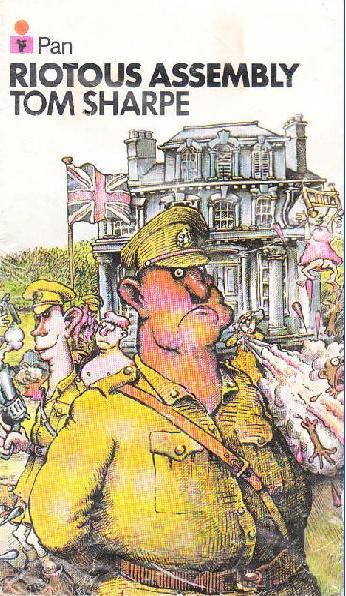
Kieran Etoria-King – Riotous Assembly by Tom Sharpe
One of the most enduring, darkly funny things I’ve ever read was the opening chapter of Tom Sharpe’s 1971 novel Riotous Assembly, in which a South African police chief argues with an old white woman who shot her black chef in the garden of her stately home. As two deputies collect up the obliterated corpse of the man she killed with a four-barrelled elephant gun, Miss Hazelstone, who graphically describes her illicit love affair with the chef, demands to be arrested for murder, while a disgusted Kommandant van Heerden insists that the killing of a black person is not murder. Meanwhile, the entire police force of the fictional town of Piemburg, operating under mistaken intelligence, are engaged in a fierce and escalating firefight at the gate, unaware that they are actually shooting at each other from behind cover.
Sharpe had lived in South Africa from 1951 to 1961 before he was deported over a play he staged that criticised the government, so he had an intimate knowledge of the country and Riotous Assembly, a hilarious send-up of the South African police force, is driven as much by real venom and contempt for the Apartheid system as it is by vulgar humour. Of course, that system wasn’t going to tolerate such mockery and the book was banned in South Africa as well as Zimbabwe.
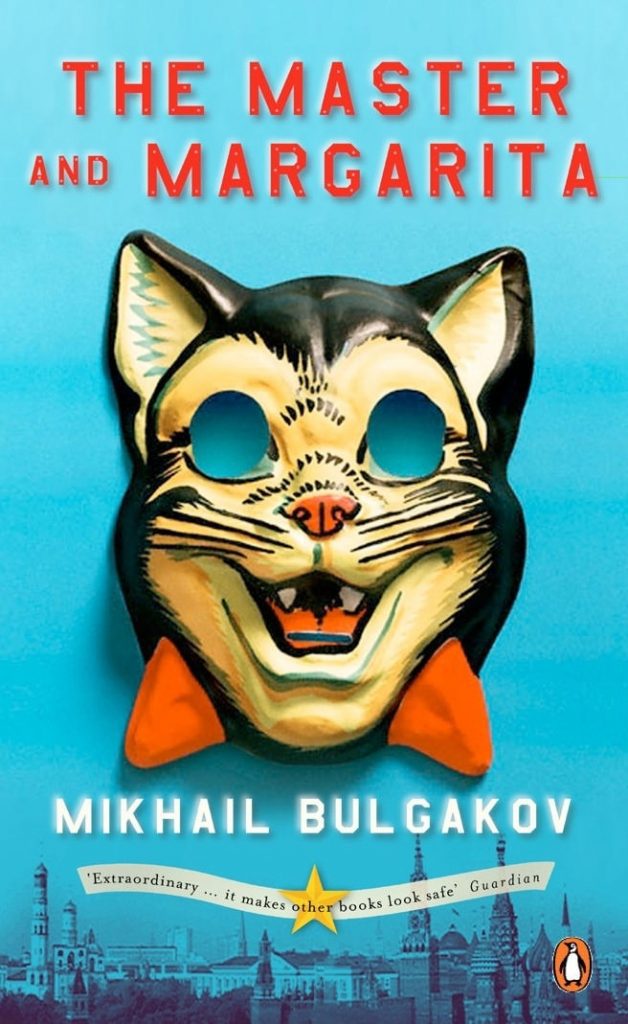
Helen Galliano – The Master and Margarita by Mikhail Bulgakov
I first came across The Master and Margarita – considered to be one of the finest novels to come out of the Soviet Union – as a performance student at Goldsmiths and a lover of magical realism. I immediately fell into Bulgakov’s wild and dangerous world of talking cats, decapitations, magic shows, Satan’s midnight ball and plenty of vodka. I was hooked, reading it multiple times throughout my third year and even created a performance reimagining Margarita’s transformation into a witch.
The forward to the 1997 translation of the novel reads: “Mikhail Bulgakov worked on this luminous book throughout one of the darkest decades of the century. His last revisions were dictated to his wife a few weeks before his death in 1940 at the age of forty-nine. For him, there was never any question of publishing the novel. The mere existence of the manuscript, had it come to the knowledge of Stalin’s police, would almost certainly have led to the permanent disappearance of its author.”
Faced with persecution, Bulgakov burned the first manuscript of The Master and Margarita, only to re-write it later from memory. It was eventually published nearly three decades after his death and since then “manuscripts don’t burn”, a famous line from the book, has come to symbolise the power and determination of human creativity against oppression.
Great literature and great ideas will always survive.
What’s it like to be an author of a banned or challenged book? How can librarians support authors who find themselves in this situation? To mark Banned Books Week, Vicky Baker, deputy editor of Index on Censorship magazine, will chair an online discussion with three authors on 29 September, followed by a Q&A. It is free to join, although attendees must register in advance.