27 Aug 2015 | Europe and Central Asia, mobile, News
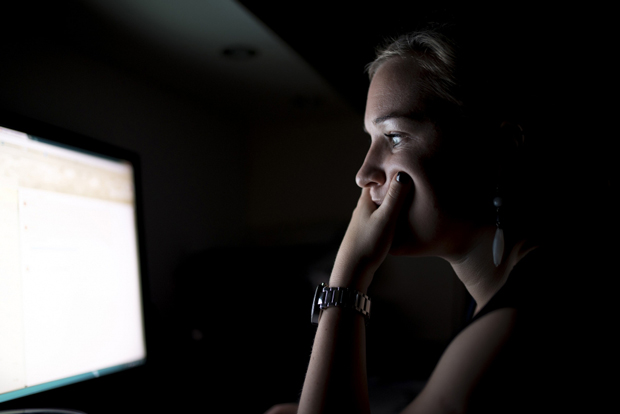
Female journalists and bloggers are increasingly being singled out and fiercely attacked online. (Photo: OSCE)
In a new online column for Index on Censorship, Dunja Mijatović, OSCE Representative on Freedom of the Media, discusses relentless attacks on women journalists, and the impact on their lives.
No job comes without sacrifices, but how many downgrading comments, criticism or even threats can one person take before it becomes too much?
Just consider the experiences of a female journalist that I know:
She had her phone number shared on dating websites, her email and other accounts were hacked, she received death threats on Skype, the website publishing her articles was hacked and a sex video was posted with the implication that she had participated in an orgy. Anonymous articles with lies about her and her family were also posted online.
Imagine being forced to shut down your accounts on social media platforms because of such massive attacks with detailed images of rape and other forms of sexual violence.
At one point, you would probably be inclined to ask yourself if it is really worth it. Is this a career I want to continue to pursue?
In the past few years, more and more female journalists and bloggers have been forced to question their profession. Male journalists are also subject to hate speech and online abuse, but research findings suggest that female journalists face a disproportionate amount of gender-based threats and harassment on the internet. They are experiencing what Irina Bokova, director-general of UNESCO, has described as a “double attack”: they are being targeted for being both a journalist and a woman.
How do these attacks affect female journalists’ lives, their work and society in general? Journalists are used to being in the frontline of conflict and they often deal with difficult and even dangerous situations. But what if you cannot shield yourself from these threats? What if the frontline became your own doorstep, your office or your computer screen?
Not only do these kinds of attacks cause severe physiological trauma for journalists and their families, but by constantly being singled out and targeted with abusive comments, many female journalists may re-evaluate the issues they choose to cover. In this way, such attacks pose a clear and present threat to free media and the society as a whole.
Online abuse must be dealt with within the existing human rights framework, with governments committed to protecting journalists’ safety and addressing gender discrimination. Governments must ensure that law enforcement agencies understand the severity of this issue and are equipped with the necessary training and tools to more efficiently investigate and prosecute online threats and abuse.
We have to acknowledge that online threats are as real and unacceptable as threats posed in the offline world. The landmark resolution 20/8 on internet freedom adopted by United Nations Human Rights Council in 2012, affirmed that “the same rights that people have offline must also be protected online, in particular freedom of expression”, and set out a clear path in this respect.
The responsibility to counter online abuse of female journalists does not solely rest with law enforcement agencies, however. The broader media community itself also plays an important role. One of the challenges facing media outlets is how to improve quality of content moderation without invoking censorship.
Sarah Jeong, lawyer, journalist and author of The Internet of Garbage, provides proper context, “moderation paradoxically increases the number of voices heard, because some kinds of speech chills other speech. The need for moderation is sometimes oppositional to free speech, but sometimes moderation aids and delivers more free speech”.
Media outlets need to address the current structures and strategies in place that provide support and relief to journalists who face online abuse. A recent survey of female journalists in the OSCE region carried out by my office suggests that employers’ awareness and active involvement in dealing with these issues is of crucial importance. Unfortunately, the survey also indicated that media outlets are not as involved as they should be.
International organisations should also dedicate resources to tackle this issue, given their widespread reach and vast partnership networks. UNESCO’s work on gender-related aspects of journalists’ safety serves as a good example. In their recent report Building Digital Safety for Journalists, online abuse of female journalists was rightly pointed out as one of the main challenges in building digital safety.
This year I have tried to use my mandate and tools given to me as the OSCE Representative on Freedom of the Media to get the OSCE participating states involved. We need to realize that different stakeholders face different challenges, but that each stakeholder’s involvement is a crucial piece of the puzzle in identifying solutions.
To further the discussion on protection of female journalists in the OSCE region, on 17 September my office will host a conference, New Challenges to Freedom of Expression: Countering Online Abuse of Female Journalists, to provide a platform for discussions on best practices and recommendations on combating this dangerous trend. The event will be streamed live on osce.org and will feature presentations by high-level experts from all over the world.
This column was posted on 27 August 2015 at indexoncensorship.org
21 Aug 2015 | France, Mapping Media Freedom, mobile, News
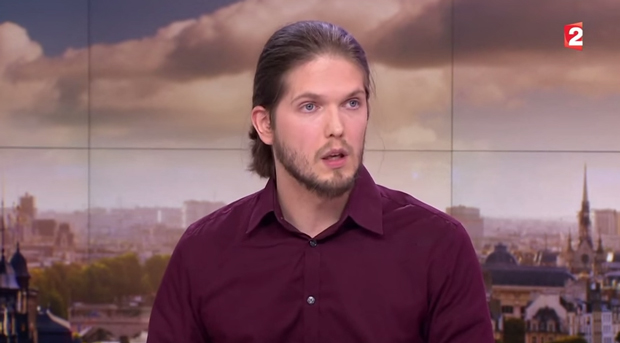
Lilian Lepère has filed a lawsuit against French media outlets for revealing where he was hiding during a standoff with the Charile Hebdo attackers. (Photo: YouTube / France 2)
Graphic designer Lilian Lepère hid under a sink for eight hours while the Kouachi brothers, Saïd and Chérif, on the run after attacking Charlie Hebdo, occupied the printing house where he worked in Dammartin-in-Goële (in the Seine-et-Marne region). Believing it was empty, the brothers hid in the factory for several hours before being killed by a special operations unit of the French armed forces.
While the designer was hiding, MP Yves Albarello (Les Républicains), during an interview with RMC radio, revealed Lepère was in the building. Television channels TF1 and France 2 repeated the information. The Kouachi brothers, who had smartphones and a radio, could have easily discovered Lepère’s presence.
French newspaper Le Parisien recently revealed that Lepère intends to sue RMC, TF1 and France 2 for revealing that he was hidden during the stand-off with the Kouachis. The newspaper reported that Lepère will contend in the suit that the media outlets put his life in danger. Last Thursday, 13 August, the Paris Public Prosecutor’s department opened an investigation.
This is not the first time French media has come under scrutiny for its treatment of the January attacks.
In February, the country’s broadcasting watchdog Conseil supérieur de l’audiovisuel (CSA) distributed warnings to TV and radio stations, noting that 13 media outlets revealed live on air that a confrontation had begun between the police and the Kouachi brothers. Considering this a “serious failure”, the CSA said that the reporting “could have had dramatic consequences for the hostages of the Hyper Casher in Porte de Vincennes”, where Amedy Coulibaly, an accomplice of the Kouachi brothers, was holding hostages at a supermarket. Coulibaly was demanding that the brothers be released. The CSA also blamed TV channels for revealing that people were hiding during the two hostage crisis that took place on 9 January.
The CSA listed the broadcasters’ failings, reproaching them:
• The broadcasting of images showing the policeman being shot by the terrorists
• The broadcasting of elements allowing the identification of the Kouachi brothers
• The disclosure of the identity of a person suspected to be a terrorist
• The broadcasting of images and information regarding an operation still under way, as hostages were still being held in Dammartin-en-Goële and in the Hyper Casher in Porte de Vincennes
• The announcement that a confrontation with the terrorists was taking place in Dammartin-en-Goële while Amedy Coulibaly was still entrenched in Porte de Vincennes
• The divulging of information regarding people hiding in the places where the terrorists had been entrenched, while the assaults had not yet taken place and the hostages’ lives were therefore still at risk
• The broadcasting of images of the assault in the Hyper Casher store Porte de Vincennes
At the time, TV and radio channels contested the CSA’s decision, writing, in a joint letter entitled “Information under threat” that, “The freedom of the press is a constitutional right. Journalists have a duty to inform with rigour and precision. The CSA blames us for having potentially breached public order or taken the risk to fuel tensions within the population. We dispute this.”
They added: “How is it possible to think that, in 2015, the CSA wishes to reinforce the control on an already regulated French broadcasting media while information circulates without constraint in the written press, on foreign channels, all social media and websites? Aren’t they placing us in a situation of inequality in front of the law?”
In a similar story that took place in March 2015, the six people who hid at the Hyper Casher, where Amedy Coulibaly killed four people, filed a complaint against an unknown person for putting their lives in danger. The complaint was directed at the media and specifically at BFMTV, Patrick Klugman, a lawyer representing the group, told Le Parisien. BFMTV revealed that a woman might of been hiding within the Hyper Casher.
“The disclosure of the presence of these people who were hiding, in the middle of a hostage crisis, is a failing that cannot remain unpunished, and all the more so because we knew that the terrorist was watching the TV channel. An information, even if it is accurate, must not put lives in danger”, Klugman said.
Speaking with Le Nouvel Obs, Christophe Bigot, a lawyer who specialises in media, explained that even if an investigation has been opened, because the story had stirred a lot of emotions at the time, Lilian Lepère’s complaint has little chance to succeed.
“The principle, when it comes to the press, is freedom of expression. It has precise limits determined by law, such as libel or the broadcasting of fake information likely to disrupt public peace. In this case, none of these limits can be pointed out. For the media, several complaints could nonetheless be an occasion to examine how to reconcile immediacy of information and ethics,” Bigot said.
Mapping Media Freedom
Click on the bubbles to view reports or double-click to zoom in on specific regions. The full site can be accessed at https://mappingmediafreedom.org/
|
Related:
• Targeted cartoonists show support for Charlie Hebdo
• Stand up for free speech. Publish Charlie Hebdo’s cartoons
• Don’t let free speech die
• How cartoonists responded to the attack on Charlie Hebdo
This article was posted to indexoncensorship.org on 21 August 2015
27 Jul 2015 | Campaigns, mobile, Morocco, Statements
To Your Majesty Mohammed VI,
At a time when Morocco is advocating openness, democratisation and full respect for human rights as instruments for confronting the future, we receive the news of the hunger strike begun by the journalist Ali Lmrabet. For this reason, we wish to pass on to you our deep concern for the situation of this journalist, who has received dozens of international awards and who is deprived of his national identity documents coinciding with the end of a 10-year ban on exercising the profession of journalist in Morocco and also with his announcement that he wishes to return to professional activity.
Freedom of expression and criticism are fundamental elements for the consolidation of a democratic state that is active against regression and intolerance. Any attempt to restrict freedom of expression degrades the image of Morocco and the credibility of its commitment to the rule of law.
Precisely because, from here, we wish to lend our full support to any effort to transform Morocco developed at different levels of the political world and civil society in the country, we are writing to you to express our serious concern at the current situation of Ali Lmrabet, whose life is in danger.
For all these reasons, we would ask you to reflect on this to give instructions to the administration in your country, and its diplomatic staff in Switzerland in particular, to renew all Ali Lmrabet’s Moroccan citizenship documents.
Without a residence certificate, passport and other documents related to journalistic work, Ali Lmrabet would become the first Moroccan deprived of his civil and political rights.
We do not need to give you, Your Majesty, lessons in the fact that the deprivation of these rights is contrary to all liberties, including fundamental freedoms, freedom of expression and, in the case of Ali, the internationally recognised and acclaimed right to freely exercise the profession of journalist. The only thing we would ask you, Your Majesty, in your capacity as Head of State, is to strictly apply the provisions of the Moroccan Constitution, giving the right to all citizens to fully and freely exercise their profession, in this case as journalist and editor of publications in Morocco.
We look forward to your considered response.
Yours sincerely,
Letter signed by the following:
Míriam Acebillo Baqué, President of Lafede.cat, Organisations for Global Justice
Mariano Aguirre, Director of Norwegian Peacebuilding Resource Centre (Norway)
Cinta Arasa, Coordinator of the Persecuted Writers Committee
Carmen Arenas, President of Catalan PEN
Homero Aridjis, Emeritus President of International PEN
Jordi Armadans, Director of FundiPau (Peace Foundation)
Sion Assidon, former Secretary General of Transparency-Morocco
Margaret Atwood, Vice-President of Canada International PEN, Prince of Asturias Award
Danielle Auroi, MP of the National Assembly of France
Juan Tomás Ávila Laurel, Writer, HM Award International Odón Betanzos Palacios of the New York Circle of Ibero-American writers and poets (Equatorial Guinea)
Malén Aznárez, President of Reporters without Borders (RSF- Spanish section)
Elisabeth Badinter, Philosopher
Ekbal Baraka, Chair of PEN International Women Writers Committee, former president of Egyptian PEN
Isaías Barreñada Bajo, University Professor and Human Rights activist
Ana Barrero Tiscar, Peace Culture Foundation
Mark Barwick, Policy Adviser at Human Rights Without Frontiers International (Switzerland)
David Bassa i Cabanas, Journalist, president of the Barnils Group of Journalists
Lluís Bassets, Deputy director of El Pais (Spain)
Anouar Bassi, Transparency 25 President (Tunisia)
Abdejelil Bedoui, Economist and member of the FTDES Steering committee
Sélim Ben Abdesselem, Former member of the Tunisian National Constituent Assembly
Abdelkader Benali, Writer and journalist, Libris Prize (Netherlands)
Thijs Berman, Former Dutch MP of the European Parliament
Mylène Botbol–Baum, Writer, University professor of philosophy and bioethics
Marian Botsford Fraser, Writer and journalist, Chair of Writers in Prison Committee, PEN International Canada
Jean-Marcel Bouguereau, Journalist Le Nouvel Observateur and former chief editor of Libération
Sfia Bouarfa, Belgian honorary MP and former senator
Jim Boumelha, President of the International Federation of Journalists (IFJ)
François Burgat, Political scientist, Research Director of CNRS
Teresa Cadete, Portuguese writer, board member of PEN International
Lindsay Callaghan, President of PEN South Africa
Maria Cañadas, President of Catalonia Amnesty International (AIC)
Gemma Calvet, MP of Parliament of Catalonia (Spain)
Carles Campuzano, MP of Congreso de los Diputados (Spain)
Marius Carol, Editor of La Vanguardia
Ignacio Cembrero, Journalist, former correspondent of El País in Maghreb
Nadia Chaabane, Former deputy of Tunisian National Constituent Assembly
Alain Chabod, International Consultant, former journalist of France Television
Luc Chartrand, Journalist, Radio-Canada
Larbi Chouikha, University professor; Institut de Presse et des Sciences de l’Information (IPSI) (Tunisia)
John Maxwell Coetzee, Writer, Nobel Prize in Literature 2003, Vicepresident of PEN International
Robert Coover, Writer, William Faulkner Foundation Award, American Academy of Arts and Letters, and National Endowment of the Arts (USA)
Olivier Corten, Professor; Centre of international law of ULB; Brussels
Joan Coscubiela, Deputy of Congreso de los Diputados (Spain)
Olivier Da Lage, Journalist, Vice-president of IFJ, RFI and SNJ
Luc Dardenne, Filmmaker
Eric David, Emeritus professor of International Law; Chairman of The International Law Centre of the ULB
Ascensión de las Heras, MP of Congreso de los Diputados (Spain)
Antonio Della Rocca, President of the Trieste PEN Center, Member of the Board of PEN International (Italy)
Christophe Deloire, Secretary General of Reporters Without Borders
Nicolas Dot Pouillard, Resercher of MAEE
Christos Doulkeridis, President of ECOLO group in the Parliament of the Wallonie-Bruxelles Federation (Belgium)
André du Bus, Deputy of Wallonie-Bruxelles Federation
Josy Dubié, Honorary senator (Belgium), former journalist and ONU official
François Dubuisson, Professor, International Law Centre of ULB (Brussels)
Patrick Dupriez, Co-chair of Ecolo party
Isabelle Durant, Brussels MP (Belgium)
Mohamed El Battiui, President of the Amazigh World Assembly
Najat El Hamchi, Writer, Ramon Llull Prize
Ahmed El Khannous, MP, Brussels Parliament
Mahmoud El May, MP and Member of the National Constituent Assembly (Tunisia)
Isabelle Emmery, Brussels Member of Parliament
Mathias Enard, Writer, Gouncourt Prize 2012
Charles Enderlin, Journalist, former France2 correspondent in Israel
Moris Farhi, MBE Vice-President, PEN International
Halim Feddal, Secretary General of the National Association for the Fights against corruption (Algeria)
Soledad Gallego-Díaz, Journalist of El País
Vicent Garcés, Former Member of the European Parliament
María Caridad García Álvarez, MP of Congreso de los Diputados (Spain)
Lise Garon, Professor, Laval University
Zoé Genot, Ecolo MP, Brussels Regional Parliament
François Gèze, President and chief editor of Éditions La Découverte (France)
Jodie Ginsberg, Chief Executive Officer of Index on Censorship
Henri Goldman, Editor of Politique, revue de débats and MICmag (Belgium)
Eric Goldstein, human rights activist (United States)
Elsa González, FAPE President (Spanish Press Associations Federation)
Juan Goytisolo, Writer, National Prize of Spanish Letters and Miguel de Cervantes Prize
Rafael Grasa Hernández, President of Institut Català Internacional per a la Pau
Ricardo Gutiérrez, Secretary general of European Federation of Journalists (EFJ)
Maher Hanin, Member of steering committee of FTDES
Abderrahmane Hedhili, President of Tunisian Forum for Economic and Social Rights (FTDES)
Seymour M. Hersh, American journalist
Francis Hickel, Coordinator Pâquis Solidarity Space, Geneva
Jesús Iglesias Fernández, Senator (Spain)
Jon Iñárritu García, MP of Congreso de los Diputados (Spain)
Véronique Jamoulle, MP, Brussels Parliament
Jean-Jacques Jespers, University Professor, Université libre de Bruxelles
Oriol Junqueres i Vies, Chairman of the party “Esquerra Republicana de Catalunya” (ERC) and opposition leader in Parliament of Catalonia
Lucina Kathmann, Writer, Vice-president of PEN International (United States)
Salam Kawakibi, Arab Reform Initiative, president of the Initiative for a New Syria
Melek Kefif, Doctor and member of the Steering committee of FTDES
Charefeddine Kellil, Lawyer for the families of martyrs and wounded (Tunisia)
Zakia Khattabi, Co-chair of Ecolo Party (Green Belgian)
Kamel Labidi, Tunisian journalist, former director of Amnesty International in Tunisia and former president of the National Authority to Reform Information and Communication (INRIC)
Luis Las Heras, Editor (Spain)
Gilwon Lee, Poète, Poet, Sang-Byeong Cheon Prize and Dong-Ju Yoon Literary Prize, Board Member, PEN International South Korea
Joanne Leedom-Ackerman, vice-president of PEN International (USA)
Jean-Claude Lefort, Former MP at the French Parliament
Emmanuel Lemieux, Essayist, and investigation journalist (France)
Stefano Liberti, journalist and writer, Luchetta Award to the best journalist and Anello Debole Prize
Jonathan Littell, Writer, Goncourt Award and Grand Prix du Roman of the French Academy
Robert Littell, Writer and journalist, Los Angeles Times Book Prize (USA)
Juan López de Uralde, Executive Commission Equo party, former Greenpeace-Spain Director
Bernabé López García, Professor, former member of Averroes Committee Spain-Morocco
Mehdi Mabrouk, Former Culture Minister (Tunisia)
Noël Mamère, MP of the National Assembly and Mayor of Bègles (France)
Sherif Mansour, MENA Program Coordinator, Committee to Protect Journalists (CPJ)
Christophe Marchand, Lawyer, Brussels (Belgium)
Jean-Paul Marthoz, journalist, correspondent of the Committe to Protect Journalists (CPJ) in the European Union
Sandrine Martins Espinoza, Lawyer and international consultant for elections (Argentine)
Daniel Patrick Maunier, University Professor, New York University
Fernando Maura Barandarián, Spanish MP, European Parliament
Federico Mayor Zaragoza, President of Foundation for a culture of peace, former Director of UNESCO
Daniel Menschaert, Diplomatic, Honorary Officer of the Federation Wallonia-Brussels in Morocco
Manuela Mesa Peinado, CEIPAZ Director, Peace Culture Foundation
Rosa Montero, Writer and journalist, Grinzane Cavour award and National Journalism Award (Spain)
Quim Monzó, Writer, National Literature award (Catalonia)
Alexandre Niyungeko, President of the Burundi Journalists Union (UBJ)
Elisabeth Nordgren, Chair of the Search Committee, PEN International (Finland)
Vida Ognjenovic, Vicepresident, PEN International (Serbia)
Margie Orford, Board Member, PEN International (South Africa)
Mario Orrù, Observer Coordinator at Democracy International
Bechir Ouarda, Journalist, Former Coordinator of the civil coalition in defence of freedom of expression in Tunisia
Rémy Pagani, Administrative Councillor for the city of Geneva
Andrés Perelló, Former Member of the European Parliament, Spain
Rosana Pérez Fernández, MP of the Congreso de los Diputados (Spain)
Tone Peršak, Chair of Writers for Peace Committee, Pen International (Slovenia)
Thomas Pierret, University professor, University of Edinburgh
John Ralston Saul, Writer, president of PEN International
Pedro J. Ramírez, Editor of El Español, former editor of El Mundo
Raul Rivero, Cuban writer, UNESCO / Guillermo Cano Press Freedom Prize
Raül Romeva Rueda, Former Spanish MP, European Parliament
Jean Louis Roumegas, MP of the French Parliament
Elena Ruiz Ruiz, University professor (Spain)
Hélène Ryckmans, Member of the Walloon Parliament and the Parliament of the Federation Wallonia-Brussels, Senator
Messaoud Romdhani, Member of the Executive Committee of the Euro-Mediterranean Network of Human Rights (EMHRN), and vice president of the Tunisian League of Human Rights (LTDH)
Amor Safraoui, Chairman of the Independent National Coordination for Transitional Justice (Tunisia)
Mohamed Salah Kherigi, Trade unionist, Vice-president of the Tunisian League of Human Rights (LTDH)
Raffaella Salierno, General Secretary of PEN Català, Director of the GuestWriter programme
Victoria Salvy, Artist and writer (France)
Gervasio Sánchez Fernández, Journalist, National Photography Award, and Ortega y Gasset Journalism Award (Spain)
Mhamed Seghier, Journalist of Liberté (Algeria)
Màrius Serra, Writer, Ramon Llul and Sant Jordi Awards (Catalonia)
Amira Aleya Sghaier, Tunisian historian and university professor
Mohamed Sheriff, President of PEN Sierra Leona
Ricardo Sixto Iglesias, MP at Congreso de los Diputados (Spain)
Simona Skrabec, Chair of Translation and Linguistic Rights Committee, PEN International
Mohamed Smaïn, Activist in charge of human rights, Algerian League for the Defence of Human Rights (LADDH)
Carles Solà, Journalist, TV3 program Director (Catalonia, Spain)
Carlo Sommaruga, Lawyer, MP of the Swiss parliament
Karima Souid, Former MP of the Tunisians from abroad, member of National Constituent Assembly of Tunisis
Simone Susskind, MP of Brussels – Capital Region
Abdellah Taïa, Moroccan Writer, Flore Award
Alaa Talbi, President of Alternatives, Tunisian Section
Joan Tardà, MP of Congreso de los Diputados (Spain)
Sami Tlili, Tunisian Filmmaker, Cinema and Human Rights Award of Amnesty International and Best documentary of the Arab world Award
Jarkko Tontti, Treasurer of PEN International (Finland)
Manuel Tornare, Swiss MP, former Mayor of Geneva
Carles Torner, Executive Director of PEN International
Estefania Torres, Spanish MP of the European Parliament
Mathew Tree, Writer, Octubre – Andròmina Award
Jane Unrue, Director of the Harvard Scholars at Risk (SAR) Program and Freedom to Write Committee board for PEN, New England (United States)
Miguel Urban, Spanish MP of the European Parliament)
Dominique Vidal, Journalist
Santiago Vidal i Marsal, Judge of Provincial Audience Chamber of Barcelona, Judges for Democracy
Per Wästberg, Writer, President of Nobel Committee for Literature, former President of PEN International
Lawrence Weschler, écrivain, George Polk et Lannan Literary Award (United States)
24 Jul 2015 | Events, mobile, Pakistan
Mahenaz Mahmud spoke of her daughter Sabeen’s dedication to Pakistan. (Click for video on Vimeo)
“Tonight, please don’t forget to laugh and dream out loud, that would be the best tribute you could pay to Sabeen”, said Mahenaz Mahmud via video at Unsilencing Pakistan, an event co-hosted by Index on Censorship at London’s Conway Hall on Thursday 23 July.
Three months earlier, Mahenaz’s daughter Sabeen Mahmud was killed by gunmen. On 24 April 2015, travelling home from hosting a panel discussion about the missing people of Balochistan two men on motorbikes surrounded the car and opened fire. Mother survived, daughter didn’t.
Sabeen Mahmud had been a prominent ‘social activist’ and human rights advocate including founding The Second Floor, a cafe dedicated to being a safe space for community discussion. Three months on from her murder, the London event was a tribute to a woman described by so many as an inspiration, a fantastic listener and a champion of free speech and freedom of expression.
Hosted by comedian Aatif Nawaz, the evening was a celebration of Mahmud’s life and Pakistani culture. Multiple speakers, many of whom knew Mahmud well, shared their thoughts on her work and the issues she confronted as she worked to encourage greater openness in Pakistan.
The event began with the trailer from forthcoming documentary Silencing Sabeen, a look back on the life and tragic death of a woman loved by so many. All of those who were close to Mahmud showered praise upon her and told anecdotes of a woman dedicated to the cause of free expression. BBC journalist Ziad Zafar, founder of Pakistan for All and a member of the newly launched Sabeen Mahmud Foundation’s board, said: “She was at the forefront of every progressive movement that has taken precedence in Pakistan in the last decade”. Dr Ayesha Siddiqa from the University of Oxford, who had met Sabeen on a number of occasions, said: “Conversation doesn’t weaken Pakistan. Sabeen knew that to free Pakistan, you need to unsilence it.”
Ali Dayan Hasan, a Pakistani human rights activist, knew Mahmud as a child and watched her grow into a beautiful woman. Of Karachi, her beloved birthplace, he said: “Her life, her achievement, her death is all quintessentially about the city that she came from”.
Childhood friend and Index on Censorship magazine contributor Kamila Shamsie described their blossoming friendship from the moment they met at Kindergarten. She had recently asked friends and colleagues of Sabeen to send her written praise of their late friend. One said: “Her passion was contagious,” while another said: “Sabeen would never have kept the spoils of victory, even if she had fought alone.”
The evening’s speakers also explored the state of Pakistan’s democracy and numerous attacks on free speech in recent times. Tehmina Kazi from British Muslims for Secular Democracy warned that “universal human rights have been tossed aside and been replaced by cultural relativism. The very people who need to have their eyes wide open have their eyes wide shut”.
Shaan Taseer of Pakistan For All, whose father Salmaan was murdered for his opposition to Pakistan’s blasphemy law, spoke forcefully about standing up to nationalist and religious figures like Abdul Aziz.
The New York Times Pakistan Bureau Chief Declan Walsh, who now operates from London after having his visa cancelled by Pakistani authorities, spoke of how, on first arriving in Pakistan in 2004, he was struck by the vibrancy and free speech of the press even though at the time it was under military rule. He called Mahmud’s murder a “very dark watershed in the decline of free speech in Pakistan in the last ten years.”
Jodie Ginsberg, CEO of Index on Censorship, said: “It takes bravery to be a dissenter at any time but it takes a special kind of courage to stick your head above the parapet in times of danger.”
Other speakers on the night included Annie Zaman from Bytes For All and Suniya Qureshi of the Qismat Foundation.
Paying tribute to Mahmud’s passion for the Art, and T2F’s ongoing role as a gallery and performance space, Pakistani singers and dancers including Kali Chandrasegaram, Hyder Cheema and Ustad Roshan Abbas Khan were also on the programme. In a fitting nod to Mahmud’s well known support for young people and future generations, three students from City and Islington Sixth Form College were also invited, bringing diversity to the bill.
Co-organisers of the event, Yasmin Whittaker-Khan and Anneqa Malik thanked the audience and Index on Censorship, encouraging action to prevent more tragedies like Mahmud’s.
Malik, a personal friend of Mahmud’s, implored people to take personal responsibility for drawing people’s attention to the plights of those in Pakistan themselves rather than shouldering it on to others. She said: “Please don’t let them silence us. Please don’t let them silence Sabeen.”
This article was posted on 24 July 2015 at indexoncensorship.org