30 Apr 2019 | Azerbaijan, Azerbaijan Incident Reports
[vc_row][vc_column][vc_column_text]
Index on Censorship’s Monitoring and Advocating for Media Freedom project tracks press freedom violations in five countries: Azerbaijan, Belarus, Russia, Turkey and Ukraine. Learn more.
[/vc_column_text][/vc_column][/vc_row][vc_row][vc_column][vc_row_inner][vc_column_inner][vc_custom_heading text=”6 Incidents” use_theme_fonts=”yes”][/vc_column_inner][/vc_row_inner][vc_column_text]
Journalist sentenced to 12 years in jail
 30 April 2019 – Editor of qafqaznews.az Mahmud Tagiyev was sentenced to 12 years reported Azerbaijan Service for Radio Free Europe.
Tagiyev was found guilty on charges of extortion.
The journalist refutes the accusation and says he is being framed. In his statement, Taghiyev said this was a punishment for his attempt to receive full payment of the property he has sold to an employee of the Prosecutor Office but was unable to receive the payment since the sale of the property. The criminal investigation against the journalist was opened February 8, 2019.
Links:
https://open.az/hadise/azerbaycanda-xeber-agentliyinin-rehberine-cinayet-isi-acildi.html
http://www.tezadlar.az/index.php?newsid=44654
https://ona.az/az/hadise/mahmud-tagiyeve-12-il-hebs-cezasi-verilib-9168
https://www.azadliq.org/a/sayt-r%C9%99hb%C9%99ri-12-il-azadl%C4%B1qdan-m%C9%99hrum-edilib/29912713.html
Categories: Arrest/Detention/Interrogation; Criminal Charges/Fines/Sentences; Legal Measures
Source of violation: Court/Judicial; Government/State Agency/Public official(s)/Political party
Journalist called in for questioning at the Organized Crime Unit
 24 April 2019 – Editor of an online news site az24saat.org Vugar Gurdganli was invited for questioning at the Chief Organized Crime Unit in Baku, reported independent online new platform Meydan TV.
Gurdqanli wrote on his Facebook that he received a phone call from a man who introduced himself as an employee of the Crime Unit and asked that Gurdqanli came in for questioning. The journalist said he told the man on the phone that he needs to see an official letter of complaint first before he comes in. Gurdqanli also mentioned that he asked what this questioning was about, but was only told that there has been a complaint against him.
Gurdqanli suspects this call was linked to previous threats he has been receiving after re-publishing a story that was first released by Meydan TV about Ramil Usubov, the Minister of the Interior and his business empire.
Gurdqanli’s website az24saat.org has been blocked for access since 2018.
Links: https://www.meydan.tv/az/article/sayt-redaktoru-meydan-tv-nin-yazisina-gore-bandotdele-cagirildigini-dusunur/?ref=search
https://meydan.tv/az/article/polis-coreyi-ve-ya-usubovlarin-biznesi/?ref=homepage-feature-articles
https://www.abzas.net/2019/04/redaktor-bu-yazi-d%C9%99rc-edildikd%C9%99n-sonra-bir-nec%C9%99-d%C9%99f%C9%99-h%C9%99d%C9%99-qorxu-almisam/
https://www.humanrightsclub.net/x%C9%99b%C9%99rl%C9%99r/2019/jurnalist-bandotdel-%C9%99-cagirilib/
Categories: Arrest/Detention/Interrogation; Intimidation; Blocked Access
Source of violation: Police/State security
News Agency refused accreditation to cover Formula 1 race
24 April 2019 – Turan News Agency, the only remaining independent news agency was refused accreditation to cover the Formula 1 race that will take place between 26 – 28 April, reported independent Meydan TV.
The accreditation was denied by the Baku City Circuit, the main company in charge of organising the race.
Turan News Agency applied for accreditation already in January but the request was denied on no grounds said Turan News Agency in a statement.
The agency considered this decision intentional and continuation of state policy on restricting freedom of the speech. The agency received accreditation in 2017-2018.
Links:
https://meydan.tv/az/article/turan-informasiya-agentliyi-formula-1-yarismasinin-teskilatcilarini-diskriminasiyada-ittiham-edib/?ref=homepage-news
http://www.turan.az/ext/news/2019/4/free/Want%20to%20Say/az/80433.htm
https://www.amerikaninsesi.org/a/turan-i%CC%87nformasiya-agentliyi-formula-1-t%C9%99r%C9%99find%C9%99n-diskriminasiyan%C4%B1-pisl%C9%99yir/4887629.html
Categories: Blocked access
Source of violation: Corporation/company
Audio recording between two journalists leaked
9 April 2019 – US based Azerbaijani journalist Sevinc Osmangizi confirmed that a phone conversation with another journalist based in Germany was leaked by a pro-government news platform in Azerbaijan, reported Azadliq Radio, Azerbaijan Service for Radio Free Europe.
Osmangizi believes the conversation with the said journalist was recorded outside of their knowledge and that it was done by the special services in Azerbaijan.
Neither the authorities nor the news outlet that aired the conversation have commented on the developments.
The audio recording that was leaked took place several weeks ago before it was leaked and the two discussed possible project together.
Update:
26 April 2019 – After releasing the exchange between Osmangizi and another journalist, the authorities have now threatened Osmangizi to release intimate footage of the journalist, reported multiple sources in Azerbaijan and internationally.
Osmangizi is threatened by another journalist, formerly with Azerbaijan News Agency, Mirshahin Agayev who now heads a pro-government media platform Real TV.
In a video Osmangizi shared on her own YouTube channel, Osmangizi says, nothing is going to prevent her from doing her work, even such tricks as this one.
Osmangizi previously received death threats against her and her family.
Links: https://www.azadliq.org/a/sevinc-osmanq%C4%B1z%C4%B1-t%C9%99hl%C3%BCk%C9%99sizliyi-il%C9%99-ba%C4%9Fl%C4%B1-m%C3%BCraci%C9%99t-edib/29872316.html
https://www.facebook.com/kriminalpress/posts/1005561049641079
https://chai-khana.org/en/azerbaijans-ans-death-of-a-tv-station
https://www.facebook.com/AmnestyUKFormerSovietUnion/photos/rpp.411814202351103/1068344913364692/?type=3&theater
https://cpj.org/2016/10/azerbaijani-tv-journalists-receive-death-threats.php
https://www.youtube.com/watch?v=AQCxqfgA-Cg&t=35s
Categories: Intimidation, Online Defamation/Discredit/Harassment/Verbal Abuse, Offline Defamation/Discredit/Harassment/Verbal Abuse
Source of violation: Police/State security, Government/State Agency/Public official(s)/Political party, Known private individual(s), Another media
Independent news website blocked
9 April 2019 – arqument.az has been rendered inaccessible and eventually blocked without any official notification to the editors, reported independent online news site Meydan TV.
The website’s editor Shamshad Aga speaking to the media, said, the website was subject to DDoS attacks before it was made completely inaccessible.
While it was possible to access the website through a VPN on April 8, as of April 9, this was no longer the case.
Argument.az was also blocked in 2018.
Links: https://mappingmediafreedom.ushahidi.io/posts/22551
https://www.meydan.tv/az/article/arqumentaz-saytina-giris-bloklanib/?ref=search
Categories: Blocked Access, DDoS/Hacking/Doxing
Source of violation: Police/State security; Government/State Agency/Public official(s)/Political party; Unknown
Blogger not allowed to leave the country
9 April 2019 – Former political prisoner, Mehman Huseynov was prevented from leaving the country reported Azadliq Radio, Azerbaijan Service for Radio Free Europe.
Huseynov was released from jail in March 2019 after having served the two year jail term.
Huseynov has been unable to leave the country for eight years.
The blogger had planned to travel to Berlin and Strasbourg to attend a conference organized by the Council of Europe’s Parliamentary Assembly (PACE) Committee on Legal Affairs and Human Rights. He was also scheduled to participate at a conference on journalists’ safety in Vienna, organized by the OSCE representative on freedom of the media.
Update: 13 April 2019 – Huseynov was finally allowed to leave Azerbaijan
Background:
Popular video blogger Mehman Huseynov was sentenced to two years in prison on defamation charges by the Surakhani district court. He was arrested in the courtroom, Azadiiq reported.
Nasimi district police chief Musa Musayev brought a lawsuit against Huseynov, claiming the blogger lied when he said that he had been tortured when he was detained in January 2017. Huseynov is the first person to be arrested for slander in Azerbaijan.
The blogger is the administrator of popular Facebook page Sancaq which has over 300,000 subscribers. He shares videos claiming to expose high level corruption among Azerbaijani officials.
Huseynov was detained on 9 January in central Baku, by a group of plain-clothed police officers. He was held incommunicado overnight allegedly for violating administrative rules. The next day, court fined him 200AZN (€100) on charges of disobeying the police (Article 535.1 of the Code of Administrative Offences). Speaking to journalists following his brief detention, Huseynov said police placed a sack over his head and used force against him during the detention. On 11 January, his lawyer Elchin Sadigov published pictures showing traces of torture on Huseynov’s body and blood stains on his clothes.
UPDATE: 12 April 2017 – Blogger Mehman Huseynov’s appeal was rejected by the Baku court of appeal, independent Azerbaijan service for Radio Free Europe Radio Liberty reported.
Huseynov’s lawyer Elchin Sadigov said they will file an appeal to the supreme court, and described the appeal court’s decision as illegal and failing to observe legal norms.
UPDATE: 25 June 2018 – The Azerbaijan Supreme Court upheld the two-year prison sentence handed down to Mehman Huseynov in March 2017, Radio Free Europe / Radio Liberty’s Azerbaijan service reported.
Huseynov was not present at the hearing. His lawyer said the case would now be taken up with the European Court of Human Rights.
UPDATE: 24 August 2018 – A regional court in Garadag ruled against the motion for conditional release of the blogger Mehman Huseynov, Radio Free Europe/Radio Liberty’s Azerbaijan Service reported.
Speaking to Azadliq Radio, Huseynov’s lawyer Shahla Humbatova said the court reached its decision on the basis of a report submitted by the administration of the penitentiary where Huseynov is being held. The report concluded that Huseynov had failed to reform during his time in jail.
UPDATE: 26 December 2018 – New charges are being brought against Mehman Huseynov on the grounds that he “resisted a representative of the authorities with the use of violence dangerous to his health and life” – an accusation that Huseynov denies. If found guilty, he could face a further seven years in jail, the website of the international free expression website Ifex reported.
The new charges were brought just two months before he was due to be released from jail.
On the same day as the fresh charges were brought, Mehman announced that he was going on hunger strike. He refused to drink water until 30 December, but after this severe health complications forced him to start drinking water.
Huseynov suffers from a severe case of varicose vein rupture, and a prison doctor has recommended immediate medical intervention to stop the internal bleeding.
UPDATE: 7 January 2019 – Mehman Huseynov broke off his hunger strike and started to drink liquid dairy products after suffering from stomach pains, the pan-Caucasus website JAM News reported.
UPDATE: 15 January 2019 – Around a dozen people in Azerbaijan have begun hunger strikes as an act of solidarity with imprisoned blogger Mehman Huseynov, JAM News reported.
Five political prisoners have begun hunger strikes in prison, JAM said, adding that award-winning Azerbaijani reporter Khadija Ismaylova joined the hunger strike on 15 January to show her solidarity with political prisoners in the country.
Seven of those who began hunger strikes since the beginning of the year are members of the opposition party Musavat, including the deputy chairman of the party, Tofik Yaqublu. Two of the Musavat members have since broken off their hunger strikes.
UPDATE: 22 January 2019 – The Azerbaijani authorities announced that they are dropping the latest criminal charges brought against imprisoned blogger Mehman Huseynov, who has already spent more than two years in jail, Trend news agency reported.
The country’s Prosecutor General issued a statement saying that “The criminal case against Mehman Huseynov has been cancelled.”
The statement said that the decision to drop the charges had been taken after human rights defenders and Huseynov himself appealed directly to President Ilham Aliyev “to ensure the objectivity of the investigation.”
It noted that, based on the president’s recommendation, “The criminal case on Mehman Huseynov was terminated due to the fact that he is a young man, was not subject to disciplinary liability during his term of punishment, took the path of reform, and his old father is in need of care.”
Trend said that Aliyev, “for whom the principles of justice and humanism are always a priority, took the appeals into account and gave recommendations to the General Prosecutor’s Office to conduct an objective investigation of the criminal case, to take all necessary measures provided by law to make a fair and humane decision.”
The agency added that “the Prosecutor General’s Office of Azerbaijan warns those who, for the sake of personal interests and political goals, are trying to create an artificial fuss around Mehman Huseynov, as well as the media spreading false information about him, that any illegal actions aimed at violating stability and tranquillity in the country will resolutely be stopped within the framework of the law.”
Radio Free Europe/Radio Liberty noted that the latest move comes after large-scale demonstrations in Baku in support of Huseynov and the adoption of a European Parliament resolution calling for his immediate release.
Links: https://mappingmediafreedom.ushahidi.io/posts/20892
https://www.azadliq.org/a/mehman-h%C3%BCseynov-m%C9%99ni-girov-kimi-saxlamaq-ist%C9%99yirl%C9%99r-/29870043.html
https://www.meydan.tv/en/article/blogger-mehman-huseynovs-travel-ban-lifted/?ref=article-related-artciles
https://cpj.org/2019/04/azerbaijani-blogger-mehman-huseynov-blocked-from-l.php
Categories: Intimidation, Blocked Access
Sources of violation: Police/State security, Government/State Agency/Public official(s)/Political party, Court/Judicial[/vc_column_text][/vc_column][/vc_row][vc_row][vc_column][vc_basic_grid post_type=”post” max_items=”4″ element_width=”6″ grid_id=”vc_gid:1575027709088-0979c989-ce0b-2″ taxonomies=”8996″][/vc_column][/vc_row]
26 Apr 2019 | Digital Freedom, Media Freedom, media freedom featured, News, Russia, Singapore, United Kingdom
[vc_row][vc_column][vc_single_image image=”97329″ img_size=”full” add_caption=”yes” alignment=”right”][vc_column_text]“Fake news”. The phrase emerged only a matter of years ago to become familiar to everybody. The moral panic around fake news has grown so rapidly that it became a common talking point. In its short life it has been dubbed the Collins Dictionary’s word of 2017 and the Bulletin of Atomic Scientists say it was one of the driving factors that made them set their symbolic Doomsday Clock to two minutes from midnight in 2019. It is a talking point on the lips of academics, media pundits and politicians.
For many, it is feared that “fake news” could lead to the end of democratic society, clouding our ability to think critically about important issues. Yet the febrile atmosphere surrounding it has led to legislation around the world which could potentially harm free expression far more than the conspiracy theories being peddled.
In Russia and Singapore politicians have taken steps to legislate against the risk of “fake news” online. A report published in April 2019 by the Department of Digital, Culture, Media and Sport could lead to stronger restrictions on free expression on the internet in the UK.
The Online Harms White Paper proposes ways in which the government can combat what are deemed to be harmful online activities. However, while some the harmful activities specified — such as terrorism and child abuse — fall within the government’s scope, the paper also declares various unclearly defined practices such as “disinformation” as under scrutiny.
Internet regulation would be enforced by a new independent regulatory body, similar to Ofcom, which currently regulates broadcasts on UK television and radio. Websites would be expected to conform to the regulations set by the body.
According to Jeremy Wright, the UK’s Secretary of State for Digital, Culture, Media and Sport, the intention is that this body will have “sufficient teeth to hold companies to account when they are judged to have breached their statutory duty of care”.
“This will include the power to issue remedial notices and substantial fines,” he says, “and we will consult on even more stringent sanctions, including senior management liability and the blocking of websites.”
According to Sharon White, the chief executive of the UK’s media regulatory body Ofcom, the term “fake news” is problematic because it “is bandied around with no clear idea of what it means, or agreed definition. The term has taken on a variety of meanings, including a description of any statement that is not liked or agreed with by the reader.” The UK government prefers to use the term “disinformation”, which it defines as “information which is created or disseminated with the deliberate intent to mislead; this could be to cause harm, or for personal, political or financial gain”.
However, the difficulty of proving that false information was published with an intention to cause harm could potentially affect websites which publish honestly held opinions or satirical content.
As a concept, “fake news” is frequently prone to bleeding beyond the boundaries of any attempt to define it. Indeed, for many politicians, that is not only the nature of the phrase but the entire point of it.
“Fake news” has become a tool for politicians to discredit voices which oppose them. Although the phrase may have been popularised by US President Donald Trump to attack his critics, the idea of “fake news” has since become adopted by authoritarian regimes worldwide as a justification to deliberately silence opposition.
As late US Senator John McCain wrote in a piece for The Washington Post: “the phrase ‘fake news’ — granted legitimacy by an American president — is being used by autocrats to silence reporters, undermine political opponents, stave off media scrutiny and mislead citizens.
“This assault on journalism and free speech proceeds apace in places such as Russia, Turkey, China, Egypt, Venezuela and many others. Yet even more troubling is the growing number of attacks on press freedom in traditionally free and open societies, where censorship in the name of national security is becoming more common.”
In Singapore — a country ranked by Reporters Without Borders as 151 out of 180 nations for press freedom in 2019 — a bill was introduced to parliament ostensibly intended to combat fake news.
Singapore’s Protection from Online Falsehoods and Manipulation Bill would permit government ministers to order the correction or removal of online content which is deemed to be false. It is justified under very broad, tautological definitions which state amongst other things that “a falsehood is a statement of fact that is false or misleading”. On this basis, members of the Singaporean government could easily use this law to censor any articles, memes, videos, photographs or advertising that offends them personally, or is seen to impair the government’s authority.
In addition to more conventional definitions of public interest, the term is defined in the bill as including anything which “could be prejudicial to the friendly relations of Singapore with other countries.” The end result is that Singaporeans could potentially be charged not only for criticising their own government, but Singapore’s allies as well.
Marte Hellema, communications and media programme manager for the human rights organisation FORUM-ASIA explains her organisation’s concerns: “We are seriously concerned that the bill is primarily intended to repress freedom of expression and silence dissent in Singapore.”
Hellema pointed out that the law would be in clear violation of international human rights standards and criticised its use of vague terms and lack of definitions.
“Combined with intrusive measures such as the power to impose heavy penalties for violations and order internet services to disable content, authorities will have the ability to curtail the human rights and fundamental freedoms of anyone who criticises the government, particularly human rights defenders and media,” Hellema says.
In Russia, some of the most repressive legislation to come out of the wave of talk about “fake news” was signed into law earlier this year.
In March 2019, the Russian parliament passed two amendments to existing data legislation to combat fake news on the internet.
The laws censor online content which is deemed to be “fake news” according to the government, or which “exhibits blatant disrespect for the society, government, official government symbols, constitution or governmental bodies of the Russian Federation”.
Online news outlets and users which repeatedly run afoul of the laws will face fines of up to 1.5 million roubles (£17,803) for being seen to have published “unreliable” information.
Additionally, individuals who have been accused of specifically criticising the state, the law or the symbols which represent them risk further fines of 300,000 roubles (£3,560) or even prison sentences.
The move has been criticised by public figures and activists, who see the new laws as an attempt to stifle public criticism of the government and increase control over the internet. The policy is regarded as a continuation of previous legislation in Russia designed to suppress online anonymity and blacklist undesirable websites.[/vc_column_text][/vc_column][/vc_row]
18 Apr 2019 | Magazine, News, Volume 48.01 Spring 2019
[vc_row][vc_column][vc_custom_heading text=”Responding to violations of media freedom in Hungary has become a conundrum for the EU. With populist parties poised for large gains in the next European election, Sally Gimson explores in the spring 2019 issue of Index on Censorship magazine what the EU could do to uphold free speech in member countries” google_fonts=”font_family:Libre%20Baskerville%3Aregular%2Citalic%2C700|font_style:400%20italic%3A400%3Aitalic”][vc_column_text]
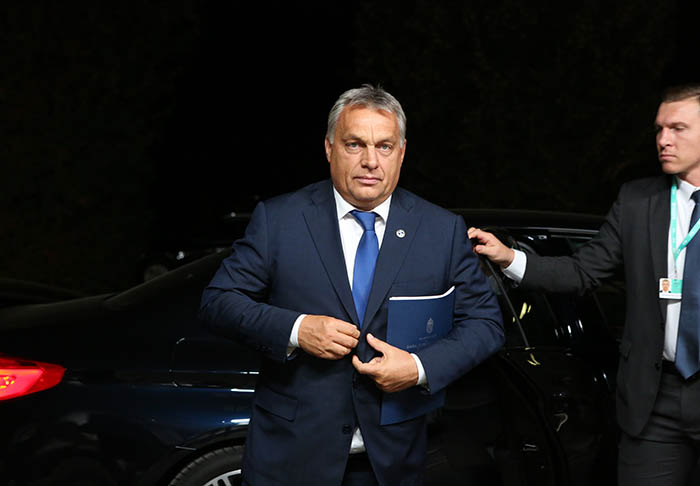
Hungarian prime minister Viktor Orbán. Credit: EU2017EE Estonian Presidency / Flickr
Dutch MEP Judith Sargentini is enemy number one in the eyes of the Hungarian government. The Green politician incurred that government’s anger when she persuaded the European Parliament to the country losing voting rights.
She accused Hungary, among other democratic failings, of not ensuring a free and uncensored press. But since the vote last September, nothing has happened, except that the Hungarian government launched a campaign against her on state television – and she no longer feels safe to travel there.
“[The government] has been spreading so much hate against me, and if the government is spreading hate, what if there is a lunatic around? I’m not taking the risk,” she said.
“The Hungarian government spent 18 million euros on a publicity campaign against me, after I won the vote – with TV commercials and a full-page advertisement with my face on it.” The other vocal critic of Hungary, Belgian Liberal MEP and former Belgian prime minister Guy Verhofstadt, as well as the philanthropist George Soros were targeted in the same campaign.
With the European elections coming up in May 2019, and the possibility of large gains by nationalist, populist parties, the question is what the EU can do to curb freedom of expression violations on its territory.
The problem according to Lutz Kinkel, managing director of the European Centre for Press and Media Freedom, is the EU has no specific competences over media freedom. No country can join the EU without guaranteeing freedom of expression as a basic human right under Article 49 of the Lisbon Treaty. Article 7 is triggered when there is “a clear risk” of a member state breaching EU values. Although this can lead to a country’s voting rights being taken away, to get to that point, all the other EU countries have to agree.
As Camino Mortera-Martinez, a senior research fellow at the think-tank Centre for European Reform in Brussels, said: “Article 7 is never going to work because it is so vague. [All the other] member states are never going to argue to punish another one by suspending voting rights.”
Historian Tim Snyder, author of The Road to Unfreedom, a book about how Russia works to spread disinformation within the West, told Index he thought Hungary should have been thrown out of the EU a long time ago. But, with Britain’s exit from the EU, it is difficult to start expelling countries now.
“The tricky thing about the European Union, and this goes not just for eastern Europe but everyone, is that there might be rules for how you get in, but once you are in the rules are a lot less clear,” he said.
[/vc_column_text][vc_row_inner][vc_column_inner width=”1/4″][vc_icon icon_fontawesome=”fa fa-quote-left” color=”custom” size=”xl” align=”right” custom_color=”#dd3333″][/vc_column_inner][vc_column_inner width=”3/4″][vc_custom_heading text=”It’s like joining a sorority with very strict rules for entering, but when you are there you can misbehave and it is covered up by the group” font_container=”tag:h3|text_align:left” google_fonts=”font_family:Libre%20Baskerville%3Aregular%2Citalic%2C700|font_style:400%20italic%3A400%3Aitalic”][/vc_column_inner][/vc_row_inner][vc_column_text]
[/vc_column_text][vc_column_text]
Hungary is the most prominent country in Europe to put restrictions on media freedom. Not only is public service media directly under government control, and critical journalists have been fired, but the government has also made sure that private media has either been driven out of business or taken over by a few oligarchs close to Prime Minister Viktor Orbán. The only independent media are very small operations, publishing almost exclusively on the internet.
Snyder told Index: “I think Europeans generally made the mistake of thinking that it doesn’t matter if we have one small country which is going the wrong way [and that] Hungary can’t possibly affect others. But the truth is – because it is easier to build authoritarianism than democracy – one bad example does ripple outwards and Hungary isn’t just Hungary and Orbán isn’t just Orbán; they represent a kind of mode of doing things which other people can look to, and individual leaders can say: ‘That’s possible’.”
This is borne out by Index on Censorship’s Mapping Media Freedom project which tracked media freedom in 43 European countries and found patterns that showed countries following Hungary’s example including Poland.
Anita Kőműves is an investigative journalist in Hungary who works for non-profit investigative outlet Átlátszó.hu which won an Index award for digital activism in 2015. She says not only does Brussels do nothing to challenge Hungary’s undermining of the free press but people in the commission are persuaded it is not all that bad.
She said: “Orbán is walking a fine line with Brussels. He knows that he cannot go too far. Whatever happens here, it must be deniable and explainable. Orbán goes to Brussels, or sends one of his henchmen, and he explains everything away. He has bad things written about him every single day in Hungary and nobody is in jail, so everything is fine… everything is not fine. Freedom of speech, the fact that I can write anything I like on the internet and nobody puts me in jail, is not the same as freedom of media when you have a strong media sector which is independent of the government.”
[/vc_column_text][/vc_column][/vc_row][vc_row][vc_column width=”1/4″][vc_icon icon_fontawesome=”fa fa-quote-left” color=”custom” size=”xl” align=”right” custom_color=”#dd3333″][/vc_column][vc_column width=”3/4″][vc_custom_heading text=”I think Europeans generally made the mistake of thinking that it doesn’t matter if we have one small country which is going the wrong way” font_container=”tag:h3|text_align:left” google_fonts=”font_family:Libre%20Baskerville%3Aregular%2Citalic%2C700|font_style:400%20italic%3A400%3Aitalic”][/vc_column][/vc_row][vc_row][vc_column][vc_column_text]
The solution for Brussels, she argues, is not Article 7 but for the EU to use European competition law to challenge the monopoly on media ownership the government and government-backed companies have in Hungary.
Kinkel says that this would be a warning to other countries, such as Bulgaria and Romania, which are trying to control the media in similar ways and in the case of Bulgaria giving EU funds only to government-friendly media.
“Governments try to get hold of public service media: this is one step,” he said. “And the other step is to throw out investors and media they don’t like and to give media outlets to oligarchs who are government-friendly and so on and so on, and to start new campaigns against independent investigative journalists.”
In Poland, the European Commission invoked Article 7 because of the government’s threats to the independence of the judiciary. The government so far controls only the state media but, as journalist Bartosz Wieliński , head of foreign news at the Gazeta Wyborcza newspaper, points out, the government used that state media to hound the mayor of Gdańsk, Paweł Adamowicz, for months before he was assassinated in January this year.
Wieliński believes it was only after Britain voted to leave the EU that countries realised they would face little sanction if they chipped away at freedom of expression. Although the EU did not collapse as they expected, the initial disarray gave them an opportunity to test European mechanisms and find them wanting.
Maria Dahle is chief executive of the international Human Rights House Foundation. She believes financial sanctions could be the way to stop countries from crossing the line, as Poland and Hungary have.
“When allocating funding, it should be conditional,” she said. “If [member states] do violate the rule of law, it has to have consequences … and the consequences should be around financial support.”
But Mortera-Martinez warns if the EU starts punishing countries too much financially, it will encourage anti-EU feeling which could be counter-productive, leading to election wins for populist, nationalist parties. The effect of any populist gains in the May elections concerns Kinkel, also: “What is clear is that when the populist faction grows, they have the right to have their people on certain positions on committees and so on. And this will be a problem… especially for press and media freedom,” he said.
Back at the European Parliament, Sargentini is impatient. “It’s about political will, and the EU doesn’t have it at the moment,” she said. “It’s like joining a sorority [with] very strict rules for entering, but when you are there you can misbehave and it’s covered up by the group.”
[/vc_column_text][/vc_column][/vc_row][vc_row][vc_column][vc_column_text]
Sally Gimson is the deputy editor of Index on Censorship magazine.
Index on Censorship’s spring 2019 issue is entitled Is this all the local news? What happens if local journalism no longer holds power to account?
Look out for the new edition in bookshops, and don’t miss our Index on Censorship podcast, with special guests, on Soundcloud.
[/vc_column_text][/vc_column][/vc_row][vc_row][vc_column width=”1/3″][vc_custom_heading text=”Is this all the local news?” font_container=”tag:h3|text_align:left” link=”url:https%3A%2F%2Fwww.indexoncensorship.org%2F2018%2F12%2Fbirth-marriage-death%2F|||”][vc_column_text]The spring 2019 issue of Index on Censorship magazine asks Is this all the local news? What happens if local journalism no longer holds power to account?
With: Libby Purves, Julie Posetti and Mark Frary[/vc_column_text][/vc_column][vc_column width=”1/3″][vc_row_inner][vc_column_inner][vc_single_image image=”105481″ img_size=”full” onclick=”custom_link” link=”https://www.indexoncensorship.org/2018/12/birth-marriage-death/”][/vc_column_inner][/vc_row_inner][/vc_column][vc_column width=”1/3″][vc_custom_heading text=”Subscribe” font_container=”tag:h3|text_align:left”][vc_row_inner][vc_column_inner][vc_column_text]In print, online. In your mailbox, on your iPad.
Subscription options from £18 or just £1.49 in the App Store for a digital issue.
Every subscriber helps support Index on Censorship’s projects around the world.
 SUBSCRIBE NOW[/vc_column_text][/vc_column_inner][/vc_row_inner][/vc_column][/vc_row][vc_row][vc_column][vc_column_text]This article has been updated on 18 April 2019 to reflect that the name of organisation Lutz Kinkel works for had been written incorrectly. The article read “European Centre for Press and Media Reform”, when it should have read “European Centre for Press and Media Freedom”.[/vc_column_text][/vc_column][/vc_row]
10 Apr 2019 | Academic Freedom, News, Scholar at Risk
[vc_row][vc_column][vc_single_image image=”106191″ img_size=”full” add_caption=”yes”][vc_column_text]“We in Syria were living in a big prison, without freedom, without good education, without good quality of life, without any desire of development,” says Dr. Kassem Alsayed Mahmoud, a food science and agricultural engineering researcher. “We have in Syria only five universities while we have more than 200 prisons.”
In 2009, Alsayed Mahmoud returned home to Syria after getting his masters and doctorate degree in France. He began working at Al-Furat University, where he quickly encountered the multitude of issues that academics in Syria face. In his experience as a professor and researcher in Syria, there is a serious lack of resources, experience and research freedom, in addition to issues of bureaucracy and corruption that all combine to create an environment that discourages and prevents academic freedom.
Despite his position as a professor at Al-Furat University and his age at the time, 37, he was forced into the one year of military service that is compulsory for Syrian citizens. He entered the military at the end of 2010 but was kept past his one-year mandatory service for an undetermined amount of time. By the end of 2012, Alsayed Mahmoud decided to defect from the military and leave Syria.
From there, Alsayed Mahmoud made his way to Turkey with the help of rebels, and then Qatar, where he remained for a year, before Scholars at Risk helped him obtain a research position in a lab at the Ghent University in Belgium. This position served as a starting point from which Alsayed Mahmoud then moved to a research position at the Universite Libre de Bruxelles, where he worked on the valorisation of bioorganic wastes from the food industry, to see if food waste could be converted into something more useful like energy, other chemicals or materials that could be helpful in manufacturing processes.
In August 2018 Alsayed Mahmoud moved back to France because of his French refugee status, where he is still searching for a job in his field.
Although he describes the higher education system in Syria as a “tragedy” and “disaster”, he still hopes to return to Syria and pursue academic research in order to help rebuild the country.
“For me, I hope very soon to be a free human living in the free Syria,” says Alsayed Mahmoud. “I hope that one day I, and all, Syrian academics could come back home and do our research with freedom as all our colleagues in Europe and developed countries do.”
Dr. Alsayed Mahmoud spoke to Emily Seymour, an undergraduate student of journalism at American University, for Index on Censorship.
Index: What are your hopes for Syria and yourself?
Alsayed Mahmoud: To stop the war in Syria as soon as possible. We need to change the dictatorial regime and clean the country of all occupation and terrorist forces. I want to go back to Syria to continue my work at a university and participate in building our country. I hope that Syria can establish the principles of freedom; and change the constitution to guarantee that no dictator could stay in power for a long time. For me, I hope very soon to be a free human living in the free Syria.
Index: How have you changed in since leaving Syria?
Alsayed Mahmoud: Since leaving Syria seven years ago, I feel that I have been living with an artificial heart. Despite having found a safe place, the help of people and governments in Europe, I still need to breathe the air of Syria, to meet my friends and loved ones, and be proud to develop the country. Seven years is long enough to know that some people who should represent humanity are the cause of disasters because they do not care about other people or about the next generations. These are the people in power who are destroying the earth by making decisions out of only self-interest, waging wars, polluting the earth and increasing hate speech and racism.
Index: Did going to France for your education impact how you viewed Syria when you returned? If so, in what way?
Alsayed Mahmoud: We in Syria were living in a big prison, without freedom, educational opportunities or a good quality of life. There was no desire to develop the country, which has been under a dictatorial regime and one-party rule since 1970. In Syria, we have only five universities but we have more than 200 prisons. When I returned to Syria, I tried to apply what I learned in France, but unfortunately, they forced me to do the mandatory military service in December 2010, despite my professorial position at a university and my age (37 years).
Index: How did the revolution impact higher education in Syria?
Alsayed Mahmoud: Before the revolution, higher education was not in a good situation. There was a lack of materials, a lack of good academics and staff due to the fact that most got their PhDs from Russia and came back without any experience. Very few research papers from Syria were published in the international reviews. There was no academic freedom because many projects were refused by the secret service because they thought the research would interfere with the security of the country. Most university students and staff, especially males, were killed, arrested, tortured, left the country or were forced into the war. You had no choice if you stayed: kill or be killed. Three of five Syrian universities are out of service or displaced to another city. There is also a lack of academics, staff, materials and even students. There is no higher education system in Syria now. It’s a tragedy and disaster.
The revolution also started at universities, because students and researchers believed that the future of the country was in danger. We knew that the situation of higher education in Syria is the worst it’s been since 1970, but we believed that the development of any country is based on research and higher education. The situation now is the result of about 50 years of dictatorship, and the revolution was the right step to start a new life in Syria. We need only some time without any terrorism or occupation to create a free and well educated new generation to build what the terrorist occupations destroyed.
Index: What was it about your experience in the army that prompted you to defect and leave the country?
Alsayed Mahmoud: Before I was forced to do the mandatory service, I was completely against the dictatorial regime and I hoped that one day I could feel free to say and do what I want in Syria.
I suffered a lot when I was in the army, we were forced to obey the stupid orders of the officers who could humiliate you if they knew that you have already finished your PhD in Europe or in a developed country and came back to Syria. As the revolution started in March 2011, they prevented us from seeing what was going on outside the military camps, they did not give us our freedom even when we finished our one-year service and kept us for an indefinite amount of time. From the first day of the revolution, I had decided to defect, but out of fear for my family, I stayed until they were safe. I defected because I am against this dictatorial regime and the army that killed civilians and innocent children, and destroyed the country only because Syrians wanted to be free.
Index: What does your current research focus on?
Alsayed Mahmoud: I returned to France in August 2018 after three years in Belgium because I have French refugee status, but I am still looking for a job in my field. My previous research focused on the valorisation of bioorganic wastes from the food industry. The goal was to give more value to food waste by producing high valued products like lactic acid, which is often used in different domains like food and pharmacy. We developed a fermentation mechanism for lactic acid production in order to valorise potato effluents, which are generated from potato processes.
Index: How has the support of organisations like Scholars at Risk (SAR) been important in your journey as an academic?
Alsayed Mahmoud: Scholars at Risk has had a very important impact on my career. Since I left Syria, I looked for help to find a safe place to continue my work as a researcher. SAR was the most helpful organisation in my case because they could help me to find a host lab — the Laboratory of Food Technology and Engineering — with a grant at Ghent University in Belgium. This was the first step to then find another two year grant at the 3BIO lab in the Universite Libre de Bruxelles in Brussels, where I worked on the valorisation of bioorganic wastes from the food industry. SAR has always been supportive, even after I finished my first year at Ghent University.
Index: Why do you believe academic freedom is important?
Alsayed Mahmoud: Academic freedom is one of the most important pillars for the development of any country. Academics are often leaders that nurture the success of a country. If they are not free to think, criticise and research, they will not be able to help foster development.
Index: In your experience, what has been the difference between the three different academic settings that you’ve been in, in Syria, France and now Belgium?
Alsayed Mahmoud: I could not find a big difference between France and Belgium, but I believe that the academic situation in Syria is very far from being as good as in Europe. In my experience, academic freedom in Syria is one of the worst in the world. Academic freedom is a more important ideal in France and Belgium. The influence of power on the research in Europe is mostly positive and academia and governments often work together to develop the country. In Syria power is really against research and development despite paying lip service to it in the media. The freedom of research is the key to development here in Europe, while in Syria research is controlled by the regime and Assad’s secret services. Generally, there is a very big budget for research here in Europe, while in Syria we have just a drop of that budget, which is also often stolen before reaching us or used for bad purposes. The staff in Syria was mostly educated in Russia and other countries that have low education levels.
The number of universities is a sign of a healthy education system in France and Belgium, while in Syria we have only five universities but more than 200 prisons. You can generally get what you need to carry out your research in Europe without any big financial or political problems, but in Syria, researchers are very limited by materials and budgets. The freedom of mobility to any country for the purposes of attending a scientific event is not a big issue here in Europe, while as a Syrian researcher you are limited by visa and political problems. I hope that one day I, and all Syrian academics, can return home and do our research in freedom — as all our colleagues in Europe and developed countries do — and be proud to be a Syrian researcher.[/vc_column_text][/vc_column][/vc_row][vc_row][vc_column][vc_separator][vc_row_inner][vc_column_inner][vc_single_image image=”105189″ img_size=”full” onclick=”custom_link” link=”https://www.scholarsatrisk.org/”][vc_column_text]This article was created in partnership with Scholars at Risk, an international network of institutions and individuals whose mission it is to protect scholars, promote academic freedom, and defend everyone’s right to think, question, and share ideas freely and safely. By arranging temporary academic positions at member universities and colleges, Scholars at Risk offers safety to scholars facing grave threats, so scholars’ ideas are not lost and they can keep working until conditions improve and they are able to return to their home countries. Scholars at Risk also provides advisory services for scholars and hosts, campaigns for scholars who are imprisoned or silenced in their home countries, monitoring of attacks on higher education communities worldwide, and leadership in deploying new tools and strategies for promoting academic freedom and improving respect for university values everywhere.[/vc_column_text][/vc_column_inner][/vc_row_inner][vc_separator][vc_basic_grid post_type=”post” max_items=”4″ element_width=”6″ grid_id=”vc_gid:1554827510836-1e64b768-ccba-7″ taxonomies=”8843″][/vc_column][/vc_row]
