Each week, Index on Censorship’s Mapping Media Freedom project verifies threats, violations and limitations faced by the media throughout the European Union and neighbouring countries. Here are just five reports from 23-29 February that give us cause for concern.
— CoE Media Freedom (@CoEMediaFreedom) March 2, 2016
The physical safety of journalists in Russia remains a major concern. Sergey Vinokurov, a correspondent for the weekly politics and news magazine Sobesednik, was assaulted outside the publication’s offices in Moscow on 25 February at around 9.20pm. As Vinokurov left for home, a perpetrator hit the journalist multiple times in the body and face, just ten meters from the entrance. The assailant, who appeared drunk, shouted vulgarities and said: “you’re getting this for your articles”. Vinokurov tried to dodge the punches and managed to make his way back to the entrance to the building’s entrance, but the assailant followed and continued his assault.
Security guards and other journalists were able to restrain the perpetrator before police arrived and brought the assailant to a detention center at the Tverskoi police department. Police have opened an investigation. The attacker was a 37-year-old Anton M, who lives next to the editorial office.
2. France: Defense minister launches investigation into Le Monde
The French Minister of Defence, Jean-Yve Le Drian, launched an investigation into French newspaper Le Monde on 24 February for “compromising the secrecy of national defence” following the publication of an article on the on the presence of French special forces in Libya. The article reported: “Highly targeted pinpoint strikes, prepared by discreet or covert actions: in Libya, this is the course of action taken by France against the threat of the Islamic State.”
Under French law, compromising the secrecy of national defence is punishable by a €45,000 fine and a 3-year prison sentence. The Le Monde claims that “specialised bloggers” had spotted the presence of French security forces in eastern Libya since mid-February.
3. Greece: Police block TV crew access to refugee camp operation
It’s been almost a year since phrases “migrant crisis” and “refugee crisis” started making headlines, and in that time we’ve seen many European governments making it increasingly difficult for asylum seekers to cross into their territorial boundaries. Most recently, Macedonia tightened its border control, leaving about 4,000 people stranded in Greece. The Greek government responded by removing refugees from a camp in the border town of Idomeni, putting them on buses bound for Athens, where they were to be temporarily housed in relocation camps.
While trying to cover events at the border, a TV crew for private broadcaster Alpha Channel was denied access. Greek police asked journalist Aphroditi Spilioti, a cameraman and a sound engineer to leave the camp “safety reasons”. The TV crew then moved outside the perimeter of the camp, where they could still observe the ongoing police operation, but again they were asked by police to move — this time 2 km away — for “safety reasons”.
When the journalist and the crew refused to do so, they were asked to provide their ID cards for verification and follow the police vehicle to the station. The police also reportedly told them not to drive back to the refugee camp.
4. Spain: Politician repeatedly asks journalist to reveal sources
Former president of the province of Valencia, Francisco Camps, tried to convince radio journalist for Cadena SER, Miguel Ángel Campos, to reveal his source when the journalist called to ask the politician about alleged corruption on 29 February.
Camps, who was filming the phone conversation, told the journalist: “I have to know who I need to talk to in order to not have a big mess tomorrow. […] I am asking you a favour, please, tell me what source told you that I was collecting money. I need to talk to that person and to defend myself.”
The journalist still refused to reveal the identity of his source. The politician continued to deny the allegations and asked to involve the journalist’s boss: “Please call him right now and tell him that you talked to me. And please tell him not to talk or to do something because all of this is a lie. Please, this is really important, talk to your boss, and if he would like to talk to me I am available.”
The independent Turkish broadcaster IMC TV was pulled off the air by one of Turkey’s largest broadcasters, Turksat, on 26 February following terror charges. Ankara prosecutor requested IMC be taken down because of allegations that the channel is “spreading terrorist propaganda” for the Kurdistan Workers’ Party (PKK), which Turkey has designated a terrorist organisation.
The channel was taken off the air during a live interview with Can Dundar and Erdem Gul, two prominent journalists who were freed pending trial that same day after spending 92 days in prison. Index on Censorship has condemned the decision. Senior Advocacy Officer Melody Patry said: “Turkey must halt its crackdown on media outlets and ensure citizens have access to diverse information and viewpoints, including those that differ from the government’s political line.”
Searching for “dissident artists” online, you’d be forgiven for thinking they are a purely Chinese or Russian phenomenon. But for every Ai Weiwei or Pussy Riot, there are scores of artists and musicians around the world whose persecution does not make the Six O’Clock News.
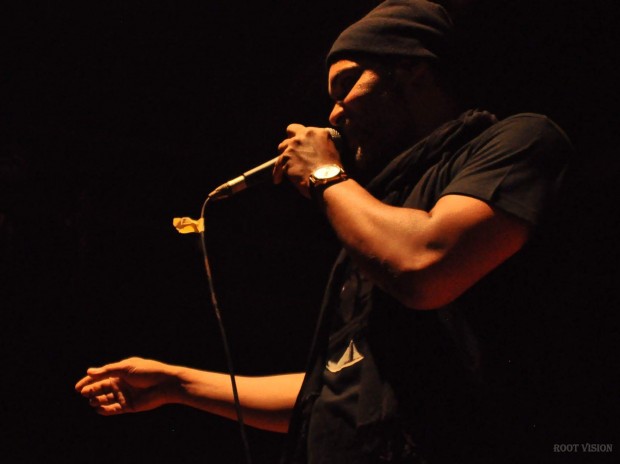
Serge Bambara — aka Smockey, meaning “se moquer”, or “to mock” — is a hip-hop artist and activist little known outside his home country of Burkina Faso, but who has had a marked impact on political and social developments there.
He combines rap with traditional Burkinabé music and often humour to “spread truth”. “Knowledge is important, and I write as a way of presenting it to the people,” he told Index on Censorship.
Index on Censorship is proud to name Smockey as the recipient of the Music in Exile Fund Fellowship. As the beneficiary, he will perform live in London, as well as receive training and opportunities to connect with other free speech heroes around the world.
“Serge Bambara’s overtly political music has made him a target for entrenched interests in Burkina Faso,” said Jodie Ginsberg, CEO of Index on Censorship. “Throughout his career, he has used his talents to fight for racial equality and battle corruption. We are delighted to have him as the inaugural Music in Exile fellow.”
In September 2015, after two years of serious activism and over 15 years of writing music about the problems in his country, forces loyal to the recently ousted president Blaise Compaoré — obviously unhappy with the truths he was spreading — bombed Smockey’s recording studio, the acclaimed Studio Abazon. The attack was an apparent attempt on his life as revenge for the role his music and activism played in the deposition of Compaoré, according to Smockey.
Attacks on artistic freedom — particularly musicians — almost doubled in 2015. But to understand why Smockey was targeted in such a violent and specific manner, we need to go back to his roots.
Smockey first became interested in hip-hop music through listening to American artists like Public Enemy, Afrika Bambaataa and LL Cool J. He began rapping in Burkina Faso in 1988, before moving to France in 1991 to study. While there, he signed to the record label EMI, but it wasn’t until he returned to his country of birth on a holiday in 1999 that his music took on the political dimension it is famed for today.
“It was around the time of the murder of journalist Norbert Zongo, who was assassinated following investigations into the activist by president Blaise Compaoré,” he said. “Student demonstrators were being beaten by police. It was very disturbing to me.”
Smockey soon packed up his computer and keyboard in France and moved back home to Burkina Faso in 2001. “Seeing the things going on in my country, I had to do something,” he said. “At the time, I didn’t know exactly what, but I knew it would involve music.”
He understands fully the responsibility that often comes with being in the spotlight in a country burdened by so many difficulties. “Not everyone is lucky enough to have a microphone in front of them, so if you have the chance to talk, you have to say something important,” Smockey said. This is the thinking behind subversive songs like Votez Pour Moi (about democracy), Tomber la Lame (FGM) and A Qui Profite le Crime (government corruption).
In the summer of 2013, Smockey co-founded Le Balai Citoyen, or The Citizen’s Broom, with reggae artist Sams’K Le Jah. The grassroots movement was set up in opposition to Compaoré, aiming to bring positive change to Burkina Faso. “As our problems were political, our solutions had to be political also,” Smockey explained.
As for the name and ethos of the movement, he said: “With just one twig, you won’t get much done, but when you bind them together and make a broom you can clean a lot of shit. This is why we always say ‘our number is our strength’ because it is impossible to be defeated if we are united.”
Le Balai Citoyen played a big part in the ousting of Compaoré. It urged the people of Burkina Faso to organise and take to the streets. Following mass demonstrations in late 2014, Compaoré resigned on 31 October after 27 years in power. A transition government, led by the military, was established, which Smockey was broadly supportive of. However, a military coup saw General Gilbert Diendéré — leader of the Regiment of Presidential Security (RSP), Compaoré’s former secret service — seize power in September 2015.
Le Balai Citoyen staged a march to the presidential palace in protest of the coup. Smockey, along with fellow demonstrators, were shot at and then chased through the streets of Ouagadougou by RSP. Although Smockey managed to escape, many others were beaten and arrested.
“We knew we were lucky, but we weren’t able to go home,” he said. On 17 September he went into hiding. Asked whether he is an artist or an activist first, Smockey told Index on Censorship that depends on what he is doing at any one time. His fans tend not to draw a distinction, he explained. Nor did Diendéré, it would seem, whose forces rocket-bombed Smockey’s studio on the same day he went underground.
Studio Abazon was a hub for young and aspiring musicians. “They attacked it because they knew it was an important landmark to the resistance,” Smockey explained. “Their thinking was that you have to kill the leaders, everyone else will go away.”
Prior to the attack, the rapper had received death threats, and although he had the opportunity to flee to Holland, he stayed put. “You can’t talk about strength in numbers if on the first sign of difficulty you are going to run away,” he said.
Diendéré’s rule didn’t last long as he failed to consolidate his authority and came under pressure from international leaders and the army to step down. Smockey came out of hiding and fresh elections were held in Burkina Faso.
“The current government, although it’s not perfect, was chosen by the people so it’s legitimate,” explains Smockey. “Our job is now to be the watchers and guards of democracy.”
The rapper is optimistic about the future of his country and proud of the role his music and activism have played in developments so far. With the progress made, he now plans to put more focus on his music. “I’ve started rebuilding the studio, and have already begun recording artists again, but much more work needs to be done,” he said.
He has plans for a tour of the country and wants to set up a hip-hop festival. “It will create a kind of bridge between rappers, old school and new,” he said. “We’re going to do one big concert every month as a way of keeping people connected.”
When Index on Censorship launched the Music in Exile Fund in October 2015 along with the producers of the award-winning documentary They Will Have To Kill Us First, Johanna Schwartz, director of the film, said: “When faced with censorship, musicians across the world need our support.”
In whatever small way, the Music in Exile Fund will help see Smockey’s plans become reality.
The Music In Exile Fund was launched to help support musicians facing censorship around the world. The fund contributes to Index on Censorship’s year-long Freedom of Expression Awards Fellowship programme, helping musicians to build their international profile and to create, perform and share their work in a safe environment. You can donate here.
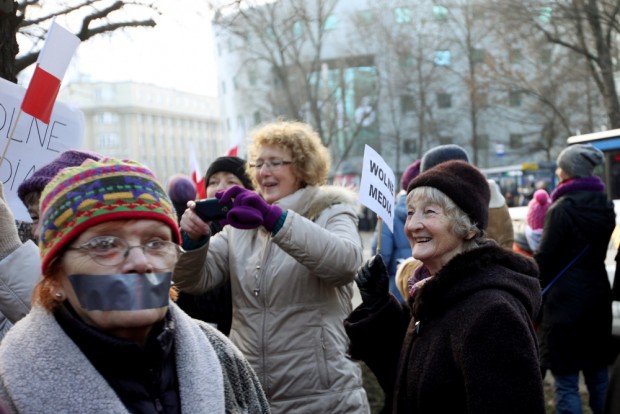
9 January, 2016: An anti-PiS demonstration in Kraków by the Committee of the Defence of the Democracy calling for a free media. Credit: Shutterstock / praszkiewicz
Poland has undergone rapid changes since the right-wing Law and Justice party (PiS) won the overall majority in the Sejm, the country’s parliament, in October 2015, and independent media hasn’t been spared.
On the evening of 28 December, draft legislation to change the management of public media was submitted to the Sejm and hurriedly passed with little public discussion and despite the objections of EU and media monitoring watchdogs — including Index on Censorship. The bill was signed into law in early January 2016.
Crucial sections of the media law empowered the government to appoint editors-in-chief at public radio and stations, Polskie Radio and TVP, rather than holding an open competition for the roles. Furthermore, the law ended member rotation on public television’s watchdog committee and symbolically re-branded “public media” as “national media”.
Immediately after enacting the law, the government named Jacek Kurski — a long-standing PiS member who represented the party in the Sejm between 2005-2009 and in the European Parliament until 2014 — as the new chair of TVP. He promised a “fast recovery” of public media on taking the role.
In speaking about the law, PiS representatives have said that the media had been under heavy influence of the Civic Platform (PO), the former governing party. In an interview with the Catholic Radio Maryja and TV station Trwam, defence minister Antoni Macierewicz said: “PiS does not take freedom of speech away from anyone, it is much rather the opposite: it returns the freedom of speech to the majority of the population, which had been deprived of it.”
The electoral success of PiS has been used to frame the changes to the media law as an expression of the public will.
The national daily Gazeta Wyborcza, which in 1989 was the first newspaper published outside the control of Poland’s then-communist government, and its workforce took these changes very seriously and set up an advertising campaign focused on the new legislation.
The changes to the media law raise a fundamental issue for media aligned to the political left or centre, as well as those with pro-European or liberal positions: financing.
Paweł Grzegorczyk, editor-in-chief of the online portal jagielloński24, conducted an analysis of public funding channelled to media outlets in recent years. In an interview with the Association of Polish Journalists (SDP), he said that Gazeta Wyborcza is likely to face a challenging financial future. Regardless of which party is in power, media funding is “usually steered, while not exclusively, by political motives”, he added.
He noted that right-wing publishers, under PO rule, had received less funding both with regards to the amount of publications (only two between 2009-14) and monetary value, than publications closer to the former government. While overall figures are not published, Gazeta Wyborcza received PLN 5 million ($1,284,076) between 2010-2014. Grzegorczyk said it wouldn’t be unreasonable to see this amount diminish in future.
Since PiS gained a majority, advertising by state institutions has soared in a number of media aligned with conservative political viewpoints, and the oil refinery company Orlen is sponsoring some news programming on Telewizja Republika, according to Grzegorczyk.
Commentators have been cautiously optimistic about the changes to the media law, calling it an opportunity to shake up dysfunctional structures in public media. “It was never as bad with the TVP as it is now, and it will never be as bad again,” wrote Stefan Turszczynski, a journalist and SDP member. Jadwiga Chmielowska wrote that Polish television has been destroyed in a 20-year process and the new media law “constitutes a chance” for change. Despite the optimism, some TVP journalists have already been dismissed.
So far commentary has focused the media law’s effect on Polish TV because Poles, on average, watch 4.23 hours a day, a Europe-wide high.
The Press Freedom Monitoring Centre (CMWP) issued a statement appealing “to editors-in-chief of public stations to pay particular attention that personnel changes would exclusively be motivated by criteria of professionalism of certain journalists or media employees”, rather than be based on family relations or political considerations.
In an interview with news-servis.pl Witold Świetlik, chair of CMWP, appeared unconcerned about the changes given that “the public media have never been that good in Poland”, and had increasingly been influenced by the surroundings of former President Bronisław Komorowski. Something had to change, and Świetlik was hopeful to see more pluralism of opinion than there was on TVP previously. One example he cites is the TVP talk show hosted by journalist Tomasz Lis, who was one of the first to leave the station following the introduction of the new media law. While Świetlik’s “fundamental doubt” concerned the fact that a politician is now leading the TV station, he noted that Kurski has so far “set up a rather neutral and pluralistic composition”, while admitting that the workforce was, “of course, predominantly made up from journalists of the conservative media”.
The position heard directly from associates of the SDP on the state of Polish public TV was very negative prior to the new law being passed. Former TVP1 departmental editor-in-chief Ewa Urbanska argues that the leasing structure set up a few years back had a detrimental impact on quality of coverage while a large body of administrative staff continued to be supported by public money, and, crucially, any production was left to commercial firms.
Outside criticism of the media landscape in Poland is rejected by some, such as the lawyer and journalist Andrzej Draminski. He is amused by the agitation of “oppositional groupings and various committees in defence of one thing or another (here you can insert any title as this really does not make a difference)” and warns the opposition not to buy in to the “sudden”, shallow interest of the West, and instead to present arguments of their own, “so far as they have any”.
The issues affecting journalism in Poland predate the changes to the media law. The industry has been grappling with accusations of becoming too simple and partisan from its own professionals. Marek Placzewski from the SDP says while there have been a few notable exceptions, the general trend in the press has been to recount right- or left-wing arguments without an attempt to move beyond these narratives.
It was February 2013 when the police knocked on the door of Anuska Delic’s mother. The two officers had arrived at the house in the Slovenian capital of Ljubljana at 8am to speak with her daughter concerning a criminal investigation.
Delic, a journalist for the well-respected daily newspaper Delo, was being charged with disseminating classified information. According to the stern-faced officers at her mother’s door, she could face up to three years in prison if found guilty.
“She called me up and was freaking out,” Delic said. She was furious and didn’t understand why the police went to her family home, as she is registered as living elsewhere. “I told my mother to give the phone to one of the police officers,” she said. “I first asked them to apologise to my mother.”
Delic learned that she was to be charged with a criminal offence and was summoned to come in for questioning at the police station in Ljubljana. The charge, she would soon learn, related to her work reporting on alleged connections between the ruling right-wing Slovenian Democratic Party (SDS) and the controversial neo-Nazi movement Blood and Honour.
“The charges were ridiculous,” she said. “They said that I had published classified information from the Slovenian Intelligence and Security Agency. But all the information they came up with was public information. They really didn’t have a case.”
It was the beginning of a long and exhausting legal process. For over two years Delic juggled her time between working as a journalist and defending herself in court, before finally being acquitted.
Delic is known as one of Slovenia’s best investigative journalists and is a member of Association of Slovenian Journalists and the Organized Crime and Corruption Reporting Project (OCCRP).
In 2011, she began researching Blood and Honour, a neo-Nazi punk rock music promotion group which was founded in the United Kingdom in 1987. The name comes from the motto of the Hitler Youth. The group has “divisions” all over the world but has been banned in Germany, Spain and Russia.
Delic discovered connections between Blood and Honour and the then-opposition — and now-ruling — Slovenian Democratic Party (SDS) in the town of Ziri. She also wrote about an investigation by the Defence Ministry into Blood and Honour members who were working for the army.
Delic’s investigation also uncovered, she said, that members of the neo-Nazi movement were involved in a mainstream political party. “This party, the SDS, is the largest and most influential right-wing party in Slovenia,” she explained. “These people [Blood and Honour members] are still active among them. The party has not denounced them until this day.”
Delic discovered that some Blood and Honour members were even candidates for local elections in 2014. “This is a democratic state so you are welcome to run elections on your neo-Nazi agenda,” she said. “But you can not hide within the confines of a big mainstream party.”
When her report was published it created a scandal in Slovenian politics. But, rather than look at the contents of her reporting, the state prosecutor instead pressed charges against Delic, believing that she could only have gotten the information from classified intelligence sources. Under article 260 of Slovenia’s criminal code, publishing classified information is punishable by up to three years in prison.
“The right wing was having a field day,” she said of the reaction her reporting provoked among those sympathetic with the SDS. “The right-wing media were doing everything they could to discredit me and their newspapers published blatant lies about me,” she claimed. But she also got support. “In general, people were shocked that this was going on,” she said.
Delic and her lawyer always believed that the state prosecutor did not have enough evidence to pursue criminal charges, and considered the trial a case of political prosecution. “I knew it was a sham,” Delic stated firmly. “I knew immediately that they were just trying to put pressure on me. They were after my sources.”
Although Slovenia did not have a law at the time that explicitly protected journalists from revealing their sources, the European Court of Human Rights has ruled in favour of journalists prosecuted in EU member states for refusing to give up their sources to the authorities. As soon as Delic realised she was going to be charged, and afraid that she might be monitored by Slovenia’s secret service, she broke all contact with her sources. “I went public immediately because I wanted to send a message to whomever my source was,” she recalled. “To let them know that our agreement was safe.”
On April 15, 2015, Slovenia’s news agency STA reported that state prosecutor Sndreja Zvanut had withdrawn all charges against Delic because of a “lack of evidence.” Zvanut, however, stated before the judge and the media that she believed Delic was guilty. “After dropping the charges against me, the prosecutor spent ten minutes explaining why she was definitely sure that I’m guilty as charged,” Delic recalled. “This really upset me — I felt there was another injustice. Although I was acquitted, I was still guilty. That’s not the way the legal system should work.”
After two long years in and out of a court room, Delic was exhausted. “No journalist wants to be the story,” she said. She believes a huge injustice was done and the trial had put a lot of pressure on her. Yet, looking back, she also believes that it might have been worth the battle. Not only were the charges against her dropped, Delic’s case resulted in a change in the law. Since October 2015, journalists and their sources are now protected under a “public interest” defence.
Although media freedom in Slovenia has improved drastically over the years — and in spite of being the most prosperous of the former Yugoslavian states and the first to join the EU in 2004 — the country still has room for improvement. Slovenian journalists working for the public broadcaster have reported political pressure when covering elections or politically sensitive topics, according to the 2015 Freedom House report on the country. The report also states that, unlike other former Yugoslav republics, journalists are generally free from physical harassment and intimidation. Slovenia is ranked 35th on the Reporters Without Borders (RSF) 2015 World Press Freedom Index, just below Great Britain. It is the highest ranked former Yugoslavia republic.
Delic has had enough, for a while at least. She doesn’t want to see the inside of a court room ever again. After her acquittal, and the prosecutor’s post-verdict statement, Delic considered pressing charges. In the end, she decided against it. “It would take another three years in court for me to get justice,” she said. “I decided that my life is worth more than that.”