26 Nov 2013 | Campaigns, European Union, United Nations
In a joint letter to Baroness Catherine Ashton, High Representative for Foreign Affairs & Security Policy and Vice-President of the European Commission, Index on Censorship has joined 66 human rights NGOs from European Union member States, States from the European Partnership and States in cooperation with the European Union stress that the intent to reduce OHCHR’s budget is a signal in the wrong direction. The programme budget for the biennium 2014-2015 for 2014-2015 already decreases the budget of OHCHR by a net 4.8%, whilst the promotion and protection of human rights represents only 3% of the overall UN budget.
Keeping in mind that within the overall UN budget, the share allocated to the promotion and protection of human rights represents approximately 3%, the intent to reduce OHCHR’s budget is a signal in the wrong direction. Soon the Human Rights Council will celebrate its 10 years of existence – we believe that all States and group of States aiming at promoting human rights should ambition to raise that share to at least 10% to celebrate the 10 years of existence of the Council, which will be made impossible if the European Union continues to pressure for more and more “across the board” cuts in the UN’s human rights budget.
20 years after the Office was established, does the European Union really want to a force contributing to undermining the sustainability of OHCHR, hence weakening the voice for human rights within the UN system?
Azerbaijan Human Rights House (on behalf of the following NGOs):
Association for Protection of Womens’ Rights
Azerbaijan Lawyers Association
Human Rights Center of Azerbaijan
Institute for Peace and Democracy
Legal Education Society
Women’s Association for Rational Development
Media Rights Institute
Public Union of Democracy and Human Rights Resource Centre
Society for Humanitarian Research
Barys Zvozskau Belarusian Human Rights House in exile, Vilnius
Human Rights House Belgrade (on behalf of the following NGOs):
Belgrade Centre for Human Rights
Lawyers’ Committee for Human Rights
Helsinki Committee for Human Rights in Serbia
Policy Center
Human Rights House Kiev (on behalf of the following NGOs):
Association of Ukrainian Human Rights Monitors on Law Enforcement (Association UMDPL)
Center for Civil Liberties
Human Rights Information Center
Human Rights House Tbilisi (on behalf of the following NGOs):
Article 42 of the Constitution
Caucasian Centre for Human Rights and Conflict Studies
Georgian Centre for Psychosocial and Medical Rehabilitation of Torture Victims
Human Rights Centre
Media Centre
Union Sapari – Family without Violence
Human Rights House Oslo (on behalf of the following NGOs):
Human Rights House Foundation (HRHF)
Health and Human Rights Info
Norwegian Helsinki Committee
Human Rights House Voronezh (on behalf of the following NGOs):
Charitable Foundation
Civic Initiatives Development Centre
Confederation of Free Labor
For Ecological and Social Justice
Free University
Golos
Interregional Trade Union of Literary Men
Lawyers for labor rights
Memorial
Ms. Olga Gnezdilova
Soldiers Mothers of Russia
Voronezh Journalist Club
Voronezh-Chernozemie
Youth Human Rights Movement
Human Rights House Yerevan (on behalf of the following NGOs):
Armenian Helsinki Association
Helsinki Citizens’ Assembly – Vanadzor
Jurists against Torture
Guaranteeing Equal Opportunities
Shahkhatun
Socioscope
Women’s Resource Center
Human Rights House Zagreb (on behalf of the following NGOs):
Association for Promotion of Equal Opportunities for People with Disabilities
B.a.B.e. – Be active, Be emancipated
Centre for Peace Studies
Documenta – Centre for Dealing with the Past
GOLJP – Civic Committee for Human Rights
Svitanje – Association for Protection and Promotion of Mental Health
Russian Research Centre for Human Rights (on behalf of the following NGOs):
Human Rights Network Group
Independent Psychiatric Association of Russia
Moscow Centre for Prison Reform
Moscow Helsinki Group
Mother’s Right Foundation
Non-violence International
Right of the Child
Right to Live and Have Civil Dignity
Social Partnership FoundationUnion of the Committees of Soldiers’ Mothers of Russia
Helsinki Foundation for Human Rights, Poland
Human Rights Club, Azerbaijan
Rafto Foundation, Norway
Human Rights House Foundation (HRHF)
Index on Censorship
26 Nov 2013 | Africa, Digital Freedom
Amid concerns that the proposed African Union Convention on Cybersecurity (AUCC) will limit free speech online the drafters of the AUC have agreed to receive input from outside organisations.
The Web We Want, a campaign aimed at promoting an internet where everyone can participate in the free flow of knowledge, ideas, collaboration and creativity, put forward a proposal after criticism that the convention should not be passed until changes have been made to it.
The convention, which will be signed in January 2014, proposes the prevention of cybercrime in 15 African states “through the organisation of electronic transactions, protection of personal data, promotion of cyber security, e-governance and combating cybercrime”. According to the Norton Cybercrime Report 2012, South Africa ranks 3rd globally for the number of cybercrime victims, behind Russia and China.
However it has been suggested that the convention should not be passed in its current form as it “dangerously imposes broad limitations on freedom of expression by permitting the interception of content data and traffic data on unfounded grounds, such as ‘where the imperatives of the information so dictate’”.
According to the Kenyan-based Strathmore University’s Centre for Intellectual Property and Information Technology (CIPIT) the convention could abuse Africans’ right to privacy, harm freedom of expression and place too much power in the hands of judges who, in the “public interest”, will have the authority to intercept individuals’ electronic communications without their permission.
Taking this into account this week will see an online discussion on the proposed changes to the AUCC by Kenyan and Ugandan stakeholders. Sponsored by KICTAnet, the Kenya ICT Action Network, and in partnership with Web We Want the five day digital event will call for a discussion of articles from the convention in need of further clarification and recommendations. The Web We Want has called upon international NGOs to put forward their concerns regarding the AUCC and internet freedom to be deliberated over the coming week.
This article was posted on 26 Nov 2013 at indexoncensorship.org
22 Nov 2013 | Comment, News
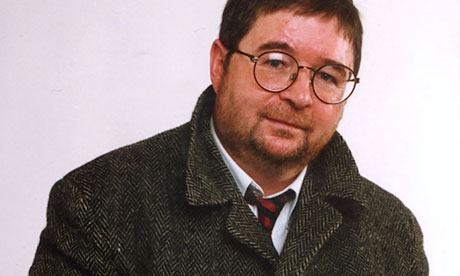
Martin O’Hagan, murdered in 2001
Earlier this week, the Northern Ireland Attorney General John Larkin suggested that investigations and prosecutions for violence carried out during “the Troubles” (that is to say, roughly between 1970 and the Good Friday Agreement of 1998) should be quietly dropped.
The idea, though well meaning, was not well received. Northern Ireland is constantly torn between wanting to forget about the past and requiring justice for history’s victims. It’s unlikely that it can have both at the same time.
The peace process did not bring an end to violence, in spite of the official line. Dissenting groups continued shooting and maiming, albeit in lower numbers.
Among them was the Loyalist Volunteer Force, which, in 2001, took the unprecedented-in-Ulster step of assassinating a journalist.
Martin O’Hagan was an investigative reporter for the Sunday World, an old-style tabloid published in Dublin and Belfast that specialises in stories about gangsters and paramilitaries. As a result, he had been harassed by paramilitaries on all sides, including being kidnapped by the provisional IRA. (He himself had been a member of the Official IRA before giving up on the cause and going into journalism)
O’Hagan had a particular interest in the activities of notoriously violent Belfast loyalist Billy Wright, whom he nicknamed “King Rat”. In 1992, Wright, then a member of the Ulster Volunteer Force, had attempted to have O’Hagan killed. Later, Wright’s splinter group, the Loyalist Volunteer Force, had attacked the Sunday World’s Belfast office.
In 1997, Wright, by then in prison, was killed by rival prisoners in the Irish National Liberation Army (questions remain for some over how the INLA managed to sneak a gun into prison).
Four years later, in 2001, O’Hagan was gunned down. The Red Hand Defenders, an operational name for the Loyalist Volunteer Force, claimed responsibility for the murder.
Twelve years later, no one has been convicted for O’Hagan’s murder. There had been hope that a case could be built against murderers based on a Loyalist “supergrass”, Neil Hyde. But in January, prosecutors dropped the case, citing a risk of basing it on uncorroborated evidence. In September, the case was passed to Northern Ireland’s police ombudsman for investigation. Though O’Hagan’s murder falls outside Attorney General Larkin’s proposed timescale for dropping prosecutions, there seems little prospect of a conviction any time soon
On 23 November, journalists mark International Day To End Impunity, highlighting the remarkable, disturbing frequency with which attacks on reporters go unpunished. It’s very easy to imagine that these are things that only happen in Mexico or Putin’s Russia.
But Martin O’Hagan, a good journalist doing his job of uncovering wrongdoing, was killed in the United Kingdom. And his killers, from the United Kingdom, are still free.
This article was originally posted on 22 Nov 2013 at indexoncensorship.org
22 Nov 2013 | Americas, Asia and Pacific, Azerbaijan News, Europe and Central Asia, News
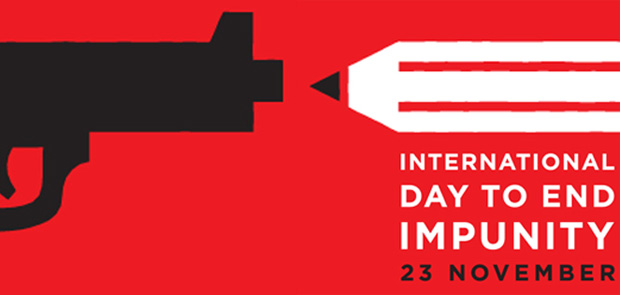
Tomorrow is International Day To End Impunity. “When someone acts with impunity, it means that their actions have no consequences” explains IFEX, the global freedom of expression network behind the campaign. Since 1992, 600 journalists have been killed with impunity — that is 600 lives taken with all or some of those culpable not being being held responsible. Countless others — writers, activists, musicians — have joined their ranks, simply for exercising their right to freedom of expression.
This year has only added to the grim statistics. By the middle of January, six journalists had already been murdered. We are now getting close to the end of 2013, and 73 more journalists and two media workers have suffered the same fate — 48 in cases directly connected to their work, 25 with motives still unconfirmed. Out of these, 15 were killed without anyone — perpetrators or masterminds — convicted.
Russia is notorious for its culture of impunity. In July this year, Akhmednabi Akhmednabiev, a Russian journalist reporting on human rights violations in the Caucasus, was shot dead. In 2009 he had been placed on an “execution list” on leaflets distributed anonymously, and had in the past also received death threats. In January he survived an assassination attempt which local authorities reportedly refused to investigate. His case is still classed as murder with impunity.
Pakistan is also an increasingly dangerous place to work as a journalist. Twenty seven of the 28 journalists killed in the past 11 years in connection with their work have been killed with impunity. In the last year alone, seven journalists have been murdered. Express Tribune journalist Rana Tanveer told Index he has received death threats and been followed for reporting on minority issues. In October, Karak Times journalists Ayub Khattak was gunned down after filing a report on the drugs trade.
In July, Honduran TV commentator Aníbal Barrow was kidnapped together with his family and a driver. The others were released, but after two weeks, Barrow’s body was found floating in a lagoon. He was the second journalists with links to the country’s president Porfirio Lobo Sosa — they were close friends — to have been killed over the past two years. Four members of the criminal group “Gordo” were detained in connection with the case, but at one point, there were at least three other suspects on the run.
In September, Colombian lawyer and radio host Édison Alberto Molina was shot four times while riding on his motorcycle with his wife. His show “Consultorio Jurídico” (The Law Office), aired on community radio station Puerto Berrío Stereo, and often took on the topic of corruption. The Inter American Press Association in October called on authorities to open “a prompt investigation into the murders” of him and news vendor and occasional stringer José Darío Arenas, who was also killed in September.
Meanwhile in Mexico, a country for many synonymous with impunity for crimes against the media, three journalists were murdered in 2013. The state public prosecutor’s offices has yet to announce any progress in the cases of Daniel Martínez Bazaldúa, Mario Ricardo Chávez Jorge and Alberto López Bello, or disclose whether they are linked to their work. Notorious criminal syndicate Zetas took responsibility for the murder of Martínez Bazaldúa and warned the police about investigating the case. He was a society photographer and student, only 22 at the time of his death. Chavez Jorge, founder of an online newspaper, disappeared in May and his body was found in June, but in August the state attorney’s office said they did not have a record of his death. López Bello was a crime reporter who had published stories on the drugs trade.
This year, 20 journalists — from Naji Asaad in January to Nour al-Din Al-Hafiri in September — have also lost their lives covering the ongoing tragedy of the Syrian civil war. Their loved ones, like those of all the civilians killed, will have to wait for justice.
It is also worth noting that while an unresolved or uninvestigated murder is the most serious and devastating manifestation of impunity, it is not the only one. Across the world, journalists are being attacked and intimidated without consequences. In August there was a two-hour long raid on the home of Sri Lankan editor and columnist Mandana Ismail Abeywickrema, who recently started a journalists’ trade union. Despite her receiving threats related to her work prior to the attack, it was labelled a robbery by the police. Bahraini citizen journalist Mohamed Hassan experienced similar incident, also in August, when he was arrested and his equipment seized during a night-time raid. His lawyer Abdul Aziz Mosa was also detained and his computer confiscated, after tweeting about his client being beaten. In October, a group of Azerbaijani journalists were attacked by a pro-government mob while covering an opposition rally in the town of Sabirabad. One of the journalists, Ramin Deko, told Index of regular threats and intimidation.
International Day To End Impunity is a time to reflect on these staggering figures and the tragic stories behind them. More importantly, however, it represents an opportunity to stand up and demand action. Demand that Russia’s President Vladimir Putin, Mexico’s President Enrique Peña Nieto, Pakistan’s President Mamnoon Hussain and the rest of the world’s leaders provide justice for those murdered. Demand an end to the culture of impunity in which journalists, writers, activists, lawyers, musicians and others can be intimidated, attacked and killed simply for daring to speak truth to power. Visit the campaign website to see how you can take action.
