
Index Index – International free speech round up 28/01/13
On 24 January, thousands of priceless manuscripts were destroyed in a fire started by Islamist militants leaving Mali. The South African — funded library had been torched by the rebel fighters after French and Malian troops closed in on their escape from the Saharan city of Timbuktu, burning it to the ground. The newly constructed Ahmed Baba Institute housed more than 20,000 scholarly manuscripts and contained fragile documents dating back to the 13th century. The city’s Mayor Halle Ousmane told the press today (28 January) that he was unable to share the extent of the damage to the building and that French and Malian troops were sealing the area today. A Tuareg-led rebellion captured the city from the government on 1 April, torching the home of a member of parliament and the office of the Mayor.

President Mahmoud Ahmadinejad: State security forces have arrested several journalists in Iran ahead of June’s presidential election
The offices of five media publications were raided by Iran’s State Security Forces, it was reported on 27 January. At least ten arrests were made for “cooperating with anti-revolutionary media” after the offices of daily reformist newspapers Bahar, Arman, and Shargh were raided, as well as Aseman magazine headquarters and ILNA news agency offices. Staff were also filmed and documents were confiscated. The prosecutor’s office is expected to release a statement on the raids, alleged to have been a campaign of intimidation ahead of the June presidential elections. Journalists reported to have been arrested include Sassan Aghaei, Emili Amraee, Motahareh Shafiee, Pejman Mousavi, Nasrin Takhayori, Suleiman Mohammadi, Saba Azarpeik, Narges Joudaki, Pourya Alami, Akbar Montajebi and Milad Fadayi-Asl. The specific reason for arrest has yet to be made, but journalists are accused of cooperating with anti-revolutionary Persian language media forces outside of the country, many of whom are living in exile and facing threats from the government.
Twenty-two Nepalese journalists have fled their home in the western district of Dailekh following death threats from the government. The warning from the ruling Unified Communist Party of Nepal (UCPN) came following prime minister Baburam Bhattarai’s visit to Dailakh, where journalists assembled in protest against his decision to call off an investigation into the death of journalist Dekendra Raj Thapa. A colleague of the protestors, Thapa had been kidnapped and murdered four years ago, allegedly by five members of the UCPN. Authorities responded by warning the journalists they could face the same fate as Thapa if they did not disperse, and proceeded to raid the offices of newspaper Hamro Tesro Aankha. The daily publication was forced to cease printing indefinitely, along with weekly Sajha Pratibimba. The radio stations Dhruba Tara and Panchakoshi FM was also forced to stop broadcasting.
An Arabic language newspaper in Sudan was seized by Sudan’s National Intelligence and Security Services (NISS) on 22 January. More than 14,000 copies of Al-Sudani were destroyed without a reason. The once independent newspaper was bought by a member of the ruling National Congress Party and now reports the political views of the owner. On 5 January, opposition leaders had met in Ugandan capital Kampala to discuss how to consolidate their power against the country’s government. Intelligence and security services then banned all media outlets from printing anything about the outcome of an agreement signed at the meeting. Last year saw the seizure of more than 20 newspapers, both pro-government and publications critical 0f authorities.
A tree-top anti-abortion protestor who describes himself as an “open-air preacher” has been banned from Washington DC after he attempted to shout down US President Barak Obama during his inauguration ceremony. Rives Grogan was arrested for disorderly conduct on 21 January by Washington police after he scaled a tree and shouted repeatedly over the president. Local judge Karen Howze ordered on 22 January that he be arrested should he step foot into the country’s capital before his court appearance on 25 February. Grogan, who said he has been arrested around 30 times in 19 years, said that he had never been banned from an entire city before, claiming the move violated his first amendment rights. Prosecutors said Grogan was arrested for breaking tree branches during his climb, endangering the lives of himself and others.


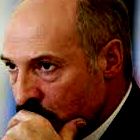 Mike Harris explains how modern authoritarian regimes censor their citizens