20 Nov 2015 | Croatia, Europe and Central Asia, mobile, News
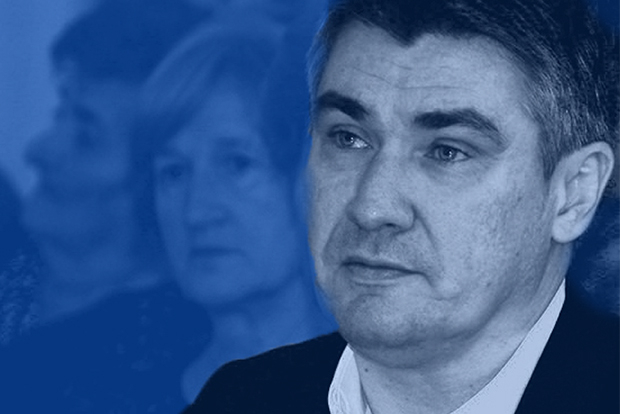
Croatian prime minister Zoran Milanović. Original image by SDP Hrvatske
A worrying escalation of attacks on the media in Croatia has been recorded by the Index’s Mapping Media Freedom project in the last three months. Since 1 September there have been 13 attacks, compared with 3 in the same period last year.
In August, we reported an increase in media violations in Croatia. Deaths, physical assaults and intimidation had been plaguing the Croatian media for months. Increasing violence is still undermining media freedom in Croatia.
Hannah Machlin, Index’s Mapping Media Freedom project officer, said: “The increasing amount of violence against Croatian journalists is quite alarming. In reaction to the migrant crisis, there’s been a particularly high number of cases on the Hungarian/Croatia border.”
The Croatian constitution guarantees freedom of expression and the press, and “these rights are generally respected in practice”. Freedom House does, however, acknowledge that journalists face political pressure, intimidation and the “occasional” attack. According to Freedom House, Croatia has been a “free” country for some years.
Below, Index on Censorship details some of the worst cases from Croatia since September.
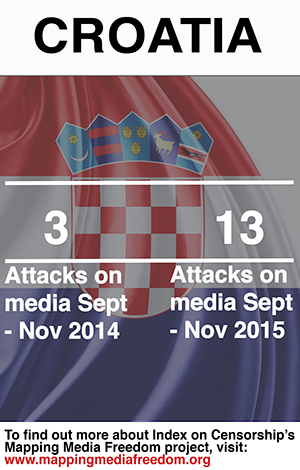
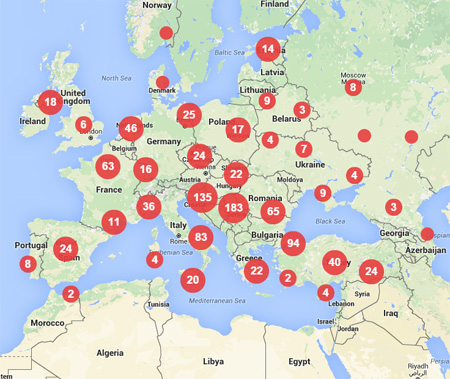
Overall attacks, including violence, intimidation, loss of employment and censorship of work
1. Media workers assaulted by police at Serbian border
In early October, Croatia opened its border with Serbia, easing one of the main areas for congestion for refugees trying to make their way north. On 19 October, Mapping Media Freedom recorded that media workers were harassed and assaulted by Croatian police on the border near the Bapska-Berkasovo crossing. Regional N1 television reported that the Croatian police had also confiscated the journalists’ equipment.
“When they moved against me, I shouted that I was an AFP photojournalist and that their colleagues had checked my ID this morning,” Andreja Isakovic told N1. “They asked me to hand over the cards. One of them ran towards me, caught up with me and threw me into the mud. They took away my cameras in a savage manner and threw them into an orchard on the Croatian side, so I could not reach them. They did the same to my colleague from England.”
2. Greek journalists attacked by masked assailants
In mid-October, two Greek journalists, George Stasinopoulos and Dionisis Verveles, were attacked by unidentified individuals while walking near a sporting event in Zagreb. Two men wearing face masks stopped the journalists on a street, asking them to identify themselves and their origin. When the two colleagues attempted to run away, they were attacked.
One journalist was beaten and the other was threatened by one of the assailants who was brandishing a knife. When the journalists began shouting that they were members of the press, the attackers fled the scene.
3. Prime minister’s father threatens journalist
Velimir Bujanec, host of the controversial TV show Bujica, was verbally assaulted by Stipe Milanović, father of Croatian prime minister, Zoran Milanović. Gordan Malic, a local freelance investigative journalist based in Croatia, was also threatened. Around noon on 3 October in a coffee bar in the center of Zagreb, Stipe Milanović allegedly said that “Bujanec and Gordan Malic should be beaten up”. There were three witnesses to his comment.
Bujanec reported to the media and posted it on Facebook. After speaking with his lawyer, he also reported the incident to the police and is now reportedly pressing charges against Milanović for verbal assaults and threats.
4. Journalist’s car tires slashed
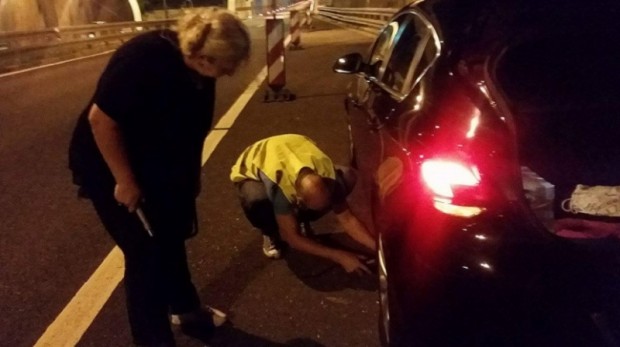
Suzana Trninic is a journalist with the Serbian television broadcaster B92. On 24 September, while travelling to a media festival in Rovinj with Belgrade license plates on her car, she and her team stopped for coffee at a petrol station in Grobnik. When they returned, one of the car’s tires had been slashed.
There was visible sticker press on the vehicle, Trninic said. She did not want to report the incident to the police and media on the day as she did not want to distract from the ongoing border crisis between Serbia and Croatia.
Trninic believes the incident is connected with her being a Serbian journalist.
5. Asylum seeker attacks TV crew
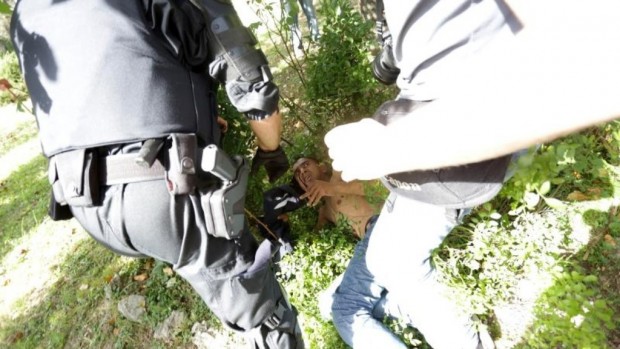
“I’ll kill you!” yelled the assailant as a stone hit the cameraman. Click image for video. Credit: Večernji.hr
On Thursday 17 September 2015, an asylum seeker from Kosovo began shouting threats and then threw a brick at the TV Mreza crew reporting at Hotel Porin. One cameraman was injured. The assailant was immediately restrained by other journalists until riot police arrived and detained him.
Hotel Porin is both a reception and registration centre where asylum applications are completed, including fingerprinting and medical examinations. As Croatian media has reported, almost all refugees are polite and grateful and all have the right to leave the hotel and walk around Dugavama.
Details of attacks on the media across Europe can be found at Index on Censorship’s Mapping Media Freedom website. Reports to the map are crowdsourced and then fact-checked by the Index team.
Mapping Media Freedom
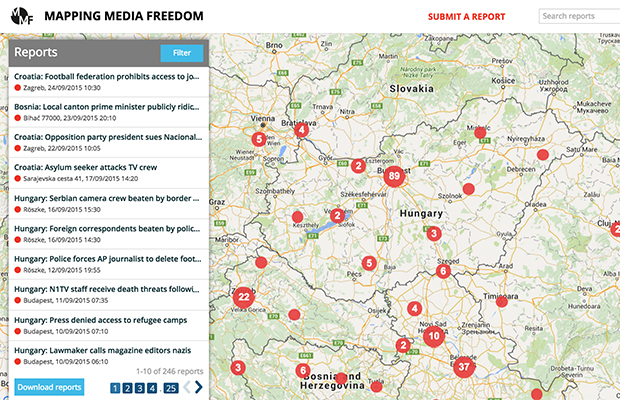
Click on the bubbles to view reports or double-click to zoom in on specific regions. The full site can be accessed at https://mappingmediafreedom.org/
|
6 Oct 2015
6 October 2015
This report is also available in PDF format
Journalists and media workers in Turkey, Hungary and the Balkans are facing increased hostility as they do their jobs, according to a survey of the verified incidents reported to Index on Censorship’s Mapping Media Freedom project.
|
| Since May 2014, Index on Censorship’s Mapping Media Freedom project has been documenting media violations throughout the European Union, including candidate and neighbouring countries. The project is an interactive platform that allows the reporting, mapping and monitoring of threats to media freedom. Mapping Media Freedom is run in partnership with the European Federation of Journalists and Reporters Without Borders, and is partially funded by the European Commission. The over 1,000 violations that have been recorded so far have exposed the dangers faced by journalists across the continent. The project expanded in September to cover Russia, Ukraine and Belarus, in reaction to new draconian measures and violence in the region. New partner affiliations have also been formed in order to increase support for media workers, including with Media Legal Defence Initiative, Human Right House Kiev and European Youth Press.
Between 1 May and 30 September 2015, 285 violations of media freedom have been recorded and verified. More than a third of the incidents – 108 cases – included harassment against journalists. |
 |
| Cases include that of Saša Leković, the president of the Croatian Association of Journalists, who received a parcel containing a death threat, as well as a number of threats on social media. And in Italy, founders of local news site Infonodo.org were threatened by the former Mayor of Seregno, Giacinto Mariani. While standing in front of the town’s city hall, Mariani told camera crews: “These people must die.”
As we noted in our May 2015 report, Turkey is, again, the country that has received the most reports of media violations. In the run up to the country’s general elections in November, press freedom continues to deteriorate, with multiple cases reported of media organisations being raided and journalists being detained, imprisoned or deported.
The map has also indicated an increase in violence against journalists, particularly within Turkey, Hungary and the Balkans.
The five countries with the most verified reports are: Turkey (40), Italy (38), Hungary (20), France (18) and Croatia (17). The successor nations to the former Yugoslavia (Serbia, Croatia, Bosnia, Macedonia, Montenegro, Kosovo and Slovenia) had a combined total of 55 out of 285 incidents that have been verified by regional correspondents.
Hannah Machlin, Index on Censorship’s project officer for the Mapping Media Freedom project says: “Independent media outlets in the region, particularly in Russia, have become increasingly under threat for multiple reasons, from restrictive government policies to ‘soft-censorship’ techniques, such as the withdrawal of advertising contracts. Expanding the project will further our understanding of these threats through specific case studies and enable us to support media outlets under pressure.” |
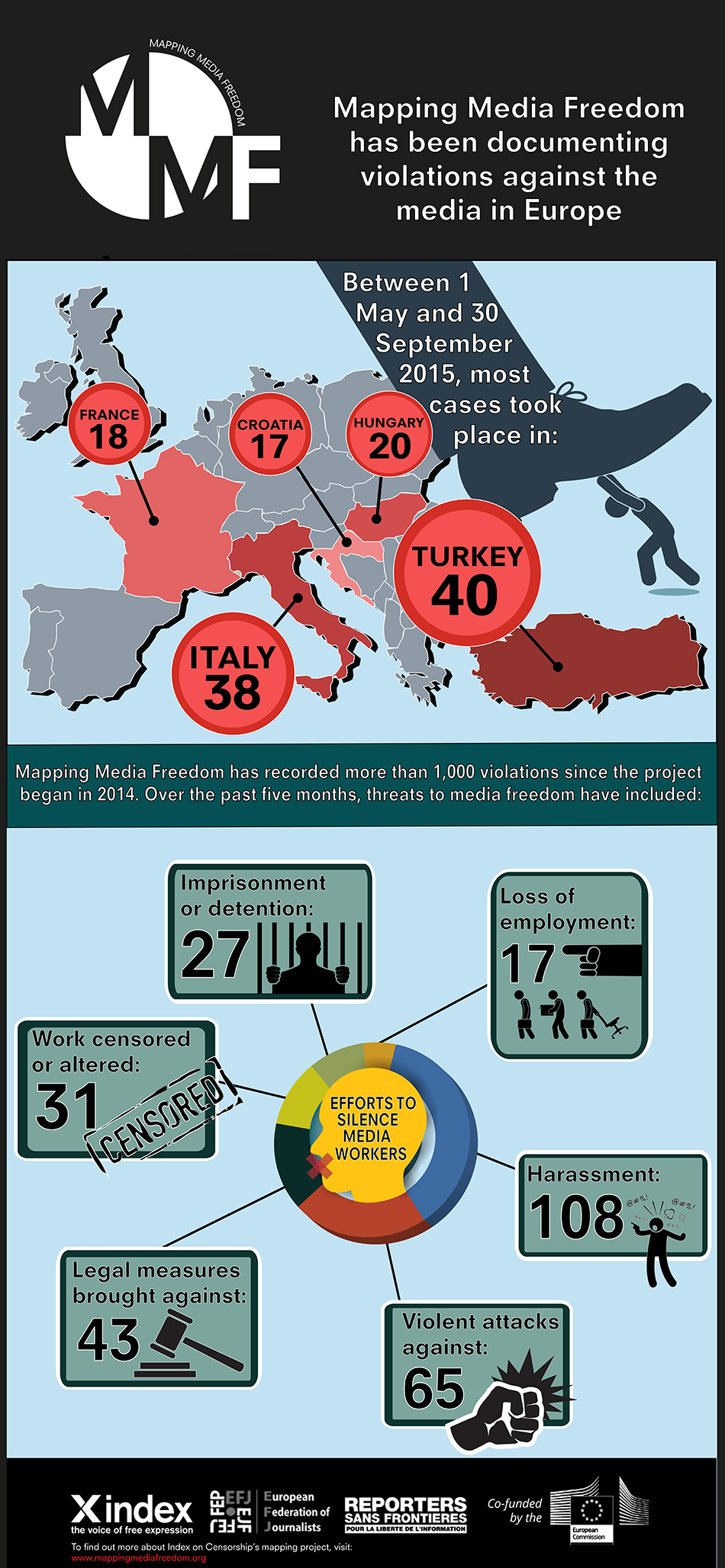
Countries with the most reports
These are the five countries with the most incidents reported to mappingmediafreedom.org between May and 30 September 2015. The project includes all European Union member states, candidates for entry and neighbouring countries, Russia, Belarus and Ukraine. Cases cited are the most recent verified reports for that country. |
 |
|
Turkey 40 reports
Turkish police raided the offices of Koza-Ipek Holding, which owns five independent media outlets: dailies Bugun and Millet, TV stations Bugun TV and Kanalturk and news website BGNNews |
|
 |
|
Italy 38 reports
Freelance journalist Gennaro Teddesco’s car was set on fire in the town of San Giovanni Rotondo. Teddesco and others have recently been targeted for their investigations into local business practices and criminal behaviour |
|
 |
|
Hungary 20 reports
A camera crew for Serbian public television was beaten by Hungarian police at the Serbian border while covering a violent clash between security forces and refugees trying to cross into Hungary |
|
 |
|
France 18 reports
An investigative documentary on French President François Hollande and former President Nicolas Sarkozy was cancelled 15 days before it was due to air on broadcaster Canal+ |
|
 |
|
Croatia 17 reports
Two armed assailants burst into the office of weekly newspaper Hrvatski Tjednik, injuring the graphic designer, damaging the offices and stealing several thousand kuna |
|
Case Studies
Across Europe, censorship and media violations take different forms depending on the country. These two reports are expanded from incidents that were logged to the map. Read more in-depth reporting. |
Turkey
Vice news journalists detained on terror charges
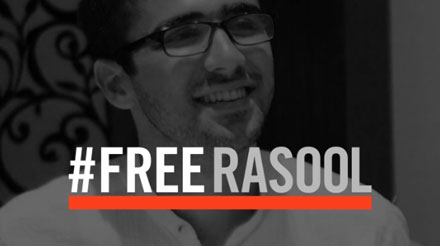
When three journalists working for Vice News were arrested on terror charges in Turkey at the end of August, Index joined other organisations to launch an emergency campaign calling for the release of the reporters, while putting them in touch with free expression lawyers in Turkey. We wrote to the UK Foreign Office the following day to demand the British government step up pressure on Turkish authorities over the arrest of the journalists. The two British journalists remained behind bars for 11 days, but their Iraqi colleague Mohammed Rasool is still being detained pending trial. Rasool worked as a fixer for the two other journalists; he acted as a translator, a local guide and helped arrange the story. The role of a fixer is vital not only to sourcing information on a granular level, but also for helping ensure the safety of the foreign journalists.
Rasool has been charged with “knowingly and willingly helping an organised criminal group without being part of the hierarchical structure of the group”, a provision increasingly being invoked against journalists, especially Kurds and those associated with the political left in Turkey. The prosecution authorities have indicated that they wish to examine the contents of an allegedly encrypted file on Rasool’s computer before making this decision.
Rasool denies having any incriminating encrypted material on his computer. We are currently working with VICE, Turkish lawyers and other organisations to secure his release. |
|
Russia/Россия
Kommersant website editor-in-chief fired after interview with opposition figure
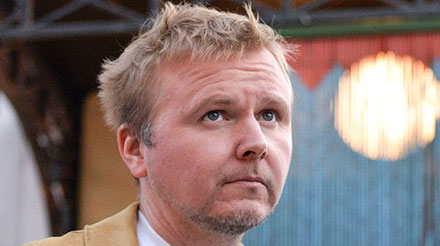
Editor-in-chief of Kommersant website, Andrey Konyakhin, was fired after a public interview with prominent opposition figure, Aleksei Navalny. On 4 September 2015, the interview was broadcasted through Kommersant-FM radio, and the transcript was published on the website. In an interview with RBC news portal, several Kommersant journalists claim it’s possible the interview is the reason for Konyakhin’s dismissal, noting large edits were made to the text after the original went live. The interview was dedicated to the opposition’s electoral campaign for the 13 September regional elections, and to an opposition rally scheduled for 20 September. Over the course of the interview, Navalny also claimed that president Vladimir Putin was involved with the crash of flight MH17 over eastern Ukraine.
“Navalny saying such notions in a live broadcast is not that important, but the fact it was shared on the website, caused the scandal within the publishing house”, a source from Kommersant stressed.
There is no official explanation for the dismissal so far. Konyakhin has also not commented on the incident.
The edited version of the interview can still be found on the Kommersant website. There is the following disclaimer under the material: “Published in abridged form. Under the recommendation of the Legal Department, the editorial office decided to delete a part of the interview which could be considered as violation of the Article 4 of the Law No. 2124-1 from 27.12.1991 “On mass media”.” |
|
This report is also available in PDF format
| A note on methodology: Mapping Media Freedom is based on crowd-sourced information. The number of violations does not reflect the severity of the cases reported to the map. |
Co-Funded by the
 |
28 Sep 2015 | Europe and Central Asia, Hungary, Mapping Media Freedom, mobile, News, Serbia
At least eight journalists were beaten and three detained as they covered a clash between refugees and the Hungarian police at the border with Serbia on 16 September.
Among those attacked were Swedish photographer Meli Petersson Ellafi, Jordan Davis, a journalist at Swiss RTS, and an entire film crew working for Radio Television of Serbia. They were covering events at the Horgoš-Röszke highway border crossing, which the Hungarian authorities had blocked the day before, leaving around 2,000 refugees stranded on the Serbian side.
On 16 September, at around 2:30 PM local time, refugees attempted to break through a gate into Hungary. While most were protesting peacefully, a small number threw stones and bottles across the fence at the Hungarian riot police. The police responded with tear gas, pepper spray and water cannons.
“At some point, the riot police retreated from the fence and the refugees managed to open the gate,” Timea Becková, who works for Slovakian newspaper Denník N, recalls. Confusion followed, with many refugees thinking the Hungarian authorities would let them in, so they walked towards the riot police on the Hungarian side. Several dozen journalists on the Serbian side followed the crowd.
At around 5:30 PM, TEK, the Hungarian anti-terror SWAT unit, equipped with sidearms, helmets and face masks, started pushing the refugees back towards Serbia.
“As I was moving backwards, I stopped for a moment to help an old man who fell and risked being trodden by riot police, which is when an officer hit me with a baton,” Becková said. She repeatedly told police in Hungarian that she is a journalist, but it made no difference.
“Suddenly the TEK guys, not the riot police, started running towards us — it was mayhem,” says Warren Richardson, an Australian photographer. Despite having two cameras, he was grabbed from behind by an officer.
“Clearly he was there to beat, not to ask questions,” Richardson told Index on Censorship, adding that he was standing on ‘no mans’ land’ between Serbia and Hungary. “From there they beat me into Hungary, then took me from the border to the police station illegally. They kidnapped me.”
“Law enforcement lost control of the situation,” Becková said. While she doesn’t hold a grudge against TEK, she says the events that followed were outrageous. She was forcefully brought back to the Hungarian side — with her hands tied tightly with a plastic wrap — where she was thrown to the ground.
She was later handed over to the regular police along with Richardson, who was kicked in the head and chest, and the Polish journalist, Jacek Tacik, who suffered a head wound. They were taken to a police station in Szeged along with a number of detained refugees.
There they were questioned on suspicion of having crossed the border illegally. In addition, Becková was accused of inciting rebellion and Tacik was told he had assaulted a policeman. However, this accusation did not emerge again during his interrogation, he told Index.
During questioning, Richardson refused to cooperate. “I stood up for myself. They were making up laws. They never took my name, personal address or fingerprints,” he said.
After interrogations that lasted up to 13 hours, the journalists were released and the charges were dropped.
In a statement, the Hungarian police denied beating the journalists. “The police — in accordance with the law — used necessary and proportional force against the members of an aggressive group that was using instruments that could cause serious harm to the police protecting the border of Hungary and the European Union. The media workers stayed at their own risk in an area where the police — after a proper warning — used coercive instruments.”
Hungarian government spokesman Zoltan Kovacs said it was a surprise to find journalists among the chaos. He said that in situations like this, the safety of journalists cannot be guaranteed, therefore they should stay away. A policeman is not in the position to judge who is a troublemaker and who represents the media, he added.
The European Federation of Journalists (EFJ) has denounced the attack. “It is incomprehensible to see an EU country like Hungary constantly violating press freedom and human rights. The European Commission and international institutions must take action against these serious violations,” EFJ President Mogens Blicher Bjerregaard said.
“It is a prerequisite for EU member states to respect the EU Charter on fundamental rights which sets out standards on media freedom and freedom of expression.”
The incident was also condemned by the Committee to Protect Journalists. “We are appalled by the police violence against journalists covering this world story,” CPJ Europe and Central Asia Program Coordinator Nina Ognianova said. “The Hungarian government must make a clear and unequivocal statement that it will not tolerate such behavior.”
Mapping Media Freedom
Click on the bubbles to view reports or double-click to zoom in on specific regions. The full site can be accessed at https://mappingmediafreedom.org/
|
This article was published on 16 September 2015 at indexoncensorship.org
25 Sep 2015 | Bahrain Statements, Campaigns, mobile, Statements
The Bahrain Institute for Rights and Democracy, alongside 16 NGOs including Index on Censorship, today voiced support for the UN joint-statement on human rights in Bahrain. The statement, delivered by Switzerland at the 30th session of the UN Human Rights Council, was co-signed by 33 countries, including 19 EU states and the United States of America.
The statement remains open for additional signatories until the end of the Human Rights Council session on 2 October 2015. The NGOs invite states who have not signed to do so and call on those who have to continue exerting collective pressure for human rights progress in Bahrain.
Letter
To the Governments of: Albania, Argentina, Bosnia and Herzegovina, Brazil, Canada, Croatia, Cyprus, Finland, Greece, Hungary, Italy, Malta, Mexico, Republic of Korea, Serbia, Slovak Republic, and Spain
24 September 2015
Excellencies,
We, the undersigned non-governmental organisations, write to voice our support for the joint statement on the human rights situation in Bahrain delivered by Switzerland at the 30th Session of the Human Rights Council (HRC).
Since the last joint statement on Bahrain in June 2014, the government has continued to curtail the rights to freedom of expression, association and peaceful assembly. Human rights defenders, political opposition leaders, members of the media, and youth have faced intimidation, arrest, arbitrary detention, unfair trials and acts of reprisal by the authorities. Furthermore, negotiations of the Office of the High Commissioner for Human Rights’ (OHCHR) for a programme of technical capacity building in Bahrain have stalled in the period since the June 2014 joint statement.
We urge your government, therefore, to sign the joint statement on Bahrain delivered by Switzerland at the HRC’s 30th session in order to refocus international attention on human rights in Bahrain and encourage the government of Bahrain to constructively address its ongoing violations.
International pressure on Bahrain continues to assist in addressing human rights violations in Bahrain, as reflected by the decision of the King of Bahrain to release prominent human rights defender Nabeel Rajab under a royal pardon after he spent over four months in prison for a tweet criticising the government.
It is critical, therefore, to take action now to reaffirm the high level of international concern over human rights conditions in Bahrain. To abandon collective pressure on Bahrain at a time when the situation is continuing to deteriorate would send an entirely wrong message to the Bahraini government, and undermine both internal and external efforts to foster genuine reform.
Switzerland has indicated that this joint statement will be open for additional signatories throughout the session. We therefore call on your government to recommit to supporting human rights in Bahrain, and to add your endorsement to this joint statement.
Sincerely,
Americans for Democracy & Human Rights in Bahrain (ADHRB)
Amnesty International
ARTICLE 19
Bahrain Centre for Human Rights (BCHR)
Bahrain Institute of Rights and Democracy (BIRD)
Cairo Institute for Human Rights Studies (CIHRS)
CIVICUS: World Alliance for Citizen Participation
English Pen
European Center for Constitutional and Human Rights (ECCHR)
European Centre for Democracy and Human Rights (ECDHR)
Human Rights Watch
Index on Censorship
International Service for Human Rights (ISHR)
Pen International
Rafto Foundation
The International Federation for Human Rights (FIDH)
World Organization Against Torture (OMCT)