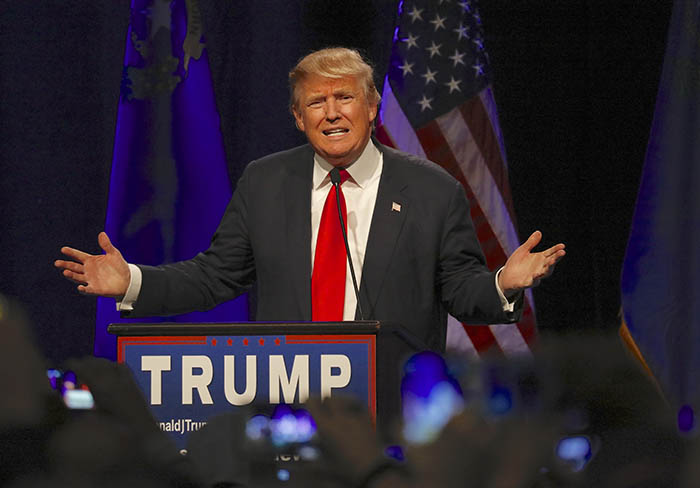
Today, more than thirty cultural institutions and human rights organisations around the world, including international arts, curators’ and critics’ associations, organisations protecting free speech rights, as well as US based performance, arts and creative freedom organisations and alliances, issued a joint statement opposing United States President Donald J. Trump’s immigration ban. Read the full statement below.
On Friday, January 27th, President Trump signed an Executive Order to temporarily block citizens of seven predominantly Muslim countries from entering the United States. This order bars citizens of Iran, Iraq, Libya, Somalia, Sudan, Syria, and Yemen from entering the United States for 90 days. It also suspends the entry of all refugees for 120 days and bars Syrian refugees indefinitely.
The organisations express grave concern that the Executive Order will have a broad and far-reaching impact on artists’ freedom of movement and, as a result, will seriously inhibit creative freedom, collaboration, and the free flow of ideas. US border regulations, the organisations argue, must only be issued after a process of deliberation which takes into account the impact such regulations would have on the core values of the country, on its cultural leadership, and on the world as a whole.
Representatives of several of the participating organisations issued additional statements on the immigration ban and its impact on writers and artists:
Helge Lunde, Executive Director of ICORN, said, “Freedom of movement is a fundamental right. Curtailing this puts vulnerable people, people at risk and those who speak out against dictators and aggressors, at an even greater risk.”
Svetlana Mintcheva, Director of Programs at the US National Coalition Against Censorship (NCAC), said, “In a troubled and divided world, we need more understanding, not greater divisions. It is the voices of artists that help us understand, empathise, and see the common humanity underlying the separations of political and religious differences. Silencing these voices is not likely to make us any safer.”
Suzanne Nossel, Executive Director of PEN America, said, “The immigration ban is interfering with the ability of artists and creators to pursue their work and exercise their right to free expression. In keeping with its mission to defend open expression and foster the free flow of ideas between cultures and across borders, PEN America vows to fight on behalf of the artists affected by this Executive Order.”
Diana Ramarohetra, Project Manager of Arterial Network, said, “A limit on mobility and limits on freedom of expression has the reverse effect – to spur hate and ignorance. Artists from Somalia and Sudan play a crucial role in spreading the message to their peers about human rights, often putting themselves at great risk in countries affected by ongoing conflict. Denying them safety is to fail them in our obligation to protect and defend their rights.”
Ole Reitov, Executive Director of Freemuse, said, “This is a de-facto cultural boycott, not only preventing great artists from performing, but even negatively affecting the US cultural economy and its citizens rights to access important diversity of artistic expressions.”
Shawn Van Sluys, Director of Musagetes and ArtsEverywhere, said, “Musagetes/ArtsEverywhere stands in solidarity with all who protect artist rights and the freedom of mobility. It is time for bold collective actions to defend free and open inquiry around the world.”
A growing number of organisations continue to sign the statement.
JOINT STATEMENT REGARDING THE IMPACT OF THE US IMMIGRATION BAN ON ARTISTIC FREEDOM
Freedom of artistic expression is fundamental to a free and open society. Uninhibited creative expression catalyses social and political engagement, stimulates the exchange of ideas and opinions, and encourages cross-cultural understanding. It fosters empathy between individuals and communities, and challenges us to confront difficult realities with compassion.
Restricting creative freedom and the free flow of ideas strikes at the heart of the core values of an open society. By inhibiting artists’ ability to move freely in the performance, exhibition, or distribution of their work, United States President Trump’s January 27 Executive Order, blocking immigration from seven countries to the United States and refusing entry to all refugees, jettisons voices which contribute to the vibrancy, quality, and diversity of US cultural wealth and promote global understanding.
The Executive Order threatens the United States safe havens for artists who are at risk in their home countries, in many cases for daring to challenge repressive regimes. It will deprive those artists of crucial platforms for expression and thus deprive all of us of our best hopes for creating mutual understanding in a divided world. It will also damage global cultural economies, including the cultural economy of the United States.
Art has the power to transcend historical divisions and socio-cultural differences. It conveys essential, alternative perspectives on the world. The voices of cultural workers coming from every part of the world – writers, visual artists, musicians, filmmakers, and performers – are more vital than ever today, at a time when we must listen to others in the search for unity and global understanding, when we need, more than anything else, to imagine creative solutions to the crises of our time.
As cultural or human rights organisations, we urge the United States government to take into consideration all these serious concerns and to adopt any regulations of United States borders only after a process of deliberation, which takes into account the impact such regulations would have on the core values of the country, on its cultural leadership, as well as on the world as a whole.
African Arts Institute (South Africa)
Aide aux Musiques Innovatrices (AMI) (France)
Alliance for Inclusion in the Arts (USA)
Arterial (Africa)
Artistic Freedom Initiative (USA)
ArtsEverywhere (Canada)
Association of Art Museum Curators and Association of Art Museum Curators Foundation
Association Racines (Morocco)
Bamboo Curtain Studio (Taiwan)
Cartoonists Rights Network International
Cedilla & Co. (USA)
Culture Resource – Al Mawred Al Thaqafy (Lebanon)
International Committee for Museums and Collections of Modern Art (CIMAM)
College Art Association (USA)
European Composer and Songwriter Alliance (ECSA)
European Council of Artists
Freemuse: Freedom of Expression for Musicians
Index on Censorship: Defending Free Expression Worldwide
Independent Curators International
International Arts Critics Association
International Network for Contemporary Performing Arts
The International Cities of Refuge Network (ICORN)
Levy Delval Gallery (Belgium)
Geneva Ethnography Museum (Switzerland)
National Coalition Against Censorship (USA)
New School for Drama Arts Integrity Initiative (USA)
Observatoire de la Liberté de Création (France)
On the Move | Cultural Mobility Information Network
PEN America (USA)
Queens Museum (USA)
Roberto Cimetta Fund
San Francisco Art Institute (USA)
Stage Directors and Choreographers Society (SDC) (USA)
Tamizdat (USA)
Vera List Center for Art and Politics, New School (USA)[/vc_column_text][/vc_column][/vc_row][vc_row][vc_column][vc_basic_grid post_type=”post” max_items=”4″ element_width=”6″ grid_id=”vc_gid:1486570424977-7a30af48-045a-3″ taxonomies=”3784″][/vc_column][/vc_row]
Films, like every kind of art, are often made purely for cinema’s sake – but sometimes they aren’t. Some of the most iconic recent films have actually played a major role in inspiring rights’ movements and protests around the world.
Ten Years, recipient of Hong Kong’s best film award on 3 April 2016, is just one of the latest examples of how cinema can side up with rights: films have often given protests momentum and a cultural reference.
Sometimes, directors have spoken out publicly in favour of protests; other times the films themselves have documented political abuses. In other cases, protesters and activists have given a film a new life, turning it into an icon for their protests on social media even against the directors’ original ideas.
Here are a few recent cases of popular films that have become symbols of rights’ movements around the world:
Directed by Chow Kwun-Wai with a $64,500 budget, Ten Years is a “political horror” set in a dystopian 2025 Hong Kong. In the five short stories told in the film, Chow Kwun-Wai warns against the effects that ten years of Beijing’s influence would have on Hong Kong: The erosion of human rights, the destruction of local culture and heavy censorship.
According to the South China Morning Post, Ten Years was not intended to be a political film, but the political content is explosive to the extent that some critics have dubbed it “the occupy central of cinema”.
China Digital Times reports that both the film and the awards ceremony are banned in China. On Sina Weibo, China’s leading social network, the searches “Ten Years + Film Awards” (十年+金像) and “Ten Years + film” (十年+电影) are blocked from results.
Birdman
Winner of a 2015 Oscar, Birdman’s plot is not about rights or protests: The film told the story of a popular actor’s struggles years after his success impersonating a superhero.
But Mexican director’s Alejandro González Iñárritu’s acceptance speech turned it into the symbol of a protest against Mexican President Enrique Peña Nieto.
After asking for a respect and dignity for Mexican immigrants in the USA, Iñárritu said in his speech: “I want to dedicate this award for my fellow Mexicans, the ones who live in Mexico. I pray that we can find and build a government that we deserve.”
The speech came after the Mexican government declared the death of 43 students who went missing while organising a protest.
Iñárritu’s speech made Twitter erupt against Peña Nieto’s government under the hashtag #ElGobiernoQueMerecemos, “the government we deserve”.
Twitter user Guillermo Padilla said, “Now we are only missing a good ‘director’ in this country” – a play on words since “director” means both director and leader in Spanish.
The sci-fi blockbuster Hunger Games took a life of its own in Thailand, where student demonstrators turned the protagonist’s salute into a symbol of rebellion against the ruling junta.
In the film, set in a heavily oppressed country where every year young people are forced to fight to death in a nationally televised contest, protagonist Katniss Everdeen defies the central government and inspires a rebellion against totalitarian rule. Her three-finger salute becomes the symbol of the protest.
In Thailand, students started to use the three-finger salute as a symbol of rebellion after the military government took power with a coup on 22 May 2014 and clamped down on all forms of protest, censored the country’s news media, limited the right to public assembly and arrested critics and opponents. According to The New York Times, hundreds of academics, journalists and activists have been detained for up to a month.
The Guardian reported that social activist Sombat Boonngam-anong wrote on Facebook: “Raising three fingers has become a symbol in calling for fundamental political rights.”
Since then, using the salute in public in groups of more than five people has been prohibited through martial law.
V for Vendetta
V for Vendetta holds a special place among films about freedom of speech. In 2005, it was incredibly successful bringing the themes freedom of speech and rebellion against tyranny into the mainstream media debate.
In the film, a freedom fighter plots to overthrow the tyranny ruling on Britain in a dystopian future. The mask he always wears has the features of Guy Fawkes, an English Catholic who attempted to blow up the parliament on 5 November 1605.
The mask has since become an icon. According to The Economist, the mask has become a regular feature of many protests. Among others, it has been adopted by the Occupy movement and Julian Assange, the founder of WikiLeaks.
David Lloyd, author of the graphic novel on which the film is based, has called the mask a “convenient placard to use in protest against tyranny … It seems quite unique, an icon of popular culture being used this way.”
Suffragette
In 2015, the film historical drama Suffragette inspired a protest against the government’s cuts to women services in Britain.
The film shows the struggle for women’s rights that took place in the beginning of the 20th century, when Emmeline Pankhurst led an all-women fight to gain the right to vote.
Before the movie premiere in London’s Leicester Square, activists from the feminist group Sister Uncut broke away from the main crowd, and laid down on the red carpet.
According to The Independent, they chanted “It is our duty to fight for our freedom,” and held signs reading “Dead women can’t vote” and “2 women killed every week” to draw attention to domestic violence and cuts to women’s services.
One protester told The Independent: “We’re the modern suffragettes and domestic violence cuts are demonstrating that little has changed for us 97 years later.”
With UK-China relations warming, the president of the People’s Republic of China, Xi Jinping, will pay a state visit to the UK from 20-23 October. The UK government hopes the visit will help finalise multibillion-pound deals for Chinese state-owned companies to contribute to the building of two British nuclear power plants.
Many — including the Dalai Lama — are concerned that Prime Minister David Cameron and Chancellor George Osborne are putting the desire for profit above concern for human rights.
Xi may be staying in luxury at Buckingham Palace during his visit, but here are just five examples of how respect for free speech in China doesn’t get past the front door:
1. Locking up artists
The soccer-loving Chinese president is due to visit Manchester City Football Club’s stadium with Cameron during his visit. But will he make time for the new exhibition by Chinese artist and dissident Ai Weiwei in London? We won’t hold our breath.
The major retrospective of the artist’s work is currently on show at the Royal Academy of Arts. Ai — whose work is famous for addressing human rights abuses and corruption — has been harassed, beaten, placed under house arrest and imprisoned.
The current London exhibition almost didn’t go ahead as the British Embassy in Beijing turned down Ai’s request for a business visa in connection with his criminal conviction for tax fraud — an accusation he denies. British Home Secretary Theresa May eventually overturned the embassy’s decision, but only after a mass public outcry. This shouldn’t be the height of the British government’s efforts to address Chinese human rights abuses.
2. The use of online “opinion monitors”
China’s Terracotta Army, the 8,000-strong force of sculptures depicting warriors and horses, was purpose-built to protect emperor Qin Shi Huang, who died in 210 BC, in his afterlife. In the modern day, China’s army of “opinion monitors”, which has been purpose-built to protect China’s current leaders from criticism and dissent, dwarfs anything the Qin dynasty could muster.
China’s hundreds of millions of web users increasingly use blogs to condemn the state, but posts are routinely deleted by government employees. In 2012, monitors banned more than 100 search terms relating to the 25th anniversary of the Tiananmen Square protest of 1989 and even shut down Google services.
3. Banning books
Often overshadowed by China’s internet censorship, we shouldn’t forget that Chinese authorities have a rich history of restricting free expression in literature. In 1931, Lewis Carroll’s Alice’s Adventures in Wonderland was banned for its portrayal of anthropomorphised animals for fear children would regard humans and animals as equal. During Chairman Mao Zedong’s Cultural Revolution, all aspects of arts and culture had to promote and aid the revolution. Libraries full of historical and foreign texts were destroyed and books deemed undesirable were burned.
The country’s post-Mao transition has been marked by a commitment to “modernising”. While the Chinese populace has access to more information than ever before, their leaders’ continuation of banning books on grounds of non-conformity and deviance are anything but modern.
Publications which are still banned — often for perceived politically incorrect content — include the memoirs of Li Rui, a retired Chinese politician and dissident who caused a stir in the CCP by calling for political reform; Lung Ying-tai’s Big River, Big Sea about the Chinese Civil War; and Jung Chang’s best-selling Wild Swans, a history that spans a century, recounting the lives of three female generations in the author’s family.
4. Detaining activists
Recent years have been marked with an intensification of the crackdown on dissent. On 6 March 2015, just days before International Women’s Day, the Chinese government detained a number of high-profile feminist activists. They were accused of creating a disturbance and, if convicted, could have received three-year prison sentences.
The women had been linked to several actions over the years which highlight issues such as domestic violence and the poor provision of women’s toilets, obvious embarrassments to the authorities.
As a result of their detention, China’s small, but increasingly vocal feminist movement was dealt a heavy blow. Demonstrations were cancelled and debate was effectively silenced. Five of the activists were released fairly quickly, but five more were in prison until 13 April, with two being denied treatment for serious medical conditions while in custody.
5. Repressing Uyghur Muslims
China continues to persecute the largely Muslim minority Uyghurs of Xinjiang. A tough system of policies and regulations deny Uyghurs religious freedom and by extension freedom of expression, association and assembly.
The abuse of national security and anti-terror laws to persecute Uyghurs and further deny them freedom of expression was highlighted in the recent ban by the Chinese authorities on 22 Muslim names in Xinjiang in an apparent attempt to discourage extremism among the region’s Uyghur residents. Many children were barred from attending school unless their names were changed.
Ryan McChrystal is the assistant online editor at Index on Censorship
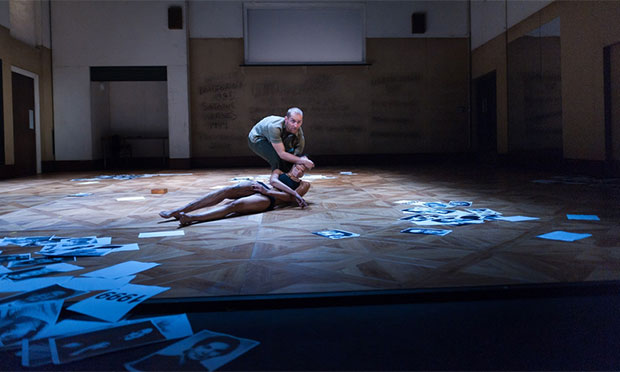
A scene from Can We Talk About This? (Photo: Matt Nettheim for DV8)
As part of our work on art, offence and the law, Julia Farrington, associate arts producer, Index on Censorship, interviewed Eva Pepper, DV8’s executive producer about how she prepared for potential hostility that the show Can We Talk About This? might provoke as it went on tour around the world in 2011-12.
Background
Can We Talk About This?, created by DV8’s Artistic Director Lloyd Newson, deals with freedom of speech, censorship and Islam. The production premiered in August 2011 at Sydney Opera House, followed by an international tour of 15 countries — Sweden, Australia, Hong Kong, France, Italy, Austria, Germany, Greece, Slovenia, Hungry, Spain, Norway, Taiwan and Korea and the UK between August 2011 and June 2012 — and was seen by a 60,000 people.
Extract from publicity of the show:
“From the 1989 book burnings of Salman Rushdie’s The Satanic Verses, to the murder of filmmaker Theo Van Gogh and the controversy of the ‘Muhammad cartoons’ in 2005, DV8’s production examined how these events have reflected and influenced multicultural policies, press freedom and artistic censorship. In the follow up to the critically acclaimed To Be Straight With You, this documentary-style dance-theatre production used real-life interviews and archive footage. Contributors include a number of high profile writers, campaigners and politicians.”
Q&A
Farrington: How did you set about working with the police for this tour?
Pepper: We focused on the UK with policing; I didn’t speak to any police forces in other countries at all, just in the UK cities we toured to: West Yorkshire Playhouse in Leeds; Warwick Arts Centre; Brighton Corn Exchange; The Lowry in Manchester and the National Theatre in London. But we did have a risk assessment and risk protocol that we shared with every venue we went to. We let them know the subject matter and the potential risks: security, safety of the audiences, media storms, safety of the people who were working on the show. They dealt either with their in-house security, or, in the UK, they would often alert the police as well.
Farrington: How did your preparations with police vary around the UK?
Pepper: We started with the Metropolitan Police, about six months before and told them our plans and that we would also contact other police forces. The National Theatre had their own contacts with the police who were already on standby. We still kept the MET events unit informed, but they [National Theatre] dealt with the police themselves. They were much more clued up, they had a head of security whom I briefed; we talked quite a lot. I made sure that he was copied in when anything a bit weird came up on the internet.
Our first venue was Leeds and we approached them about six weeks before the UK premiere. There was a bit of nervousness around Leeds, because of the larger Muslim population in the area. But we were only just beginning our liaison with the police and it took a little time to get a response. In the end we approached senior officers, but they often didn’t engage personally, just put us in touch with the appropriate unit to deal with.
Farrington: They didn’t see it as that important?
Pepper: They liked to be alerted that something might happen and they assured us that they were preparing. The venues also had their own police liaison; sometimes there was a bit of conflict if they had their own. I probably ruffled a few feathers when I went to a more senior officer.
Our starting point to the police was a very carefully worded letter which set out who we were. We didn’t ask permission to put it on we just alerted them that we might need police involvement. I did have some calls and a couple of meetings with officers, where they reiterated what is often said, which is that the police’s mandate is to keep the peace. It was made clear that they have as much of a duty to those people who want to protest or potentially might want to protest, as they have to allow us to exercise our freedom of expression. In Leeds nothing happened but there was a certain amount of nervousness around it.
Farrington: Where – at the venue?
Pepper: I think we were probably a bit nervous, and the police took it seriously enough. We had contact numbers to call. They were very much in the loop of the risk assessment.
Farrington: Was there a police presence on the night?
Pepper: I don’t remember seeing anybody. There was security of the venue of course, but regional venues only go so far with security. With some venues we were a little insistent that they get somebody upstairs and downstairs for example.
Farrington: And search bags, that kind of thing?
Pepper: We insisted people check in bags. The risk protocols weren’t invented for Can We Talk About This? They were really invented for To Be Straight With You [DV8’s previous show] and just tightened up for Can We Talk About This?. The risk protocols are just bullet points to get people thinking through scenarios.
Farrington: In general how would you describe your dealings with the police?
Pepper: I think generally supportive but we came to alert them that we might need them – there wasn’t a crisis. They said ‘thanks for letting us know let us deal with it.’ We would have quite liked to go through their risk assessments, but that didn’t happen. I think we were a little bit on their radar. They offered to send round liaison people to discuss practicalities around the office – stuff we hadn’t really thought about. It was a little bit tricky to get their attention.
The things we asked them to look out for were internet activity, if there was something brewing; sounds terribly paranoid. If there were issues around our London office or tour venues like hate mail, suspicious packages and then protests. So protest was just one thing our board was concerned about.
Farrington: Did you do anything else with the venue to prepare them for a possible hostile response from the media or a member of the public?
Pepper: I asked every venue artistic director or chief executive to prepare a statement. Lloyd would have been the main spokesperson for us if anything went wrong, but for a regional venue it is important that you are ready with a response and they all did that.
Farrington: What kind of thing did they say?
Pepper: We have supported this artist for the last 20 years. Lloyd has always been challenging in one way or another. This time he is challenging about this and we are going with him.
Farrington: Did you have any contact with lawyers?
Pepper: We looked carefully at the contents of the show. We had used interviews with real people and we wanted to be sure that nothing said was libellous or factually incorrect. So we had things looked at. The lawyer would say have you thought about that, did you get a release for this, are you using this from the BBC, do you have permission, have you spoken to this person, does he know you are doing it? And sometimes it is yes and sometimes it was a no.
Farrington: They pointed out some bases you hadn’t covered?
Pepper: Maybe one. We were really good and a bit obsessive. Sometimes we thought we didn’t have to ask because the information was in the public domain anyway, based on an interview that has been online for ten years for example. And the lawyer would or wouldn’t agree with that. It was good for peace of mind. That’s the thing with legal advice it doesn’t mean that nobody comes after you, because the law isn’t black and white.
Farrington: Were there some venues that you took the show to that didn’t think it was necessary to make special preparations?
Pepper: We always made them aware and we let them handle it. There are certain things that we always did. We asked them to consider security, and certainly PR. I was quite concerned that it would be a big PR story and then out of the PR story, as we saw with Exhibit B, comes the police. The protests don’t come from nowhere usually, somebody comes and stirs things up.
Farrington: Did you prepare the venue press departments?
Pepper: Yes we did, and we quite consciously had interviews, preview pieces before hand, where Lloyd could give candid interviews about the show. Almost to take the wind out of people’s sails, to put it out in the open so nobody could say they were surprised.
Farrington: How did you prepare with the performers for potential hostility?
Pepper: We talked through the risk procedure with them. We also got some advice from a security specialist, about being more vigilant than usual, noticing things that are out of the ordinary; if somebody picks a fight in the bar after the show, find a way to alert the others. So yes, the security specialist had a meeting with us here in the office, but also came up to Leeds to talk to the performers.
Farrington: Did it create a difficult atmosphere?
Pepper: It did yes, it got a bit edgy. Next time I would not do it around the UK premiere. It took a long time to set all of this up. To find the right people, to get people to take it seriously, to have meetings scheduled.
Farrington: It took time to find the right kind of security specialist?
Pepper: It also took a little while to get straight what we needed. We probably tried to figure it out for ourselves for a long time. And then got somebody in after all, just as maybe we, or the board got a bit more nervous. When you talk about protests you always worry about the general public, but as an employer there are the people who you send on tour who have to defend the show in the bar afterwards, potentially they are the targets.
Farrington: But they were behind the show?
Pepper: Yes, undoubtedly. But it’s an uncomfortable debate. There were so many voices in that show and you didn’t agree with every voice and it was never really said what really is Lloyd’s or DV8’s line. I would say that all the dancers were fine, but sometimes if somebody corners you in a bar it gets squirmy. No one is comfortable with everything.
Farrington: Can you summarise the response to the show?
Pepper: We had everything from 1 to 5 stars. We had people that loved the dance and hated the politics, who loved the politics and hated the dance. Occasionally somebody liked both. Occasionally somebody hated both. The show was discussed in the dance pages, in the theatre pages and in the comments pages. So in terms of the breadth and depth of the discussion we couldn’t have been more thrilled. Then we had dozens of blogs written about the show. For us Twitter really started with Can We Talk About This? and it was a great instrument for us. Social media was largely positive, though some people were picking a fight on Facebook at some point. It was very, very broad and very widely discussed.
Farrington: And did you interact with Twitter or did you let it roll?
Pepper: Mostly we let it roll. As part of the risk strategy we had a prepared statement from Lloyd which was very similar to the forward in the programme and anybody who had any beef would be redirected to the statement.
Farrington: Did the venues take this performance as an opportunity to have post show discussion and debate?
Pepper: Lloyd prefers preshow talks because he doesn’t like people to tell him what they thought of the shows. Quite often there is a quick Q&A before. In UK, we had one in Brighton [organised by Index] and one at the National. We had fantastic ones in Norway after the Breivik killings. In Norway they weren’t sure it was relevant and then the killings happened and then I got the call to say now we need to talk about it.
But having pre-show talks is certainly how we decided to deal with it. There is a conflict with having a white middle-aged atheist put on a show about Islam. But the majority of voices in the show were Muslim voices of all shades of opinion. It wasn’t fiction. It was based on his research and based on people’s stories – writers, intellectuals, journalists, politicians and who had a personal story to tell
Farrington: How did you prepare work with the board regarding potential controversies?
Pepper: Really the work with the board started with the previous show To Be Straight With You that already dealt with homosexuality and religion and culture; how different communities and religious groups make the life of gay people quite unbearable, internationally and in this country. And even then, we started to say, ‘can we say this? are we allowed to criticise these people like this?’ and out of that grew the ‘yes, I do want to talk about this’ because if we don’t a chill develops. Can We Talk About This? was a history about people who had spoken out about aspects of Islam that they were uncomfortable with or against and what happened to them.
Farrington: What kind of board do you need if you are going to be an organisation that explores taboos like this?
Pepper: We have got a fantastic board; it is incredibly responsible and so is Lloyd. There is a very strong element of trust in Lloyd’s work. They wouldn’t be on the board if they didn’t support him. But, as employers, they are aware of their responsibilities to everyone who works for us. As a company we have to be prepared in the eventuality that there is a PR or security disaster. What we were really trying to do was avoid that eventuality. We will never know. Maybe nothing bad would have happened. I think that Lloyd now wishes more people had seen it, that a film had been made, that it was more accessible to study by those who want to. He thinks that maybe we were a bit too careful. But as an organisation, as DV8, as an employer I think that we did the right thing by looking after people.
Farrington: What advice could you give to prepare the ground for doing work that you know will divide opinion and you know could provoke hostility?
Pepper:
E: If you can anticipate this you already have an advantage, but it’s not always possible to second-guess who might find what offensive. But if you know, I would suggest you ask yourself what buttons you are likely to push; you have to be confident why you are pushing them – usually in order to make an important point. It’s a good idea to articulate this reasoning very well in your head and on paper. Then you have got to be brave and get on with your project. Strong partners are invaluable, so try to get support. But in the end it is about standing up and being able to defend what you do.
Farrington: So you think you could have gone a bit further?
Pepper: I think if you prepare well you could go a bit further. I don’t think there is a law in this country that would stop you from being more offensive than we were. Every artist has to decide for themselves what they want to say and why they are saying it, and if they can justify it they can go for it.