25 Mar 2019 | Awards, News
[vc_row][vc_column][vc_video link=”https://youtu.be/VKf4-ki-cds”][vc_column_text] Bihus.info is a group of independent investigative journalists in Ukraine who – despite threats and assaults – are fearlessly exposing the corruption of many Ukrainian officials.
In the last two years alone, Bihus.info’s coverage has contributed to the opening of more than 100 legal cases against corrupt officials, helped save 500 million hryvnia (£13.8 million) of public money from embezzlement, and led to the dismissal over 20 compromised candidates from the competition for seats on the reformed supreme court.
Chasing money trails, murky real estate ownership and Russian passports, Bihus.info produces hard-hitting, in-depth reports for popular television programme, Nashi Hroshi (Our Money), which illuminates the discrepancies between the officials’ real wealth and their official income.
The team’s goal is not just informing Ukrainians, but to convince them that exposing corruption is nothing to shy away from. To do this, it has sought to involve citizens and to improve the standards of Ukrainian investigative journalism as a whole. For example, the Bihus.info team created the Ukraine’s largest open registry of officials’ tax declarations, which became the source of many of their reports. They gave access to other publications and projects as well.
Bihus.info then launched the Tynsy! [Push!] project in which lawyers follow up on investigations to translate them into action – writing reports to law enforcement agencies, monitoring investigations and arguing cases in courts. The lawyers also assist journalists before and after publication. Legal support is provided not only to journalists of Bihus.Info, but also to corruption fighters belonging to over 50 organisations from all over Ukraine.
Investigative journalism in Ukraine is an increasingly risky business. Journalists have been beaten, persecuted and killed. Transparency International’s 2017 Corruption Perception Index ranks the country 130th place out of 180 countries. In 2015, The Guardian called Ukraine “the most corrupt nation in Europe”.
The Bihus.info team has been repeatedly attacked by MPs’ bodyguards and secret service agents. In the three years it has been operating, the team has been the victim of four serious assaults. In the first of the three, the crew was attacked by the son-in-law of the deputy minister of Internal Affairs. In 2018, the Bihus.info team found out it was being followed by the Security Services.
In 2018, the team has investigated government and opposition politicians, unelected officials and other public figures. One of their reports uncovered the misuse of international aid by the head of the Ukrainian Football Federation.
In another recent investigation, Bihus.info exposed that most of the family members of one of the highest intelligence officers in Ukraine had Russian passports – while the war between Russia and Ukraine continues.[/vc_column_text][vc_separator][vc_row_inner][vc_column_inner width=”1/2″][vc_single_image image=”104691″ img_size=”full” onclick=”custom_link” link=”https://www.indexoncensorship.org/2019/01/awards-2019/”][/vc_column_inner][vc_column_inner width=”1/2″][vc_column_text]
Index on Censorship’s Freedom of Expression Awards exist to celebrate individuals or groups who have had a significant impact fighting censorship anywhere in the world.[/vc_column_text][/vc_column_inner][/vc_row_inner][vc_separator][/vc_column][/vc_row][vc_row][vc_column][vc_basic_grid post_type=”post” max_items=”4″ element_width=”6″ grid_id=”vc_gid:1553263258536-1edfda11-60d5-3″ taxonomies=”26925″][/vc_column][/vc_row]
23 Nov 2017 | Mapping Media Freedom, Media Freedom, media freedom featured, News
Russian and Ukrainian investigative journalist Ekaterina Sergatskova met with Index to discuss her experiences reporting on the conflicts in Iraq and Ukraine.
In 2014, Ukraine saw political and civil unrest amidst conflicting pro-Europe and pro-Russia disputes. The 2014 Ukrainian revolution both stemmed from and perpetuated this unrest, as most of southern and eastern Ukraine opposed the ousting of the democratically elected president, Viktor Yanukovych.
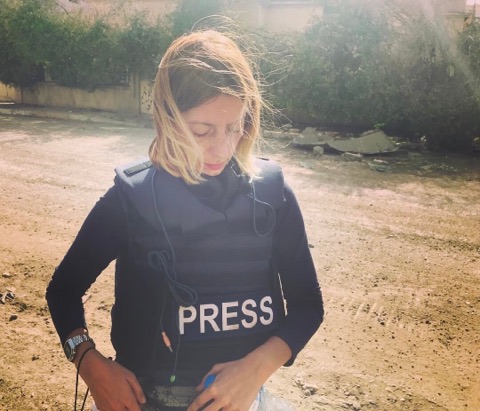 Sergatskova, a reporter on this issue, explains that the conflict made for a harsh environment for journalists: “It is a really hard period of journalism in Ukraine and it is continuing.”
In 2016, a group of hackers released personal contact information of journalists that were considered threatening to the Ukrainian government, including Sergatskova. Following the leak, she received death threats.
Three months after the leak, journalist Pavel Sheremet — a friend and colleague of Sergatskova — was murdered in a crime that is believed to be linked to his reporting. After a year and a half, Sergatskova says, there are still have no answers.
The journalist says that following such incidents, she and her colleagues feel unsafe but nevertheless will persist in their reporting: “We have a lot of really good investigators and they will not stop … because it’s their mission. We’re afraid of it, but we have only one way to save our country, to develop, to be a normal country with normal rules, we need to do our work.”
29 Sep 2017 | Campaigns -- Featured, Media Freedom, media freedom featured, Statements
[vc_row][vc_column][vc_column_text]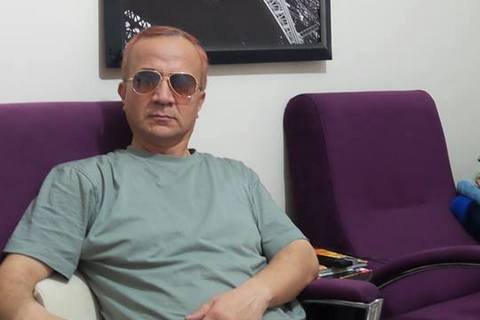
Index on Censorship urges Ukraine to not extradite journalist Narzullo Okhunjonov to Uzbekistan where he faces prosecution.
On 20 September authorities detained Okhunjonov when he arrived at an international airport in Kyiv, Ukraine, following an Interpol red notice.
Uzbek authorities issued an international arrest warrant on fraud charges against Okhunjonov, who denies the charges.
A Kyiv court then approved a 40-day detention period for the journalist, the limit under an Interpol notice.
Okhunjonov along with his wife and five children were seeking political asylum from the Ukrainian authorities. The journalist has been living in exile in Turkey since 2013 in order to avoid politically motivated persecution for his reporting.
“This abuse of the Interpol system is a direct violation of Article 2 of its constitution and a clear effort to silence critical journalists,” Hannah Machlin, project manager of Index on Censorship’s Mapping Media Freedom platform, said. “We call on the Ukrainian authorities to allow Narzullo Okhunjonov to remain in Ukraine, grant him political asylum and reject requests to extradite him to his home country.”
Okhunjonov writes in Uzbek and Russian for media outlets including BBC Uzbek on topics such as Uzbekistan’s authoritarian government and has criticised by the late president Islam Karimov.
The journalist’s family is currently residing in Kyiv.
The Council of Europe’s parliamentary assembly published Resolution 2161 in April 2017 on the abuse of the Interpol system. The resolution underlined that “in a number of cases in recent years, however, Interpol and its Red Notice system have been abused by some member States in the pursuit of political objectives, in order to repress freedom of expression”.
In August, two exiled Turkish journalists, Hamza Yalçın and Doğan Akhanli, were detained in Spain following Interpol red notices from Turkey. Both are no longer facing extradition. [/vc_column_text][/vc_column][/vc_row][vc_row][vc_column][vc_basic_grid post_type=”post” max_items=”4″ element_width=”6″ grid_id=”vc_gid:1506702230284-c0425a2a-f87f-6″ taxonomies=”6564″][/vc_column][/vc_row]
13 Sep 2017 | Mapping Media Freedom, media freedom featured, News, Ukraine
[vc_row][vc_column][vc_single_image image=”95583″ img_size=”full” alignment=”center” onclick=”custom_link” link=”https://mappingmediafreedom.org/#/”][vc_column_text]Journalists across Ukraine are being suppressed, deported and banned from the country, according to the Index on Censorship’s Mapping Media Freedom project.
Ukraine has imposed a number of restrictions on the media as a response to Russian propaganda in order to protect its national security.
Mapping Media Freedom correspondent Vitalii Atanasov said that “the deportation of journalists is not an effective and justified response to such challenges and threatens press freedom. It is necessary to develop another mechanism to maintain a truly professional and fair media that could compete with all sorts of propaganda and fake news.”
The conflict has led to a rise in anti-media sentiments across Ukraine with some prominent members of the Ukrainian government branding journalists as traitors. Public opinion has swayed over the course of the conflict and the press is often criticised for showing the problems of Ukrainian society.
“Another disturbing trend is that the authorities and their supporters are promoting the idea of the ‘fifth column’, hinting that critical journalism can be a threat inspired from outside. Unfortunately, journalists are an easy target,” Atanasov said
Journalists operating in Ukraine are being blamed for the spread of classified information and for undermining the Ukrainian army. “There have been several cases when journalists were accused of having published classified information, but in the end, the accusations were not confirmed,” Atanasov added.
With both the public and the politicians demonising the press, it has become increasingly dangerous for journalists to work and operate in the Ukraine. The most extreme example of the dangers the media face in Ukraine is the assassination of Pavel Sheremet in July 2016.
Atanasov said that this has led to some self-censorship in the Ukrainian press. “I can assume that some journalists resort to self-censorship in some cases, as they would like to avoid obstacles and problems for their work in the future.”[/vc_column_text][/vc_column][/vc_row][vc_row][vc_column][vc_separator][vc_custom_heading text=”Media freedom is under threat worldwide. Journalists are threatened, jailed and even killed simply for doing their job.” font_container=”tag:h3|text_align:left” use_theme_fonts=”yes” link=”url:https%3A%2F%2Fwww.indexoncensorship.org%2Fcampaigns%2Fpress-regulation%2F|||”][vc_row_inner][vc_column_inner width=”1/2″][vc_column_text]Index on Censorship monitors media freedom in Ukraine and 41 other European area nations.
As of 11/9/2017, there were 296 verified violations of press freedom associated with Turkey in the Mapping Media Freedom database.[/vc_column_text][/vc_column_inner][vc_column_inner width=”1/2″][vc_column_text]Index on Censorship campaigns against laws that stifle journalists’ work. We also publish an award-winning magazine featuring work by and about censored journalists. Support our work today.[/vc_column_text][/vc_column_inner][/vc_row_inner][vc_separator][/vc_column][/vc_row][vc_row][vc_column][vc_column_text]Recent cases reported to Mapping Media Freedom’s database of European area press freedom violations:
Two Russian journalists were deported and banned from Ukraine this August. The first was Tamara Nersesyan, a correspondent for the All-Russian State Television and Radio Company on 15 August. Shortly after her report on the Ukrainian music festival Bandershtat was shown on Channel One she was deported and banned from the country.
On 30 August, Russian State TV Channel One correspondent Anna Kurbatova was deported. A spokesperson for the Security Service of Ukraine (SBU) Olena Gitlyanska wrote that “Russian propagandist Anna Kurbatova was forcibly expelled from Ukraine… she is forbidden to enter the territory of our state for three years.” The reason stated for deportation was “because of activities, which hurt the national interests of Ukraine.” Information about Kurbatova was published on the Myrotvorets because she was judged to be distributing “anti-Ukrainian propaganda” and to be “manipulating significant information”. In 2016, the Myrotvorets leak shared the names of thousands of journalists accredited in the separatist republics. She had recently reported on the deportation of two Spanish journalists and covered Ukrainian Independence Day for Channel One.
Spanish journalists Antonio Pampliega and Manuel Ángel Sastre were deported from Ukraine. Both had been blacklisted in 2015 but granted access to the country after pressure from Spanish authorities. However, on 25 August an SBU spokeswoman said that the journalists were barred because of their “activities that contradict the national interest of Ukraine,” according to the Committee to Protect Journalists. The pair were deported to the Netherlands after a 20-hour detention in Kiev airport. Sastre said the Ukrainian authorities “treated us like criminals”.[/vc_column_text][/vc_column][/vc_row][vc_row][vc_column][vc_basic_grid post_type=”post” max_items=”4″ element_width=”6″ grid_id=”vc_gid:1505295853750-ecfb674d-953f-9″ taxonomies=”6564″][/vc_column][/vc_row]
