7 Jul 2022 | News, Turkey, Turkey
In the name of counter-terrorism, police raided the houses of journalists in Diyarbakır, in the Kurdish region of Turkey, on 8 June. They took into custody 19 journalists, two media employees and one citizen, who had given an interview to a journalist. Two criminal investigations were announced to target “the Press Structure of the Kurdish Workers Party (PKK) and Kurdistan Communities Union (KCK)”.
Journalists who work in eastern Turkey face tremendous pressures as they are almost always the ones who expose rights violations by the state in a conflict between Turkish authorities and Kurdish groups, which has been going on since the early 1980s. The PKK has called for more rights for Kurdish people, and the armed conflict has cost over 40,000 lives. Turkey considers the PKK a terrorist organisation, as do the EU and US.
In addition to the journalists’ houses, police raided the offices of three production companies and the women’s news agency Jin News in an unlawful manner. The search conducted at the Jin News agency was carried out without any representative of the agency being notified or present. The police are yet to provide a record of what has been confiscated.
After being extended twice, the custody period eventually amounted to eight days. In her indictment-like extension petitions, the prosecutor directly accused the journalists without presenting any evidence. Furthermore, she justified the extensions by saying the confiscated material needed extensive examination. According to the lawyers, however, this long custody period served the manufacturing of new evidence.
The interrogation of the journalists began on 15 June at around 9am. The prosecutor questioned the journalists about their professional activities. She asked why they worked at their respective media outlets, why they produced particular programmes or news articles, and why they used specific expressions.
While neither the lawyers nor the journalists were granted access to the investigation file – which violated their right to defence – investigation details were leaked to media organisations close to the government. According to these news reports, journalists are accused of “operating as the PKK and KCK Press Structure.”
After an interrogation lasting nearly 20 hours, the prosecutor referred 18 journalists, two media employees and one citizen to the Diyarbakır 1st Criminal Judgeship of Peace and requested their arrest on suspicion of “membership of a terrorist organisation”. Within 15 minutes, the judge ruled to arrest 16 of the journalists. In the decisions, the judge did not refer to any concrete evidence other than the testimonies of defectors from the PKK who claimed that the journalists produced content for Sterk TV, Medya Haber TV, Jin TV and Rohani TV – all of which are considered as PKK outlets by Turkish authorities. The judge released four journalists, one media employee and the sole citizen from custody, along with judicial control measures.
This is not an isolated incident. A recent example is when five journalists reported on two villagers who were tortured and thrown out of a helicopter by security forces in Van, also in eastern Turkey. Four of them were held in pre-trial detention for six months until the first hearing. Accompanied with discrediting campaigns on social and mainstream media, these journalists were tried under terrorism charges and were eventually acquitted. Acquitted or not, this recent operation is the largest of its kind targeting the Kurdish press in recent years. It is reminiscent of the infamous “KCK Press Trials”, in which 46 journalists and media employees have been standing trial for the past 10 years.
This latest operation targeting Kurdish journalists signals that the government is once again flexing its muscles to silence journalists in the region ahead of the upcoming elections next year.
The 16 arrested journalists:
Lezgin Akdeniz: Camera operator, TV show producer
Safiye Alagaş: Jin News Director
Serdar Altan: Freelance journalist, Dicle Fırat Journalists’ Association (DFG) Co-chair
Zeynel Abidin Bulut: Xwebûn editor, DFG executive
Ömer Çelik: TV show host, former Mesopotamia News Agency editor
Suat Doğuhan: Camera operator, Pel Production owner
Mehmet Ali Ertaş: Xwebûn Editor-in-chief
Ramazan Geciken: Pel Production camera operator
Mazlum Doğan Güler: Piya Production camera operator
İbrahim Koyuncu: Camera operator, video editor
Abdurrahman Öncü: Pel Production camera operator
Aziz Oruç: Mesopotamia News Agency editor
Mehmet Şahin: Xwebûn columnist, teacher
Neşe Toprak: Pel Production TV show producer
Elif Üngür: Piya Production TV show host
Remziye Temel: Piya Production accountant
For more details on the arrests, visit MLSA.
3 Dec 2021 | 2021 year end campaign, Campaigns, China, News, Syria, Turkey
At the end of every year, Index on Censorship launches a campaign to focus attention on human rights defenders, artists and journalists who have been in the news headlines during the past twelve months and their oppressors.
This year, we asked for your help in identifying the Tyrant of the Year. There was fierce competition, with many rulers choosing to use the cover of Covid lockdowns to crack down on their opponents.
Heartbreakingly there was fierce competition – with too many repressive regimes in the running. However, your views were clear.
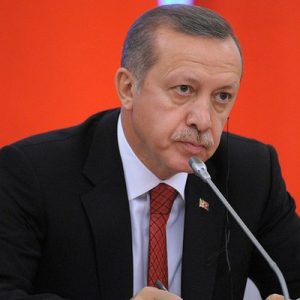 The crown for the most oppressive Tyrant of 2021 goes to Turkish President Recep Tayyip Erdoğan.
We can think of a few reasons why Erdoğan claimed the top spot. He refuses to release civil society leader Osman Kavala, imprisoned since 2017 despite being acquitted twice. Student LGBTQ+ artwork and campaigning on International Women’s Day has also led to arrests in the country.
He has also, perhaps ironically, become the first European leader to withdraw from the Istanbul Convention on violence against women. Kurds have also continuously seen their rights to freedom of expression curtailed while opposition politicians such as the Democracy and Progress Party’s Metin Gurcan have also been jailed for criticising the president.
While Erdoğan topped this year’s poll, two other names pulled in plenty of votes: China’s Xi Jinping came in second with Syria’s Bashar al-Assad following closely in third.
The December poll saw huge amounts of traffic on our website with thousands of votes cast. We also saw the number of cyber attacks on our site double during the period, suggesting that it had annoyed some of those in the poll or their supporters.
We give thanks to all those who voted, to those continuing to loudly criticise tyrants globally, and remind everyone to stay vigilant to those seeking to silence them and us all.
29 Jan 2021 | Greece, Opinion, Poland, Ruth's blog, Turkey
[vc_row][vc_column][vc_single_image image=”116129″ img_size=”full” add_caption=”yes”][vc_column_text]The last 12 months have been difficult for everyone. Whilst many of us have lost loved ones and tried to cope with the impact of lockdowns, social restrictions, closed businesses, redundancies, reduced wages, home schooling and the fear of illness, others have sought to exploit the situation – hoping that the world wouldn’t notice.
Our theme for the winter edition of Index on Censorship magazine was Masked by Covid – the underreported stories of 2020 which had been drowned out by the global public health emergency. There were simply too many for one edition of the magazine.
The news cycle has been dominated by Covid, Trump and Brexit with little else being able to break through. This in itself provided the ideal opportunity for leaders of repressive regimes to move against their citizens with impunity; after all the world wasn’t watching. But when you add the ‘legitimacy’ of emergency regulations to the mix under the guise of protecting the population against Covid, the perfect storm for repression and tyranny has been created.
When the virus spread last spring, Index started covering how it was affecting free speech around the world through a project called Disease Control. Documenting new legislation which closed local newspapers, new regulations which restricted or delayed access to government information, limitations on the free press, the end of the right to protest in numerous countries and arrests of political activists in dozens of countries.
As we all now await to be vaccinated and long for a return to normal, you would hope that maybe the dictators and authoritarian leaders, around the globe, would mitigate their actions knowing that the world might start to pay attention. Unsurprisingly that isn’t proving to be the case.
Only this week we have seen the Polish Government ban abortion, the Greek government propose a new university police force to deal with ‘trouble makers’ on campus and, in Russia, the coronavirus restrictions have been used as a cover to arrest Alexei Navalny’s allies – in the wake of his detention and the subsequent protests.
And it hasn’t just been Covid that has provided cover for oppression. In Turkey, on 27 December – when many of us were more focused on Netflix then the news – the government passed a new piece of anti-terrorism legislation, Preventing Financing of Proliferation of Weapons of Mass Destruction. I think most of us would welcome legislation that sought to stop the proliferation of WMDs.
Whilst this legislation has ostensibly been introduced to meet a United Nations Security Council counterterrorism resolution, unfortunately this new law actually goes well beyond that. It is an unfettered attack on civil society organisations across Turkey – with a clear emphasis on undermining those organisations which seek to protect minorities, especially the Kurdish population.
The legislation enables the Interior Ministry to replace board members of NGOs with state-appointed trustees. They can also suspend all operations and activities of an NGO if members are being prosecuted on terrorism charges – this would seem completely reasonable in many nation states, but as over 300,000 people are arrested for being a member of a terrorist group in Turkey every year, the definition of terrorist isn’t quite the global standard.
The legislation also gives the Governor’s office the right to undertake annual inspections of NGOs adding a new admin burden, international NGOs are also covered by new provisions and unsurprisingly financial assets and online donations to individual campaigns can be blocked by the government to “prevent terrorist financing and money laundering”.
Erdogan has just doubled down as an authoritarian leader and did so without global condemnation or even notice. It simply isn’t good enough…
All of these actions, and the many others from Hong Kong to Uganda, seek to cause division, undermine hope in the domestic population and entrench control. The world is getting smaller, technology means that we can know what is happening, as it happens, in every corner of the world. But too many people have stopped paying attention.
For Index it means that we have to double down and keep finding new ways to tell people’s stories so no one can claim ignorance.[/vc_column_text][/vc_column][/vc_row][vc_row][vc_column][three_column_post title=”You may also want to read” category_id=”41669″][/vc_column][/vc_row]
18 Nov 2020 | News, Turkey
[vc_row][vc_column][vc_single_image image=”115574″ img_size=”full” add_caption=”yes”][/vc_column][/vc_row][vc_row][vc_column][vc_column_text]On 11 September, the peaceful silence of the early morning in Sürik, a tiny, unassuming village located in the barren yet beautiful mountains of Van, an eastern and mostly Kurdish populated province in Turkey, was broken by the sound of a violent explosion. The blast was so powerful that the earth shook; the adobe houses of the village rattled.
The Turkish military had been conducting operations in the region since early September, and clashes between soldiers and militants of the Kurdistan Workers’ Party (PKK), an armed group which has been fighting for Kurdish independence for more than four decades, had been more frequent than usual. The villagers saw military helicopters circling the usually serene skies above Çatak.
By the time the sun had melted the previous night’s fragile frost, one of the choppers had landed in an area behind the village. They took off a while later, taking two of the villagers with them.
The two men, Osman Şiban, 50, and Server Turgut, 63, reappeared two days later, in the ward of a military hospital in Van. While these are nowhere near rare occurrences in the Turkish southeast, the country would have never heard about the horrific torture the two men went through if it wasn’t for a news report published on the day of their reappearance by Cemil Uğur, a Van-based journalist with the Mezopotamya News Agency (MA). The report claimed they were beaten and pushed off a helicopter.
The Van governor’s office denied the allegations of torture, saying the two villagers, captured as part of an operation in the region named Yıldırım-10 Norduz (after an indigenous mountain goat), ignored commands to stop.
In the following days, other reporters—Adnan Bilen, the Van bureau chief of MA, Şehriban Abi from the feminist Kurdish news agency JinNews and freelancer Nazan Sala—all known for reporting on human rights violations in Turkey’s Kurdish regions, followed the story, filling in the details, talking to the families and witnesses, gathering documents from forensic invesetigations and prosecutors.
An interview with Siban from his hospital bed by Uğur on 17 September featured a photo of Şiban, whose bloody eyes (top) left little to the imagination about the horrors the two men must have had undergone, whom the journalist talked with in his hospital bed.
On 30 September, Turgut died after days in intensive care.
Less than a week after Turgut’s death, the homes of the journalists reporting on the case were raided and, a few days later, they were arrested on charges of “membership of a terrorist organisation”.
Journalists punished for reporting the news
More details of the unspeakable torture the two men had gone through came out on 2 November, when independent lawmaker Ahmet Şik, who travelled to the region in late October, revealed the details of his investigation at a press conference in parliament.
The two men were beaten on the chopper, later, pushed off — presumably after it landed – and then beaten to near-death by 150 gendarmerie soldiers in scenes in a “state-sanctioned lynching.”
Şık’s report also detailed other ways in which the state attempted to cover up the torture of the two villagers in addition to arresting the people who reported on the case. He later told the Media and Law Studies Association (MLSA),whose lawyers represent three of the imprisoned Van reporters, that the journalists, who the authorities assert were detained on the basis of an investigation launched prior to the Van incident, were clearly being punished for their reporting on the ordeal of the two villagers.
A ‘grave danger’ for all journalists
Lawyer Veysel Ok, co-director of the MLSA, notes that this punishment for reporting the news has the power to have serious repercussions for other journalists in Turkey, where 86 journalists are in prison.
He points to several alarming developments regarding the investigation into the journalists, saying, “In the journalists’ arrest order, the court accused these journalists of ‘reporting on social incidents against the state but in favour of the terrorist organisation PKK/KCK’ in order to incite agitation, and ‘making news in a continuous way, with variety and in high numbers.’”
To highlight the gravity of the possible consequences, “these journalists are all Kurdish and have been working in the region, and specifically in Van, for a very long time.”
“Their reporting has always shed light on human rights violations against Kurdish citizens in the region,” Ok said.
The arrest warrant also accuses the journalists of “criticising and harming the reputation of the anti-terrorism effort of the Republic of Turkey”. Another accusation is “identifying oneself as a journalist and making news reports for a fee without being a press card holder”.
“So the court is arguing that the four reporters are not ‘real’ journalists on the grounds that they don’t have an official press card issued by the president’s office,” Ok said. “There is not a single line in the Turkish legislation that stipulates that one needs a press card to be a journalist. Press card accreditation is necessary only for following government officials’ activities and the practice has been, as of late, to only issue them to those journalists who work for the pro-government media, so this press card mention in the warrant can have far-reaching consequences for any journalist in Turkey.”
The justifications put forth by the court are “unacceptable,” the lawyer added.
“The judiciary aims to create a chilling effect on all journalists, like the Sword of Damocles,” he said. “That’s why we find this case extremely important, care about it deeply and demand solidarity from fellow journalists, and everyone who cares about freedom of speech and not just in Turkey but all around the world.”
Ok also noted another worrying problem about the case; that the prosecutor who is conducting the investigation against the Van journalists is the same one that conducts the investigation on the lynching of the two villagers.
“The arrest decision is a very alarming one for journalism,” he said. “This is why our organisation has taken on this case. We will take this unlawful arrest first to the Constitutional Court and then to the European Court of Human Rights (ECtHR).”
Ok said he was in Van on 27 October where he visited the four journalists in prison and noted that although they seem to be in good spirits, they also demand solidarity and support from the outside world against the injustice they are suffering for doing their jobs.
“Van is a far-off city, in the easternmost part of the country,” Ok said. “It is important that this case is not forgotten because it is not in Istanbul. These journalists have written news reports that should win an award. We will be in Van at the time of the first hearing to support these journalists and their journalism. They deserve the support of their colleagues and rights groups everywhere for bringing out the truth.”[/vc_column_text][/vc_column][/vc_row][vc_row][vc_column][three_column_post title=”You may also want to read” category_id=”55″][/vc_column][/vc_row]
