11 Oct 2016 | Digital Freedom, Magazine, Volume 45.03 Autumn 2016
[vc_row][vc_column][vc_column_text]
CREDIT: ra2studio / Shutterstock
Securing your connection
Activists in countries where the web is heavily censored and internet traffic is closely monitored know that using a virtual private network or VPN is essential for remaining invisible.
A VPN is like a pair of curtains on a house: people know you are in but cannot see what you are doing. This is achieved by creating an encrypted tunnel via a private host, often in another country, through which your internet data flows. This means that anyone monitoring web traffic to find out persons of interest is unable to do so. However, the very fact that you are using a VPN may raise eyebrows.
An increasing number of VPNs promise truly anonymous access and do not log any of your activity, such as ExpressVPN and Anonymizer. However, access to some VPN providers is blocked in some countries and their accessibility is always changeable.
Know your onions
One of the internet’s strengths is also one of its weaknesses, at least as far as privacy is concerned. Traffic passes over the internet in data packets, each of which may take a different route between sender and recipient, hopping between computer nodes along the way. This makes the network resilient to physical attack – since there is no fixed connection between the endpoints – but also helps to identify the sender. Packets contain information on both the sender’s and recipient’s IP address so if you need anonymity, this is a fatal flaw.
“Onion” routing offers more privacy. In this, data packets are wrapped in layers of encryption, similar to the layers of an onion. At each node, a layer of encryption is removed, revealing where the packet is to go next, the benefit being that the node only knows the address details of the preceding and succeeding nodes and not the entire chain.
Using onion routing is not as complicated as it may sound. In the mid-1990s, US naval researchers created a browser called TOR, short for The Onion Routing project, based on the concept and offered it to anyone under a free licence.
Accessing the dark web with the Tor browser is a powerful method of hiding identity but is not foolproof. There are a number of documented techniques for exploiting weaknesses and some people believe that some security agencies use these to monitor traffic.
Put the trackers off your scent
Every time you visit a popular website, traces of your activity are carefully collected and sifted, often by snippets of code that come from other parts of the web. A browser add-on called Ghostery (ghostery.com) can show you just how prevalent this is. Firing up Ghostery on a recent visit to The Los Angeles Times website turned up 102 snippets of code designed to track web activity, ranging from well-known names such as Facebook and Google but also lesser known names such as Audience Science and Criteo.
While some of this tracking has legitimate uses, such as to personalise what you see on a site or to tailor the ads that appear, some trackers, particularly in countries where there are lax or no rules about such things, are working hard to identify you.
The problem is that trackers can work out who you are by jigsaw identification. Imagine you have visited a few places on the web, including reading an online article in a banned publication and then flicking through a controversial discussion forum. A third-party tracker used for serving ads can now learn about this behaviour. If you then subsequently log into another site, such as a social network, that includes your identity, this information can suddenly be linked together. Open-source browser extensions such as Disconnect (disconnect.me) offer a way to disable such trackers.
Use the secure web
A growing number of popular websites force visitors to connect to them securely. You can tell which ones because their addresses begin with https rather than http. Using https means that the website you are visiting will be authenticated and that your communications with the site are encrypted, stopping so-called man-in-the-middle attacks – where a malicious person sits between two people who believe they are communicating directly with each other and alters what is being communicated. Google, as well as using https for both Gmail and search, is also encouraging other websites to adopt it by boosting such sites up the search rankings.
Rather than remembering to check you are using https all the time, some people employ a browser extension created by the Electronic Frontier Foundation and the Tor Project called HTTPS Everywhere to do it for them. It is available for Chrome, Firefox and Opera and forces browsers to user https versions of sites where available.
Hide your fingerprints
Traditional identification methods on the web rely on things like IP addresses and cookies, but some organisations employ far more sophisticated techniques, such as browser fingerprinting. When you visit a site, the browser may share information on your default language and any add-ons and fonts you have installed. This may sound innocuous, but this combination of settings may be unique to you and, while not letting others know who you are, can be used to associate your web history with your browser’s fingerprint. You can see how poorly you are protected by visiting panopticlick.eff.org.
One way to try to avoid this is to use a commonly used browser set-up, such as Chrome running on Windows 10 and only common add-ins activated and the default range of fonts. Turning off Javascript can also help but also makes many sites unusable. You can also install the EFF’s Privacy Badger browser add-on to thwart invisible trackers.
Mark Frary is a journalist and co-author of You Call This The Future?: The Greatest Inventions Sci-Fi Imagined and Science Promised (Chicago Review Press, 2008)
This article is from the Autumn issue of Index on Censorship Magazine. You can order your copy here, or take out a digital subscription via Exact Editions. Copies are also available at the BFI, the Serpentine Gallery, MagCulture, (London), News from Nowhere (Liverpool), Home (Manchester), Calton Books (Glasgow) and on Amazon. Each magazine sale helps Index on Censorship continue its fight for free expression worldwide.[/vc_column_text][/vc_column][/vc_row][vc_row][vc_column][vc_custom_heading text=”From the Archives”][vc_row_inner][vc_column_inner width=”1/3″][vc_single_image image=”90642″ img_size=”213×289″ alignment=”center” onclick=”custom_link” link=”http://journals.sagepub.com/doi/pdf/10.1080/03064220008536724″][vc_custom_heading text=”Anonymous now” font_container=”tag:p|font_size:24|text_align:left” link=”url:http%3A%2F%2Fjournals.sagepub.com%2Fdoi%2Fpdf%2F10.1080%2F03064220008536724|||”][vc_column_text]
May 2000
Surfing through cyberspace leaves a trail of clues to your identity. Online privacy can be had but it doesn’t come easy, reports Yaman Akdeniz.
[/vc_column_text][/vc_column_inner][vc_column_inner width=”1/3″][vc_single_image image=”89179″ img_size=”213×289″ alignment=”center” onclick=”custom_link” link=”http://journals.sagepub.com/doi/pdf/10.1080/03064220701738651″][vc_custom_heading text=”Evasion tactics” font_container=”tag:p|font_size:24|text_align:left” link=”url:http%3A%2F%2Fjournals.sagepub.com%2Fdoi%2Fpdf%2F10.1080%2F03064220701738651|||”][vc_column_text]
November 2007
Nart Villeneuve provides an overview of how journalists and bloggers around the world are protecting themselves from censorship.
[/vc_column_text][/vc_column_inner][vc_column_inner width=”1/3″][vc_single_image image=”89164″ img_size=”213×289″ alignment=”center” onclick=”custom_link” link=”http://journals.sagepub.com/doi/pdf/10.1177/0306422010363345″][vc_custom_heading text=”Tools of the trade” font_container=”tag:p|font_size:24|text_align:left” link=”url:http%3A%2F%2Fjournals.sagepub.com%2Fdoi%2Fpdf%2F10.1177%2F0306422010363345|||”][vc_column_text]
March 2010
As filtering becomes increasingly commonplace, Roger Dingledine reviews the options for beating online censorship.
[/vc_column_text][/vc_column_inner][/vc_row_inner][vc_separator][/vc_column][/vc_row][vc_row][vc_column width=”1/3″][vc_custom_heading text=”The unnamed” font_container=”tag:p|font_size:24|text_align:left” link=”url:%20https%3A%2F%2Fwww.indexoncensorship.org%2F2017%2F09%2Ffree-to-air%2F|||”][vc_column_text]The autumn 2016 Index on Censorship magazine explores topics on anonymity through a range of in-depth features, interviews and illustrations from around the world.
With: Valerie Plame Wilson, Ananya Azad, Hilary Mantel[/vc_column_text][/vc_column][vc_column width=”1/3″][vc_single_image image=”80570″ img_size=”medium” alignment=”center” onclick=”custom_link” link=”https://www.indexoncensorship.org/2016/11/the-unnamed/”][/vc_column][vc_column width=”1/3″][vc_custom_heading text=”Subscribe” font_container=”tag:p|font_size:24|text_align:left” link=”url:https%3A%2F%2Fwww.indexoncensorship.org%2Fsubscribe%2F|||”][vc_column_text]In print, online. In your mailbox, on your iPad.
Subscription options from £18 or just £1.49 in the App Store for a digital issue.
Every subscriber helps support Index on Censorship’s projects around the world.
 SUBSCRIBE NOW[/vc_column_text][/vc_column][/vc_row]
12 May 2016 | mobile, News
Facebook made headlines this week over allegations by former staff that the site tampers with its “what’s trending” algorithm to remove and suppress conservative viewpoints while giving priority to liberal causes.
The news isn’t likely to shock many people. Attempts to control social media activity have been rife since Facebook and Twitter launched in 2006. We are outraged when political leaders ban access to social media, or when users face arrest or the threat of violence for their posts. But it is less clear cut when social media companies remove content they deem in breach of their terms and conditions, or move to suspend or ban users they deem undesirable.
“Legally we have no right to be heard on these platforms, and that’s the problem,” Jillian C. York, director for international freedom of expression at the Electronic Frontier Foundation, tells Index on Censorship. “As social media companies become bigger and have an increasingly outsized influence in our lives, societies, businesses and even on journalism, we have to think outside of the law box.”
Transparency rather than regulation may be the answer.
 Back in November 2015, York co-founded Online Censorship, a user-generated platform to document content takedowns on six social media platforms (Facebook, Twitter, Instagram, Flickr, Google+ and YouTube), to address how these sites moderate user-generated content and how free expression is affected online.
Online Censorship’s first report, released in March 2016, stated: “In the United States (where all of the companies covered in this report are headquartered), social media companies generally reserve the right to determine what content they will host, and they do not consider their policies to constitute censorship. We challenge this assertion, and examine how their policies (and the enforcement thereof) may have a chilling effect on freedom of expression.”
The report found that Facebook is by far the most censorious platform. Of 119 incidents, 25 were related to nudity and 16 were due to the user having a false name. Further down the list were content removed on grounds of hate speech (6 reports) and harassment (2).
“I’ve been talking with these companies for a long time, and Facebook is open to the conversation, even if they haven’t really budged on policies,” says York. If policies are to change and freedom of expression online strengthened, “we have to keep the pressure on companies and have a public conversation about what we want from social media”.
Critics of York’s point of view could say if we aren’t happy with the platform, we can always delete our accounts. But it may not be so easy.
Recently, York found herself banned from Facebook for sharing a breast cancer campaign. “Facebook has very discriminatory policies toward the female body and, as a result, we see a lot of takedowns around that kind of content,” she explains.
Even though York’s Facebook ban only lasted one day, it proved to be a major inconvenience. “I couldn’t use my Facebook page, but I also couldn’t use Spotify or comment on Huffington Post articles,” says York. “Facebook isn’t just a social media platform anymore, it’s essentially an authorisation key for half the web.”
For businesses or organisations that rely on social media on a daily basis, the consequences of a ban could be even greater.
Facebook can even influence elections and shape society. “Lebanon is a great example of this, because just about every political party harbours war criminals but only Hezbollah is banned from Facebook,” says York. “I’m not in favour of Hezbollah, but I’m also not in favour of its competitors, and what we have here is Facebook censors meddling in local politics.”
York’s colleague Matthew Stender, project strategist at Online Censorship, takes the point further. “When we’re seeing Facebook host presidential debates, and Mark Zuckerberg running around Beijing or sitting down with Angela Merkel, we know it isn’t just looking to fulfil a responsibility to its shareholders,” he tells Index on Censorship. “It’s taking a much stronger and more nuanced role in public life.”
It is for this reason that we should be concerned by content moderators. Worryingly, they often find themselves dealing with issues they have no expertise in. A lot of content takedown reported to Online Censorship is anti-terrorist content mistaken for terrorist content. “It potentially discourages those very people who are going to be speaking out against terrorism,” says York.
Facebook has 1.5 billion users, so small teams of poorly paid content moderators simply cannot give appropriate consideration to all flagged content against the secretive terms and conditions laid out by social media companies. The result is arbitrary and knee-jerk censorship.
“I have sympathy for the content moderators because they’re looking at this content in a split second and making a judgement very, very quickly as to whether it should remain up or not,” says York. “It’s a recipe for disaster as its completely not scalable and these people don’t have expertise on things like terrorism, and when they’re taking down.”
Content moderators — mainly based in Dublin, but often outsourced to places like the Philippines and Morocco — aren’t usually full-time staff, and so don’t have the same investment in the company. “What is to stop them from instituting their own biases in the content moderation practices?” asks York.
One development Online Censorship would like to see is Facebook making public its content moderation guidelines. In the meantime,the project will continue to strike at transparency by providing crowdsourced transparency to allow people to better understand what these platforms want from us.
These efforts are about getting users to rethink the relationship they have with social media platforms, say York. “Many treat these spaces as public, even though they are not and so it’s a very, very harsh awakening when they do experience a takedown for the first time.”
28 Jan 2016 | Mapping Media Freedom, News, Russia
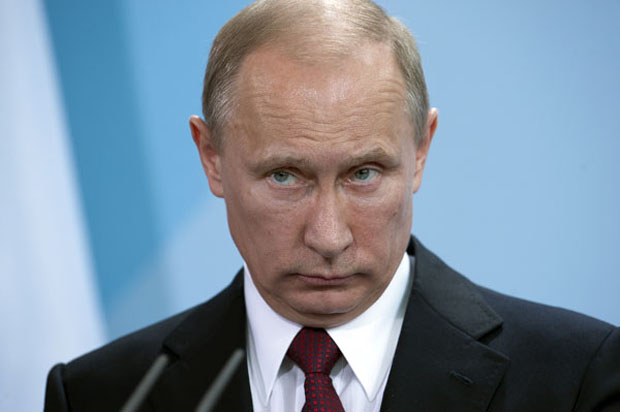
(Image: /Demotix)
Russia’s media freedom has declined under the government of Vladimir Putin. The president and his allies have used a cloak of legislative legitimacy to target potential opposition to his rule. Mapping Media Freedom correspondents Ekaterina Buchneva and Andrey Kalikh explore what this means for two important sectors of the Russian media.
Print and broadcast media
By Ekaterina Buchneva, Mapping Media Correspondent
Under Russia’s law on mass media amended in autumn 2014, foreign owners are restricted to 20% of shares in media organisations in the country. Its authors said that the legislation would halt the West’s “cold information war”. The law has triggered major changes in the Russian media market and, as critics warned when the law was passed, was used to replace international investors with locals loyal to the Kremlin.
The Russian edition of Forbes magazine, formerly owned by German media conglomerate Axel Springer and known for its independent editorial policy, was sold to businessman Alexey Fedotov, who immediately said that the publication was “too focused on politics” and should cover more business news. In January 2016, the magazine named Nikolay Uskov as its new editor-in-chief. Uslov, a former editor-in-chief of the Russian edition of GQ, has never worked in business journalism.
Finland’s Sonoma Independent Media, America’s Dow Jones and the UK’s Pearson also had to sell their shares in Vedomosti, the main business newspaper known for its critical opinion pieces. Now the paper’s new — and only — owner is Demian Kudryavtsev, a business partner of oligarch Boris Berezovsky, who died in 2013, and a former chief executive of major Russian publishing house Kommersant. Kudryavtsev also purchased The Moscow Times, the country’s only English-language daily. Some journalists were concerned about the origin of the money Kudryavtsev used in the deal and suggested that there was another buyer behind him.
The media ownership law also affected a number of glossy magazines, which, as one of the law’s author said, “squeeze articles favorable to the West and the fifth column in between news about cars and glamorous watches”, and entertainment television channels. CTC Media sold 75% of its shares to loyal to the Kremlin oligarch Alisher Usmanov, who also owns the Kommersant publishing house.
The Russian broadcasters of CNN, Cartoon Network and Boomerang, as well as 11 television channels of Discovery group, came under the control of Media Alliance, 80% of which belongs to National Media Group. The president of NMG, which also owns a number of Russian media organisations, including RenTV, Channel Five, Izvestia newspaper and 25% of Сhannel One, is Kirill Kovalchuk, a nephew of Putin’s old friend Yuri Kovalchuk.
Tightening control over foreign publishers
In addition, in December 2015, another bill with new amendments to the “law about mass media” was introduced into the Russian State Duma. It contains more limitations for media organisations, some of them refer to foreign publishers.
The bill suggests new legal background — violation of anti-extremism legislation — for denying or revoking distribution permit for foreign publishers. Among the ones that now have such permits are Frankfurter Allgemeine Zeitung, China Daily, European Weekly, GQ, Cosmopolitan, Esquire, Tatler, Vogue, and some papers from CIS (Commonwealth of Independent States) countries, including Expert.Ukraine magazine.
“The problem is vagueness and inconsistency of the anti-extremism legislation itself and the practice of its implementation by the Russian authorities,” says Damir Gainutdinov, lawyer of Inter-regional Association of Human Rights Organisations “Agora”.
“It is primarily about Article 1 of the Federal Law on Countering Extremist Activity, which gives a definition of extremism, extremist materials, etc. In practice, this definition is used not only for hate crimes but also, for example, criticism of the Russian authorities. Condemnation of the Crimea annexation is recognised as calls for infringement of the territorial integrity of Russia, as it was in the case of Rafis Kashapov (Tatar activist from Tatarstan, who was convinced in September 2015 to three years in jail for posting informational materials criticising Crimea annexation), and criticism of the United Russia is recognised as the incitement of hatred to a social group, as it was in the case of prohibition of video clips by Navalny (a few activists were found guilty of distribution of extremist materials for posting a video by opposition leader Alexey Navalny titled ‘Let’s recall manifest-2002 to crooks and thieves’, on social media). Therefore, any unenthusiastic article published by foreign media may be recognised as a violation of anti-extremist legislation. Another thing is that this applies only to the print media. Since February 2014, it works much easier with websites; they can be just blocked by orders of the general prosecutor office.”
According to the bill, the foreign publishers also will have to pay a fee for issuing a distribution permit. The authors explained that it would “eliminate the unfair advantage of the founders of foreign publications that provides them with more favorable business conditions”.
Another bill, that was already approved by the State Duma, requires Russian media organisations to inform Roskomnadzor (The Federal Service for Supervision in the Sphere of Telecom, Information Technologies and Mass Communications) about foreign funding, including funding from foreign states, international organisations and Russian NGOs that were considered “foreign agents”. The minimum amount of money that should be declared is 15,000 roubles (less than $200). Penalties for not notifying Roskomnadzor will be fines of 30-50,000 roubles (about $400-600) for officials and the amount of money received for companies. A repeated violation will be punished with a fine of 80,000 roubles (about $1,000) and triples amount of money received.
This bill resembles the one adopted in June 2012 by the Russian State Duma, requiring NGOs to register as “foreign agents”, says Damir Gainutdinov. “First, it is a simple registration and then more and more new burdens will be introduced, for example, state bodies will deny accreditation of such media organisations, officials will be banned from giving them interviews and answering their questions … An additional mandatory audit and special checks of staff could be introduced, who knows what else.”
The bill about foreign funding could affect a number of media platforms – from Colta.ru that cover art and culture to Mediazonа that highlights problems of the Russian justice and the penal system.
Limitations for founders of media organisations
Another block of amendments introduces a new restriction for media founders. It suggests that those, who have unspent or unexpunged convictions for crimes against the constitutional order, public security and public safety, can not found a media organisation.
Those crimes include a number of criminal articles – from hooliganism and repeated violation of rules of organising or holding rallies and demonstrations to espionage and treason. But the most tricky ones are incitement of hatred and abasement of human dignity (Article 282 of the Criminal Code of Russia), public calls for extremism (Article 280) and public calls for infringement of the territorial integrity of Russia (Article 280.1), says Damir Gainutdinov. “These articles are used for persecution of dissenters. In absolute numbers, there are not many cases like this against journalists, but such practice is developing gradually – Stomaknih, Yushkov, Kashapov”.
However, these limitations could not prevent dissenters from taking part in media management at different positions. For example, Pussy Riot members Nadezhda Tolokonnikova and Maria Alekhina, who were convinced for hooliganism, founded Mediazona platform, but as Tolokonnikova told RBC newspaper, they were not officially registered as founders as they had foreseen possible legal problems.
Internet
By Andrey Kalikh, Mapping Media Correspondent
Russia’s environment for freedom of expression on the internet has declined precipitously since 2002 when the law on Counteracting Extremism was adopted. The definition of extremism used in the law is vague and overly broad, according to Aleksandr Verkhovski, an expert on extremism from the SOVA Information and Analytical Centre in Moscow. Verkhovski said that the law was written to keep independent media, oppositional political parties, and “not official” religious confessions under control.
In 2012, the anti-extremism law was amended to empower Roskomnadzor, the state media and communication watchdog, to launch the United Register of Banned Websites. The modifications also enabled the agency to add websites that have “extremist content” without judicial approval. Once a site is added to the list, Russia’s internet services providers are obliged to block it. Within days of the changes, several independent media outlets and political opposition sites websites and blogs — Grani.ru, Ej.ru, Alexei Navalny’s blog — were blacklisted in the country.
On 30 December 2015 a district court in the Siberian city of Tomsk sentenced blogger Vadim Tyumentsev to five years in prison for two videos he posted on his YouTube page.
In the first video, the blogger criticised the local government’s decision to raise the cost of fares on the city’s public transport. In the second video, he said that authorities help refugees from eastern Ukraine more than they help local residents.
The court recognised both of Tyumentcev’s videos as “having extremist character”. Ekaterina Galyautdinova, the presiding judge, gave Tyumentsev a sentence even longer than the prosecutor had pursued. She also banned Tyumentsev from posting online for three years.
The Tyumentcev case is far from the first time that a blogger has been subjected to a prosecution. In 2007, Savva Terentyev, a blogger from the Siberian city of Syktyvkar, was sentenced to a large fine for “offending a social group” – in this case, the local police force – by writing about bad behaviour and human rights abuses committed by officers. In 2012, Maxim Efimov, a blogger from Petrozavodsk, Republic of Karelia, faced prosecution after he posted an article under the headline.
In 2012, Maxim Efimov, a blogger from Petrozavodsk, Republic of Karelia, faced prosecution after he posted an article under the headline “Karelia is tired of priests”, in which he criticised the leadership of the Russian Orthodox Church. Efimov left Russia and was subsequently granted political asylum in Estonia.
That same year the Prosecutor General Office blocked the website and blog of Alexei Navalny, blogger and opposition leader, for allegedly calling “for mass disorders”. Navalny was sentenced to the administrative detention for 15 days and faced other accusations related to his political activities.
“Bloggers law”
In August 2014, the Russian State Duma adopted a number of amendments to communication legislation. The so-called “bloggers law” required sites with more than 3,000 visitors a day to register with Roskomnadzor and observe the same rules as much larger media outlets.
Under the amendments, all site owners and social media users are required to disclose their names and email address on their websites. Owners and users must keep all the information published on the web including personal data for at least six months and immediately submit to the law enforcement bodies on demand.
Moreover, Roskomnadzor received the right to request personal information from all site owners and users.
Most recently, as of 1 January 2016, the “bloggers law” requires all websites and social media platforms to keep all personal data of Russian users on servers within Russian territory. Failing to do this means Roskomnadzor can block the site or service. Companies can either comply or cease doing business in Russia.
According to the Roskomnadzor spokesman Vladimir Ampelonski, some foreign companies submitted to the requirement and brought their servers to Russia. However, some companies — Google, Facebook and Apple — have defied implementing this change. Facebook representatives met with the authority’s deputy chief, Aleksandr Zharov. At the meeting the company said it will not observe the law because it is “economically disadvantageous”, the Vedomosti newspaper reported.
Empowering the FSB
After Putin’s re-election in 2012, Russian security service FSB’s powers were considerably expanded. Articles of the Criminal Code of the Russian Federation on high treason, espionage and disclosure of state secrets were widened and made ever more vague by introducing language on cooperation with any “foreign organisation, or their representatives in hostile activities to the detriment of the external security of the Russian Federation”.
The FSB has further tried to make investigative journalism more by lobbying members of the State Duma to pass a draft law limiting access to information on commercial real estate transactions. If passed, the law would make it impossible to uncover cases of illicit enrichment by government officials.
This article was originally published on Index on Censorship.