30 May 2014 | News, Politics and Society, United Nations
In a discretion well known to diplomatic circles, the United Nations so-called Committee on NGOs is meeting in New York this week. It is to select which NGOs fit the institution. The 19-member body’s aim could be to ensure a high-level and quality participation of independent NGOs to the United Nations – it is instead the 21st century censorship bureau.
Any governmental institution has to establish mechanisms by which participation of external organisations and lobbyists is regulated. The role of the Committee on NGOs of the United Nations is to look into applications of NGOs from all around the world. It is supposed to assess, case by case, whether the applicant NGO respects the Charter of the United Nations and abides by basic principles such as non-violence and democracy.
We know how much civil society has contributed to the development of the United Nations as such, and has been a force in pushing States to adopt a set of internationally binding standards to protect human rights and so many other issues. Access to the international bodies allowed NGOs to have a direct and formal input into the discussions. Unlike lobbyists at parliaments, representatives of NGOs can officially participate in the debates at the United Nations Human Rights Council. No need to be invited by an official or find strategies to get in contact with decision-makers. The access guaranteed to independent civil society, representing values and principles, not financial interests, is at the very core of the United Nations and a consequence of the organisation recognising it would be nothing if it had to count only on States to build itself and its standards up.
Some of those States are indeed the ones most willing to silence critical NGOs.
Throughout the globe, NGOs are fighting more and more for their own space in society, for their ability to work and defend victims of human rights violations. The work used to be all about those who loose their lives working as slaves, those who end up behind bars because of their beliefs, their engagement or their sexuality, those who loose their houses because from a day to another a ruler wants the land or a country believes it has the absolute right over it. Human rights defenders used to give body and soul to those people, and to so many others. Now, we need to include that we need to challenge governments shrinking the ability of those fighting for rights – human rights defenders need more and more to fight for themselves and their own space.
The United Nations should be an arena of dialogue aspiring to protect victims and promote peace. To do so, various voices are needed at the table. However, those who shrink space for civil society at home certainly do not want to see them at the table in New York or Geneva, or at any other international forum for that matter.
Along with inter alia Cuba, Pakistan and Venezuela, China and Russia are long-standing members of the Committee of NGOs. Both can proudly wear a label of censorship. Following President Vladimir Putin’s third election in March 2012, the country is undergoing a wave a repression and has adopted some of the most draconian laws against independent civil society. Dissenting with the Chinese regime is at the cost of one’s life, safety and integrity. The same behaviour is being observed by China and Russia at the Committee on NGOs – the institution is its tool to repress those the countries’ leadership do not agree with. And the consequences are grave. As world powers and permanent members of the Security Council, the two countries are already immune to critics within the UN on their rights record. The repression against political activists, human rights defenders and their NGOs, should have brought both countries to the centre of debates at the Human Rights Council and the General Assembly. It did not because they effectively prevents critics from getting into the room. Other States are now following the same strategy; one cannot believe that Azerbaijan, which will become a member of the Committee in 2015, shows a genuine interest in NGO participation in the international debate when it jails those who want to monitor the public life in Azerbaijan, such as the leader of the country’s only independent election monitoring group Anar Mammadli.
Member States of the Eastern European Group in the United Nations (the geographical groups are one of the legacies of the post world war era) should have run against Azerbaijan and Russia. Many of those Eastern Europe States are within the European Union. The Union was a step behind others by omitting to see that its willingness to promote rights and democracy in its direct neighbourhood will be affected by leaving a censorship tool in the hands of people who enjoy it.
Western countries have on their side left Turkey run unopposed for the Committee. The country has singled itself out recently, from all members of the Western European and Others Group, in blocking access to social media, especially Twitter. The single fact that a leader believes the power held in his hands allows him to block freedom of expression on the media of one’s choice should imply that that leader’s government is not to participate in the selection of civil society organisations participating in shaping the international arena.
Within the protected compound of the United Nations in Manhattan, the Committee on NGOs is this week looking into accepting those NGOs nobody will oppose, whilst blocking those NGOs publicly and forcefully engaging for human rights, including rights of people belonging to minorities or espousing minority beliefs. States should stand up for the space for critical NGOs. They might have the numbers and if they do not they are on the honourable side trying to support those NGOs that deserve to be at the United Nations. There is no shame in losing against censors – there is one in not trying to oppose them.
This article was posted on May 30, 2014 at indexoncensorship.org
23 Dec 2013 | Volume 42.04 Winter 2013
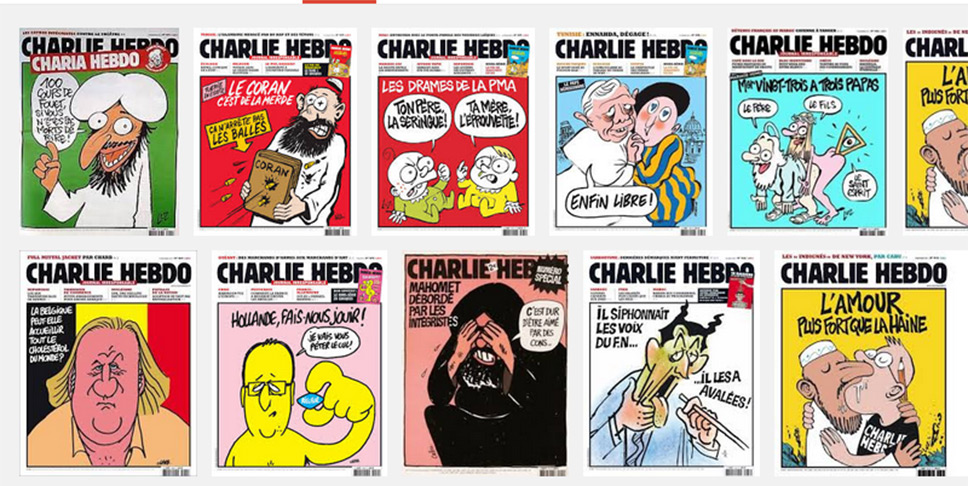
In conjunction with the Cambridge Festival of Ideas 2015, we will be publishing a series of articles that complement many of the upcoming debates and discussions. We are offering these articles from Index on Censorship magazine for free (normally they are held within our paid-for archive) as part of our partnership with the festival. Below is and article by Samira Ahmed on how 15 years of multiculturalism and how some people’s ideas of it are getting in the way of freedom of expression from the winter 2013 issue. This article is a great starting point for those planning to attend the Faith and education: an uneasy partnership session at the festival.
Index on Censorship is a global quarterly magazine with reporters and contributing editors around the world. Founded in 1972, it promotes and defends the right to freedom of expression.
In 1999, the neo-Nazi militant David Copeland planted three nail bombs in London – in Brixton, Brick Lane and Soho – targeting black people, Bangladeshi Muslims and gays and lesbians. Three people died and scores were injured.
In response, the government awarded funds to local charities and community groups working on projects to build cohesion among the people that had been the targets of Copeland’s bloody campaign.
The intention was honorable, the impact underwhelming. According to Angela Mason, then head of Stonewall, the gay rights pressure group, the assumption was that all the people targeted by Copeland were “on the same side”. The truth as she sees it was that the government-funded projects exposed the uncomfortable reality that there were strong anti-gay prejudices among Muslim, Christian and black communities in Britain.
How realistic is it to expect a cohesive society could emerge from this kind of climate?
Today, the tensions between freedom of speech and religious belief remain acute – and they are systematically exploited by political groups of all stripes, from the English Defence League to radical Islamists who threaten to disrupt the repatriation of dead British soldiers at Wootton Bassett. The story consistently makes the headlines. The idea that there is an Islamist assault on British freedoms and values is widespread.
The Muslim campaign against Salman Rushdie’s The Satanic Verses in 1988 was the crucial moment in all this. It forced writers and artists from an Asian or Muslim background, whether they defined themselves that way or not, to take sides. They had to declare loyalty – or otherwise – to the offended.
The results have been appalling, and not only in Britain. Most notoriously, the Somali writer and Dutch politician Ayaan Hirsi Ali had her citizenship withdrawn by the Dutch authorities just as Muslim expressions of outrage and death threats in response to her writing about Islam reached their peak.
In the UK, local authorities have been all too ready to cave in to pressure under cover of preventing community unrest, maintaining public order or resisting perceived cultural insensitivity.
Sensitivity to religious insult, too often conflated with racism, has frequently taken precedence over concern for free expression. In 2004 violent protests by Birmingham Sikhs led to the closure of Behzti, Gurpreet Kaur Bhatti’s play on rape and abuse of women in a Sikh temple.
But the problem is not always obvious. In September 2012, Jasvinder Sanghera, founder of Karma Nirvana, a charity campaigning against forced marriage, ran a stall at the National Union of Teachers conference, distributing posters for schools. She told the Rationalist Association: “Many teachers came to my stall and many said, ‘Well, we couldn’t put them up. It’s cultural, we wouldn’t want to offend communities and we wouldn’t get support from the headteacher.’ And that was the majority view of over 100 teachers who came to speak to me.”
Sanghera said that one teacher who did take a poster sent her photographs of it displayed on a noticeboard in his school. But “within 24 hours of him putting up the posters, the headteacher tore them all down”. The teacher was summoned to the head’s office and told: “Under no circumstances must you ever display those posters again because we don’t want to upset our Muslim parents.”
The delayed prosecution of predominantly Asian Muslim grooming gangs in Rochdale and Oxford has to be seen in the context of the long-standing local authority fear of causing offence. Women’s rights, artistic free speech, even child protection have repeatedly been downgraded in order to avoid the accusation of racism or religious insult.
It’s not as bad as it used to be, according to Peter Tatchell, whose organisation OutRage! promotes the rights of lesbian, gay, bisexual and transgender people and has campaigned against homophobic and misogynist comments by Islamic preachers and organisations. “Official attitudes are better in terms of defending free speech but still far from perfect,” he says. However, he adds, “Police and prosecutors still sometimes take the view that causing offence is sufficient grounds for criminal action, especially where religious and racial sensitivities are involved.”
The pressure isn’t necessarily overt but individual writers say they are struggling to work out where the lines are being drawn.
Writer Yasmeen Khan’s work ranges from making factual programmes, including documentaries for BBC Radio Four, to writing and performing comedy and drama. She says: “The pressure not to ‘offend’ has certainly increased over the past few years,” though she adds that it has probably affected writers and performers outside a particular religion more than believers.
Being seen as a religious believer can be an advantage when it comes to commissioning or applying for grants, she says. “But the downside is that you’re sometimes only viewed through that lens; you don’t want to be seen as a ‘Muslim writer’ – you just want to be a writer. It can feel like you’re being pigeon-holed by others, and that holds you back as being seen as ‘mainstream’. I’ve seen that issue itself being used for comedy – I was part of an Edinburgh show for which we wrote a sketch about an Asian writer being asked to ‘Muslim-up’ her writing.”
Luqman Ali runs the award-winning Khayaal Theatre company in Luton. It has built a strong critical reputation for its dramatic interpretation of classical Islamic literature. He dismisses the assertion that political correctness has shut down artistic freedom: “There would appear to be an entrenched institutional narrative that casts Muslims as problem people and Muslim artists as worthy only in so far as they are either prepared to lend credence to this narrativeor are self-avowedly irreligious,” he says. He contrasts what he sees as the “retrospective acceptance” of historic Islamic art and literary texts in museum collections with “very little acceptance of contemporary Muslim cultural production, especially in the performing arts”.
In 2011, the TLC channel in the US cancelled the reality TV series All American Muslim, a programme about a family in Michigan, after only one season. The cancellation followed a campaign by the Florida Family Association that was reminiscent of the UK group Christian Voice’s campaign against Jerry Springer: The Opera in 2005. Lowe’s, a national home-improvement chainstore and major advertiser, pulled out of sponsoring the show after the group claimed the series was “propaganda that riskily hides the Islamic agenda’s clear and present danger to American liberties and traditional values”.
Lowe’s denied its decision was in response to the Florida Family Association campaign. But amid the hysteria generated, including protests outside Lowe’s stores, ratings for the show plummeted. Many Americans decided not to watch it. As with Jerry Springer: The Opera, a small group had created a momentum of outrage that led to a fatal atmosphere of threat and intimidation around a piece of mainstream – and until then, highly successful – entertainment. The Bollywood thriller Madras Café was withdrawn from Cineworld and Odeon cinemas in the UK and Tamil Nadu, India, after a campaign by Tamil groups who found it “offensive”.
Veteran comedy writer John Lloyd, speaking at a British Film Institute event marking the 50th anniversary of the broadcast of the satirical news programme That Was The Week That Was in 2012, said there was now an obsession with “compliance” by tier after tier of broadcast managers, which he felt had suffocated satire. “Now,” said Lloyd, “everyone’s jibbering in fright if you do anything at all.” He contrasted the current climate to his experience working for Not The Nine O’ Clock News when, he said, he was “encouraged to provoke and challenge”.
Writer and stand-up comedian Stewart Lee, who co-wrote Jerry Springer: The Opera, is currently working on a new series of his award-winning Comedy Vehicle for BBC Two. He believes a general uncertainty about British legislation on religious offence is affecting what gets produced: “It’s all very confusing. I don’t know what I am allowed to say. There is a culture of fear generally now in broadcasting. No one knows what they are allowed to do.”
“In Edinburgh in August 2013, a (nonbroadcast) show in a tent funded by the BBC at 9.30pm saw the BBC person running it pull a song by the gay musical comedy duo Jonny and the Baptists about laws concerning gays giving blood because it ‘promoted homosexuality’. This at 9.30pm, in a country where it is not illegal to promote homosexuality, and not for broadcast.
“In series one of Comedy Vehicle, I had a bit on imagining Islamists training dogs to fly planes into buildings. This was pulled on the grounds that it appeared deliberately provocative to Muslims because of the dog taboo in Islam. I looked into this, and read a load of stuff on it. There is no dog taboo in the Muslim faith.”
A BBC spokesman said: “The band were invited to perform on our open garden stage which was run as a family friendly venue for the 24 days it was open to the public. With the possibility of children and young people in the audience, we asked the band to tailor their short set to reflect the audience. They did so, and in one of these, a late night notfor- broadcast show, their set included the song which Stewart Lee refers to. The BBC has a strong track record of offering comedians opportunities to perform their edgiest material without restraint during the festival and we will continue to do so.”
Lee described the Jerry Springer: The Opera debacle, explaining that the pressure group Christian Voice “were able to scupper the viability of the 2005-2006 tour” of the play by informing theatres they would be prosecuted under the forthcoming incitement to religious hatred bill if they staged the play. The bill was later defeated by one vote in the Commons, and soon after the House of Lords scrapped the blasphemy laws. “But,” says Lee, “I think the public perception is that both these laws still exist.”
He says he doesn’t like to make a fuss: “The BBC is beset on all sides by politically and economically interested partners who want to see it destroyed. I wouldn’t expect the BBC, any more, to go to the wall about something I wanted to say. I’d just say it somewhere else – on a long touring show for example – and get better paid for it anyway! I am also anxious not to appear to contribute to the notion that ‘political correctness has gone mad’. People say, ‘ah but you’ve never done stuff about Islam’. I have. Nothing happened. But I have not done stuff about Islam in the depth I have stuff about Christianity as it is not relevant to me in the same way.”
Lee says his writing for tours isn’t affected by the fear of offence because his solo tours are “cost-effective and largely off the radar of the anti-PC brigade or people looking for things to complain about”.
However, he says, when it comes to the television series, he does consider the power of offence. “It affects what I write,” he says. His new show addresses the Football Association’s objection to the word “nigger”. He suspects that the BBC might get cold feet about this bit. “So I will drop it and use it live and on DVD. I don’t see TV as the place to experiment with certain types of content any more.”
But he says that one of the most important things about freedom of speech is that it applies to everyone. “I don’t think a lot of the jokes that, say, Jimmy Carr and Frankie Boyle do are worth the annoyance they cause, but I would defend their right to say them.”
So what, if anything, has changed for writers and what they feel they can write about since his experience with Jerry Springer?
“It’s all much worse,” Lee says. “But for many reasons: lack of funding mainly.” In April 2013, culture secretary Maria Miller addressed members of the arts industry at the British Museum, arguing that: “When times are tough and money is tight, our focus must be on culture’s economic impact.”
But as Lee points out, “it’s harder to justify funding something worthwhile in the current climate if people are storming the publicly funded theatre, such as Behzti, in protest.” “It has lost its moral authority in many ways,” he says, adding that ratings are at the forefront of commissioners’ minds.
There have been high-profile attempts to link comedy and Islam, such as the recent Allah Made Me Funny international standup tours. The Canadian CBC sitcom Little Mosque on the Prairie defied self-styled Muslim community leaders’ complaints about insult and offence to run for six highly-rated seasons, finishing in 2012. The BBC’s own Citizen Khan, which begins its second series in 2014, has similarly ignored claims of insult. Both sitcoms combine a Muslim family setting with very familiar sitcom themes.
In Britain, the overly cautious attitude to free speech and religion supposed to create community harmony has coincided with growing fundamentalist intimidation often promoted within enclosed immigrant communities. Sikh gangs have targeted mixed weddings in temples, and there have been tense stand-offs between Sikhs and Muslims over allegations of sexual grooming in Luton and elsewhere. British Ahmadiyya Muslims, who fled persecution in Pakistan, have struggled to draw media attention to the orchestrated hate campaigns being conducted against them by some Sunni groups. We need to feel free to criticise religious groups when they cross lines and commit crimes, without worrying about the cultural upset.
As Kenan Malik has said, the refusal to confront these issues in open and frank discussion, is “transforming the landscape” of free speech. Even in the United States, where free speech is enshrined in the constitution, there are serious questions being asked about what free speech actually means – particularly when it comes to religion.
The right to free speech should never be half-hearted. People have the right to be offended, but they don’t have the right to stop others speaking, discussing and debating ideas.
11 Nov 2013 | Americas, News
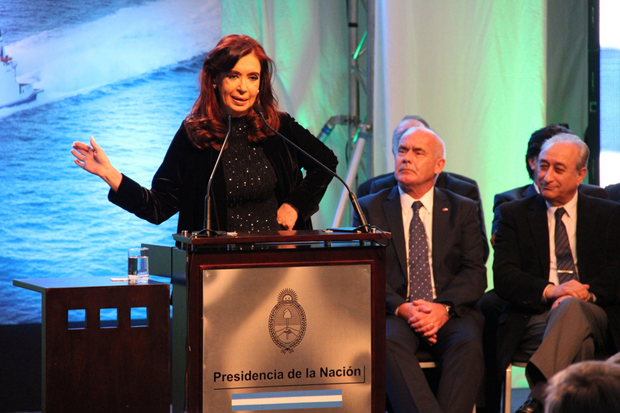
While president Cristina Fernández de Kirchner’s government took a hit during midterm elections, Argentina’s supreme court ruled her restrictions on the country’s media were constitutional. (Photo: Claudio Santisteban / Demotix)
The Argentinian supreme court recently ruled to uphold the country’s controversial media law. The decision represents a big victory for President Cristina Fernández de Kirchner, who argued that the law helps break up the power concentrated in the hands of Argentina’s biggest media conglomerate Grupo Clarín. Opponents, however, says it stifles freedom of expression and press as it would force media companies to sell off some of their outlets. Concerns have also been raised about the law being a way of punishing Clarín, which fell out with the government after negative coverage during tax protests in 2008.
This is only the latest chapter in the ongoing story of the media business in some Latin American countries, with left wing governments and private companies locked in a decade-long fight for control of what will be shown on TV, heard on the radio, printed in newspapers, and posted on websites. New communications laws, persecution of journalists and closure of television networks, however, shows who is really in charge.
Governments like Venezuela and Argentina are waging war against big media companies, while more moderate ones, like Brazil, are using milder means to try and balance the power of communication in their countries. But far from being presented as a straightforward issue of freedom of expression, most of these cases have two opposing and radical interpretations.
On one side, there is the pro-government camp. They believe the governments are democratising the media, which has traditionally been in the hands of the few. In Brazil, for example, eight families control almost 80% of all traditional media companies. The aforementioned Grupo Clarín owns national and regional newspapers, radios, TV channels and more.
Those opposing these measures, however, say they amount to censorship. Again, a good example comes from Argentina: there are some rumours that Kirchner’s administration is trying to suffocate Grupo Clarín by not allowing big chain stores to advertise in their papers. There is also the infamous case of the the closure of Venezuela TV channel RCTVI in 2010.
Both sides talk of freedom of expression, arguing they want to show what is better for the public. But the public – those with the most to benefit from a good and transparent media – are not being allowed to decide for themselves. This is not happening just in Argentina and Venezuela, but across the continent – in Ecuador, Nicaragua and Bolivia, and, albeit in a much gentler way, in Brazil.
Professor Mirta Varela, specialist in history of the media at the University of Buenos Aires, is among those who believe governments are not repressing the big companies or trying to dominate the industry. “The measures taken have shown the political and economic power of the main companies, the spurious origin of their economic growth and their relationship with the dictatorship”, she explains, referencing Grupo Clarín and the military regimes that held power in almost all the Latin American countries from 1960 to 1980. But she also sees some problems with this polarisation: “There is a little room to set a new agenda; to make independent criticism, not overtly for or against the government.”
Cecilia Sanz works for Argentinian TV show “Bajada de línea”, which roughly translates to “Under the Line”. The show is hosted by Uruguayan Victor Hugo Morales, a well-known journalist connected to what Sanz calls “the progressive governments” in Latin America. Here she groups together a number of different left-leaning governments from across the continent – from moderates Lula da Silva and Dilma Rousseff in Brazil, to the more radical Evo Morales in Bolivia and Rafael Correa in Ecuador.
The show comments on the state of the media in Latin America, mainly arguing against the big private companies. “Our main goal is to put in context and show how the media owners have the intention, above all else, to accomplish their economic objectives,” she says. “The are using ‘freedom of expression’ as an excuse for this”. She mentions the case of powerful Mexican TV Azteca, which according to her, supports all the candidates from the hegemonic party PRI, and Chilean paper “El Mercurio”, which used to attack Chilean ex-president Salvador Allende in the 1970s – again putting very different cases in the same group.
The more radical of these “progressive governments” accuse the media industry of trying to destabilise the authorities or to encourage coups d’état. Venezuela’s putsch in 2002 is always mentioned. In this case factions of the media was directly fighting against Hugo Chávez – so Chávez took them off the air.
“This is an insult to the audience because in all of cases it is about the most popular media channels”, counters Claudio Paolillo, president of the freedom of press and expression commission of SIP, Sociedad Interamericana de Prensa (the Inter-American Press Society). “No one has put a gun to the audience’s head to force them to choose what to read, listen or watch, and on what channel.”
Paolillo says the government engages in “Goebbels’ style” propaganda, sustained by public resources, to oppress independent or critic media and journalists. He adds that, ironically, these radical “progressive governments” act like the conservative military regimes of the past. “It is an ideological posture. They want to nationalise communications media as if it was a regular business that offers services or products.”
Paolillo says SIP is against Latin Americas state-controlled monopolies or oligopolies, but reaffirms it is the audience that has the real power to decide what to watch, and where. If they want to watch the same news program, the government shall not interfere. “Unfortunately in Argentina as in Venezuela (and we must add here Ecuador, Nicaragua and Bolivia), governments have created their own media companies, expropriated and bought private ones – in some cases even working through a figurehead”, he complains.
Brazilian political scientist Mauricio Santoro brings up another common problem in the region – organised crime targeting reporters in Mexico and Colombia. But he says this is not a new situation. In his opinion, what is new, is “progressive governments” using the power of the state to control its opponents.
“The alternative proposed by these leftist governments is not based on the construction of an alternative model that privileges pluralism and gives a voice to social and community movements. It is about breaking business groups and giving power to a state press that acts like a government representative and not a public one.”
Worried about the poor quality of the media across Latin America, Santoro suggests the continent needs a more dynamic media, more capable of listening and understanding the true necessities of the people of a region going through “profound change”.
“Looking at the local scene”, he asks, “are we able to find any country where the traditional media meets this expectation?”
Not really.
This article was originally posted on 11 Nov 2013 at indexoncensorship.org
9 Oct 2013 | News, Russia
 The Arctic Sunrise scandal began on 18 September, when Greenpeace activists reached Russia’s state gas giant Gazprom oil rig Prirazlomnaya. The Arctic Sunrise crew consisted of 28 activists from 18 different countries, including New Zealand, Australia, United Kingdom, Russia, France, Italy, Canada and Argentina, and two journalists – Russian photographer Denis Sinyakov and British videographer Kieron Bryan. Captain Peter Willcox was skipper of Greenpeace’s legendary “Rainbow Warrior” – a ship on which Greenpeace activists protested against testing nuclear weapons in late 1980s.
The activists lowered dinghies trying to disembark to the oil rig to hang out a banner, criticising petroleum production in the Arctic, but were seized by Russian frontier guards, “Arctic Sunrise” towed to Murmansk and its crew members arrested.
All thirty Greenpeace activists from “Arctic Sunrise” ship have face charges of piracy in Russian city of Murmansk – a criminal article which stipulates up to 15 years in jail.
The activists deny the charges and have been refusing to give evidence since their very arrest.
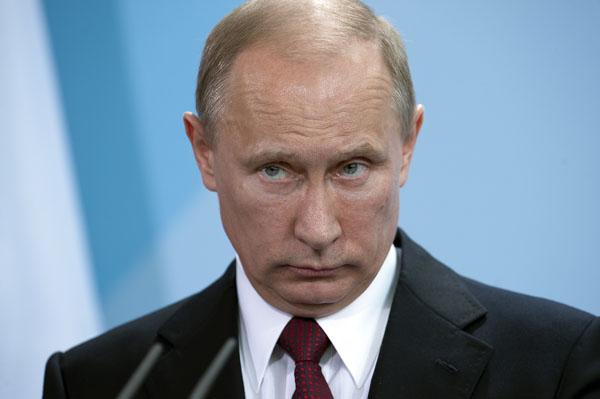
Vladimir Putin commented:
“I do not know the details of what happened, but they are definitely not pirates. But formally they tried to siege the rig, and our law enforcement authorities, our frontier guards didn’t know, who was trying to seize this rig under the name of Greenpeace – in the context of events in Kenya this could be anything,”
One could not perceive Russian president’s words unambiguously. On the one hand, he made it clear Greenpeace activists were not pirates, and his words have always been an indirect order for Russian courts. On the other hand, he did actually compare Greenpeace with terrorists.
Gennady Lyubin , executive director of Gazprom Schelf Neft – the owner of Prirazlomnaya –insists that Greenpeace members’ actions could have led to “unpredictable and even tragical consequences” and says that Prirazlomnaya is absolutely safe.
Russian journalists have stood up for their colleague Denis Sinyakov and his colleagues from Greenpeace.
They held pickets near Russian Investigative Committee headquarters in Moscow. Leading online media illustrated their articles with black squares instead of photographs.
Greenpeace, famous for its remarkable, yet always peaceful protests against threats to nature, have noted that “Arctic Sunrise” crew didn’t do any harm to anyone, nor did it try to take possessions.
What was happening should have been quite obvious for Russian authorities, including Vladimir Putin; it’s not the first time Greenpeace has protested against Gazprom’s petroleum production in the Arctic.
Early in September 20 Greenpeace activists wearing polar bear costumes blocked the entrance of Gazprom’s headquarters in Moscow. In late August six mountain climbers, including Greenpeace executive director Kumi Naidoo, climbed onto the Prirazlomnaya and managed to stay on its sheer wall for 15 hours. The activists said the rig’s workers poured cold water on them and threw metal objects at them.
That time they managed to avoid criminal prosecution.
Greenpeace activists also disrupted a football game between Swiss club Bazel and Gazprom-sponsored Schalke-04 for about five minutes by unfurling a gigantic banner saying “Gazprom. Don’t foul the Arctic”.
The Greenpeace Save the Arctic campaign was launched in June 2013. According to the the petition against offshore drilling in the has already been signed by almost four million people.
Has “Arctic Sunrise” crew manage to bring more world’s attention to the issue?
It seems Vladimir Putin and his team – intentionally or not – managed to change the subject from the threatened Arctic ecology to Russia’s repressive attitude towards any kinds of civil activism. The paradox is that Greenpeace has became a part of this focus shifting, now having to raise the alarm more as human rights advocates than ecologists.
However, the important question is whether such focus shifting is accidental.
Vladimir Putin is used to his reputation as someone who doesn’t exactly stick to the letter of the European Convention on Human Rights. But never has he shown the signs of being ready to give up any of his and his fellow oligarchs’ commercial interests. The Arctic Sunrise case is another example.
This article was originally published on 9 Oct 2013 at indexoncensorship.org