2 Mar 2023 | Afghanistan, Burma, China, Hungary, News, Poland, Russia, United Kingdom, United States
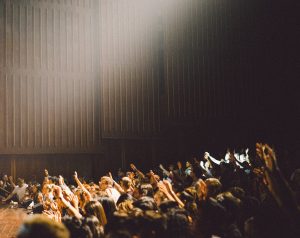
Academic freedom is under attack. Photo: Edwin Andrade
Students should be encouraged to challenge ideas and question the world around them. Higher education is meant to teach us how to think freely, and for ourselves. Unsettling new data published by the Academic Freedom Index proves that this freedom is under threat. The report finds that academic freedom is in decline for over 50 percent of the world’s population and that many people on campuses worldwide have significantly less freedom today than they did ten years ago. In the past decade, academic freedom has improved in only a handful of countries, affecting just 0.7% of the world’s population. The most populous of these countries is Uzbekistan, a closed autocracy in which universities and scholars still face severe limitations, such as the government’s control over contacts between universities or scholars and foreign entities.
AFI’s data signals a decline across all regions and all region types. Our own ranking, the recently published Index Index, a project that uses innovative machine learning techniques to map the free expression landscape across the globe, shows just how this plays out on a country-by-country basis. Some obvious patterns can be drawn. Dwindling academic freedom clearly correlates to the deterioration of democracy in countries such as Poland, Hungary, Russia and Belarus. Political developments, including military coups in countries such as Myanmar and Afghanistan, have coincided with severe declines in academic freedom. In December 2022, the latter saw a ban by the Taliban on women and girls attending universities, a ruling that illustrates how academic freedom extends beyond what is taught on campuses and delineates one’s freedom to simply exist within academic spaces.
That said, the data shows that declines in academic freedom worldwide have occurred in different political settings and do not always follow the same pattern. Liberal democracies such as the United States of America and the United Kingdom are among the countries under which freedom is proven to be under threat. The AFI attributes this to ‘differences between individual and institutional dimensions of academic freedom’. This demarcates the difference between the freedom of an individual to teach, research and communicate freely and an institution’s autonomy and freedom to operate without government regulation. The AFI report gives a number of examples showing how disaggregation has occurred.
China, for instance, has witnessed a decrease in institutional academic freedom since 2010, when the State Council launched a ten-year strategy for education reform. Chinese universities have since remained in a subordinate position to the party-state, with universities that maintain leadership and management systems controlled by the university’s party committee. The party sets the boundaries of permissible research, exchange, and academics’ public speech. This system facilitated a serious decline in the freedoms enjoyed by academics under President Xi Jinping who has consolidated and centralised power, reestablished the party’s control over information, education and media, and made censorship in China a fact of life. Moreover, the draconian National Security Law enacted in Beijing in 2020 has exacerbated pressure on academic freedom.
The United States, however, presents an altogether different picture. Despite being lauded as a bastion of free expression, the US has seen a visible decline in academic freedom since 2021. This is because educational matters in the USA are largely regulated by individual states, which have increasingly used their authority to interfere in academic affairs. Several Republican-led states have adopted bills that ban the teaching of concepts related to “critical race theory” in universities. Conservative groups have lobbied state legislatures in attempts to withdraw funding from subjects such as gender, minority studies, and environmental science. Some institutions have introduced self-censoring measures following abortion bans to avoid persecution by state governments. In September 2022, Idaho’s flagship university curtailed individual academic freedom by blocking staff from discussing abortion or emergency contraception on campus.
Mexico’s government, led by Andrés Manuel López Obrador, has weakened institutional autonomy by regularly appointing university directors, often resulting in student protests. Attacks on (predominantly female) students, protests against these harassments, and a drug war fought on university campuses has also fuelled a decline in campus integrity, university safety and academic freedom.
The underwhelming glimpse of hope that emerges from this year’s findings (compared with 2022) is that the number of countries with improvements in academic freedom grew from two to five. Overall, the data signals a shift toward a less free world, in a worse state than it was 10 years ago. It’s a tough pill to swallow.
22 Jun 2022 | Afghanistan, Africa, Americas, Asia and Pacific, Belarus, China, Europe and Central Asia, European Union, Hungary, India, Kenya, Magazine, Magazine Contents, Philippines, Poland, Russia, Turkey, Ukraine, United Kingdom, United States, Volume 51.02 Summer 2022 Extras
The summer issue of Index magazine concentrated its efforts on the developing situation between Russia and Ukraine and consequential effects around Europe and the world.
We decided to give voice to journalists, artists and dissidents who chose to respond to this ruthless war. At the same time, we didn’t forget other attacks on freedoms that haven’t been covered around the globe as much as they should.[/vc_column_text][vc_custom_heading text=”Up front”][vc_column_text]Joining Ukraine’s battle for freedom, by Jemimah Steinfeld: We must stand with the bold and brave against Putin.
The Index: A global tour of free expression, departing from the poll booth and arriving at the journalists reporting under Taliban rule.[/vc_column_text][vc_custom_heading text=”Features”][vc_column_text]Fifty years of pride and prejudice, by Peter Tatchell: Following the rise and
corporate fall of London’s march for LGBT rights, will grassroots voices rise again?
India’s meaty issue, by Aishwarya Jagani: When a burger comes with a side of oppression.
Cartoon, by Ben Jennings: Art imitates life, caveman style.
My three years of hell in an Uyghur ‘re-education’ camp, by Gulbahar Hatiwaj and Rahima Mahmut: As the world stays silent, hear the truth from inside China’s brutal concentration camps.
One step ahead of the game, by Chen Dan: Media criticism of the Chinese government is all part of the power play.
Welcome to the kingdom of impunity, by Michael Deibert: The landscape is dangerous for journalists in Haiti. Murders and kidnappings are a daily risk.
Politically corrected? By Issa Sikiti da Silva: The banned words the Kenyan
government doesn’t want to hear in this election year.[/vc_column_text][vc_custom_heading text=”Special report: The battle for Ukraine”][vc_column_text]Losing battle for truth in Russian lecture halls, by Ilya Matveev: The war has put a new strain on academic freedom. A Russian lecturer laments his lost classroom.
Don’t be afraid to say two plus two is four, by Mark Frary and Alla Gutnikova: As a convicted student journalist speaks out for freedom, do Russian dissidents once again face the gulag?
Emotional baggage, by Slavenka Drakulic: How it feels to pack up a life in Ukraine and become a refugee.
Back to the future, by Martin Bright: The world has been turned
upside down for Ukrainian reporters, and this is their new landscape.
On not being shot, by John Sweeney: Amidst the Kremlin-wrought
wreckage, do we need a new era of journalism?
Russia’s trojan horse moves closer to Europe, by Viktória Serdult: In Hungary, Putin’s right-hand man and Europe’s right-wing firebrand wins again.
Turkey’s newfound russophilia, by Kaya Genç: Putinism is seeping into Turkey, and it spells trouble for future freedoms.
Divided by age and a tv screen, by Hanna Komar: How do you make sure your
family see the truth when they’re blinded by Kremlin propaganda? A Belarus activist speaks out.
Culture in the cross hairs, by Andrey Kurkov: Decades after Soviet rule, Ukrainian culture is once again under threat, as are the lives behind the creative expression.
Bordering on media control, by Kseniya Tarasevich: False information about
Ukraine finds fertile breeding ground in Poland.
Treat tragedies of the Ukraine war with dignity, by Olesya Khromeychuk: The grieving hearts left behind when death becomes news fodder.
Worth a gamble, by Jemimah Steinfeld: When telling the truth is a crime, turn to a criminal spam operation.[/vc_column_text][vc_custom_heading text=”Comment”][vc_column_text]
Cancel Putin, not culture, by Maria Sorenson: Banning Russian artists assumes
that they are all collaborators of the Russian state and goes against artistic freedoms.
Beware the ‘civilisation’ battle, by Emily Couch: Why Europe must reject
anti-Asian racism to fully stand with Ukraine.
The silent minority, by Ruth Smeeth: A tribute to those whose work never saw the light of day.[/vc_column_text][vc_custom_heading text=”Culture”][vc_column_text]‘The light is no longer the light it used to be’, by Lyuba Yakimchuk: The poet on children being indoctrinated and the elderly disorientated in Russia-occupied Ukraine.
A cassandra worth heeding, by Dominic Cavendish: Murdered Russian journalist
Anna Politkovskaya, whose dispatches from Chechnya should be put in the spotlight.
Poetic injustice, by Stephen Komarnyckyj: History is repeating itself
on the pages penned by Ukrainian writers.
Banking on Russia’s poetic spirit, by Maria Bloshteyn and Yulia Fridman: A “piggy bank” of Russian poetry is fighting on the right side of Putin’s war.
Metaphors and madness, by Eduardo Halfon: In Guatemala, truth is best expressed through fiction.
Metal shows its mettle, by Guilherme Osinski: A heavy metal band labelled
“satanic” by Iran is free from prison and taking back the microphone.
America’s coming crucible, by Jo-Ann Mort: Women in the USA might soon be in the dark about their own bodies.
