For the past six months the Index on Censorship Youth Advisory Board has attended monthly online meetings to discuss and debate free speech issues. For their final assignment we asked members to write about the issue they felt passionately about that took place during their time on the board.
Simon Engelkes – Terrorism and the media in Turkey
When three suicide bombers opened fire before blowing themselves up at Istanbul Atatürk airport on 28 June 2016, Turkey’s social media went quiet. While the attacks were raging in the capital’s airport, the government of president Recep Tayyip Erdogan blocked social networks Facebook and Twitter and ordered local media not to report the details of the incident – in which at least 40 people were killed and more than 200 injured – for “security reasons”.
An order by the Turkish prime minister’s office banned sharing visuals of the attacks and any information on the suspects. An Istanbul court later extended the ban to “any written and visual media, digital media outlets, or social media”. Şamil Tayyar, a leading deputy of the ruling Justice and Development Party said: “I wish those who criticise the news ban would die in a similar blast.”
Hurriyet newspaper counted over 150 gag orders by the government between 2010 and 2014. And in March 2015, Turkey’s Constitutional Court approved a law allowing the country’s regulator to ban content to secure the “protection of national security and public order” without a prior court order. Media blackouts are a common government tactic in Turkey, with broadcast bans also put in place after the bombings in Ankara, Istanbul and Suruç.
Emily Wright – The politics of paper and indirect censorship in Venezuela
Soaring inflation, high crime rates, supply shortages and political upheaval all typically make front-page news. Not so in Venezuela, where many newspapers have suspended printing because of a shortage of newsprint.
For over a year now, the socialist government of Nicolás Maduro has centralised all paper imports through the Corporación Maneiro, now in charge of the distribution of newsprint. It is a move the political opposition is calling a form of media censorship, given that many newspapers critical of Chavismo and Maduro’s regime, have been struggling to obtain paper to print news.
In January, 86 newspapers declared a state of emergency, announcing they were out of stock and their capacity to print news was at risk. El Carabobeño, which is critical of the government and Chavismo, stopped circulating in March due to a lack of paper. A year earlier the newspaper had been forced to change its format to a tabloid, and reduce its pages, after running as a standard newspaper since 1933.
Censorship is an long-term problem in Venezuela but it is taking new, covert forms under Hugo Chávez’s successor, Nicolás Maduro. Media outlets are being economically strangled through tight regulation. On top of this huge fines for spurious charges of defamation or indecency linked to articles have become commonplace. Correo del Coroni, the most important newspaper in the south of the country, went bankrupt in this fashion. In March it was fined a million dollars and its director sentenced to four years in jail for defamation against a Venezuelan businessman. A month earlier it was forced to print only at weekends after being systematically denied newsprint.
Under Maduro’s regime, censorship in Venezuela has gone from piecemeal to systemic and the public’s right to information has been lost in the mix. Unable to mask the country’s hard realities with populist promises like his predecessor did, Maduro has been cracking down on the media instead.
Reporters Without Borders recently rated the press in Venezuela as being among the least free in the world, ranking it 139 out of 180 countries, below Afghanistan and Zimbabwe. Freedom House recently rated the press in Venezuela as Not free.
Mark Crawford – The UK government’s anti-BDS policy
In February this year, the British government banned public boycotts of Israeli goods. In recent years, the Boycott, Divestment and Sanctions campaign has become popular among those in opposition to the oppression of the Palestinian people, whereby Israeli goods, services and individuals are evaded or censored.
It’s illogical to punish an entire nation, as BDS does, for the actions of those in power. The answer to this illiberal policy must not be, however, to hand greater power to faceless, bureaucratic law enforcement to suppress freedom of expression.
As a result of the government’s clampdown, the board of trustees at my students’ union, UCLU, has already overridden a pro-BDS position democratically endorsed – however poorly – by its Union Council; but as well as emboldening the very illiberal voices that thrive on the aloof vilification of bureaucrats, the board even elected to censor council’s harmless and necessary expressions of solidarity with the Palestinian people.
The cure for faulty ideas and tactics is better ideas and better politics – translated through debate and honest self-reflection. Not only have legal shortcuts never worked, but they’re ideologically hypocritical and politically suicidal.
Ian Morse – Twitter’s safety council
Twitter unveiled its safety council in February. Its purpose is to ensure that people can continue to “express themselves freely and safely” on Twitter, yet there are no free speech organisations included.
So while the group ostensibly wants to create safety, its manifesto and practice suggest otherwise. The group doesn’t stop incitements of violence, it stops offensive speech. Safety only refers to the same attempts to create “safe spaces” that have appeared in so many other places. There is a difference between stopping the promotion of violence within a group – as Twitter did with 125,000 terrorism-related accounts – and stopping people from hearing other people’s views. Twitter has a mute and block button, but has also resorted to “shadow banning”.
It’s indicative of two wider trends: the consolidation of “speech management” in Silicon Valley, and the calamitous division of the liberal left into those who allow the other side to speak and those who do not.
Layli Foroudi – Denied the freedom to connect: censorship online in Russia
The United Nations Human Rights Commission has brought the human rights framework into the digital age with the passing of a resolution for the “promotion, protection, and enjoyment of human rights on the internet”, particularly freedom of expression.
Russia opposed the resolution. This is unsurprising as the government institutionalises censorship in legislation, using extremism, morality and state security as justifications. Since November 2012, the media regulatory body Roskomnadzor has maintained an internet blacklist. Over 30,000 online resources were listed in April, plus 600,000 websites that are inaccessible due to being located on the same IP address as sites with “illegal” information.
This year, the internet in Russia has experienced increased censorship and site filtering under the influence of Konstantin Malofeev whose censorship lobbying group, the Safe Internet League, has been pushing for stricter standards in the name of Christian Orthodox morality, freedom from extremism and American influence.
Activists in Russia have claimed that their messages, sent using encrypted chat service Telegram, have been hacked by Russian security forces. Surveillance was what originally drove Pavel Durov, founder of Telegram and social network VKontakte, to set up the encrypted service as he and his colleagues felt the need to correspond without the Russian security services “breathing down their necks”. Durov himself lives in the US, a move prompted by the forced sale of VKontakte to companies closely aligned with the Kremlin, after the social network reportedly facilitated the 2011 protests against the rigging of parliamentary elections. His departure confirms theories about the chilling effect that crackdowns on expression can have on innovation and technology in a country.
In June a new law was passed which requires news aggregators, surpassing one million users daily, to check the “truthfulness” of information shared. Ekaterina Fadeeva, a spokesperson for Yandex, the biggest search engine in Russia, said that Yandex News would not be able to exist under such conditions.
Madeleine Stone – The murder of Joe Cox
The brutal daylight murder of Yorkshire MP Jo Cox may not initially seem like a freedom of speech issue.
In Britain, we imagine political assassinations to take place in more volatile nations. We are often complacent that our right to free speech in the UK is guaranteed. But whilst there are people intimidating, attacking and murdering others for expressing, campaigning on and fighting for their beliefs, this right is not safe. For democracy to work, people need to believe that they are free to fight for what they believe is right, no matter where they fall on the political spectrum. Jo Cox’s murder, which for the most part has been forgotten by British media, should be a wake-up call to Britain that our freedom of speech cannot be taken for granted.
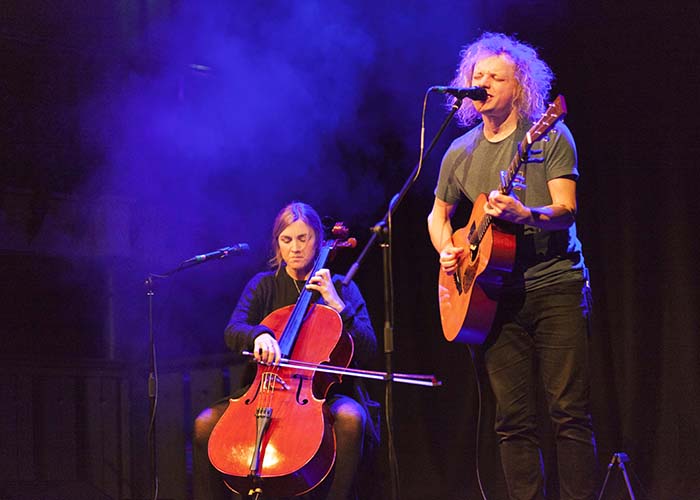
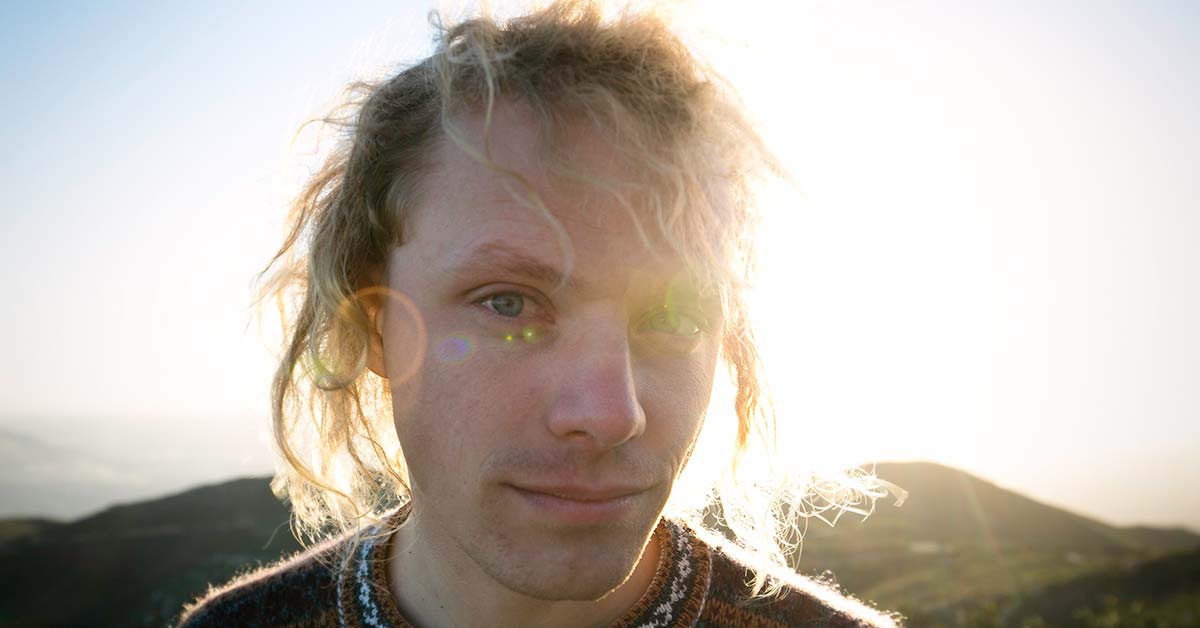
Norwegian musician Moddi has collated an album of songs from around the world that had been banned, censored or silenced. Unsongs includes cover versions of songs from countries including China, Russia, Mexico and Vietnam, on topics such as drugs, war and religion. Index has put together a playlist of some of these songs to coincide with the release of the 250th issue of Index on Censorship magazine, which includes a feature by Moddi about the inspiration behind the album.
1. Izhar Ashdot – A Matter of Habit
Israeli singer Izhar Ashdot was preparing to sing A Matter of Habit on army radio station Galatz in 2012 when he received a message saying it wasn’t welcome. The station stating “We should avoid celebrating a song that demonises our soldiers.” The song describes the fear and confusion of Israeli soldiers, until “killing is a matter of habit”.
2. Pussy Riot – Punk Prayer
Punk Prayer became internationally known after Russian feminist punk band Pussy Riot staged a performance of the song at Moscow’s Cathedral of Christ the Saviour. The group said it was a protest against the Orthodox church’s support for Russia’s President Vladimir Putin. Three members of the group were sentenced to two years in prison for “hooliganism motivated by religious hatred”.
3. Kate Bush – Army Dreamers
Kate Bush’s 1980 hit Army Dreamers tells the story of a mother’s grief after her son is killed in battle, and reflects the brutality and emotional effects of military conflict. During the Gulf War the BBC were wary of playing songs with an anti-war sentiment and told to think carefully before playing them.
4. Victor Jara – Prayer for a Worker
Chilean folk singer Victor Jara was killed in the 1973 military coup that overthrew socialist president Salvador Allende. His songs followed a theme of peace and social justice. A Prayer for a Worker highlights the failed attempts of the Christian Democratic Party and the Socialist Party to reconcile before the coup.
5. Los Tucanes di Tijuana – My Three Animals
In their 1990s narco-corrido (drugs ballad) Mis Tres Animals, Mexican group Los Tucanes di Tijuana sing of drug-trafficking but disguise cocaine, marijuana and heroin with the names of animals: a parrot, a goat and a rooster. The song made it on to the radio thanks to this word play, but narco-corridos are often censored as they are blamed for encouraging drug use and trafficking.
6. Richard Burgess – Eli Geva
Eli Geva was an soldier who refused to lead his forces into Beirut during the 1982 Lebanon war. His act caused a great deal of controversy in Israel, and Geva became an icon for the peace movement. This ode to the Israeli commander was written by Richard Burgess and performed by Norwegian singer Birgitte Grimstad, but Grimstad was warned against singing the song during a tour in Israel. The above video is Moddi’s cover version.
7. Billie Holiday – Strange Fruit
Strange Fruit, originally recorded by Billie Holiday in 1939, was a protest against the brutality and racism in the United States, particularly the lynching of African Americans. Holiday approached both her record label and producer about recording the song but they turned it down, fearing a negative reaction. Instead a friend, Milt Gabler, helped her to record and distribute the song after her a cappella version of it bought him to tears.
Order your full-colour print copy of our journalism in danger magazine special here, or take out a digital subscription from anywhere in the world via Exact Editions (just £18* for the year). Each magazine sale helps Index on Censorship fight for free expression worldwide.
*Will be charged at local exchange rate outside the UK.
Magazines are also on sale in bookshops, including at the BFI and MagCulture in London, Home in Manchester, Carlton Books in Glasgow and News from Nowhere in Liverpool as well as on Amazon and iTunes. MagCulture will ship anywhere in the world.
Bahraini authorities this week released opposition activist Zainab Al-Khawaja, who had been imprisoned with her infant son since March. She had been convicted of insulting the Bahraini king after she ripped up a picture of him.
Al-Khawaja may now be out of prison — though she could be re-arrested at any time — but her father, Abdulhadi Al-Khawaja, is one of over 3,500 prisoners of conscience who remain in Bahrain’s jails. According to research by World Prison Brief, Bahrain has the highest number of prisoners per capita in the Middle East, with 301 people in jail per 100,000 people of its 1.3 million population (followed by Israel at 256).
Arbitrary detention is the imprisonment of a person without proper evidence that they committed a crime or a case in which there has been no proper due process. Last year, the Liberties and Human Rights Department (LHRD) of Al-Wefaq National Islamic Society recorded a total of 1,765 arrests by security services for reasons related to the opposition political movement, including the arrests of 120 children and five women.
The total number of arbitrary arrests last year was up on 2014 (1,765) but down on 2013 (2,192), 2012 (2,221) and 2011 (2,929).
The UN Working Group on Arbitrary Detention, a UN body consisting of five experts, has repeatedly concluded that Bahrain has violated several international standards of a fair trial. In September of last year, the group found the detention of the secretary general of Al-Wefaq National Islamic Society, Sheikh Ali Al-Salman — this month sentenced to nine years imprisonment — to be arbitrary and “falls under category II and III of the Working Group’s categories of arbitrary detention”.
The five categories of arbitrary deprivation of liberty, according to the UN group are: when it is clearly impossible to invoke any legal basis justifying the deprivation of liberty (I); when the deprivation of liberty results from the exercise of the rights or freedoms (II); when the total or partial non-observance of the international norms (III); when asylum seekers, immigrants or refugees are subjected to prolonged administrative custody without the possibility of administrative or judicial review or remedy (VI); and when the deprivation of liberty constitutes a violation of international laws for reasons of discrimination (V).
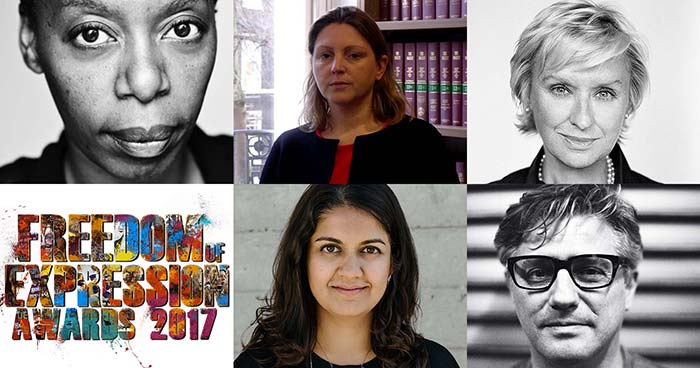
In 2013, the UN Working Group on Arbitrary Detention found the imprisonment of Index on Censorship’s Freedom of Expression Awards 2016 judge Nabeel Rajab (since pardoned) to be arbitrary, and, along with Index, called for his release.
Last year’s arbitrary arrests of prisoners of conscience in Bahrain included Mohammed Mahdi Alekri, a member of Al-Wefaq’s advisory board who was arrested on 4 January 2015 by security forces during a demonstration against the arrest of Al-Salman.
Also among those arrested was Sayed Sa’eed Isa, a member of The Martyrs Associate and father to Sayed Hashim Saeed, the 15-year-old boy killed during the security crackdown on demonstrations in Sitra late 2011.
The Bahraini authorities have continued to use arbitrary detention to silence political opponents and opposition supporters.
Julia Farrington, associate arts producer, Index on Censorship, participated in the Theatre UK 2016 conference on 12 May 2016. This is an adapted version of her presentation.
In January 2013 I organised a conference called Taking the Offensive for Index on Censorship, in partnership with the Free Word Centre and Southbank Centre. The conference was held to debate the growth of self-censorship in contemporary culture, the social, political and legal challenges to artistic freedom of expression and the sources of these new challenges.
The report from the conference concluded that censorship and self-censorship are significant influences in the arts, creating a complex picture of the different ways society controls expression. Institutional self-censorship, which many acknowledged suppresses creativity and ideas, was openly discussed for the first time.
Lack of understanding and knowledge about rights and responsibilities relating to freedom of expression, worries about legal action, police intervention and loss of funding, health and safety regulations, concern about provoking negative media and social media reaction, and public protests are all causing cultural institutions to be overly cautious.
One speaker at Taking the Offensive suggested that we are fostering a culture where “art is not for debate, controversy and disagreement, but it is to please”.
There is above all, unequal access to exercising the right to artistic freedom of expression, with artists from black and minority ethnic encountering additional obstacles.
Many felt that far greater trust, transparency and honesty about the challenges being faced need to be developed across the sector; dilemmas should be recast as a necessary part of the creative process, to be shared and openly discussed, rather than something to keep behind closed doors. This will make it possible for organisations to come together when there is a crisis, rather than standing back and withholding support: “if we collectively don’t feel confident about the dilemmas we face how can we move on with the public?”
I think there have been significant changes in the three years since the conference and, whilst I think the same challenges persist, there have been some really positive moves to tackle self-censorship within the sector. The growth of What Next? has created precisely the platform to debate and discuss the pressures, dilemmas and controversies that the conference identified. What Next? has produced guidance on navigating some of these issues and is developing more resources on how organisations can support each other when work is contested.
Index on Censorship responded to the clear call from the conference for the need for guidance about legal rights and responsibilities if we are to create a space where artists are free to take on complex issues that may be disturbing, divisive, shocking or offensive.
We have published information packs around five areas of law that impact on what is sayable in the arts: Public Order, Race and Religion, Counter Terrorism, Child Protection and Obscene Publications. They are available on the website under our campaign Art and Offence. These have been well received by the sector and read by CPS and police and we are developing a programme of training which will, if all goes well, include working with senior police officers.
At the same time, pressures from outside the sector have intensified.
The role of the police in managing the public space when controversial art leads to protest has come into sharp relief over the past two-three years where they have repeatedly “advised” venues to remove or cancel work that has caused protest or may cause protest.
More worryingly the police “advice” has also led to the foreclosing of work that is potentially inflammatory – as in Isis Threaten Sylvannia an art installation by Mimsy, that was removed from an exhibition called Passion for Freedom from the Mall Gallery last year.
With the removal of Isis Threaten Sylvania, we see a shift from the police advising closure following protest to the police contributing indirectly or directly to the decision to remove work to avoid protest.
In this case freedom of expression was actually given a price — set at £7,200 per day for the five days of the exhibition — the price set by the police for their services to guarantee public safety.
The police took the view that a perfectly legal piece of art, which had already been displayed without incident earlier in the year, was inflammatory. And in the balance of things as they stand, this opinion outweighs:
the right of the artist to express him or herself;
the organisation’s right to present provocative political art;
the audience’s right to view it;
and those that protest against it, the right to say how much they hate it, including when that means that they want the art removed.
This new chapter in the policing of controversial art sets alarm bells ringing and represents a very dangerous precedent for foreclosing any work that the police don’t approve of.
But going against police advice is problematic.
In Index’s information pack on Public Order we asked our legal adviser, working pro bono, questions that many artists and arts managers are concerned about:
What happens if police advise you not to continue with presenting a piece of work because they have unspecified concerns about public safety – and yet tell you it is your choice and they can only advise you? The artist would in principle be free to continue with the work. It would be advisable, however, to ensure that the reasons held by the police were understood. It may also be prudent to take professional advice…
And then what responsibilities for safety do employers have to staff and the public in relation to continuing with an artwork that has been contested by the police? An organisation also has duties to their employees and members of the public on their premises. These duties may extend to making an organisation liable in the event of injury to a person resulting from the unlawful act of a third party if, for example, that unlawful act was plainly foreseeable – in other words the police have given their warning.
What are the options for an arts organisation to challenge police advice at the time of the protest itself? If the organisation believes that it has grounds to challenge police directions to avoid a breach of the peace, it can seek to take legal action on an urgent basis. Realistically…legal action will not be determined until some time later and until it is determined by the courts, the organisation and/or its members or employees would risk arrest if they do not comply with police directions.
So – what starts out as police advice which implies genuine choice, on closer inspection transforms into a Hobson’s Choice where failure to follow that advice could lead to arrest.
On this evidence, both self-censorship and direct censorship are the undesirable outcomes of this as yet unchallenged area of policing.
But the Crown Prosecution Service has read and approved the packs and our law packs are in the system with the police.
The ideal policing scenario is to keep the space open for both the challenging political art and the protest it provokes. Both are about freedom of expression, what we have to avoid is the heckler’s veto prevailing.
Going back to other recent examples of censorship — questions remain about the role of the police in the decision to cancel Homegrown the National Youth Theatre production of a play about the radicalisation of young Muslims by writer Omar El-Khairy and director Nadia Latif. This was followed earlier this year by the presentation, without incident, of Another World: Losing our Children to Islamic State at the National Theatre, play on similar themes by Gillian Slovo and Nicolas Kent.
I mention Another World because it is important to state the obvious, that all the work that has been contested by the police and been cancelled, relates to work about race and religion and the majority of artists involved in work that has been foreclosed are from black and minority ethnic communities.
Looking through the lens of freedom of expression, each case of censorship gives a valuable opportunity to view a specific snapshot of relationships within society and to analyse the power dynamics operating there, both directly around the censored work — whose voices are and aren’t being heard in the work itself, and in the field and context in which the work is taking place and again looking at who is in control, who decides what voices are heard. I don’t have time here to go into an analysis of each case, but what emerges is that freedom of expression is, as it stands, a biased affair in the UK and I believe will remain so while our society and our culture are not equal.
As well as these new cases of censorship that we have seen since the 2013 conference, we have also seen new government policy, legislation and regulations which place increasingly explicit controls on what we can say and have a chilling effect on many areas of expression and communication, and interaction with government.
Many campaigners and charities see the Criminal Justice and Courts Act 2015 as designed to deter charities from intervening in judicial reviews — the most important legal channel we have to call authorities to account; the Investigatory Powers Bill, better known as the Snoopers’ Charter gives the surveillance state more powers; the Prevent Strategy requires us to police each other – surveillance and policing our neighbours — two nasty authoritarian tactics, and most recently the anti-advocacy clause would effectively ban organisations from using government funds for lobbying — stifling dissent. It was due to come into law on 1 May but the consultation period was extended and it might be kicked into the long grass.
The government has made it clear that it wants us to see ourselves predominantly if not exclusively as businesses and in response we have successfully made the case that the arts contribute massively to the economy.
But we know we are so much more. The arts are a vital, at best magnificent and effective player in civil society — especially when you define civil society as “a community of citizens linked by common interests and collective activity”.
With our core values and freedoms under attack, the arts and other civil society bodies are responding. The discussion about the role of the artist in taking on the big issues in society — from climate change to the refugee crisis — has, from where I stand, definitely intensified and gone up the agenda over the past three years, both here and internationally, as the pressure on our freedoms and values also intensifies domestically and internationally.
To fully participate in society and to create art that calls power to account, we need to continue to identify, analyse and tackle the causes of self-censorship within the sector, and stand together to enter into dialogue with the various agents of control that we identify in the process.
Art can help us imagine and bring about a more equal and just future.