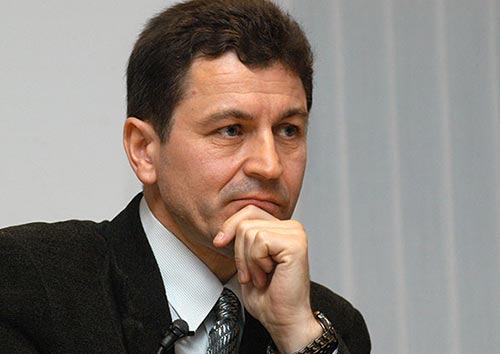
In a country marked by increasing authoritarianism, a strident crackdown on press and social media as well as numerous human rights violations, Turkish-British technologist Alp Toker brought together a small team to investigate internet restrictions. Using Raspberry Pi technology they built an open source tool able to reliably monitor and report both internet shut downs and power blackouts in real time. Using their tool, Turkey Blocks have since broken news of 14 mass-censorship incidents during several politically significant events in 2016. The tool has proved so successful that it has been implemented elsewhere globally.
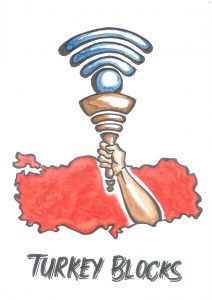
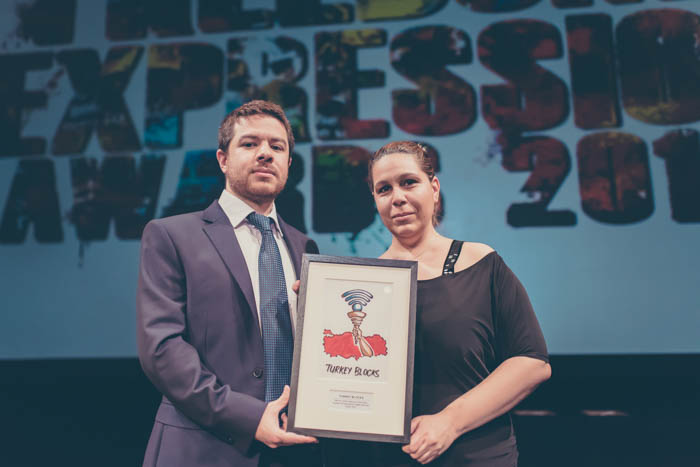
2017 Freedom of Expression Digital Activism Award-winning Turkey Blocks was presented an illustration created by cartoonist Aseem Trivedi
Internet shutdowns – the wholesale censorship of millions of voices and silencing of entire populations – pose a grave threat to the media, democracy, most of all vulnerable communities and ordinary citizens. Since the invention of the world wide web we have come to rely on the internet for personal communication, news gathering, publishing and almost every aspect of our lives. That reliance has introduced a single point of failure which is now being exploited by authorities who seek to control narrative and restrict the flow of information on an unprecedented scale.
In 2015, I was in Ankara when so-called Islamic State launched a deadly terror attack, killing over a hundred people at a rally. In the hours that followed the authorities restricted access to social media and communication networks; victims were unable to contact their loved ones or reach out for help. Journalists were unable to contact eyewitnesses or ask critical questions so essential in a healthy democracy.
Our mission was born: Since then my organisation Turkey Blocks has developed new technology that can pinpoint and validate reports of shutdowns in real time. Through 2016 we uncovered evidence of over a dozen major blackouts during national emergencies, arrests of opposition party members and a devastating attempted military coup. We provided the data that enabled media, local press and international communities to report with confidence and push back to keep the internet on. We encouraged the government to become more transparent and limit use of their telecommunications kill-switch. Today our cause crosses political lines and resounds throughout Turkey’s polarised society.
Online censorship is increasingly used to mask more severe human rights violations – not just in Turkey, but from China, Vietnam, Pakistan, India, Kashmir, to Cameroon and Bahrain and all over the world. My team’s mission now extends beyond Turkey to cover several other countries as part of our NetBlocks observatory project. With new allies like Access Now and Index’s own Mapping Media Freedom project, standing alongside the global Open Source and open technology communities we send a unified message to those who seek to silence independent voices: as long as freedom of expression and digital rights are not safeguarded, our mission will continue and we will persist.
Alp Toker and Isik Mater of Digital Activism Award-winning Turkey Blocks at the 2017 Freedom of Expression Awards (Photo: Elina Kansikas for Index on Censorship)
For his one-man protests, Ildar Dadin was sent to prison in December 2015 where he was tortured, before his conviction was quashed in February 2017. Read the full profile.[/vc_column_text][/vc_column][vc_column width=”1/2″][vc_single_image image=”84888″ img_size=”full” alignment=”center”][vc_column_text]
Despite the persecution he faces for his work, Rebel Pepper continues to satirise the Chinese state from a life in exile in Japan. Read the full profile
Established in 2015, Turkey Blocks is an independent digital research organisation that monitors internet access restrictions in Turkey. Read the full profile.
Maldives Independent, the Maldives’ premiere English publication and one of the few remaining independent media outlets, was formed in exile in Sri Lanka in 2004. Read the full profile.
[/vc_column_text][/vc_column][/vc_row][vc_row][vc_column][vc_column_text]Milyonlarca sesi toptan susturan internet kesintileri, medya ve demokrasinin etkili çalışmasını engelliyor ve en önemlisi, savunmasız toplulukların ve vatandaşların hayatını zorlaştırıyor. İcat edilmesinden bu yana, kişisel iletişim, haber alma, yayınlama gibi pek çok yönden internete bel bağlamış durumdayız. İnternetin yaşantımızda bu kadar büyük bir yer kaplaması, erişimin kısıtlanması durumunda büyük boşluk yaratıyor.
IŞİD’in Ekim 2015’te Ankara Garı yakınlarında düzenlenen miting sırasında gerçekleştirerek yüzlerce kişinin ölümüne sebep olduğu, Türkiye tarihinin en ölümcül terör saldırısı sırasında ben de Ankara’daydım. Saldırının hemen akabinde yetkililer sosyal medyaya ve iletişim ağlarına erişimi kısıtladılar; o sırada mitingde bulunanlar ailelerine ulaşıp “ben iyiyim” diyemediler, yaralı olanlar için yardım isteyemediler. Gazeteciler, her sağlıklı demokraside olması gereken bilgiye ulaşma özgürlüğünden mahrum bırakıldılar. Görgü tanıklarıyla iletişime geçip, olaylarla ilgili ayrıntıları öğrenemedikleri için konuyla ilgili haber yapmakta zorlandılar.
Görevimiz artık belliydi. O günden itibaren Turkey Blocks organizasyonu olarak, internet engellemelerini gerçek zamanlı olarak saptayabilen ve doğrulayabilen yeni bir teknoloji geliştirdik. 2016 yılı süresince, ulusal krizler, muhalefet partisi üyelerinin tutuklanması ve askeri darbe girişimi gibi olaylar sırasında ülke çapında ondan fazla kesintiye dair bulgular elde ettik. Elde ettiğimiz veriler, medya, yerel basın ve uluslararası organizasyonların internet kullanıcılarına doğru ve ayrıntılı bilgi vermelerini ve kullanıcıların internet kesintilerine karşı durabilmelerini sağladı. Hükümeti daha şeffaf olmaya ve internet kesintilerini en aza indirgemesini teşvik ettik. Girişimimiz bugün siyasi sınırları aşarak, ayrım gözetmeksizin tüm Türkiye’ye bilgi sağlıyor.
Dijital sansür, sadece Türkiye’de değil. Çin, Vietnam, Pakistan, Hindistan, Keşmir, Kamerun ve Bahreyn gibi dünyanın birçok ülkesinde meydana gelen ve gittikçe ciddileşen insan hakları ihlallerini gizlemek için giderek daha çok kullanılmakta. Ekibimizin yeni misyonu, NetBlocks gözlemleme projesi dahilinde, Türkiye dışındaki diğer ülkelere de ulaşmak. Access Now ve Index on Censorship’in Mapping Media Freedom Projesi gibi müttefiklerle birlikte küresel Açık Kaynak, Özgür Yazılım ve açık teknoloji topluluklarının yanında yer alarak, bağımsız sesleri susturmak isteyenlere ortak mesajımızı gönderiyoruz: Misyonumuz, ifade özgürlüğü ve dijital haklarımız korunmadığı sürece var olacak ve yolumuza devam edeceğiz.[/vc_column_text][/vc_column][/vc_row][vc_row][vc_column][vc_basic_grid post_type=”post” max_items=”12″ style=”load-more” items_per_page=”4″ element_width=”6″ grid_id=”vc_gid:1492791622630-bd3f02e6-28e4-6″ taxonomies=”8935″][/vc_column][/vc_row]
Drawn from more than 400 crowdsourced nominations, this year’s nominees include artists, journalists, campaigners and digital activists tackling censorship and fighting for freedom of expression. Many of the 16 shortlisted are regularly targeted by authorities or by criminal and extremist groups for their work: some face regular death threats, others criminal prosecution.
The gala takes place Wednesday 19 April at the Unicorn Theatre in London and will be hosted by comedian, actor and writer Katy Brand. If you aren’t lucky enough to be attending, you can catch the night’s events by tuning into coverage and a live Periscope stream @IndexCensorship beginning at 7:30PM BST.
We will be live tweeting throughout the evening on @IndexCensorship. Get involved in the conversation using the hashtag #IndexAwards2017.
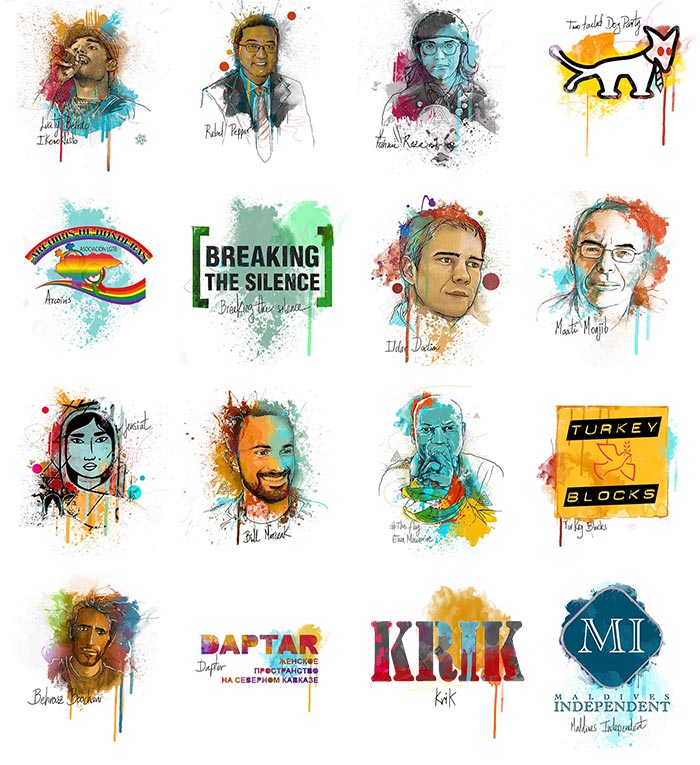
Index on Censorship Freedom of Expression Awards nominees 2017
Arts
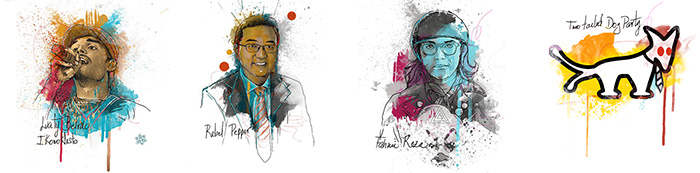
Luaty Beirão, Angola
Rapper Luaty Beirão, also known as Ikonoklasta, has been instrumental in showing the world the hidden face of Angolan President José Eduardo dos Santos’s rule. For his activism Beirão has been beaten up, had drugs planted on him and, in June 2015, was arrested alongside 14 other people planning to attend a meeting to discuss a book on non-violent resistance. Since being released in 2016, Beirão has been undeterred attempting to stage concerts that the authorities have refused to license and publishing a book about his captivity entitled “I Was Freer Then”, claiming “I would rather be in jail than in a state of fake freedom where I have to self-censor”.
Rebel Pepper, China
Wang Liming, better known under the pseudonym Rebel Pepper, is one of China’s most notorious political cartoonists. For satirising Chinese Premier Xi Jinping and lampooning the ruling Communist Party, Rebel Pepper has been repeatedly persecuted. In 2014, he was forced to remain in Japan, where he was on holiday, after serious threats against him were posted on government-sanctioned forums. The Chinese state has since disconnected him from his fan base by repeatedly deleting his social media accounts, he alleges his conversations with friends and family are under state surveillance, and self-imposed exile has made him isolated, bringing significant financial struggles. Nonetheless, Rebel Pepper keeps drawing, ferociously criticising the Chinese regime.
Fahmi Reza, Malaysia
On 30 January 2016, Malaysian graphic designer Fahmi Reza posted an image online of Prime Minister Najib Razak in evil clown make-up. From T-shirts to protest placards, and graffiti on streets to a sizeable public sticker campaign, the image and its accompanying anti-sedition law slogan #KitaSemuaPenghasut (“we are all seditious”) rapidly evolved into a powerful symbol of resistance against a government seen as increasingly corrupt and authoritarian. Despite the authorities’ attempts to silence Reza, who was banned from travel and has since been detained and charged on two separate counts under Malaysia’s Communications and Multimedia Act, he has refused to back down.
Two-tailed Dog Party, Hungary
A group of satirists and pranksters who parody political discourse in Hungary with artistic stunts and creative campaigns, the Two-tailed Dog Party have become a vital alternative voice following the rise of the national conservative government led by Viktor Orban. When Orban introduced a national consultation on immigration and terrorism in 2015, and plastered cities with anti-immigrant billboards, the party launched their own mock questionnaires and a popular satirical billboard campaign denouncing the government’s fear-mongering tactics. Relentlessly attempting to reinvigorate public debate and draw attention to under-covered or taboo topics, the party’s efforts include recently painting broken pavement to draw attention to a lack of public funding.
Campaigning
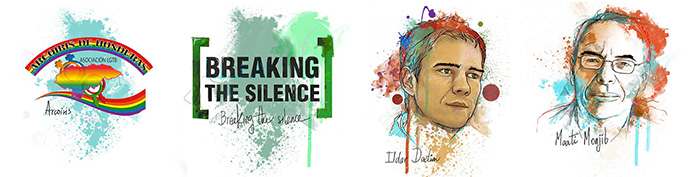
Arcoiris, Honduras
Established in 2003, LGBT organisation Arcoiris, meaning ‘rainbow’, works on all levels of Honduran society to advance LGBT rights. Honduras has seen an explosion in levels of homophobic violence since a military coup in 2009. Working against this tide, Arcoiris provide support to LGBT victims of violence, run awareness initiatives, promote HIV prevention programmes and directly lobby the Honduran government and police force. From public marches to alternative awards ceremonies, their tactics are diverse and often inventive. Between June 2015 and March 2016, six members of Arcoiris were killed for this work. Many others have faced intimidation, harassment and physical attacks. Some have had to leave the country because of threats they were receiving.
Breaking the Silence, Israel
Breaking the Silence, an Israeli organisation consisting of ex-Israeli military conscripts, aims to collect and share testimonies about the realities of military operations in the Occupied Territories. Since 2004, the group has collected over 1,000 (mainly anonymous) statements from Israelis who have served their military duty in the West Bank and Gaza. For publishing these frank accounts the organisation has repeatedly come under fire from the Israeli government. In 2016 the pressure on the organisation became particularly pointed and personal, with state-sponsored legal challenges, denunciations from the Israeli cabinet, physical attacks on staff members and damages to property. Led by Israeli politicians including the prime minister, and defence minister, there have been persistent attempts to force the organisation to identify a soldier whose anonymous testimony was part of a publication raising suspicions of war crimes in Gaza. Losing the case would set a precedent that would make it almost impossible for Breaking the Silence to operate in the future. The government has also recently enacted a law that would bar the organisation’s widely acclaimed high school education programme.
Ildar Dadin, Russia
A Russian opposition and LGBT rights activist, Ildar Dadin was the first, and remains the only, person to be convicted under a notorious 2014 public assembly law. Aimed at punishing anyone who breaks strict rules on protest, the law was enacted to silence dissent after a wave of demonstrations following Putin’s last election victory. Dadin’s crime was to stage a series of one-man pickets, often standing silently with a billboard, attempting to duck the cynical law and push for free expression. For his solo enterprise, Dadin was arrested and sentenced to three years imprisonment in December 2015. In November 2016, website Meduza published a letter smuggled from Dadin to his wife, exposing torture he claimed he was suffering alongside fellow prisoners. The letter, a brave move for a serving prisoner, was widely reported. A government investigation was prompted, and Dadin was transferred – against his will – to an undisclosed new location. A wave of public protest led to Dadin’s new location in a Siberian prison colony being revealed in January 2017. In February 2017, Russia’s constitutional and Supreme Courts suddenly quashed Dadin’s conviction, ruling he should be released and afforded opportunity for rehabilitation.
Maati Monjib, Morocco
A well-known academic who teaches African studies and political history at the University of Rabat since returning from exile, Maati Monjib co-founded Freedom Now, a coalition of Moroccan human rights defenders who seek to promote the rights of Moroccan activists and journalists in a country ranked 131 out of 180 on the Reporters Without Borders Press Freedom Index. His work campaigning for press freedom – including teaching investigative journalism workshops and using of a smartphone app called Story Maker designed to support citizen journalism – has made him a target for the authorities who insist that this work is the exclusive domain of state police. For his persistent efforts, Monjib is currently on trial for “undermining state security” and “receiving foreign funds.”
Digital Activism
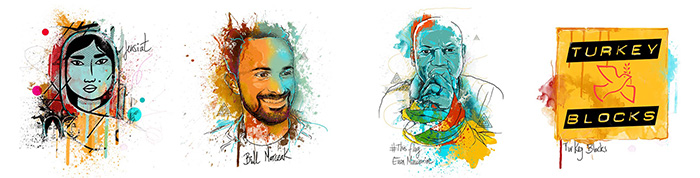
Jensiat, Iran
Despite growing public knowledge of global digital surveillance capabilities and practices, it has often proved hard to attract mainstream public interest in the issue. This continues to be the case in Iran where even with widespread VPN usage, there is little real awareness of digital security threats. With public sexual health awareness equally low, the three people behind Jensiat, an online graphic novel, saw an an opportunity to marry these challenges. Dealing with issues linked to sexuality and cyber security in a way that any Iranian can easily relate to, the webcomic also offers direct access to verified digital security resources. Launched in March 2016, Jensiat has had around 1.2 million unique readers and was rapidly censored by the Iranian government.
Bill Marczak, United States
A schoolboy resident of Bahrain and PhD candidate in computer science at the University of California, Berkeley, Bill Marczak co-founded Bahrain Watch in 2013. Seeking to promote effective, accountable and transparent governance, Bahrain Watch works by launching investigations and running campaigns in direct response to social media posts coming from activists on the front line. In this context, Marczak’s personal research has proved highly effective, often identifying new surveillance technologies and targeting new types of information controls that governments are employing to exert control online, both in Bahrain and across the region. In 2016 Marczak investigated several government attempts to track dissidents and journalists, notably identifying a previously unknown weakness in iPhones that had global ramifications.
#ThisFlag and Evan Mawarire, Zimbabwe
In May 2016, Baptist pastor Evan Mawarire unwittingly began the most important protest movement in Zimbabwe’s recent history when he posted a video of himself draped in the Zimbabwean flag, expressing his frustration at the state of the nation. A subsequent series of YouTube videos and the hashtag Mawarire used, #ThisFlag, went viral, sparking protests and a boycott called by Mawarire, which he estimates was attended by over eight million people. A scale of public protest previously inconceivable, the impact was so strong that private possession of Zimbabwe’s national flag has since been banned. The pastor temporarily left the country following death threats and was arrested in early February as he returned to his homeland.
Turkey Blocks, Turkey
In a country marked by increasing authoritarianism, a strident crackdown on press and social media as well as numerous human rights violations, Turkish-British technologist Alp Toker brought together a small team to investigate internet restrictions. Using Raspberry Pi technology they built an open source tool able to reliably monitor and report both internet shut downs and power blackouts in real time. Using their tool, Turkey Blocks have since broken news of 14 mass-censorship incidents during several politically significant events in 2016. The tool has proved so successful that it has begun to be implemented elsewhere globally.
Journalism
Behrouz Boochani, Manus Island, Papua New Guinea/Australia
Iranian Kurdish journalist Behrouz Boochani fled the city of Ilam in Iran in May 2013 after the police raided the Kurdish cultural heritage magazine he had co-founded, arresting 11 of his colleagues. He travelled to Australia by boat, intending to claim asylum, but less than a month after arriving he was forcibly relocated to a “refugee processing centre” in Papua New Guinea that had been newly opened. Imprisoned alongside nearly 1000 men who have been ordered to claim asylum in Papua New Guinea or return home, Boochani has been passionately documenting their life in detention ever since. Publicly advertised by the Australian Government as a refugee deterrent, life in the detention centre is harsh. For the first 2 years, Boochani wrote under a pseudonym. Until 2016 he circumvented a ban on mobile phones by trading personal items including his shoes with local residents. And while outside journalists are barred, Boochani has refused to be silent, writing numerous stories via Whatsapp and even shooting a feature film with his phone.
Daptar, Dagestan, Russia
In a Russian republic marked by a clash between the rule of law, the weight of traditions, and the growing influence of Islamic fundamentalism, Daptar, a website run by journalists Zakir Magomedov and Svetlana Anokhina, writes about issues affecting women, which are little reported on by other local media. Meaning “diary”, Daptar seeks to promote debate and in 2016 they ran a landmark story about female genital mutilation in Dagestan, which broke the silence surrounding that practice and began a regional and national conversation about FGM. The small team of journalists, working alongside a volunteer lawyer and psychologist, also tries to provide help to the women they are in touch with.
KRIK, Serbia
Crime and Corruption Reporting Network (KRIK) is a new independent investigative website which was founded by a team of young Serbian journalists intent on exposing organised crime and extortion in their country which is ranked as having widespread corruption by Transparency International. In their first year they have published several high-impact investigations, including forcing Serbia’s prime minister to admit that senior officials had been behind nocturnal demolitions in a Belgrade neighbourhood and revealing meetings between drug barons, the ministry of police and the minister of foreign affairs. KRIK have repeatedly come under attack online and offline for their work –threatened and allegedly under surveillance by state officials, defamed in the pages of local tabloids, and suffering abuse including numerous death threats on social media.
Maldives Independent, Maldives
Website Maldives Independent, which provides news in English, is one of the few remaining independent media outlets in a country that ranks 112 out of 180 countries on the Reporters Without Borders Press Freedom Index. In August 2016 the Maldives passed a law criminalising defamation and empowering the state to impose heavy fines and shut down media outlets for “defamatory” content. In September, Maldives Independent’s office was violently attacked and later raided by the police, after the release of an Al Jazeera documentary exposing government corruption that contained interviews with editor Zaheena Rasheed, who had to flee for her safety. Despite the pressure, the outlet continues to hold the government to account.
Grigory Pasko, was named Whistleblower of the Year at the 2001 Freedom of Expression Awards.
Grigory Pasko, a former naval officer and journalist for Russian Pacific Fleet newspaper Boyevaya Vakhta (Battle Watch), was imprisoned in 1997 after exposing Russia’s navy for illegally dumping nuclear waste in the Sea of Japan. He was arrested on charges of espionage and abuse of his official power as a former officer in the Russian navy.
Pasko was the winner of Index on Censorship’s International Whistleblower of the Year award in 2001.
Pasko spent 20 months in prison awaiting his first trial, and on 20 July 1999 he was acquitted of most of the charges. However, he was sentenced to three years in prison for abusing his authority as a naval officer. Pasko was finally released from prison under an amnesty in January 2003.
Although Russia’s 1990 Law on the Mass Media [1991] states that journalists are allowed to carry on investigations and Article 29 of the Russian Constitution bans censorship altogether, journalists are often persecuted for their work and subject to governmental harassment.
In March 2011, Pasko, along with his colleagues Igor Korolkov and Galina Sidorova, created an international NGO called the Community of Investigative Journalists – Foundation 19/29. The numbers 19 and 29 refer to the freedom of expression Articles of the Universal Declaration of Human Rights and the Russian Constitution.
Foundation 19/29 was created to provide guidance and assistance to Russian investigative reporters and bloggers who are in trouble due to their work and/or want to develop their professional skills.
Since his release from jail, Pasko has been campaigning for human rights and protection of the environment.
Index: How much more difficult is it now to be an informant than 16 years ago when you won the Index for Censorship International Whistleblower?
Pasko: The word “difficult” is no longer suitable. It is practically impossible without being detected and not “registered”. “To put on the register” means that suddenly there can be some difficulties: with obtaining a passport (as now at Dadin); with departure abroad; allegedly with non-payment of fines, taxes and so on; it can come with an apartment search or arrest (Mark Halperin recently) … Previously, this happened very rarely.
Index: What major projects are you currently working on and how does this differ from your work when you won the Index Awards?
Pasko: Since 2009, I have been engaged in teaching activities in the field of investigative journalism – journalists are, in fact, banned in Russia. Therefore, I am persecuted in all cities of Russia and in Moscow. I’m being squeezed out of the country, not giving me the opportunity to work. Our organization – Fund 19/29 http://foundation19-29.com/ was recognized as a “foreign agent” so that we had to stop our activities. Now there is a Fund 19/29, but already in Prague. In the same place, we conduct our training activities. In general, almost all independent NGOs are subject to harassment in Russia.
Index: How do you think the Russian government manages the information landscape? How does social media play a certain role in this?
Pasko: The Russian government (FSB, mostly) almost completely manages the information landscape. Those media and their blogs that still exist, for sure (if they are smart and sober) do not consider themselves independent, because they can be closed within a day. They are just allowed to exist. Social networks are relatively free so far. But they also gradually fall under the total dependence of the state (FSB). So the other day it happened with LiveJournal.
Index: What do you think, what will be the future for journalists in Russia?
Pasko: Independents will be persecuted, squeezed out of Russia, and those who remain will be imprisoned and / or killed. Independent journalism will not remain in the legal and free field. Only underground, in networks. The angry propaganda will occupy the entire information field.
Index: How did your attack in Siberia in September 2016 affect you?
Pasko: Personally, it did not. After two convictions and two imprisonments, I can only be killed, but not scared. But our partners in the regions were frightened and less likely to invite us to conduct studies on investigative journalism, despite the fact that there is a demand among young journalists, civil journalists and bloggers for this genre.
Index: Do you have any advice for other investigative journalists and informers working under a dangerously authoritarian regime?
Pasko: Be careful. Because no work should cost a human life. And, strangely enough, be bold – in the mass of its leadership of Russia (Chekists) are not only deceitful, but also cowardly. We need to learn to resist them – from the standpoint of legality, justice, respect for human rights and generally common sense. Journalism is a wonderful and necessary profession, and it deserves to be fought for by the journalists themselves.[/vc_column_text][/vc_column][/vc_row][vc_row][vc_column width=”1/2″][vc_single_image image=”85476″ img_size=”full” alignment=”center” onclick=”custom_link” link=”https://www.indexoncensorship.org/2016/11/awards-2017/”][/vc_column][vc_column width=”1/2″][vc_column_text]
Index on Censorship Freedom of Expression Awards
Seventeen years of celebrating the courage and creativity of some of the world’s greatest journalists, artists, campaigners and digital activists
In the spring issue of Index on Censorship magazine, we look at how free speech around the world is under massive pressure from conflicting interests.
On this podcast, Guadalajara-based Duncan Tucker describes the tightrope walked by Mexico’s journalists as they try to report on the government and organised crime; also Annemarie Luck, the editor of Tokyo Weekender magazine, discusses Japan’s “really weird” culture of penis festivals, censored artists and manga girls. Additionally, as the magazine’s global journalists break down how you can spot made-up news, exiled Eritrean journalist Abraham T. Zere muses on why these viral stories fool people so easily.
Kieran Etoria-King is editorial assistant at Index on Censorship magazine, and the 2016 recipient of the Tim Hetherington Fellowship. He tweets @etoriaking
[/vc_column_text][/vc_column][/vc_row][vc_row content_placement=”top”][vc_column width=”1/3″][vc_custom_heading text=”The Big Squeeze” font_container=”tag:p|font_size:24|text_align:left” link=”url:https%3A%2F%2Fwww.indexoncensorship.org%2Fmagazine|||”][vc_column_text]The spring 2017 issue of Index on Censorship magazine looks at multi-directional squeezes on freedom of speech around the world.
Also in the issue: newly translated fiction from Karim Miské, columns from Spitting Image creator Roger Law and former UK attorney general Dominic Grieve, and a special focus on Poland.[/vc_column_text][/vc_column][vc_column width=”1/3″][vc_single_image image=”88788″ img_size=”medium” alignment=”center” onclick=”custom_link” link=”https://www.indexoncensorship.org/magazine”][/vc_column][vc_column width=”1/3″ css=”.vc_custom_1481888488328{padding-bottom: 50px !important;}”][vc_custom_heading text=”Subscribe” font_container=”tag:p|font_size:24|text_align:left” link=”url:https%3A%2F%2Fwww.indexoncensorship.org%2Fsubscribe%2F|||”][vc_column_text]In print, online. In your mailbox, on your iPad.
Subscription options from £18 or just £1.49 in the App Store for a digital issue.
Every subscriber helps support Index on Censorship’s projects around the world.

 Arcoiris, Honduras
 Jensiat, Iran