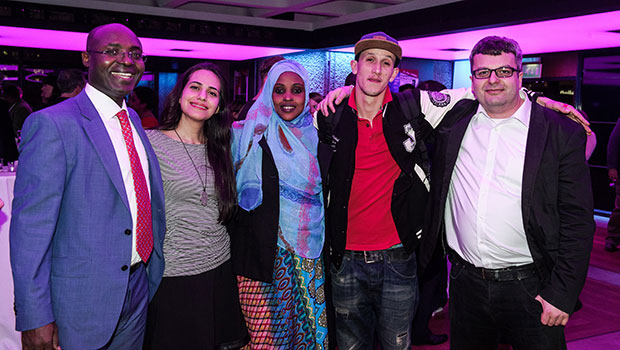
A Kenyan woman speaking out for women in one of the world’s most dangerous regions and a female journalist who exposed an unreported uprising in Saudi Arabia are among the winners of this year’s Index on Censorship Freedom of Expression Awards.
“Our shortlisted nominees are all tackling direct and serious threats to stifle free speech,” said Index on Censorship CEO Jodie Ginsberg. “We were humbled and inspired by their stories, and their dedication to ensuring we can all speak freely.”
Index on Censorship 2015 Freedom of Expression award winners: Rafael Marques de Morais (journalism), Safa Al Ahmad (journalism), Amran Abdundi (campaigning), Mouad “El Haqed” Belghouat (arts) and Tamas Bodoky (digital activism) (Photo: Alex Brenner for Index on Censorship)
Awards are presented in four categories: journalism, arts, campaigning and digital activism. The winners were Saudi journalist Safa Al Ahmad and Angolan reporter Rafael Marques de Morais (journalism – jointly awarded); Moroccan rapper “El Haqed” (arts); Kenyan women’s rights campaigner Amran Abdundi (campaigning); and Hungarian freedom of information website Atlatszo (digital activism).
The crime of free expression
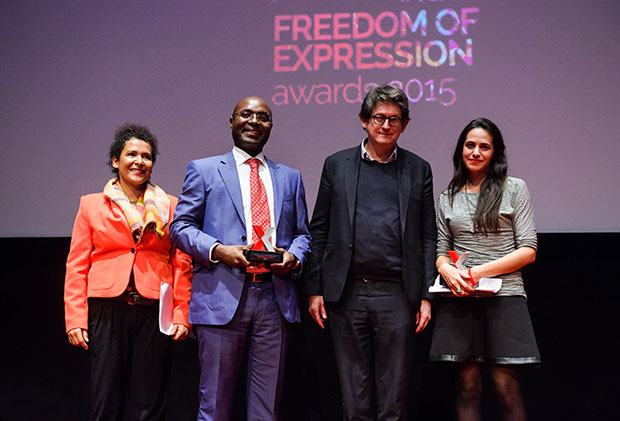
Journalist and campaigner Mariane Pearl, journalism award recipient Rafael Marques de Morais, Guardian editor Alan Rusbridger and journalism award recipient Safa Al Ahmad (Photo: Alex Brenner for Index on Censorship)
Al Ahmad was recognised for her documentary Saudi’s Secret Uprising, which exposed details of an unreported mass demonstration in Saudi Arabia. “Safa Al Ahmad dared to go into places that are difficult for women and for reporters, to bring that information back and share it with the world,” said Turkish author Elif Shafak, one of the five judges. Saudi Arabia is a mystery, even to its own people, said Al Ahmad in her acceptance speech: “Parts of our history is deliberately concealed, the present is muddled with rumours and half-truths. The government-owned and controlled media play a major role in the dissemination of those false realities of ourselves and others. This makes facts a precious commodity in Saudi Arabia.”
Angolan investigative reporter Marques de Morais has been repeatedly prosecuted for his work exposing government and industry corruption and will go on trial on 24 March charged with defamation. “Rafael is a very important individual doing very important work in a very, very difficult environment,” said judge Sir Keir Starmer QC. Marques de Morais dedicated his speech to the Zone 9 group of Ethiopian bloggers currently in jail “for the crime of exercising their right to freedom of expression”.
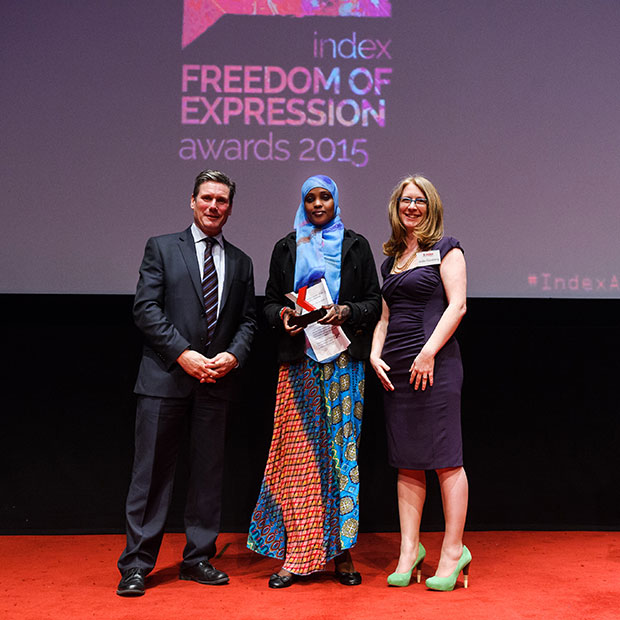
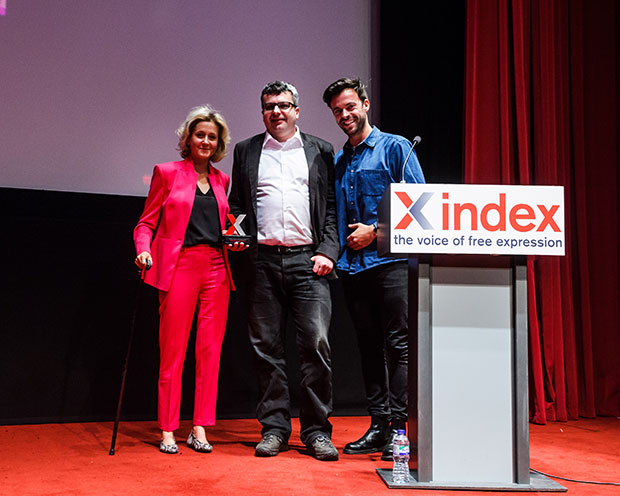
Doughty Street barrister Keir Starmer, campaigning award recipient Amran Abdundi and Index on Censorship CEO Jodie Ginsberg (Photo: Alex Brenner for Index on Censorship)
The winner in the campaigning category, Amran Abdundi, is a women’s rights activist based in north-eastern Kenya and runs a group helping women along the dangerous border with Somalia, where terrorism and extremist violence dominate. Judge Martha Lane Fox said: “Amran Abdundi was a standout candidate for me. She is doing something incredibly powerful in an unbelievably complicated and dangerous situation.” Abdundi dedicated her award to the “marginalised women of northern Kenya… who will now know that their struggles and their efforts to fight for their rights are being recognised internationally”.
Help us let the world know the truth
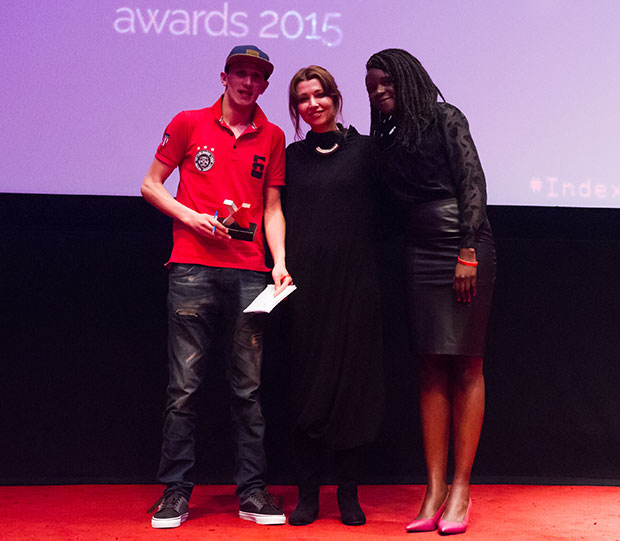
Arts category winner Mouad “El Haqed” Belghouat, novelist Elif Shafak and actor Stella Odunlami (Photo: Alex Brenner for Index on Censorship)
Arts category winner Mouad “El Haqed” Belghouat is a Moroccan rapper and human rights activist whose music highlights widespread poverty and endemic government corruption in Morocco. He has been imprisoned on spurious charges three times in as many years, most recently in 2014. Belghouat said in his acceptance speech: “I have been through difficult times: I was jailed, fired from my work, rejected by many friends. I am still forbidden to sing in my own country. But after all that I am still determined that I will never change my position. I will fight for freedom, equality and human rights for ever.” Lane Fox said Belghouat had taken his music and “translated it into a kind of online activism, but then, crucially, mobilised people in the street”.
The digital award, decided by public vote, went to Hungarian investigative news outlet Atlatszo.hu managed by Tamás Bodoky. The website acts as watchdog to a Hungarian government which has increasingly tightened its grip on press freedom in the country. Editor-in-chief Bodoky said Atlatszo.hu called on all those who believe that independent journalism in Hungary is under threat. “All those who agree that politics and business interests have sunk their claws into everyday life. All those who know that taxpayer money is vanishing. We are calling on you to help us let the world know the truth.”
Entrepreneur Martha Lane Fox, digital activism award recipient Tamas Bodoky and actor Jolyon Rubinstein (Photo: Alex Brenner for Index on Censorship)
The awards were presented by the judges along with special guests including Guardian editor Alan Rusbridger.
A special award was also given on the evening to honour the many Azerbaijani journalists and activists jailed or forced into exile or hiding following a recent crackdown by the government. Former award winner and journalist Idrak Abbasov, who was forced to flee Azerbaijan last year, accepted the award on behalf of all those facing persecution in the country. “I call upon the world community to help Azerbaijan… so that our colleagues might be released and that our country might become a normal state in which we and others might live freely,” Abbasov told the audience in a video speech.
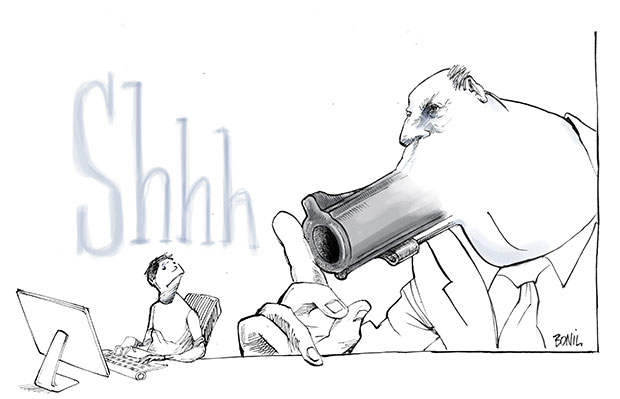
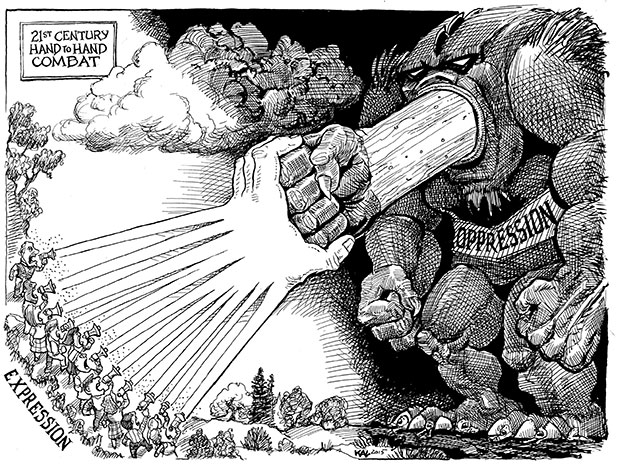
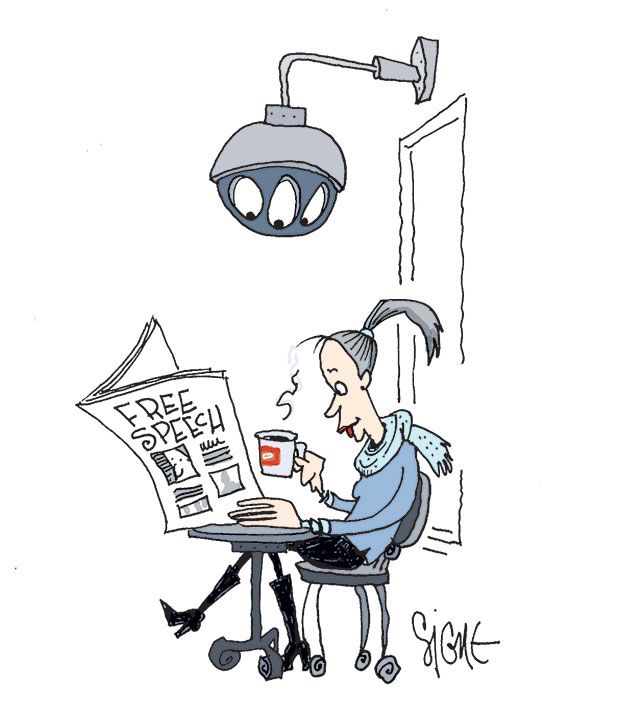
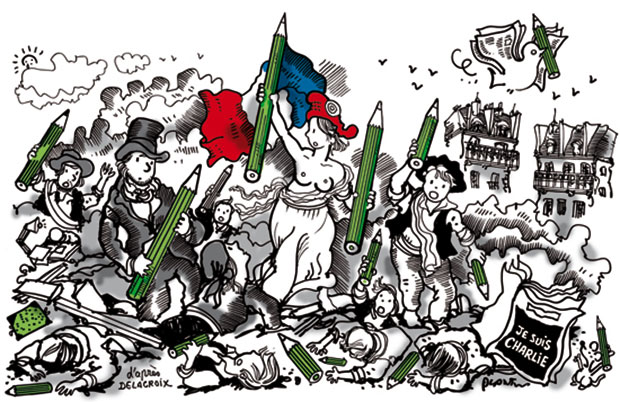
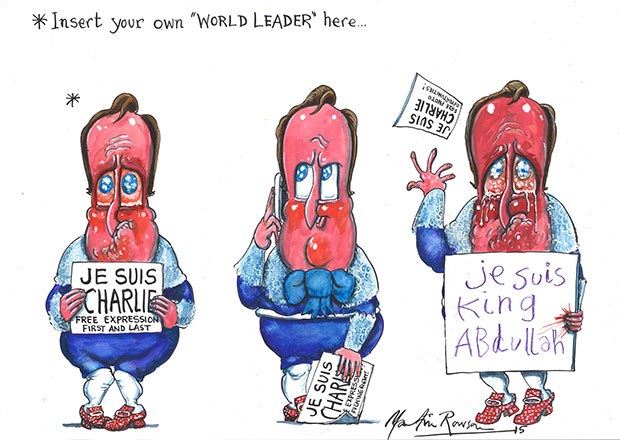
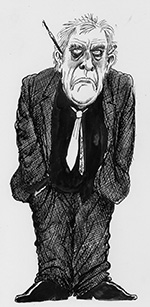
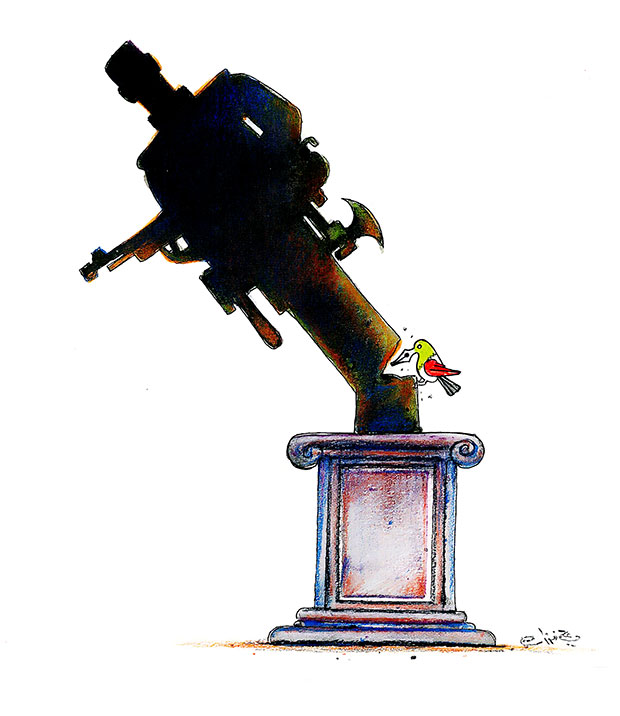
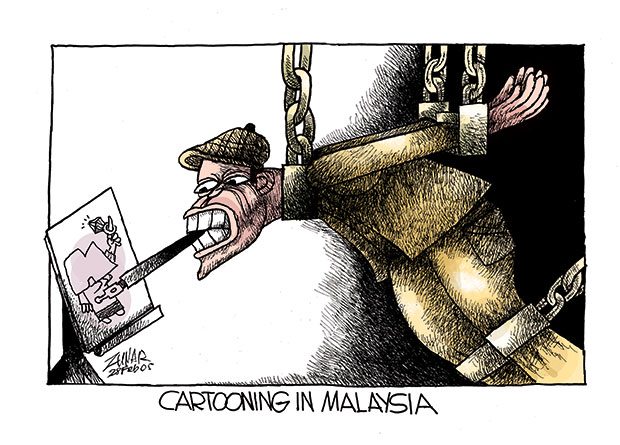
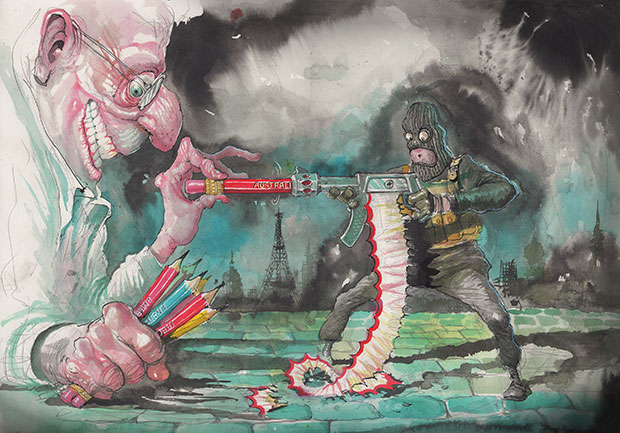
The evening featured an exhibition of specially commissioned cartoons by international cartoonists, reflecting on the past 12 months for free expression. Most of the artists had direct experience of persecution over their work, including Syrian political cartoonist Ali Ferzat – a former Index award winner – and Malaysia’s Zunar. “In the wake of the attacks on Charlie Hebdo, we wanted to pay homage to the work of cartoonists who are so often the first to face censorship in any move to stifle free expression,” said Index’s Jodie Ginsberg.
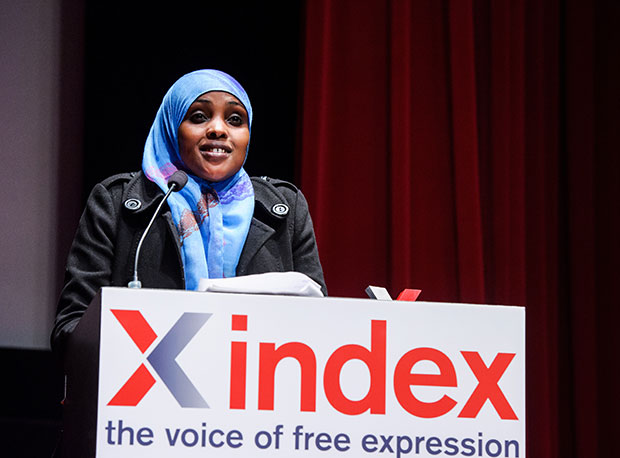
Amran Abdundi is an activist who, through various channels, has worked to make life safer in northeastern Kenya – supporting women who are vulnerable to rape, female circumcision and murder. Despite death threats, Abdundi’s Frontier Indigenous Network (FIN) has set up shelters along the dangerous border between Kenya and Somalia, an area where militant terrorist groups pose a threat to many. Alongside these shelters, FIN also maps out conflict areas, targets the illegal arms trade which fuels local conflict and has set up radio listening groups. As a way of reaching women in remote areas, these circles help to dispel myths about tuberculosis treatment and female property ownership, and to tackle doctrines spread by the area’s terror organisations. She is the recipient of the 2015 Index on Censorship Freedom of Expression Award for Campaigning.
I want to thank the judges who selected me for this award after going through so many worthwhile and wonderful nominations that were submitted from around the world. Equally I want to thank Index on Censorship’s staff. I will be eternally indebted to you all.
This award goes to marginalised women of northern Kenya whom I have worked with closely for the last ten years and who have joined hands with me in fighting outdated cultural practices that deny them the right to own property, expose them to dangerous practices like FGM, and threaten them with sexual exploitation.
Women’s rights activist Amran Abdundi (Photo: Alex Brenner for Index on Censorship)
The award also goes to conflict concubines who were abducted by armed youths in the height of armed violence in northern Kenya and acted as comfort women for armed militias. When these women came back from conflict zones with children born out of wedlock, they were rejected by their families. This award is for them.
Society rejected them and they live in separate makeshift areas outside normal settlement areas in northern Kenya. Working together with the conflict concubines we engaged various stakeholders — women leaders, elders, local government officials, cultural leaders and youths in order to open a dialogue. This led to partial acceptance by the community in accommodating them. I am still working in engaging the stakeholders to fully accept them and still hope to integrate the conflict concubines in mainstream society.
This award also goes to women who through my organizational campaign are today enjoying their constitutional right to own property, land and livestock. This is contrary to past practice when all lands, livestocks and properties acquired by women was registered in name of their husbands. Or if the woman was single or widowed, her brother or father’s name. Our campaign and advocacy managed to break that outdated cultural practice.
The award also goes to women victims of armed violence perpetrated by terrorist groups, community militias and gangs along the Kenya/Somalia border. Thugs who have used their armed power to attack, rape, gang rape and block women fleeing droughts from reaching Dadaab refugee camp in northern Kenya. We used our loud speakers to confront the attackers and we documented the abuses along the border.
I have done all these things not to win any award or recognition but because of a grave reality on the ground. A horror which moved me to join hands with other women and form a woman-led organisation called FRONTIER INDIGENOUS NETWORK.
As a founder member I started as community mobiliser and now I am Executive Director. Because of my work and campaigns I have been called many names by those people who are opposed to change. I cannot mention those names here — they are unprintable or not worth mentioning. But this award also goes to them too.
Thank you Index on Censorship for selecting my work in northern Kenya for this award. The women of northern Kenya will now know that their struggles and their efforts to fight for their rights are being recognised internationally.
Today is my birthday and it will be a birthday that I will never forget. It will be in my mind for the rest of my life. You are a true partner of the women of northern Kenya. Thank you.
The attacks on French satirical magazine Charlie Hebdo in January threw a global spotlight on the challenges faced by cartoonists worldwide. Index has since its earliest days reported on the persecution of satirists. As part of our work in celebrating as well as defending free expression, Index has this year asked cartoonists to reflect on the past year for free expression in their own way.
South America
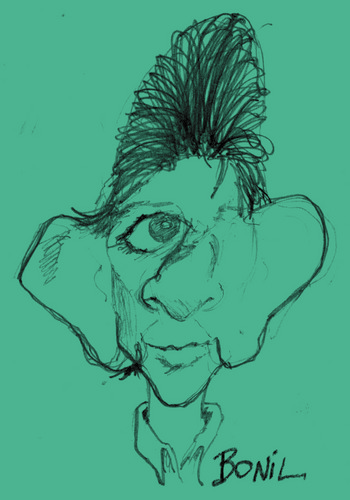
Xavier Bonilla (Bonil)
Ecuador
Bonil has been criticising Ecuador’s political leaders in his cartoons for 30 years. Regularly denounced, threatened and fined, Bonil has earned the title “the pursued cartoonist”. @bonilcaricatura
North America
Kevin Kallaugher (Kal)
United States
US artist Kal spent 10 years drawing cartoons in London before returning home, where he continues to work. He has won numerous awards and his cartoons have been featured in more than 100 publications around the globe. @kaltoons | web
Signe Wilkinson (Signe)
United States
In 1992, Signe became the first woman to win the Pulitzer Prize for Editorial Cartooning, and she has since won several other awards for her work. She comments on topical political issues and is best known for her daily cartoons in The Philadelphia Daily News. @SigneWilk | Facebook
Europe
Jean Plantureux (Plantu)
France
Plantu, the chief cartoonist for France’s Le Monde, is co-founder of Cartooning for Peace. Since the Charlie Hebdo attacks, Plantu has had a constant security detail but says he intends to continue to draw. @plantu | web
Martin Rowson
United Kingdom
Political satirist Martin Rowson contributes cartoons to The Guardian and the Daily Mirror as well as Index on Censorship magazine. His work has earned him several awards, as well as an official appointment as Cartoonist Laureate of London in 2001. @MartinRowson
Middle East
Ali Farzat
Syria
Former Index arts award winner Ali Farzat came to global attention in 2011, when he was pulled from his car and beaten by Syrian security forces who broke both his hands. Farzat recently worked for Kuwaiti Newspaper Al-Watan, which has been closed by authorities after criticising the government.
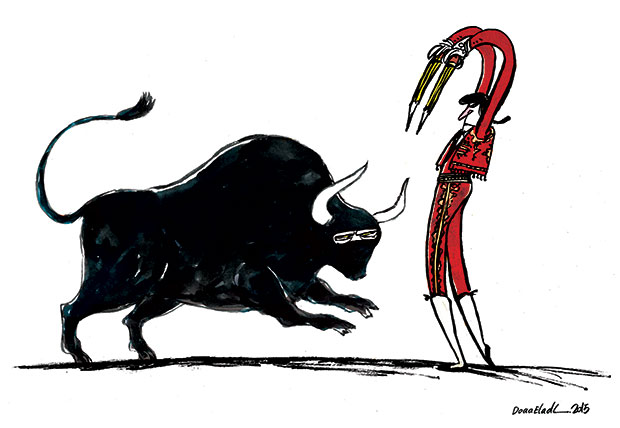
Doaa El Adl
Egypt
Doaa El Adl has been an award-winning cartoonist for prominent Egyptian newspaper Al Masry Al Youm since 2008. She has faced threats and charges of blasphemy for her illustrations. @doaaeladl
Asia
Zulkiflee Anwar Haque (Zunar)
Malaysia
“Why pinch when you can punch?!” says Zunar, believing the best way to make a political impact is to criticise his country’s powerful leaders as harshly as possible. The Malaysian government has banned much of Zunar’s work and repeatedly subjected him to raids, arrest and detainment. Zunar continues undeterred, despite two arrests in 2015 already. @zunarkartunis | web
Australia
David Rowe
Australia
Award-winning cartoonist David Rowe has worked as an editorial artist for the Australian Financial Review for 22 years. Rowe’s bright and colorful watercolors are famously merciless. He is a three-time winner of the Stanley Award for Australia’s Cartoonist of the Year. @roweafr
Africa
Damien Glez (Glez)
Burkina Faso
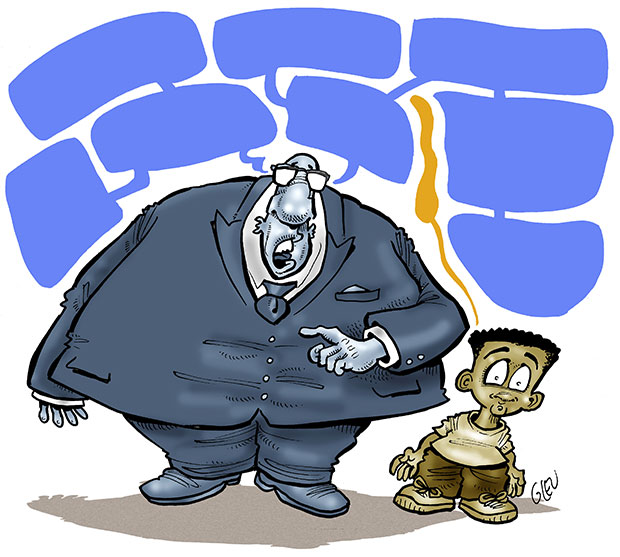
Glez’s cartoons regularly appear in publications spanning three continents, including Le Journal du Jeudi, for which he is the delegated director of publication, and the satirical Le Marabout, which he co-created. He writes his own comic strip called Divine Comedy. @DamienGlez | web
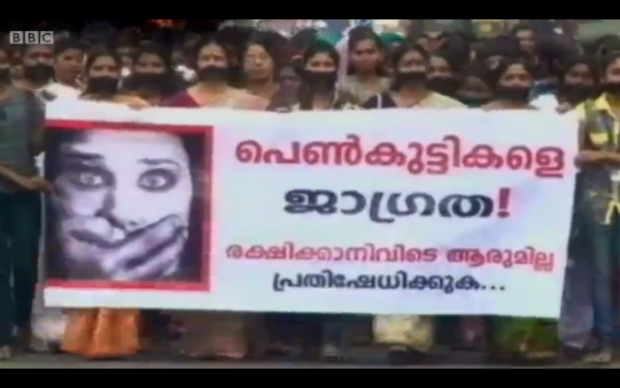
A scene from the recently released documentary India’s Daughter (Image: BBC)
Whoever, intending to insult the modesty of any woman, utters any word, makes any sound or gesture, or exhibits any object, intending that such word or sound shall be heard, or that such gesture or object shall be seen, by such woman, or intrudes upon the privacy of such woman, shall be punished with simple imprisonment for a term which may extend to one year, or with fine, or with both.
– Section 509, Indian Penal Code
“The lady…or the girl, or woman, is more precious than a gem, a diamond. It is up to you how you want to keep that diamond in your hand.”
“Someone put his hand inside her and pulled out something long. It was her intestines.”
“My husband told me I was stupid because I went to protest and didn’t think about the consequences”
– From the documentary India’s Daughter
The rape and murder of Jyoti Singh on a bus in Delhi in December horrified much of India and the world. Rape is by definition an act of violence and violation, but the details of the brutality meted out by the gang of six attackers were particularly shocking. Singh was flown to a specialist hospital in Singapore, but eventually succumbed to her injuries.
The 23-year old had been returning home from a trip to the cinema to see The Life Of Pi with a male friend. Of course, in discussions of rape, it does not matter what the victim was doing; where the victim was going, or when, or why or with whom. But it was extraordinary how the “asking for it” argument was extended in the prosecution of Singh’s killers.
Watching the BBC’s stunning India’s Daughter documentary was a disturbing experience. Singh had not gone out alone, it was true. She had not gone to a bad part of town: but she had gone out in the evening, with a man who was not a family member. That was enough.
She was female in public. That was enough to justify the attack. One attacker spoke of taking “pleasure” where you found it: the rich man will pay for his “pleasure”, the poor man will attain it “through courage” — that is, rape.
India’s Daughter was a shocking, grim and important hour of television that laid the misogyny of society bare for all to see. All, that is, except Indian BBC viewers, who were denied the opportunity to watch the documentary.
The Indian government obtained an injunction barring the film being shown in the country after it emerged the filmmakers had interviewed one of the rapists, Mukesh Singh. The attacker was apparently unrepentant, repeating the mantra that a “good girl” would not have got herself into the situation where he raped her.
Indian Home Minister Rajnath Singh was appalled, saying: “It was noticed the documentary film depicts the comments of the convict which are highly derogatory and are an affront to the dignity of women.” The government invoked section 509 of the Indian penal code
So the film was banned from television. And then later from YouTube in India. An hour of forensic, challenging film-making, exploring violence against women and the attitudes around violence against women was censored in order to protect women’s honour — a woman’s “honour” being patriarchy’s most precious bauble. Indian society had failed to protect Jiyoti Singh in life and now, still, she, through her story, was to be denied access to public space in death. This is not how we “protect” women.
It is not the job of society to “protect” women: rather it is the job of society to ensure women’s rights. This is not done by keeping quiet, or suggesting that women keep quiet, but rather by talking loud and clear.
This week, Naz Shah, the Labour parliamentary candidate for Bradford West (where she will challenge George Galloway) became an instant star after an article about her life and what had driven her to seek political office. Her mother had been brutalised for years. Shah’s father had run off with another woman, and her mother sought shelter for herself and her children with another man. But she found torture, not sanctuary. After years of abuse, Shah’s mother killed her tormentor. Following campaigning work from the ever-inspirational Southall Black Sisters, Shah’s mother Zoora saw her jail sentence for the killing reduced from 20 years to 12.
Borrowing a phrase from Barack Obama, Shah described how her political ambition had stemmed from the “dream of her mother”. After Shah’s father left, it was the mother, the innocent party, who was left with the shame, the besmirched honour. While in prison, Zoora Shah told her daughter that she would like to see her become a prison governor, so that she could help women in incarceration. Shah’s impulse ever since, she says, was to be in a position to influence change.
But still she realises there will be people who are not interested in women taking up public spaces. “Already my ‘character’ has been attacked and desecrated through social media and trolling. The smear campaign that has started has been some of the most vicious and disgusting I have seen. But it does not scare me, will not change me, and it in fact fuels my passion for change more,” she wrote for Urban Echo.
The impulse to deny women the right to exist in public is not limited to the streets of Delhi, or Bradford. Think of the threats received by feminist Caroline Criado Perez, by MPs such as Stella Creasy and Luciana Berger. Think, even of the sexist chants against female officials and staff that have been highlighted by the Football Association recently. The language may be openly hateful, or couched in “protective” metaphor, but the message is always clear. The public sphere, public interaction, is for men, and at best, you are here by our permission. But the question is not, fundamentally, about who grants permission. As long as we accept that that power belong to one group and not the other, then we are accepting and entrenching inequality. The aspiration is to smash any idea of who is “allowed” to go where, who is allowed to wear what, who is allowed to say what. In an equal world, there can be no concept of “permission” being granted by one group to another. Instead, as Naz Shah wrote, there must be “real meaningful and honest conversations not only with ourselves but with our families, our communities and beyond”.