20 Jul 2015 | Magazine, mobile, Volume 44.02 Summer 2015
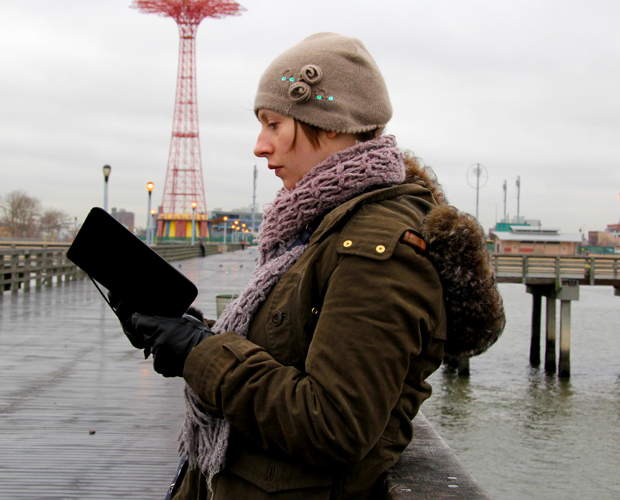
Ann Morgan’s self-imposed challenge to read 196 books in a year taught her much about the world of literary censorship. Credit: Steve Lennon
“For as long as people have been telling stories other people have been trying to shut them up,” writes Ann Morgan in Reading the World: Confessions of a Literary Explorer. The book, published earlier this year, charts her bid to read a book from each of the world’s 196 independent states. In the 365-day challenge, she faced constant barriers, from trying to find literature in places with almost no publishing industry, such as the Marshall Islands, to tracking down the works that the authorities have tried to hide.
Morgan found herself getting a crash course in world censorship. Two of the exiled writers she profiled have stories featured in the summer 2015 edition of Index on Censorship magazine: Ak Welsapar from Turkmenistan and Hamid Ismailov from Uzbekistan.
It was a chance tweet that Morgan spotted about Welsapar’s poetry that first led her to the as-yet-unpublished translation of his novel, The Tale of Aypi. She was soon struck by his use of Aesopian language and allegory to communicate subversive or challenging ideas, a literary tactic that Welsapar revealed was by no means accidental. Morgan told Index, “Towards the end of the Soviet era there was a relative loophole in one of the censor’s guidance documents that said that if there was an element of doubt in what was meant, the writer had the benefit of the doubt. This was a grey area that was quite freeing for Ak.” However, when the country declared independence in 1991, he found himself more censored than ever before, his works were banned and he was forced to flee to Sweden.
Ismailov faced a similar plight. After working on a series of articles and projects that criticised the Uzbek regime, his books – and even any mention of his name – were forbidden. He fled the country and ended up in the UK, working for the BBC. Morgan said: “When [Ismailov] was growing up, he always thought there was something wrong with the literature he was reading. All the positives he’d been bombarded with in Soviet literature didn’t make sense. He was seeing this gap between his reality and the reality of what he was reading.”
But of the 196 countries Morgan explored on a literary level, North Korea was the one that intrigued her the most. Keen to discover what – if anything – is read within its fiercely guarded border, she contacted a spokesman for the Democratic People’s Republic of Korea’s (DPRK) Committee for Cultural Relations for Foreign Countries (run by Alejandro Cao De Benós, the first and only foreigner to be allowed to work for the government in North Korea) and, after much persistence, was eventually sent a manuscript of My Life and Faith, the memoir of jailed North Korean war correspondent Ri In Mo. Mo was imprisoned for 40 years in South Korea in 1950, after being arrested for fighting as a guerrilla during the Korean War. Although his autobiography is primarily used as propaganda, Morgan found his work far less two-dimensional than she had expected; it included thought-provoking passages on how Mo engaged with the South Korean media after his release and how his words were altered by journalists to make him sound “more North Korean”.
Morgan feels her interactions with the DPRK Committee and reading the corresponding work taught her much about our refusal in the west to engage with abhorrent ideas: “I got reactions from people saying you shouldn’t read anything from there [North Korea], but to me this was still censorship, it was quite sinister. How are you to have a dialogue and move forwards if you are banishing them from the realm of the human and not allowing for any common ground?”
So does she believe books such as hers can help bring people’s attention worldwide to the issues surrounding literary censorship and further publicise these semi-forgotten works? “Hopefully, the project has brought attention to the works of a number of those writers who I encountered, and the works of many other writers out there who I didn’t read directly. I hope it encourages readers generally to look further and I hope in the long run it will bring more opportunities for other writers.”
You can read short stories by Ak Welsapar and Hamid Ismailov in the summer 2015 issue of Index on Censorship magazine. Ann Morgan’s book, Reading the World: Confessions of a Literary Explorer, was published in the UK by Harville Sacker in January 2015. Her blog is A year of reading the world.
17 Dec 2014 | Magazine, Volume 43.04 Winter 2014
[vc_row][vc_column][vc_custom_heading text=”Packed inside this issue, are; an interview with fantasy writer Neil Gaiman; new cartoons from South America drawn especially for this magazine by Bonil and Rayma; new poetry from Australia; and the first ever English translation of Hanoch Levin’s Diary of a Censor; plus articles from Turkey, South Africa, South Korea, Russia and Ukraine.”][vc_row_inner][vc_column_inner width=”1/2″][vc_column_text]
Also in this issue, authors from around the world including The Observer’s Robert McCrum, Turkish novelist Elif Shafak, and Nobel nominee Rita El Khayat consider which clauses they would draft into a 21st century version of the Magna Carta. This collaboration kicks off a special report Drafting Freedom To Last: The Magna Carta’s Past and Present Influences.
[/vc_column_text][/vc_column_inner][vc_column_inner width=”1/2″][vc_single_image image=”62427″ img_size=”full”][/vc_column_inner][/vc_row_inner][vc_column_text]
Also inside: from Mexico a review of its constitution and its flawed justice system and Turkish novelist Kaya Genç looks at recent intimidation of women writers in Turkey.
[/vc_column_text][/vc_column][/vc_row][vc_row][vc_column][vc_custom_heading text=”SPECIAL REPORT: DRAFTING FREEDOM TO LAST” css=”.vc_custom_1483550985652{margin-right: 0px !important;margin-left: 0px !important;border-bottom-width: 1px !important;padding-top: 15px !important;padding-bottom: 15px !important;border-bottom-color: #455560 !important;border-bottom-style: solid !important;}”][vc_column_text]
The Magna Carta’s past and present influences
1215 and all that – John Crace writes a digested Magna Carta
Stripsearch cartoon – Martin Rowson imagines a shock twist for King John
Battle royal – Mark Fenn on Thailand’s harsh crackdown on critics of the monarchy
Land and freedom? – Ritu Menon writes about Indian women gaining power through property
Give me liberty – Peter Kellner on democracy’s debt to the Magna Carta
Constitutionally challenged – Duncan Tucker reports on Mexico’s struggle with state power
Courting disapproval – Shahira Amin on Egypt’s declining justice as the anniversary of the military takeover approaches
Digging into the power system – Sue Branford reports on the growth of indigenous movements in Ecuador and Bolivia
Critical role – Natasha Joseph on how South African justice deals with witchcraft claims
[/vc_column_text][/vc_column][/vc_row][vc_row][vc_column][vc_custom_heading text=”IN FOCUS” css=”.vc_custom_1481731813613{margin-right: 0px !important;margin-left: 0px !important;border-bottom-width: 1px !important;padding-top: 15px !important;padding-bottom: 15px !important;border-bottom-color: #455560 !important;border-bottom-style: solid !important;}”][vc_column_text]
Brave new war – Andrei Aliaksandrau reports on the information war between Russia and Ukraine
Propaganda war obscures Russian soldiers’ deaths – Helen Womack writes about reports of secret burials
Azeri attack – Rebecca Vincent reports on how writers and artists face prison in Azerbaijan
The political is personal – Arzu Geybullayeva, Azerbaijani journalist, speaks out on the pressures
Really good omens – Martin Rowson interviews fantasy writer Neil Gaiman, listen to our podcast
Police (in)action – Simon Callow argues that authorities should protect staging of controversial plays
Drawing fire – Rayma and Bonil, South American cartoonists’ battle with censorship
Thoughts policed – Max Wind-Cowie writes about a climate where politicians fear to speak their mind
Media under siege or a freer press? – Vicky Baker interviews Argentina’s media defender
Turkey’s “treacherous” women journalists – Kaya Genç writes about dangerous times for female reporters, watch a short video interview
Dark arts – Nargis Tashpulatova talks to three Uzbek artists who speak out on state constraints
Talk is cheap – Steven Borowiec on state control of South Korea’s instant messaging app
Fear of faith – Jemimah Steinfeld looks at a year of persecution for China’s Christians
Time travel to web of the past and future – Mike Godwin’s internet predictions revisited, two decades on
[/vc_column_text][/vc_column][/vc_row][vc_row][vc_column][vc_custom_heading text=”CULTURE” css=”.vc_custom_1481731777861{margin-right: 0px !important;margin-left: 0px !important;border-bottom-width: 1px !important;padding-top: 15px !important;padding-bottom: 15px !important;border-bottom-color: #455560 !important;border-bottom-style: solid !important;}”][vc_column_text]
Language lessons – Chen Xiwo writes about how Chinese authors worldwide must not ignore readers at home
Spirit unleashed – Diane Fahey, poetry inspired by an asylum seeker’s tragedy
Diary unlocked – Hanoch Levin’s short story is translated into English for the first time
Oz on trial – John Kinsella, poems on Australia’s “new era of censorship”
[/vc_column_text][/vc_column][/vc_row][vc_row][vc_column][vc_custom_heading text=”COLUMNS” css=”.vc_custom_1481732124093{margin-right: 0px !important;margin-left: 0px !important;border-bottom-width: 1px !important;padding-top: 15px !important;padding-bottom: 15px !important;border-bottom-color: #455560 !important;border-bottom-style: solid !important;}”][vc_column_text]
Global view – Jodie Ginsberg writes about the power of noise in the fight against censorship
Index around the world – Aimée Hamilton gives an update on Index on Censorship’s work
[/vc_column_text][/vc_column][/vc_row][vc_row][vc_column][vc_custom_heading text=”END NOTE” css=”.vc_custom_1481880278935{margin-right: 0px !important;margin-left: 0px !important;border-bottom-width: 1px !important;padding-top: 15px !important;padding-bottom: 15px !important;border-bottom-color: #455560 !important;border-bottom-style: solid !important;}”][vc_column_text]
Humour on record – Vicky Baker on why parody videos need to be protected
[/vc_column_text][/vc_column][/vc_row][vc_row][vc_column][vc_custom_heading text=”SUBSCRIBE” css=”.vc_custom_1481736449684{margin-right: 0px !important;margin-left: 0px !important;border-bottom-width: 1px !important;padding-bottom: 15px !important;border-bottom-color: #455560 !important;border-bottom-style: solid !important;}”][vc_column_text]Index on Censorship magazine was started in 1972 and remains the only global magazine dedicated to free expression. Past contributors include Samuel Beckett, Gabriel García Marquéz, Nadine Gordimer, Arthur Miller, Salman Rushdie, Margaret Atwood, and many more.[/vc_column_text][vc_row_inner][vc_column_inner width=”1/2″][vc_single_image image=”76572″ img_size=”full”][/vc_column_inner][vc_column_inner width=”1/2″][vc_column_text]In print or online. Order a print edition here or take out a digital subscription via Exact Editions.
Copies are also available at the BFI, the Serpentine Gallery, MagCulture, (London), News from Nowhere (Liverpool), Home (Manchester), Calton Books (Glasgow) and on Amazon. Each magazine sale helps Index on Censorship continue its fight for free expression worldwide.
 SUBSCRIBE NOW[/vc_column_text][/vc_column_inner][/vc_row_inner][/vc_column][/vc_row]
21 Oct 2014 | Africa, Magazine, News, South Africa
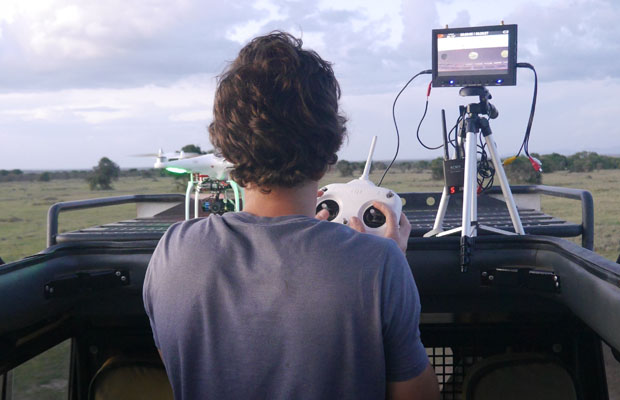
Quadcopters, like this one flown by Ben Kreimer of the University of Nebraska’s Drone Journalism Lab, are being used by AfricanSkyCam to collect images. (Photo: AfricanSkyCAM/University of Nebraska)
In conjunction with the Cambridge Festival of Ideas 2015, we will be publishing a series of articles that complement many of the upcoming debates and discussions. We are offering these articles from Index on Censorship magazine for free (normally they are held within our paid-for archive) as part of our partnership with the festival. Below is and article by Raymond Joseph on n how low-cost technology is helping African newsrooms get hold of information that they couldn’t previously track from the autumn 2014 issue. This article is a great starting point for those planning to attend the Technologies of revolution: how innovations are undermining regimes everywhere session at the festival.
Index on Censorship is a global quarterly magazine with reporters and contributing editors around the world. Founded in 1972, it promotes and defends the right to freedom of expression.
Deep in Mpumalanga province, in the far north-east of South Africa, a poorly resourced newspaper is using a combination of high and low tech solutions to make a difference in the lives of the communities it serves.
It is also pioneering a new and innovative form of journalism that not only places its readers at the centre of its coverage, but also involves them directly in the newsgathering operation.
What this small newspaper does is a lesson for bigger, more established media outlets, which are searching for new non-traditional revenue streams and which, in the age of online and digital journalism, struggle to survive and remain relevant.
The Ziwaphi community-based newspaper is distributed to communities in the Nkomazi district, situated at the epicentre of the South Africa AIDS pandemic, where there is very little access to news reporting. One of the biggest problems in the area is water contaminated with sewage. Women and young girls spend hours every day collecting water from rivers for drinking, cooking and washing, but these same rivers are also often used to dispose of human waste. As a result the E.coli count sometimes spikes, causing diarrhoea. And every few years, there is an outbreak of cholera.
Using a grant, and technology assistance from the African Media Initiative (AMI), which is spearheading the drive to embed data-driven journalism in African newsrooms, Ziwaphi is placing old smartphones submerged in clear plastic bottles in rivers in the area. Functioning as simple electron microscopes, the phones use their cameras to take regular flash-lit pictures. These photographs are then magnified and compared against images from an existing database to detect dangerous levels of E.coli. The results are delivered via SMS to residents, informing them where it’s safe to collect water.
Completing the circle, the newspaper analyses the real-time data to detect trends, and hopefully even triangulates the sources of contamination.
Once a month, Ziwaphi publishes an in-depth story based on the results, which is shared with other community papers and local radio stations in the area. The hope is the information can then empower ordinary people in the region to force the government to deliver clean water and sanitation. Ziwaphi’s readers also help gather information themselves using a mobile-based citizen reporting app which supplements the smartphone data with eyewitness stories about the impacts of the pollution, and possible sources of contamination.
“The total project only cost $20 000, including a modest salary for a year for a full-time health reporter,” says Justin Arenstein, a strategist for AMI. “But the important thing, from a media sustainability perspective, is that Ziwaphi is using the water project to build the digital backbone it will need to survive in the near future.”
Until recently Africa lagged behind the rest of the world where the internet was concerned, because of the high cost of access. But now the deployment of new undersea cables is helping bring down the cost of connectivity, especially in east and southern Africa. This has sparked an exciting new era for journalism, with an explosion of ideas and innovations that are producing “news you can use” tools. Established media is increasingly reaching out to citizens to involve them in their news-gathering and content production processes. The phone-in-a-bottle project is an example of what can be done with limited resources.
In Kenya, the Radio Group, the third largest media house, has set up Star Health, the first in a set of toolkits to help readers do easy background checks on doctors and learn whether they have ever been found guilty of malpractice. In one case a man working as a doctor turned out to be a vet.
The site, which has proved to be a big hit in a country where dodgy doctors are a major problem, also helps users locate medical specialists and their nearest health facility. It can also be used to check whether medicines are covered by the national health scheme. Importantly, the results of queries on Star Health are delivered via a premium SMS service that generates an income stream, crucial in an age when media needs to diversify revenue models away from reliance on advertising and, in some case, copy sales.
“These tools don’t replace traditional journalism, rather they augment journalistic reportage by, for example, helping readers to find out how a national story on dodgy doctors personally affects them,” says Arenstein. News must be personal and actionable and should become an important part of the media’s digital transformation strategies, he stresses.
The reality of journalism today is that, even though outlets may not have the large audiences of conventional media, anyone with a smartphone or basic digital skills has the ability to be a “publisher”.
In Nigeria, for example, the Sahara online community has over a million followers on social media, far more than many media houses. The challenge in the future will be for newsrooms to tap into these grassroots networks, but still keep citizens’ voices at their centre.
A pioneering project in Nigeria’s isolated Delta region has seen the mainstream media working with an existing citizen-reporting network, Naija Voices, to adopt remote-controlled drones fitted with cameras to monitor for environmentally destructive oil spills. The plan is to syndicate the footage to mainstream TV and newspaper partners in Lagos and Abuja. This would allow the newspapers unprecedented reach into parts of the country that had previously been largely inaccessible.
The fixed-wing drones are relatively cheap and simple to fly, but they crash from time to time. “Getting new parts, like the wings or pieces of the fuselage, would be costly and time consuming, so we’re experimenting with 3D printers to create parts onsite and on demand,” says Arenstein.
This citizen-reporting experiment builds on the work of AfricanSkyCam which for the past year has been experimenting with drones in Kenya as part of “Africa’s first newsroom-based eye-in-the-sky”. SkyCam uses drones and camera-equipped balloons to help media that cannot afford news helicopters to cover breaking news in dangerous situations or difficult to reach locations.
In South Africa, Oxpeckers Center for Investigative Environmental Reporting is using “geo journalism” and other mapping techniques to amplify its reporting and to analyse stories such as rhino poaching and canned lion hunting – breeding tame lions for wealthy trophy-hunters to shoot. Investigations help uncover trends or links to criminal syndicates and the Oxpeckers Center’s reportage is credited with promoting a recent ban on canned hunting in Botswana, and helping to shape laws on trade in rhino and other wildlife products in China and in Mozambique.
But the reality is that poorly resourced African newsrooms seldom have the in-house technology or digital skills to build new online tools.
So, AMI’s digital innovation programme and similar initiatives at Google, the Bill & Melinda Gates Foundation, and at smaller donors including the Indigo Trust are all building external support systems to help newsrooms leapfrog into a digital future.
Donors are also focusing on embedding data journalism approaches into mainstream media. They are helping journalists use publicly available digital information from sources such as censuses or government budgets to build decision-making tools to help ordinary citizens make better informed decisions on bread and butter issues affecting their lives.
Helping drive the new-tech approach is Code for Africa, a network of civic technology labs planned for countries across the continent to help drive innovation and to work with media and citizen journalist networks, to help them bridge the digital divide.
Code for South Africa (C4SA) is helping everyone, from the township-based Ziwaphi and its cholera alert project, to national media outlets, such as the Mail & Guardian and City Press.
“The media know they’re in crisis, with their advertising-based business model under threat as audiences shift online, but digital innovation is still a hard sell,” says C4SA director Adi Eyal. “Progress is painstakingly slow because many African media owners are hesitant to invest before they know how these new models will generate revenue. The result is that much of what South African newsrooms are calling home-grown data journalism is just visualisation. They’re creating very little actionable information and virtually no news tools that people can use to make decisions. The investment in a one-off project is high, so it is important that the tools that are built live on, so that newsrooms can use them to report on issues and people can act.”
Progress is painstakingly slow, but nevertheless the building blocks are slowly being put in place as the “root stock” — datasets from across Africa — is collected and collated on the African Open Data portal for both newsroom journalists and civic coders to use. The data means they can create applications and tools which will help them build communities and generate income.
C4SA is also building an “invisible” back-end infrastructure that newsrooms can help build news tools quickly and cheaply. This includes support for initiatives such as OpenAfrica that helps newsrooms digitise and extract data from source documents. C4SA has also built a series of open, machine-readable, data rich application programming interfaces (APIs) that newsrooms can easily plug into their mobile apps or websites. The APIs drive tools like WaziMap, which uses censuses, elections and other data to help journalists to dig into the make up of communities, right down to local ward level. Each of these resources is a tool not only for the media, but also for civic activists and public watchdogs, says Arenstein.
In a recent column on the future of newspapers, Ferial Haffajee, the editor of City Press, a national South African Sunday newspaper that is struggling to reinvent itself in the digital age, wrote: “Nothing is as it was. Nor are most things what they seem. We have a future, and it is tantalising.”
And you just need to look at the smartphones in a bottle and 3D-printed drones to know that this future is slowly, newsroom by newsroom, project by project, becoming a reality.
Read more about the future of journalism in Index on Censorship’s latest magazine. Read more here and find out how to subscribe either in print, digital replica or app.
This article was posted on 21 October at indexoncensorship.org
1 Oct 2014 | Magazine, Volume 43.03 Autumn 2014
[vc_row][vc_column][vc_custom_heading text=”The explosion of social media, the rise of citizen reporters, the dangers of freelancing in a war zone, the invention of new technology: journalism is clearly going through its biggest changes in history. But will the public know more or less as a result?”][vc_row_inner][vc_column_inner width=”1/2″][vc_column_text]
This is the question we explore in great depth in the latest issue of Index on Censorship magazine. Contributors include Iona Craig (2014 winner of the Martha Gellhorn Prize for her reporting in Yemen); Index award nominee Dina Meza and the BBC’s Samira Ahmed. We also have an exclusive, new short story by acclaimed novelist, playwright and author Ariel Dorfman.
[/vc_column_text][/vc_column_inner][vc_column_inner width=”1/2″][vc_single_image image=”59980″ img_size=”full”][/vc_column_inner][/vc_row_inner][vc_column_text]
And Australia’s race commissioner, Tim Soutphommasane, speaks out on how the right to be a bigot should not override the right to be free from the effects of bigotry.
[/vc_column_text][/vc_column][/vc_row][vc_row][vc_column][vc_custom_heading text=”SPECIAL REPORT: THE FUTURE OF JOURNALISM” css=”.vc_custom_1483551011369{margin-right: 0px !important;margin-left: 0px !important;border-bottom-width: 1px !important;padding-top: 15px !important;padding-bottom: 15px !important;border-bottom-color: #455560 !important;border-bottom-style: solid !important;}”][vc_column_text]
Back to the future: Iona Craig on journalists trying to stay safe in war zones
Digital detectives: Ray Joseph on the new technology helping Africa’s journalists investigate
Re-writing the future: Five young journalists talk on their hopes and fears for the profession – from Yemen, India, South Africa, Germany and the Czech Republic
Attack on ambition: Dina Meza on a Honduran generation ground down by fear
Stripsearch cartoon: Martin Rowson envisages an investigative reporter meeting Deep Throat
Generation why: Ian Hargreaves asks on how the powerful may or may not be held to account in the future
Making waves: Helen Womack reports from Russia on the radio station standing up for free media
Switched on and off: US journalist Debora Halpern Wenger on TV’s power shift from news producers to news consumers
TV news will reinvent itself (again): Taylor Walker interviews a veteran TV reporter on the changes ahead
Right to reply: Samira Ahmed on how the BBC tackles viewers’ criticism
Readers as editors: Stephen Pritchard on how news ombundsmen create transparency
Lobby matters: Political reporter Ian Dunt on the push/pull of journalists and politicians inside Britain’s corridors of power
Funding news freedom: Glenda Nevill looks at innovative ways to pay for reporting
Print running: Will Gore on how newspapers innovate for new audiences
Paper chase: Luis Carlos Díaz on overcoming Venezuela’s newsprint shortage
[/vc_column_text][/vc_column][/vc_row][vc_row][vc_column][vc_custom_heading text=”IN FOCUS” css=”.vc_custom_1481731813613{margin-right: 0px !important;margin-left: 0px !important;border-bottom-width: 1px !important;padding-top: 15px !important;padding-bottom: 15px !important;border-bottom-color: #455560 !important;border-bottom-style: solid !important;}”][vc_column_text]
Free thinking? Australia’s race commissioner Tim Soutphommasane on bigotry
Guarding the guards: Jemimiah Steinfeld on China’s human rights lawyers becoming targets
Taking down the critics: Irene Caselli investigates allegations that Ecuador’s government is silencing social media users
Maid equal in Brazil: Claire Rigby on the Twitter feed giving voice to abuse of domestic workers in Brazil
Home truths in the Gulf: Georgia Lewis on how UAE maids fear speaking out on maltreatment
Text messaging: Indian school books are getting “Hinduised”, reports Siddarth Narrain from India
We have to fight for what we want: our editor, Rachael Jolley, interviews the OSCE’s Dunja Mijatovic on 20 years championing free speech
Decoding defamation: Lesley Phippen’s need-to-know guide for journalists
A hard act to follow: Tamsin Allen gives a lawyer’s take on Britain’s libel reforms
Walls divide: Jemimah Steinfeld speaks to Chinese author Xiaolu Guo about a life of censorship
Taking a pop: Steven Borowiec profiles controversial South Korean artist Lee Ha
Mapping media threats: Melody Patry and Milana Knezevic look at rising attacks on journalists in the Balkans
Holed up in Harare: Index’s contributing editor Natasha Joseph reports from southern Africa on the dangers of reporting in Zimbabwe
Burma’s “new” media face threats and attack: Burma-born author Wendy Law-Yone looks at news in the run up to the impending elections
Head to head: Sascha Feuchert and Charlotte Knobloch debate whether Mein Kampf should be published
[/vc_column_text][/vc_column][/vc_row][vc_row][vc_column][vc_custom_heading text=”CULTURE” css=”.vc_custom_1481731777861{margin-right: 0px !important;margin-left: 0px !important;border-bottom-width: 1px !important;padding-top: 15px !important;padding-bottom: 15px !important;border-bottom-color: #455560 !important;border-bottom-style: solid !important;}”][vc_column_text]
Political framing: Kaya Genç interviews radical Turkish artist, Kutlug Ataman
Action drama: Julia Farrington on Belarus Free Theatre and the upcoming Belarus election
Casting away: Ariel Dorfman, a new short story by the acclaimed human rights writer
[/vc_column_text][/vc_column][/vc_row][vc_row][vc_column][vc_custom_heading text=”COLUMNS” css=”.vc_custom_1481732124093{margin-right: 0px !important;margin-left: 0px !important;border-bottom-width: 1px !important;padding-top: 15px !important;padding-bottom: 15px !important;border-bottom-color: #455560 !important;border-bottom-style: solid !important;}”][vc_column_text]
Index around the world: Alice Kirkland gives a news update on Index’s global projects
[/vc_column_text][/vc_column][/vc_row][vc_row][vc_column][vc_custom_heading text=”END NOTE” css=”.vc_custom_1481880278935{margin-right: 0px !important;margin-left: 0px !important;border-bottom-width: 1px !important;padding-top: 15px !important;padding-bottom: 15px !important;border-bottom-color: #455560 !important;border-bottom-style: solid !important;}”][vc_column_text]
From the factory floor: Vicky Baker on listening to the world’s garment workers via new technology
[/vc_column_text][/vc_column][/vc_row][vc_row][vc_column][vc_custom_heading text=”SUBSCRIBE” css=”.vc_custom_1481736449684{margin-right: 0px !important;margin-left: 0px !important;border-bottom-width: 1px !important;padding-bottom: 15px !important;border-bottom-color: #455560 !important;border-bottom-style: solid !important;}”][vc_column_text]Index on Censorship magazine was started in 1972 and remains the only global magazine dedicated to free expression. Past contributors include Samuel Beckett, Gabriel García Marquéz, Nadine Gordimer, Arthur Miller, Salman Rushdie, Margaret Atwood, and many more.[/vc_column_text][vc_row_inner][vc_column_inner width=”1/2″][vc_single_image image=”76572″ img_size=”full”][/vc_column_inner][vc_column_inner width=”1/2″][vc_column_text]In print or online. Order a print edition here or take out a digital subscription via Exact Editions.
Copies are also available at the BFI, the Serpentine Gallery, MagCulture, (London), News from Nowhere (Liverpool), Home (Manchester), Calton Books (Glasgow) and on Amazon. Each magazine sale helps Index on Censorship continue its fight for free expression worldwide.
SUBSCRIBE NOW[/vc_column_text][/vc_column_inner][/vc_row_inner][/vc_column][/vc_row]