20 Feb 2015 | Egypt, Middle East and North Africa, News
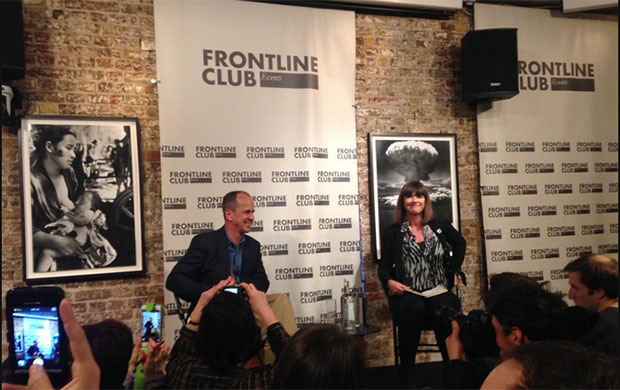
Peter Greste spoke to a Frontline Club audience about his arrest and detention in Egypt. (Photo: Milana Knezevic / Index on Censorship)
Peter Greste, the Al Jazeera journalist recently released after 400 days in Egyptian jail, met a packed room at London’s Frontline Club on Thursday, where he spoke about his time in jail, the campaign for his release and fellow journalists still imprisoned in Egypt. “An attack on journalism, an attack on freedom of speech, is an attack on the wider society,” he said.
“I remember that day well,” he said, recounting 29 December 2013, when a group of around eight men came to his Cairo hotel room and without explanation started searching it, before talking him away. While he was aware that the media was under some pressure in Egypt, the arrest came as a surprise. He felt as long as they stuck to their journalistic principles and didn’t push boundaries, they would be fine.
“There have been plenty of stories before where I’ve pushed boundaries, when I fully expected to get a knock on the door from the police, when I know I’ve upset governments,” he explained. But this time around, he hadn’t gone looking for difficult stories or made a conscious effort to try and challenge the government, so he “genuinely didn’t think it was going to be an issue.”
Greste was imprisoned together with Al Jazeera producer Baher Mohamed and Al Jazeera English’s Cairo bureau chief Mohamed Fahmy. He said they forced themselves to consider that they might be convicted, but never seriously believed it.
While there were “some very dark moments”, he insisted anger wasn’t his dominant emotion, believing that letting anger take hold of the situation would only hurt himself. They were broadly treated with respect in prison, and never physically threatened. “The problem is that in prison…what really matters is your own head, your own mind and how you cope with it.”
Egypt
Index has reported extensively on the situation confronting free expression in the country
Committee to Protect Journalists named Egypt as one of the world’s top 10 jailers of journalists in Dec 2014
Reporters Without Borders: World Press Freedom Index ranks the country as 159
Freedom House: Classifies Egypt as “not free”
Greste spoke of the importance of having a routine and some structure to his day, crediting seemingly simple things like meditation, exercise, studying and even cooking with helping him though the ordeal.
“The only way through is to set your horizon, to set a target date, to set something that’s manageable,” he said. “What you do is narrow your horizon, to the thing that you think you can cope with. Sometimes that was the end of next week, or it would be to the next visit. Sometimes it would be simply to the end of the day.”
Today, he doesn’t feel traumatised, and believes that we are all more capable of dealing with difficult situations than we think. And when discussing the conditions in prison, it was clear he had kept his humour. “The less said about the toilets the better,” he joked.
If his detention had been a surprise, so was his release. He had been expecting his brother for a visit, when he got the unexpected message to pack his bags — he was going home. Himself, Fahmy and Mohamed had discussed the possibility that one of them might be released before the others, and all agreed that if that were to happen, there would be no doubt that that person should go.
And yet, Greste said walking away and leaving Mohamed and others (Fahmy was receiving medical treatment at the time) behind was not easy. “And I still feel that and I still feel quite anguished about it.” His two colleagues have now been released on bail, with their retrial set to start on Monday.
Greste was also keen to remind us that while the three of them had been given the most media attention, many others had been caught up in the case — including three young students, a businessman and journalists sentenced in absentia.
“We can’t forget that sympathy tends to go with people who you identify with. As a European, as a white guy, it’s easier for white Europeans to identify with me than it is to identify with an Egyptian. I’m not suggesting for a second that that makes Baher’s case any less worthy. And in a way we need to bear that in mind, that because of that trend, it’s so easy to let local journalists slip through the cracks,” he also added. “It is the locals that get hit, and the freelancers in particular.”
He said he’ll continue to report, though he is not yet sure what form his work will take. He also hopes to continue to speak out for press freedom.
“One of the most extraordinary elements of this, and one that we are in danger of losing, if we do not make a conscious effort to hold on to, is the unity of purpose that emerged within the media community around our case. For some reason, the community right across the globe pulled together in a way that I think is absolutely unprecedented; we’ve never seen anything like this ever before,” he said.
“If we lose that sense of purpose, then we lose something that we have created of enormous value. I think its very difficult to maintain, particularly under the current circumstances, but I think it’s incumbent on everybody to recognise it, to make use of it, not just in our case but in the case of every journalist that’s been imprisoned.”
This article was posted on 20 February 2015 at indexoncensorship.org
17 Feb 2015 | Awards
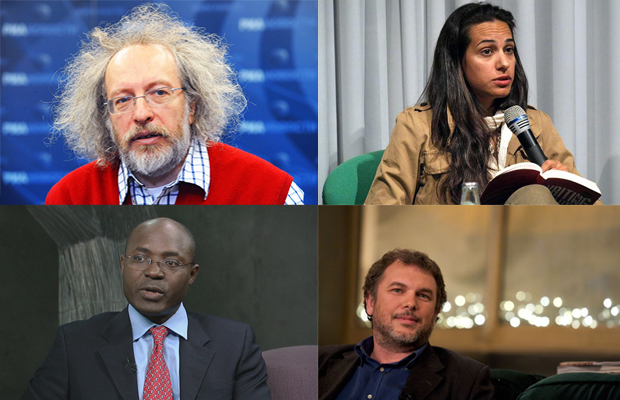
This week we will be showcasing our shortlisted nominees from the journalism category. This year’s nominees include Lirio Abbate, an Italian journalist whose investigations into the mafia mean he requires round-the-clock police protection; Safa Al Ahmad, whose documentary exposed details of an unreported mass uprising in Saudi Arabia; radio station Echo of Moscow, one of Russia’s last remaining independent media outlets; and Rafael Marques de Morais, an Angolan reporter repeatedly prosecuted for his work exposing government and industry corruption.
Tuesday: Documentary maker Safa Al Ahmad
Wednesday: Investigative journalist Lirio Abbate
Thursday: Journalist and human rights activist Rafael Marques de Morais
Friday: Radio station Ekho Moskvy
In 2014 Azerbaijani newspaper, Azadliq, picked up the award for this category. In the past, winners have included Greek investigative journalist Kostas Vaxevanis; Idrak Abbasov, Azerbaijan; Egyptian editor, Ibrahim Eissa; Radio La Voz, Peru; Ski Lankan newspaper The Sunday Leader; Arat Dink, editor of Turkey-based Armenian newspaper, Agos; Egyptian blogger Abdul Kareem Suleiman Amer; Sihem Bensedrine, Tunisia; Sumi Khan, Bangladesh; and Pulitzer Prize winning photo-journalist Kaveh Golestan, who was killed by a landmine in Northern Iraq in 2003.
In 2003, internationally recognised journalist Fergal Keane was the first to win an award under the journalism category, however, the previous year Russian journalist Anna Politkovskaya, who was killed in 2006, won the Defence of Free Expression award. In 2001 the same award was given to Iranian journalist, Mashallah Shamsolvaezin.
17 Dec 2014 | Magazine, Volume 43.04 Winter 2014
[vc_row][vc_column][vc_custom_heading text=”Packed inside this issue, are; an interview with fantasy writer Neil Gaiman; new cartoons from South America drawn especially for this magazine by Bonil and Rayma; new poetry from Australia; and the first ever English translation of Hanoch Levin’s Diary of a Censor; plus articles from Turkey, South Africa, South Korea, Russia and Ukraine.”][vc_row_inner][vc_column_inner width=”1/2″][vc_column_text]
Also in this issue, authors from around the world including The Observer’s Robert McCrum, Turkish novelist Elif Shafak, and Nobel nominee Rita El Khayat consider which clauses they would draft into a 21st century version of the Magna Carta. This collaboration kicks off a special report Drafting Freedom To Last: The Magna Carta’s Past and Present Influences.
[/vc_column_text][/vc_column_inner][vc_column_inner width=”1/2″][vc_single_image image=”62427″ img_size=”full”][/vc_column_inner][/vc_row_inner][vc_column_text]
Also inside: from Mexico a review of its constitution and its flawed justice system and Turkish novelist Kaya Genç looks at recent intimidation of women writers in Turkey.
[/vc_column_text][/vc_column][/vc_row][vc_row][vc_column][vc_custom_heading text=”SPECIAL REPORT: DRAFTING FREEDOM TO LAST” css=”.vc_custom_1483550985652{margin-right: 0px !important;margin-left: 0px !important;border-bottom-width: 1px !important;padding-top: 15px !important;padding-bottom: 15px !important;border-bottom-color: #455560 !important;border-bottom-style: solid !important;}”][vc_column_text]
The Magna Carta’s past and present influences
1215 and all that – John Crace writes a digested Magna Carta
Stripsearch cartoon – Martin Rowson imagines a shock twist for King John
Battle royal – Mark Fenn on Thailand’s harsh crackdown on critics of the monarchy
Land and freedom? – Ritu Menon writes about Indian women gaining power through property
Give me liberty – Peter Kellner on democracy’s debt to the Magna Carta
Constitutionally challenged – Duncan Tucker reports on Mexico’s struggle with state power
Courting disapproval – Shahira Amin on Egypt’s declining justice as the anniversary of the military takeover approaches
Digging into the power system – Sue Branford reports on the growth of indigenous movements in Ecuador and Bolivia
Critical role – Natasha Joseph on how South African justice deals with witchcraft claims
[/vc_column_text][/vc_column][/vc_row][vc_row][vc_column][vc_custom_heading text=”IN FOCUS” css=”.vc_custom_1481731813613{margin-right: 0px !important;margin-left: 0px !important;border-bottom-width: 1px !important;padding-top: 15px !important;padding-bottom: 15px !important;border-bottom-color: #455560 !important;border-bottom-style: solid !important;}”][vc_column_text]
Brave new war – Andrei Aliaksandrau reports on the information war between Russia and Ukraine
Propaganda war obscures Russian soldiers’ deaths – Helen Womack writes about reports of secret burials
Azeri attack – Rebecca Vincent reports on how writers and artists face prison in Azerbaijan
The political is personal – Arzu Geybullayeva, Azerbaijani journalist, speaks out on the pressures
Really good omens – Martin Rowson interviews fantasy writer Neil Gaiman, listen to our podcast
Police (in)action – Simon Callow argues that authorities should protect staging of controversial plays
Drawing fire – Rayma and Bonil, South American cartoonists’ battle with censorship
Thoughts policed – Max Wind-Cowie writes about a climate where politicians fear to speak their mind
Media under siege or a freer press? – Vicky Baker interviews Argentina’s media defender
Turkey’s “treacherous” women journalists – Kaya Genç writes about dangerous times for female reporters, watch a short video interview
Dark arts – Nargis Tashpulatova talks to three Uzbek artists who speak out on state constraints
Talk is cheap – Steven Borowiec on state control of South Korea’s instant messaging app
Fear of faith – Jemimah Steinfeld looks at a year of persecution for China’s Christians
Time travel to web of the past and future – Mike Godwin’s internet predictions revisited, two decades on
[/vc_column_text][/vc_column][/vc_row][vc_row][vc_column][vc_custom_heading text=”CULTURE” css=”.vc_custom_1481731777861{margin-right: 0px !important;margin-left: 0px !important;border-bottom-width: 1px !important;padding-top: 15px !important;padding-bottom: 15px !important;border-bottom-color: #455560 !important;border-bottom-style: solid !important;}”][vc_column_text]
Language lessons – Chen Xiwo writes about how Chinese authors worldwide must not ignore readers at home
Spirit unleashed – Diane Fahey, poetry inspired by an asylum seeker’s tragedy
Diary unlocked – Hanoch Levin’s short story is translated into English for the first time
Oz on trial – John Kinsella, poems on Australia’s “new era of censorship”
[/vc_column_text][/vc_column][/vc_row][vc_row][vc_column][vc_custom_heading text=”COLUMNS” css=”.vc_custom_1481732124093{margin-right: 0px !important;margin-left: 0px !important;border-bottom-width: 1px !important;padding-top: 15px !important;padding-bottom: 15px !important;border-bottom-color: #455560 !important;border-bottom-style: solid !important;}”][vc_column_text]
Global view – Jodie Ginsberg writes about the power of noise in the fight against censorship
Index around the world – Aimée Hamilton gives an update on Index on Censorship’s work
[/vc_column_text][/vc_column][/vc_row][vc_row][vc_column][vc_custom_heading text=”END NOTE” css=”.vc_custom_1481880278935{margin-right: 0px !important;margin-left: 0px !important;border-bottom-width: 1px !important;padding-top: 15px !important;padding-bottom: 15px !important;border-bottom-color: #455560 !important;border-bottom-style: solid !important;}”][vc_column_text]
Humour on record – Vicky Baker on why parody videos need to be protected
[/vc_column_text][/vc_column][/vc_row][vc_row][vc_column][vc_custom_heading text=”SUBSCRIBE” css=”.vc_custom_1481736449684{margin-right: 0px !important;margin-left: 0px !important;border-bottom-width: 1px !important;padding-bottom: 15px !important;border-bottom-color: #455560 !important;border-bottom-style: solid !important;}”][vc_column_text]Index on Censorship magazine was started in 1972 and remains the only global magazine dedicated to free expression. Past contributors include Samuel Beckett, Gabriel García Marquéz, Nadine Gordimer, Arthur Miller, Salman Rushdie, Margaret Atwood, and many more.[/vc_column_text][vc_row_inner][vc_column_inner width=”1/2″][vc_single_image image=”76572″ img_size=”full”][/vc_column_inner][vc_column_inner width=”1/2″][vc_column_text]In print or online. Order a print edition here or take out a digital subscription via Exact Editions.
Copies are also available at the BFI, the Serpentine Gallery, MagCulture, (London), News from Nowhere (Liverpool), Home (Manchester), Calton Books (Glasgow) and on Amazon. Each magazine sale helps Index on Censorship continue its fight for free expression worldwide.
 SUBSCRIBE NOW[/vc_column_text][/vc_column_inner][/vc_row_inner][/vc_column][/vc_row]
15 Dec 2014 | About Index, Draw the Line, Young Writers / Artists Programme
Religious freedom and religious radicalism which leads to extremism has become an increasingly difficult balancing act in the digital age where presenting religious superiority through fear and “terror” is possible both locally and internationally at internet speeds.
The ongoing series of beheading videos released by the Islamic State and the showcase of kidnapped school girls by Nigeria’s Boko Haram on YouTube are both examples that test the extent to which the UN Convention of Human Rights can protect religious freedoms. According to a report by the International Humanist and Ethical Union, Egypt’s Youth Ministry are targeting young atheists vocal on social media about the dangers of religion. In Saudi Arabia, Raef Badawi was sentenced to seven years in prison in 2013 and received 600 lashes for discussing other versions of Islam, besides Wahhabism, online.
Article 18 of the Convention states that the “right includes freedom to change his religion or belief, and freedom, either alone or in community with others and in public or private to manifest his religion or belief in teaching, practice, worship and observance”. The interpretation of “practice” is a grey area – especially when the idea of violence as a form of punishment can be understood differently across various cultures. Is it right to criticise societies operating under Sharia law that include amputation as punishment, ‘hadd’ offences that include theft, and stoning for committing adultery?
Religious extremism should not only be questioned under the categories of violence or social unrest. Earlier this month, religious preservation in India has led to the banning of a Bollywood film scene deemed ‘un-Islamic’ in values. The actress in question was from Pakistan, and sentenced to 26 years in prison for acting out a marriage scene depicting the Prophet Muhammad’s daughter. In Russia, the state has banned the publication of Jehovah’s Witness material as the views are considered extremist.
In an environment where religious freedom is tested under different laws and cultures, where do you draw the line on international grounds to foster positive forms of belief?
This article was posted on 15 December 2014 at indexoncensorship.org
