21 Jan 2013 | Uncategorized
Two journalists have been killed in Syria while reporting on the front line. French journalist Yves Debay was shot twice while covering the conflict between the Syrian regime’s army and rebel forces on 17 January, reportedly killed by a regime sniper. Al Jazeera correspondent Mohamed Al-Massalma was shot with three bullets the following day during fights in the town of Busra Al-Harir in the southern province of Deraa. The Syrian journalist for Al Jazeera, who used the pseudonym Mohamed Al-Horani, was an activist in the revolt against President Bashar al-Assad before he joined the news network. More than 60,000 people have died since the Syrian conflict began in March 2011.

Lupe Fiasco – ejected at Obama’s reelection event
On 17 January, a Cameroonian man who text his friend saying “I’m very much in love with you” had a three year jail sentence upheld. Jean-Claude Roger Mbédé had already served a year and a half in prison for homosexual conduct when he was released on bail for medical reasons in July 2012 — he was malnourished and injured after being assaulted. Cameroon is considered the worst place in Africa for persecution of homosexuals. Last year, 14 people were arrested for homosexuality, 12 of whom were prosecuted.
On 19 January, a journalist in Somalia was killed whilst walking to work. Abdihared Osman Aden, a veteran producer for Shabelle Media Network was shot by unidentified assailants, becoming the fifth Shabelle worker to be murdered in 13 months. Twelve journalists were killed in Somalia in 2012, the highest rate of murders in Africa that year. All the deaths from last year remain unsolved, accoring to Committee to Protect Journalists’ research. President Hassan Sheikh Mohamoud had vowed to establish a task force to investigate the deaths of media workers in November, but has failed to take action so far, according to local journalists.
Google will decline personal information requests from authoritarian governments in Africa, it announced on 17 January. In a press conference in Nairobi, Google Executive Chairman Eric Schmidt said Google are careful where they place servers and staff, as refusing frequent information requests from the government could lead to arrests and harassment.
Rapper Lupe Fiasco was removed from the stage during an event to celebrate Barack Obama’s inauguration. Headlining the StartUp RockOn concert, Fiasco took to the stage at The Hamilton in Washington, saying that he didn’t vote for Obama during a 30-minute anti-war performance. The performance ended with security eventually moving him along for the next performer, after the rapper refused to leave the stage. Co-founders of the festival Hypervocal later released a statement putting the removal of the star down to a “bizarrely repetitive, jarring performance”, as opposed to his opinions. Lupe Fiasco has previously voiced opposition to the Obama administration, when discussing the President ordering drone attacks.
9 Jan 2013 | Americas, Brazil
Tech giant Google is in the middle of a censorship debate in Brazil after its top executive in the country was temporarily detained during the latest mayoral election.
Fabio Coelho was detained in September by order of a judge from the state of Mato Grosso do Sul. He demanded the removal of YouTube videos considered offensive against Alcides Bernal, the mayoral candidate of state capital Campo Grande. Since the video wasn’t promptly deleted, Coelho was held responsible.
He was questioned by federal police and released shortly after.
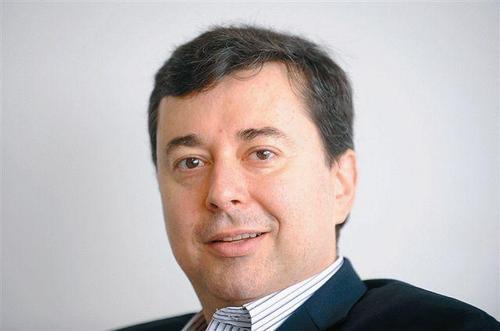
Google Brazil executive Fabio Coelho. Image from Twitter
Brazilian law is extremely rigid about offensive material aimed at political candidates. But many view some of the judges’ attitudes in these cases as excessive and often times myopic.
In a statement issued in September, Coelho said the episode had “intimidating effects” on freedom of expression. He claimed the videos were “legitimate manifestations of free speech” and should be kept available.
“There are gaps in Brazil’s electoral legislation that make this kind of situation possible”, said Google Brazil’s Public Policy Senior Counsel Marcel Leonardi about Coelho’s arrest. He added:
We hope this episode puts a light on the need to adjust Brazil’s law, so that legitimate political outcries from internet users can be differentiated from, say, unlawful propaganda. The dynamics of the internet need to be understood.
In November, lobbying by telecom companies in the Brazilian Congress’s lower house killed a draft bill known as the “internet bill of rights”, a civil rights framework to guarantee basic rights for internet users, content creators and online intermediaries.
Google says Brazil is one of the countries that has the most cases of site removal requests made by government agencies.
21 Dec 2012 | Digital Freedom, Uncategorized

UPDATE: An appeals court in Milan acquitted today three Google executives of violating the privacy of an Italian boy with autism, in the so-called “Vividown” case. “We’re very happy that the verdict has been reversed and our colleagues’ names have been cleared. Of course, while we are delighted with the appeal, our thoughts continue to be with the family who have been through the ordeal,” said Giorgia Abeltino, Google Italy Policy Manager, in an statement.
The European Union Directive on electronic commerce is not the most inspirationally named document. The title would barely fit on a placard, and scans awkwardly for sloganeering (“What do we want?” “Implementation of the Electronic Commerce Directive!” “When do we want it?” “Within an agreed scheduled framework period, subject to negotiation between neighbour states and key stakeholders!”)
But the eCommerce Directive, as it is known by, er, some people, states a principle that is absolutely crucial to how the web works.
Article 12 of the directive, adopted in 2000, establishes the principle of the “mere conduit”. That is the idea that an Internet Service provider is not liable for content hosted on its platform, provided it “(a) does not initiate the transmission; (b) does not select the receiver of the transmission; and (c) does not select or modify the information contained in the transmission.”
This idea means that, at least in theory, Facebook, YouTube etc. can allow users to post anything on their platforms without worrying about having to account for it legally.
I say “in theory”. Today (21 December), an appeal will take place in an Italian court over a ruling which severely tested the concept of “mere conduit”.
In September 2006, Italian secondary school students posted a video of a boy with Down’s Syndrome being taunted and beaten by other teenagers. The video remained online until November that year, when it was removed by YouTube following a request by Italian police.
In 2010, three Google executives were found guilty of breach of privacy by an Italian court in a case brought by Down’s Syndrome charity Viva Down. The appeal comes to court on Friday.
Google protests that it acted as soon as it was notified by the authorities that the video may be illegal. Prosecutors claim that YouTube should have responded to private complaints sooner.
Videos of bullying are unpleasant to say the least, but the people responsible for the harassment of the boy, and the uploading of the video, have been convicted.
The 2010 conviction of Google employeees seriously breaches the idea of ISP as “mere conduit”, and with that, the way the web works. If social platforms are to be held responsible for all content, the consequences could be catastrophic for the way we operate on the web. Even the Chinese Internet police cannot pre-moderate every single piece of content uploaded, which is what ISPs may feel obliged to do should they be held responsible for content. The alternative might be an automated “banned words” list, perhaps. Either way, we would see an enormous escalation of censorship. What’s more, we would be establishing, even more than already exists, a system of privatised censorship. By handing over responsibility for what we say online from individuals to ISPs, we would be allowing private companies even more power than the state has to govern our speech.
Already this week there has been uproar over Instagram’s (attempted, then hastily withdrawn) grab for users’ content, itself perhaps a breach of mere conduit status.
And if this ruling is upheld in Italy, we’ll be facing another blow to individuals’ free use of the web. Already, a huge deal of our communication happens across private networks. If they are legally responsible for every word, picture and video, they will be inclined to caution, and our space to speak ever more narrowed.
Padraig Reidy is news editor at Index on Censorship
13 Nov 2012 | minipost, News
 Google’s new transparency report reveals government requests for user data and takedowns are on the increase
Today the search giant updated its bi-annual report with requests from January to June 2012. In a blog accompanying the report a Google analyst said:
This is the sixth time we’ve released this data, and one trend has become clear: Government surveillance is on the rise.
In the first half of 2012, the internet giant received 20,938 demands for user data from government proxies around the world — a 33 per cent increase from the same period last year.
Take down requests from government entities are also on the rise, government administrators made 1,789 demands to remove 17,746 items. Google also released details of some of the UK removal requests:
- We received a request from a local law enforcement agency to remove 14 search results for linking to sites that criticize the police and claim individuals were involved in obscuring crimes. We did not remove content in response to this request. In addition, we received a request from another local law enforcement agency to remove a YouTube video for criticizing the agency of racism. We did not remove content in response to this request.
- The number of content removal requests we received increased by 98% compared to the previous reporting period
In a policy paper released last week Index expressed serious concerns about the rapid increase in the number of governments and government surrogates who use takedown requests to silence critics.
