26 Jun 2015 | Academic Freedom, Academic Freedom Letters, Magazine, News, Turkey Letters, Volume 44.02 Summer 2015
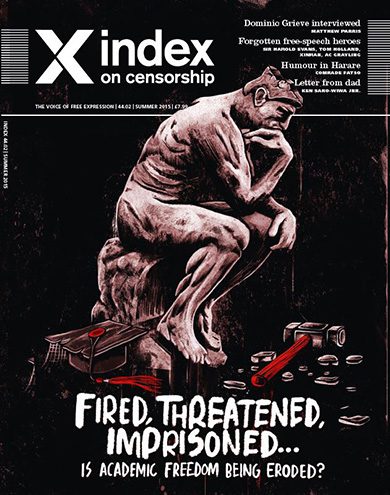
With threats ranging from “no-platforming” controversial speakers, to governments trying to suppress critical voices, and corporate controls on research funding, academics and writers from across the world have signed Index on Censorship’s open letter on why academic freedom needs urgent protection.
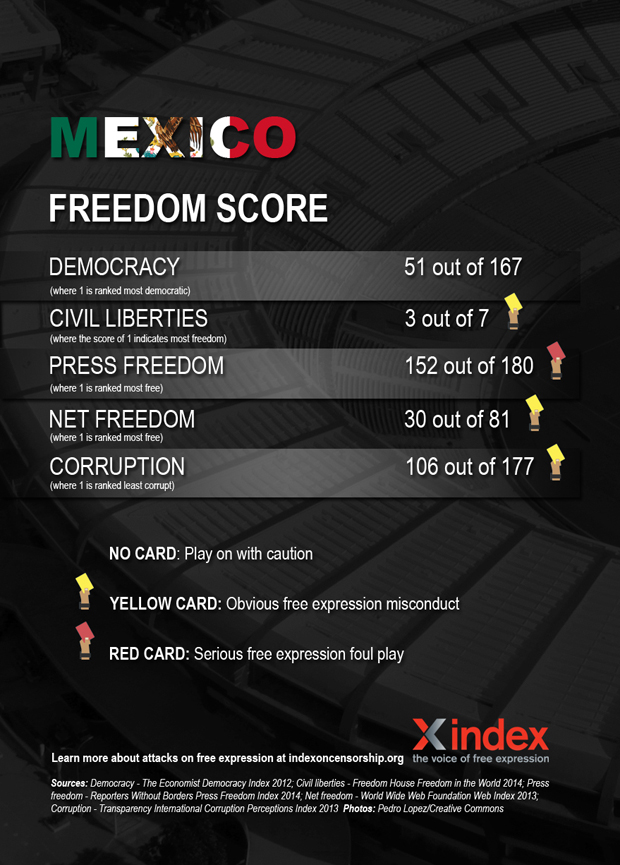
Academic freedom is the theme of a special report in the summer issue of Index on Censorship magazine, featuring a series of case studies and research, including stories of how setting an exam question in Turkey led to death threats for one professor, to lecturers in Ukraine having to prove their patriotism to a committee, and state forces storming universities in Mexico. It also looks at how fears of offence and extremism are being used to shut down debate in the UK and United States, with conferences being cancelled and “trigger warnings” proposed to flag potentially offensive content.
Signatories on the open letter include authors AC Grayling, Monica Ali, Kamila Shamsie and Julian Baggini; Jim Al-Khalili (University of Surrey), Sarah Churchwell (University of East Anglia), Thomas Docherty (University of Warwick), Michael Foley (Dublin Institute of Technology), Richard Sambrook (Cardiff University), Alan M. Dershowitz (Harvard Law School), Donald Downs (University of Wisconsin-Madison), Professor Glenn Reynolds (University of Tennessee), Adam Habib (vice chancellor, University of the Witwatersrand), Max Price (vice chancellor of University of Cape Town), Jean-Paul Marthoz (Université Catholique de Louvain), Esra Arsan (Istanbul Bilgi University) and Rossana Reguillo (ITESO University, Mexico).
The letter states:
We the undersigned believe that academic freedom is under threat across the world from Turkey to China to the USA. In Mexico academics face death threats, in Turkey they are being threatened for teaching areas of research that the government doesn’t agree with. We feel strongly that the freedom to study, research and debate issues from different perspectives is vital to growing the world’s knowledge and to our better understanding. Throughout history, the world’s universities have been places where people push the boundaries of knowledge, find out more, and make new discoveries. Without the freedom to study, research and teach, the world would be a poorer place. Not only would fewer discoveries be made, but we will lose understanding of our history, and our modern world. Academic freedom needs to be defended from government, commercial and religious pressure.
Index will also be hosting a debate in London, Silenced on Campus, on 1 July, with panellists including journalist Julie Bindel, Nicola Dandridge of Universities UK, and Greg Lukianoff, president and CEO of Foundation for Individual Rights in Education, US.
To attend for free, register here.
If you would like to add your name to the open letter, email [email protected]
A full list of signatories:
Professor Mike Adams, University of North Carolina, Wilmington, USA
Monica Ali, author
Lyell Asher, associate professor, Lewis & Clark College, USA
Professor Jim Al-Khalili OBE, University of Surrey, UK
Esra Arsan, associate professor, Istanbul Bilgi University, Turkey
Julian Baggini, author
Professor Mark Bauerlein, Emory University, USA
David S. Bernstein, publisher, USA
Robert Bionaz, associate professor, Chicago State University, USA
Susan Blackmore, visiting professor, University of Plymouth, UK
Professor Jan Blits, professor emeritus, University of Delaware, USA
Professor Enikö Bollobás, Eötvös Loránd University, Hungary
Professor Roberto Briceño-León, LACSO, Caracas, Venezuela
Simon Callow, actor
Professor Sarah Churchwell, University of East Anglia, UK
Professor Martin Conboy, University of Sheffield, UK
Professor Thomas Cushman, Wellesley College, USA
Professor Antoon De Baets, University of Groningen, Holland
Professor Alan M Dershowitz, Harvard Law School, USA
Rick Doblin, Association for Psychedelic Studies, USA
Professor Thomas Docherty, University of Warwick, UK
Professor Donald Downs, University of Wisconsin-Madison, USA
Professor Alice Dreger, Northwestern University, USA
Michael Foley, lecturer, Dublin Institute of Technology, Ireland
Professor Tadhg Foley, National University of Ireland, Galway, Ireland
Nick Foster, programme director, University of Leicester, UK
Professor Chris Frost, Liverpool John Moores University, UK
AC Grayling, author
Professor Randi Gressgård, University of Bergen, Norway
Professor Adam Habib, vice-chancellor, University of Witwatersrand, Johannesburg, South Africa
Professor Gerard Harbison, University of Nebraska-Lincoln
Adam Hart Davis, author and academic, UK
Professor Jonathan Haidt, NYU-Stern School of Business, USA
John Earl Haynes, retired political historian, Washington, USA
Professor Gary Holden, New York University, USA
Professor Mickey Huff, Diablo Valley College, USA
Professor David G. Hoopes, California State University, USA
Philo Ikonya, poet
James Ivers, lecturer, Eastern Michigan University, USA
Rachael Jolley, editor, Index on Censorship
Lee Jones, senior lecturer, Queen Mary University of London, UK
Stephen Kershnar, distinguished teaching professor, State University of New York, Fredonia, USA
Professor Laura Kipnis, Northwestern University, USA
Ian Kilroy, lecturer, Dublin Institute of Technology, Ireland
Val Larsen, associate professor, James Madison University, USA
Wendy Law-Yone, author
Professor Michel Levi, Universidad Andina Simón Bolívar, Ecuador
Professor John Wesley Lowery, Indiana University of Pennsylvania, USA
Greg Lukianoff, president and chief executive, Foundation for Individual Rights in Education (Fire), USA
Professor Tetyana Malyarenko, Donetsk State Management University, Ukraine
Ziyad Marar, global publishing director, Sage
Charlie Martin, editor PJ Media, UK
Jean-Paul Marthoz, senior lecturer, Université Catholique de Louvain, Belgium
Professor Alan Maryon-Davis, King’s College London, UK
John McAdams, associate professor, Marquette University, USA
Timothy McGuire, associate professor, Sam Houston State University, USA
Professor Tim McGettigan, Colorado State University, USA
Professor Lucia Melgar, professor in literature and gender studies, Mexico
Helmuth A. Niederle, writer and translator, Germany
Professor Michael G. Noll, Valdosta State University, USA
Undule Mwakasungula, human rights defender, Malawi
Maureen O’Connor, lecturer, University College Cork, Ireland
Professor Niamh O’Sullivan, curator of Ireland’s Great Hunger Museum, and Quinnipiac University, Connecticut, USA
Behlül Özkan, associate professor, Marmara University, Turkey
Suhrith Parthasarathy, journalist, India
Professor Julian Petley, Brunel University, UK
Jammie Price, writer and former professor, Appalachian State University, USA
Max Price, vice-chancellor, University of Cape Town, South Africa
Clive Priddle, publisher, Public Affairs
Professor Rossana Reguillo, ITESO University, Mexico
Professor Glenn Reynolds, University of Tennessee College of Law, USA
Professor Matthew Rimmer, Queensland University of Technology, Australia
Professor Paul H. Rubin, Emory University, USA
Andrew Sabl, visiting professor, Yale University, USA
Alain Saint-Saëns, director,Universidad Del Norte, Paraguay
Professor Richard Sambrook, Cardiff University, UK
Luís António Santos, University of Minho, Portugal
Professor Francis Schmidt, Bergen Community College, USA
Albert Schram, vice chancellor/CEO, Papua New Guinea University of Technology
Victoria H F Scott, independent scholar, Canada
Kamila Shamsie, author
Harvey Silverglate, lawyer and writer, Massachusetts, USA
William Sjostrom, director and senior lecturer, University College Cork, Ireland
Suzanne Sisley, University of Arizona College of Medicine, USA
Chip Stewart, associate dean of the Bob Schieffer College of Communication, Texas Christian University, USA
Professor Nadine Strossen, New York Law School, USA
Professor Dawn Tawwater, Austin Community College, USA
Serhat Tanyolacar, visiting assistant professor, University of Iowa, USA
Professor John Tooby, University of California, USA
Meena Vari, Srishti Institute of Art, Design and Technology, Bangalore, India
Professor Leland Van den Daele, California Institute of Integral Studies, USA
Professor Eugene Volokh, UCLA School of Law, USA
Catherine Walsh, poet and teacher, Ireland
Christie Watson, author
Ray Wilson, author
Professor James Winter, University of Windsor, Canada
10 Nov 2014 | China, News, Tibet
![Photo: Wolfgang H. Wögerer, Vienna, Austria [CC-BY-SA-3.0 (http://creativecommons.org/licenses/by-sa/3.0) or CC-BY-SA-3.0 (http://creativecommons.org/licenses/by-sa/3.0)], via Wikimedia Commons](https://www.indexoncensorship.org/wp-content/uploads/2014/11/Vienna_2012-05-26_-_Europe_for_Tibet_Solidarity_Rally_158_Lobsang_Sangay.jpg)
Lobsang Sangay at a solidarity rally for Tibet in 2012 (Photo: Wolfgang H. Wögerer, Vienna, Austria [CC-BY-SA-3.0 or CC-BY-SA-3.0], via Wikimedia Commons)
It was not, to say the least, what he had been expecting. Just a few weeks earlier, Sangay had become Tibet’s new political leader, taking over all political authority from the Dalai Lama after winning an election held among exiled Tibetans all across the world. It had been his first day in parliament in Dharamsala, where the Central Tibetan Administration (CTA) is based, and his entire cabinet had just been unanimously approved — a cause for celebration.
Yet that same day, a top-secret memo about an upcoming visit to the US had somehow been obtained from the government’s computers, and leaked into the public domain. “Everything was supposed to be very confidential, and the memo was only meant for three people in Washington DC,” Sangay tells Pao-Pao.
His assistants recommended cancelling the trip altogether. “It’s all out,” they told Sangay. “Nothing is a secret.” Their worries were not unwarranted. The Chinese government had started pressuring the American politicians listed in the memo to cancel their meeting with Sangay. Still, he pushed ahead. “I said: ‘We are going to Washington DC, on the same dates as described in the memo, and we are meeting with the same people as in the memo. That’s the only way we can respond to Beijing’s bullying.’”
Security upgrade
In the end, the visit went ahead as planned. But the attack was a shock to Sangay. “First of all, that Beijing is so capable of penetrating our computers that they can get at even our very confidential memos,” he says. “But also, that when I came back to the office, they were logging into every computer in the office and trying to shut it down, trying to track down which computer was affected with a virus and how they stole the secret memo. The whole place was shut down.”
It wasn’t the first time that the Tibetan administration had found itself under Chinese cyber attack. In 2008, the large-scale cyber spying operation Ghostnet managed to extract emails and other data from the CTA. Ghostnet also affected other Tibet-related organisations, as well as embassies and government organisations across the world. A year later, ShadowNet was employed, which researchers from the Infowar Monitor (IWM) at the University of Toronto called a form of “cyber espionage 2.0”.
The IWM researchers were able to establish that the hackers worked from within China, but they have been hesitant to link these hackers to the Chinese government due to a lack of direct evidence. However, an American cable released by Wikileaks describes a “sensitive report” that was able to establish a connection between the attackers’ location and the Chinese army.
The 2011 attack propelled Sangay to tighten the administration’s digital security. “At the time, there was a different mindset about it: ‘Oh, we can’t do much about it, Beijing can do whatever it wants,’” he recalls. Sangay, who was an outsider to Tibetan politics and had spent the sixteen years before he was elected at Harvard Law School, didn’t agree. “I thought that we could upgrade our security to a certain level. Now, even if we have a virus, it’s only on one computer, we can isolate it.”
But while the CTA’s office might no longer grind to a halt when a computer is infected, attacks have continued unabated. In 2012, a Chinese cyber attack infiltrated at least 30 computer systems of Tibetan advocacy groups for over ten months. In 2013, the CTA’s website Tibet.net was compromised in a so-called watering hole attack, which allows hackers to spy on and subsequently attack website visitors.
Greg Walton, an internet security researcher at Oxford University, is concerned at the growing number of these watering hole attacks. When they are combined with attacks that exploit software vulnerabilities, he argues that “there is essentially no defence for the end user, and no amount of awareness or training will mitigate the threat.”
Sangay does not believe that absolute security is possible. “Beijing is still, I am sure, trying to steal things. And I am sure they are successful, in some sense. But we also have to try to make it a little more difficult,” he says. “I assume my email is being read on a daily basis. The Pentagon, the CIA, multinational companies are all being hacked, and they are spending hundreds of millions to protect themselves.”
Sangay throws up his hands: “Poor me! My administration’s budget is around 50 plus million dollars. Even if I would spend my whole budget to protect my email account, that still wouldn’t be enough.”
No attachment, please
Sangay does believe that many problems can be avoided with a few basic precautions. He uses very long passwords for instance, and changes them often to prevent hacks of his own email account. And, he says: “You always have to follow Buddha’s message. What would Buddha say if you send him an email? ‘No attachment please!’” Sangay laughs. “One of the cardinal sins in Buddhism is attachment. Well, Buddha’s lessons, who said that 2,500 years ago, are still valid.”
Holding himself to “Buddha’s teachings” has prevented Sangay from getting his computer infected many times — although there have been some close calls. Take for example the time Time magazine’s editor Hanna Beech emailed him, a week prior to a scheduled interview in Dharamsala.
“She sent me the ten questions she would ask me. I found that very generous, journalists sending me questions ahead of time!” Sangay was about to download the attachment — but then he paused. “I grew a bit suspicious, so I decided to write back to her to ask if it was really her.” Beech said it wasn’t.
The attack was sophisticated, but not uncommon, Sangay says. “We get that on a daily basis, literally; some Tibetan support group or someone from our office sends an email that will contain a virus.”
Strengthening bonds
For the Tibetan government, digital communications have offered Chinese hackers a welcome point of attack. But Sangay also emphasises the positive sides of the internet: “Despite the [Great] Firewall, information breaks through, and is exchanged. That is happening, and that is not something that the Chinese government or any other government can prevent.”
He points to the 2008 protests in Tibet as one example. In the protests, which some dubbed “the cellphone revolution”, written reports, videos and photos from eyewitnesses were able to make their way to the rest of the world via mobile phones.
Additionally, the internet has allowed the Tibetan Central Administration in Dharamsala, home of about 100,000 Tibetans, to strengthen its bonds with the approximately 50,000 exiled Tibetans living elsewhere. Sangay says that the exile community — “scattered across some forty countries” — keeps in touch mainly through the internet.
“The internet has been very vital. The other day, I was speaking to Tibetans in Belgium. I asked them how many log in to Tibet.net, our website, and how many watch Tibetan online TV. About 40% raised their hands.” Tibetans from inside Tibet even manage to send Sangay “one-off messages” via Facebook from time to time. “Things like: ‘I wish you well’, from Facebook accounts that are immediately deleted.”
Dangerous, but helpful
Tibetans inside and outside of China now also communicate constantly via WeChat, but that is not without danger. A year ago, two monks in Tibet were arrested and jailed after posting pictures of self-immolations via the chat app. “Many say it’s very dangerous, because it’s an app by a Chinese company,” Sangay concedes. Still, he also considers it “very helpful and informative” as long as it is used to discuss safe topics.
The Tibetan administration consciously abstains from contacting Tibetans inside China “for fear that we might jeopardise them,” Sangay says. “We get a little less than 100,000 readers to our website every month, and we know many are from inside Tibet and China as well. We know it’s happening, but we really don’t make deliberate efforts [to contact them], and we also don’t keep track.”
Skyping with Woeser
Since Sangay was elected, it has been too risky for him to keep in touch with Tibetans in China via the internet. But before his election, like many others, he was in touch with those inside China almost every day. During his years at Harvard, he often Skyped with the famed Tibetan blogger and activist Tsering Woeser.
“It almost became an everyday ritual. I would go to the office, and then at a particular time I would log on and we would talk for half hour or more. Because her Tibetan wasn’t good, I became her unpaid, amateur Tibetan language teacher.” Sangay laughs as he recalls Woeser’s unsuccessful attempts to crack jokes in her — at the time — mediocre Tibetan.
Unfortunately, Sangay says he “had to stop talking to her for fear that I might endanger her”. But he still admires her work: “She is a good source of information. She compiles information from inside and shares with the rest of the world. She is very bold.” He considers bloggers like her an invaluable resource for those who want to know what life in Tibet is really like.
So will the internet ultimately be a force for good or evil? Sangay doesn’t know. “It all depends on who uses it. For good, if more good people use it.” On the one hand, he is in awe at how nowadays “in zero seconds, at almost zero cost, you can send vast volumes of information”. But he worries about the security side of the internet. “Ultimately, the [power] dynamic is so asymmetrical. One has wealth, and control over access to stronger and better technology, and one doesn’t.”
That, of course, is a power dynamic that the Tibetan leader has long ago gotten accustomed to. “I think the David and Goliath battle will go on, even on the internet,” Sangay says. “Ultimately, if David will prevail, we will have to see.”
This article is also available in Chinese at Pao-Pao.net
This article was posted on 10 November at indexoncensorship.org with permission from Pao-Pao.net