18 Apr 2017 | Awards, Awards Update, Digital Freedom, News, Youth Board
[vc_row][vc_column][vc_column_text]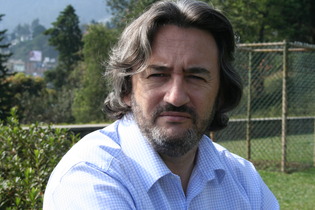
Fergal Keane is a journalist who made his name as a war reporter at the end of millennium, covering conflicts from Congo and Rwanda to Kosovo. In 2003, the Index on Censorship recognised his efforts with their award for Outstanding Commitment to Journalism Integrity. It wasn’t Keane’s first award, and it wasn’t his last either. On top of his Orwell Prize (1996) and Amnesty International Press Award (1993) and Television Prize (1994), his OBE and his BAFTA (both from 1997), Keane has since added a Sony Gold award in 2009, for his inspiring Radio 4 series ‘Taking a Stand’, and the Ireland Funds Literary Award in 2015.
In 2004, following decades in the profession, Keane made the decision to stop entering active war zones. “I couldn’t justify potentially robbing my children of a father,” he told the Daily Telegraph in 2010. “I couldn’t do it anymore.” But despite a slight career shift, Keene continues his commitment to journalism and justice just as fervently. He is now a special correspondent for the BBC, still writing and broadcasting on topics like the refugee crisis, the Yemen conflict and the South Sudan civil war – though sometimes from afar – as well as often being dispatched to the latest scenes of terrorism in Europe, whether France, Belgium or Germany. Wherever he is, he retains an insight and awareness of historical context that few can match.
Beyond the BBC, he is also the author of several well-received books and in 2011 he received an honorary degree from the University of Liverpool, where he is now three years into a Professorial Fellowship. He is part of the university’s Institute of Irish Studies, teaching students on the Understanding Conflict masters programme.
Speaking to the university’s website in 2015, Fergal criticised the “endlessly reductive” mainstream press and urged his students to “always challenge your opinions with facts, every day of your life. You will only know what your opinions are worth if they are taken out of the box and subjected to the most severe tests. Facts, facts, facts.”
Not all Keane’s work is confined to journalism, however. In 2005, he founded Msaada, an NGO dedicated to assisting Rwandans – and Rwandan society – to recover from the 1994 genocide, through meaningful, income-generating projects. It continues to support such projects today.
Samuel Earle is a member of Index on Censorship’s Youth Advisory Board. He is a freelance writer and recent masters graduate from the London School of Economics and Political Science, where he studied Political Theory. He lives in Paris.[/vc_column_text][/vc_column][/vc_row][vc_row][vc_column width=”1/2″][vc_single_image image=”85476″ img_size=”full” alignment=”center” onclick=”custom_link” link=”https://www.indexoncensorship.org/2016/11/awards-2017/”][/vc_column][vc_column width=”1/2″][vc_column_text]
Index on Censorship Freedom of Expression Awards
Seventeen years of celebrating the courage and creativity of some of the world’s greatest journalists, artists, campaigners and digital activists
2001 | 2002 | 2003 | 2004 | 2005 | 2006 | 2007 | 2008 | 2009 | 2010 | 2011 | 2012 | 2013 | 2014 | 2015 | 2016 | 2017[/vc_column_text][/vc_column][/vc_row][vc_row][vc_column][vc_basic_grid post_type=”post” max_items=”12″ style=”load-more” items_per_page=”4″ element_width=”6″ grid_id=”vc_gid:1492505799978-a5ad6490-9f12-5″ taxonomies=”4881, 8935″][/vc_column][/vc_row]
15 Mar 2017 | Events
[vc_row][vc_column][vc_column_text]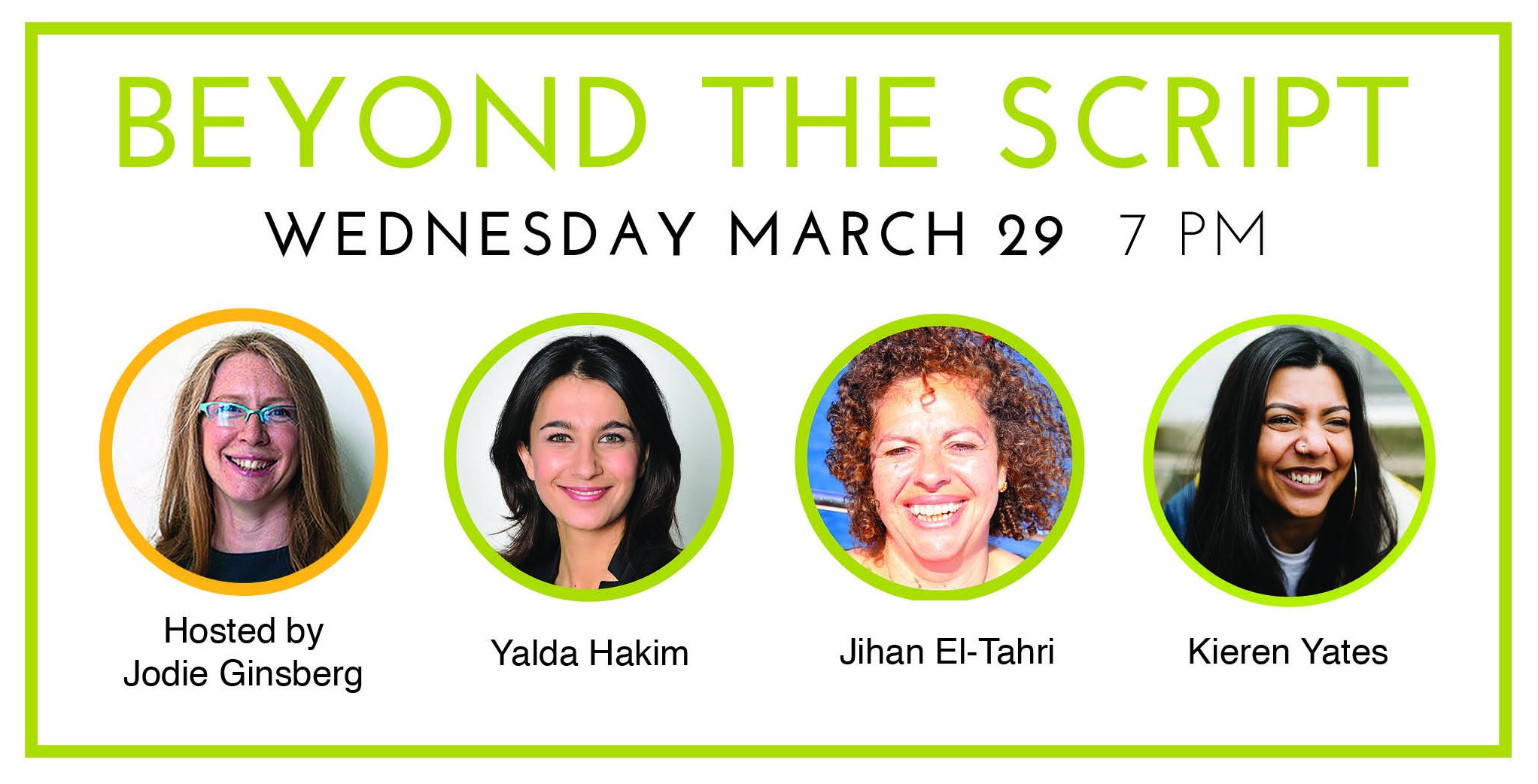 Beyond the Script, part of the BBC Arabic Festival, invites speakers to question what we cannot talk about. Journalists, filmmakers and producers will look at policy, ethics and physical boundaries that limit their ability to convey information or tell a story in full. What are the barriers that limit our knowledge of situations and who gets left behind in the process? What are the stories we cannot tell?
Joining us for this discussion are:
Jihan El-Tahiri – Jihan has been making documentaries since 1990. Her most recent film, Nasser, was part of the 2015 official selection at the Toronto International Film Festival. Jihan is engaged in a number of associations working with African cinema, including the Guild of African Filmmakers in the Diaspora, the Federation of Pan African Cinema and Focus Feature’s Africa First Program. She is also a Mentor at the Documentary Campus.
Yalda Hakim – Yalda currently anchors the BBC World News flagship programme Impact and delivers hard hitting journalism for the Our World documentary strand. In the past twelve months she has reported from some of the world’s most challenging areas; covering the rise of ISIS in Iraq, Nigeria’s fight against Boko Haram, the devastation of the Nepal earthquake, the plight of people starving in South Sudan and has gained entry to Eritrea – considered one of the most secretive and oppressive states on earth.
Kieren Yates – Kieran is a London-based journalist, editor and broadcaster who had spent the last 10 years writing about youth culture, immigrant communities and politics. She writes regularly for The Guardian, FADER and Vice, edits the acclaimed fanzine British Values. She made the award nominated Muslim Drag Queens documentary in 2015 and appears everywhere from BBC One News to Radio 4 discussing politics and culture.
The evening will be chaired by Jodie Ginsberg. Jodie is the chief executive of Index on Censorship, having joined from the think-tank, Demos. A former London Bureau Chief for Reuters, Jodie worked for more than a decade as a foreign correspondent and business journalist. She was previously Head of Communications for Camfed, a non-profit organisation working in girls’ education.[/vc_column_text][/vc_column][/vc_row][vc_row][vc_column][vc_column_text]
When: Wednesday 29 March, 7pm
Where: Radio Theatre, Broadcasting House, Portland Pl, W1A 1AA (map)
Tickets: Free. Registration required.
[/vc_column_text][/vc_column][/vc_row]
18 Sep 2015 | Magazine, mobile, Volume 44.01 Spring 2015
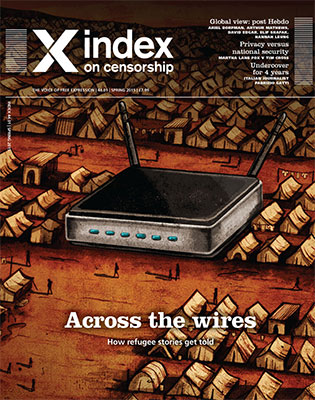
In conjunction with the Cambridge Festival of Ideas 2015, we will be publishing a series of articles that complement many of the upcoming debates and discussions. We are offering these articles from Index on Censorship magazine for free (normally they are held within our paid-for archive) as part of our partnership with the festival. Below is and article by Ismail Einashe on television journalist Temesghan Debesai’s escape from Eritrea, taken from the spring 2014 issue. This article is a great starting point for those planning to attend the A New Home: Asylum, Immigration and Exile in Today’s Britain session at the festival.
Index on Censorship is a global quarterly magazine with reporters and contributing editors around the world. Founded in 1972, it promotes and defends the right to freedom of expression.
Television journalist Temesghen Debesai had waited years for an opportunity to make his escape, so when the Eritrean ministry of information sent him on a journalism training course in Bahrain he was delighted, but fearful too. On arrival in Bahrain, he quietly evaded the state officials who were following him and got in touch with Reporters Sans Frontières. Shortly after he met officials from the United Nations High Commissioner for Refugees who verified his details. He then went into hiding for two months so the Eritrean officials in Bahrain could not catch up with him and eventually escaped to Britain.
Debesai told no one of his plans, not even his family. He was concerned he was being watched. He says a “state of paranoia was everywhere” and there was no freedom of expression. Life in Eritrea, he explains, had become a “psychological prison”.
After graduating top of his class from Eritrea’s Asmara University, Debesai became a well-known TV journalist for state-run news agency Erina Update. But from 2001, the real crackdown began and independent newspapers such as Setit, Tsigenai, and Keste Debena, were shut down. In raids journalists from these papers were arrested en masse. He suspects many of those arrested were tortured or killed, and many were never heard of again. No independent domestic news agency has operated in Eritrea since 2001, the same year the country’s last accredited foreign reporter was expelled.
The authorities became fearful of internal dissent. Debesai noticed this at close hand having interviewed President Afwerki on several occasions. He describes these interviews as propaganda exercises because all questions were pre-agreed with the minister of information. As the situation worsened in Eritrea, the post-liberation haze of euphoria began to fade. Eritrea went into lock-down. Its borders were closed, communication with the outside world was forbidden, travel abroad without state approval was not allowed. Men and women between the ages of 18 and 40 could be called up for indefinite national service. A shoot-to-kill policy was put in operation for anyone crossing the border into Ethiopia.
Debesai felt he had no other choice but to leave Eritrea. As a well-known TV journalist he could not risk walking across into Sudan or Ethiopia, so he waited until he got the chance to leave for Bahrain.
Eritrea was once a colony of Italy. It had come under British administrative control in 1941, before the United Nations federated Eritrea to Ethiopia in 1952. Nine years later Emperor Haile Selassie dissolved the federation and annexed Eritrea, sparking Africa’s longest war. This long bitter war glued the Eritrean people to their struggle for independence from Ethiopia. Debesai, whose family went into exile to Saudi Arabia during the 1970s, returned to Eritrea as a teenager in 1992, a year after the Eritrean People’s Liberation Front captured the capital Asmara.
For Debesai returning to Asmara had been a “personal choice”. He wanted to be a part of rebuilding his nation after a 30-year conflict, and besides, he says, life in post-war Asmara was “socially free”, a welcome antidote to conservative Saudi life. Those heady days were electric, he says. An air of “patriotic nationalism” pervaded the country. Women danced in the streets for days welcoming back EPLF fighters. Asmara had remained largely unscathed during the war thanks to its high mountain elevation. Much of its beautiful 1930s Italian modernist architecture was intact, something Debesai was delighted to see.
But those early signs of hope that greeted independence quickly soured. By 1993 Eritreans overwhelmingly voted for independence, and since then Eritrea has been run by President Isaias Afwerki, the former rebel leader of the EPLF. Not a single election has been held since the country gained independence, and today Eritrea is one of the world’s most repressive and secretive states. There are no opposition parties and no independent media. No independent public gatherings or civil society organisations are permitted. Amnesty International estimates there are 10,000 prisoners of conscience in Eritrea, who include journalists, critics, dissidents, as well as men and women who have evaded conscription. Eritrea is ranked the worst country for press freedoms in the world by Reporters Sans Frontières.
The only way for the vast majority of Eritreans to flee their isolated, closed-off country is on foot. They walk over the border to Sudan and Ethiopia. The United Nations says there are 216,000 Eritrean refugees in Ethiopia and Sudan. By the end of October 2014, Sudan alone was home to 106,859 Eritrean refugees in camps at Gaderef and Kassala in the eastern, arid region of the country.
In Ethiopia, Eritrean refugees are found mostly in four refugee camps in the Tigray region, and two in the Afar region in north-eastern Ethiopia.
During the first 10 months of 2014, 36,678 Eritreans sought refuge across Europe, compared to 12,960 during the same period in 2013. Most asylum requests were to Sweden (9,531), Germany (9,362) and Switzerland (5,652). The UN says the majority of these Eritrean refugees have arrived by boat across the Mediterranean. The majority of them are young men, who have been forced into military conscription. All conscripts are forced to go to Sawa, a desert town and home to a military camp, or what Human Rights Watch has called an open-air prison. Many young men see no way out but to leave Eritrea. For them, leaving on a perilous journey for a life outside their home country is better than staying put. The Eritrean refugee crisis in Europe took a sharp upward turn in 2014, as the UNHCR numbers show. And tragedies, like the drowning of hundreds of Eritrean refugees off the Italian island of Lampedusa in October 2013, demonstrate the perils of the journey west and how desperate these people are.
Even when Eritrean refugees go no further than Sudan and Ethiopia, they face a grim situation. According to Lul Seyoum, director of International Centre for Eritrean Refugees and Asylum Seekers (ICERAS), Eritrean refugees in a number of camps inside Sudan and Ethiopia face trafficking, and other gross human rights violations. They are afraid to speak and meet with each other. She said, that though information is hard to get out, many Eritreans find themselves in tough situations in these isolated camps, and the situation has worsened since Sudan and Eritrea became closer politically.
Eritrea had a hostile relationship with Sudan during the 1990s. It supported the Sudan People’s Liberation Movement, much to the anger of President Al Bashir who was locked in a bitter war with the people of now-independent South Sudan. Today tensions have eased considerably, and President Afwerki has much friendly relations with Sudan to the detriment of then tens of thousands of Eritrean refugees in Sudan.
A former Eritrean ministry of education official, who is a refugee now based in the UK and who does not want to be named because of safety fears, believes there’s no freedom of expression for Eritreans in Ethopian camps, such as Shimelba.
The official says in 2013 a group of Eritrean refugees came together at a camp to express their views on the boat sinking near Lampedusa and they were abused by the Ethiopian authorities who then fired at them with live bullets.
Seyoum believes that the movement of Eritreans in camps in Ethiopia is restricted. “The Ethiopian government does not allow them to leave the camps without permission,” she says. Even for those who get permission to leave very few end up in Ethiopia, instead through corrupt mechanisms are trafficked to Sudan. According to Human Rights Watch, hundreds of Eritreans have been enslaved in torture camps in Sudan and Egypt over the past 10 years, many enduring violence and rape at their hands of their traffickers in collusion with state authorities.
Even when Eritreans make it to the West, they are still afraid to speak publicly and many are fearful for their families back home. Now based in London, Debesai is a TV presenter at Sports News Africa. As an exile who has taken a stance against the regime of President Afewerki, he has faced harassment and threats. He is harassed over social media, on Twitter and Facebook. Over coffee, he shows me a tweet he’s just received from Tesfa News, a so-called “independent online magazine”, in which they accuse him of being a “backstabber” against the government and people of Eritrea. Others face similar threats, including the former education ministry official.
For this piece, a number of Eritreans said they did not want to be interviewed because they were afraid of the consequences. But Debesai said: “It takes time to overcome the past, so that even for those in exile in the West the imprisonment continues.” He adds: “These refugees come out of a physical prison and go into psychological imprisonment.”
© Ismail Einashe and Index on Censorship
20 Jun 2014 | Egypt, News, Politics and Society
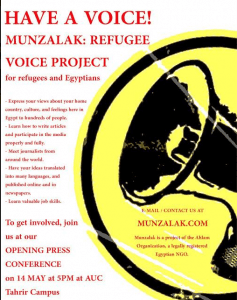 It is still hot in the shade of the palm trees and stuccoed buildings on the American University in Cairo’s (AUC) downtown campus. Groups of refugees sit around on wicker chairs.
Everyone is here to learn about journalism. Munzalak is a new organization that aims to get refugees living in Egypt involved in the media and in command of their own voice. The name translates to “your comfortable place,” like a home from home – the one you were forced to leave.
Every weekend Munzalak hires out a room at AUC. Refugees are invited to come along and learn the basics of journalism for free. Aurora Ellis, a news editor for an international news agency, runs the workshops with aim of producing “articles that deal with refugee issues and with the refugee experience.”
The ultimate aim is to give refugees a space to voice their experiences. A blog on Munzalak’s website publishes pieces written by refugees (with the option of writing under a pseudonym) while training goes on and – organizers hope – more people join.
Similar initiatives have existed. The Refugee Voice was a newspaper based in Tel Aviv run by African asylum seekers and Israelis inside Israel and founded in April 2011, but is no longer published. Radar, a London-based NGO, also trains local populations in areas around the world (including Sierra Leone, Kenya and India) with the aim of connecting isolated communities.
“We’re being given the opportunity to write about our experiences…I can write about my experiences, and interview other refugees about theirs,” says Edward, a Sudanese refugee who arrived in Cairo earlier this year.
“We have several basic problems – in housing, security, education and health.” He quietly tells stories of life in Egypt; harassment and assault in the streets and pervasive racism (even, he says, from some people who are there to help). “We live a separated life. We are here by force only.”
Ultimately, Edward wants to write a history of the Nuba Mountains, the war-torn area straddling the border between Sudan and South Sudan, where he was born in over 25 years ago. Edward carries a notebook with ideas for this book – scribbled notes of a people and culture disappearing; histories of war and exodus. Edward sees his journalism as self-preservation, telling stories that other people don’t want to be told. He most admires Nuba Reports, a non-profit news source staffed by Sudanese reporters, which aims to break reporting black-spots while humanitarian crises and fighting continues on the ground.
Some activists working alongside refugees see initiatives like this as an important way to break the silence.
“Before June 30, refugees were always neglected in the national media. They were only included [the media] if they were being used as scapegoats,” says Saleh Mohamed from the Refugee Solidarity Movement (RSM) in Cairo. Famous examples include right-wing TV host Tawfik Okasha calling for Egyptians to arrest and attack Syrian and Palestinian refugees on sight. Syrians and Palestinians arrested by security forces have been routinely referred to as “terrorists” by the authorities, a narrative often repeated verbatim by pro-regime newspapers. “Now I think the media wants to keep refugees in the shadows and not talk with them,” Mohamed adds. “You never hear about refugees.”
But Munzalak is not without its risks and challenges. Staying independent but still being able to attract funding and support is one thing. Another is security.
Last Sunday 13 Syrians were sentenced to five years in prison after protesting in March 2012 against Bashar al-Assad. They were charged with illegal assembly and “threatening…security [forces] with danger,” something the defendants all denied, according to state-run newspaper Al-Ahram. A UNHCR official last year had told Syrian refugees to stay away from domestic politics – a warning that could feasibly include journalism as well.
Although historically repressive towards journalists during the rule of Hosni Mubarak, the Supreme Council of the Armed Forces (SCAF) and the Muslim Brotherhood’s Mohamed Morsi, Egypt’s media landscape has taken a significant nosedive since the July coup. Several journalists have been killed in the violence; Mayada Ashraf, a young reporter for Al-Dostour became the latest casualty after she was shot in the head during a protest, allegedly by a police sniper; while reporters remain behind bars and on trial for doing their job.
So is it a good idea to get refugees involved?
Mohamed says that street reporting and visibly working as journalists could put refugees – like Edward – “in danger.” Their legal ability to work also depends on what refugee status they have.
“But otherwise they can talk about themselves rather than waiting for journalists to approach them instead…They definitely need a voice.” But for some refugees, other priorities come first.
Jomana is a 20-year-old Syrian refugee and media studies undergraduate, originally from Aleppo. She visited Munzalak once and liked the idea, but is more concerned about getting a job and paying her way than talking about her experiences – which, like so many Syrian refugees in Egypt nowadays, are harsh. Of almost 184,000 refugees living in Egypt, according to mid-2013 figures from the United Nations Refugee Agency (UNHCR), around 130,000 of that number are Syrians.
“I don’t have enough money to continue my studies so I will have to leave,” she explains plainly. Jomana’s home was bombed out during the war and they fled the country with just their passports, arriving in Cairo over two years ago. Eventually her father went back to Aleppo to try and restart his old factory, but returned to find rubble. He came back to Cairo to economic uncertainty, incitement and political instability. “Other people are going back to Syria and dying there. Those that stay [here] aren’t dying from bombing or from fighting…but from hunger.”
Munzalak might help, but for some refugees, not in the most crucial of ways.
“It means I can express my opinion freely,” Jomana says, “but will I get paid for my opinion?”
This article was published on June 20, 2014 at indexoncensorship.org