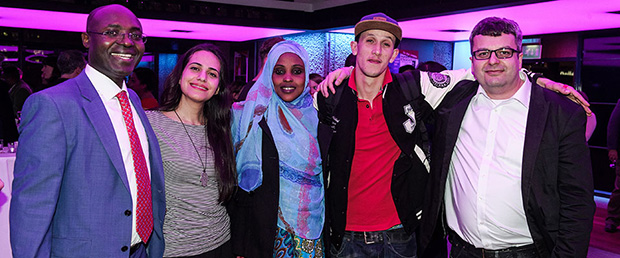
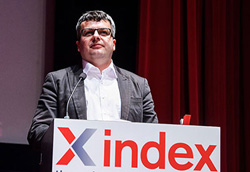
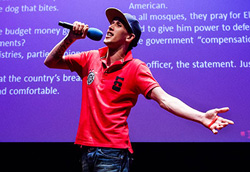
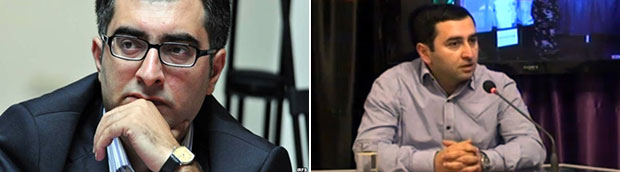
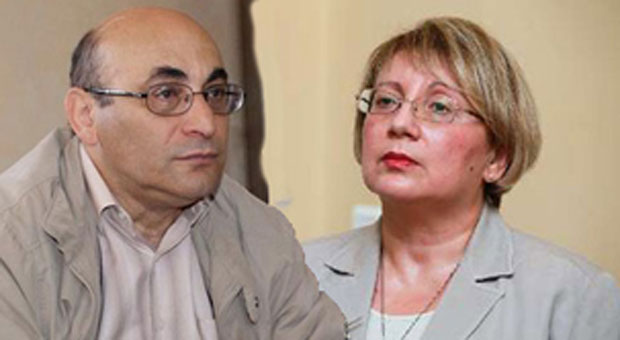
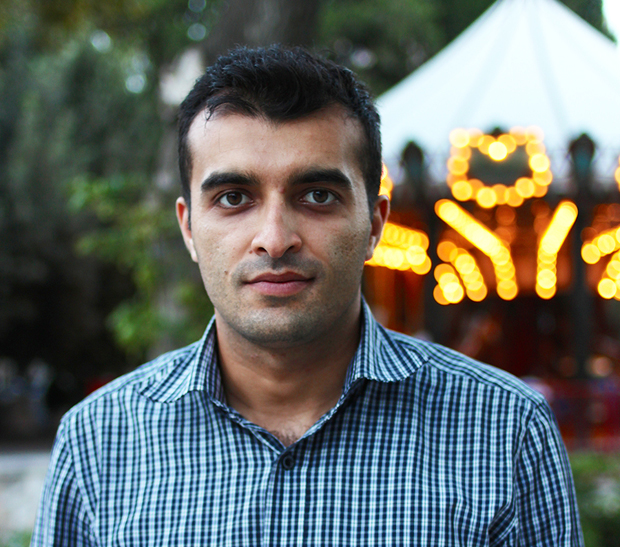
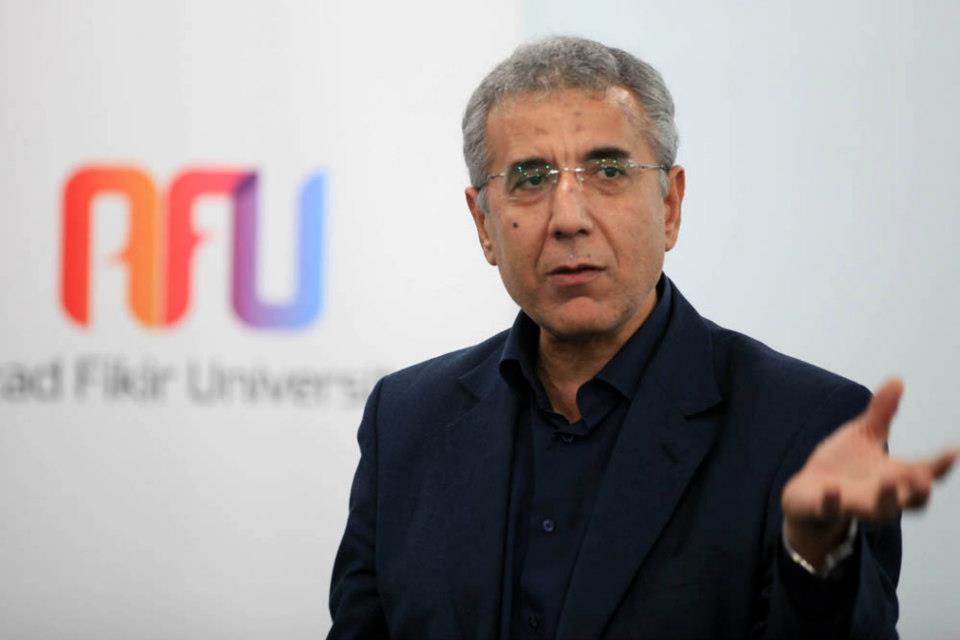
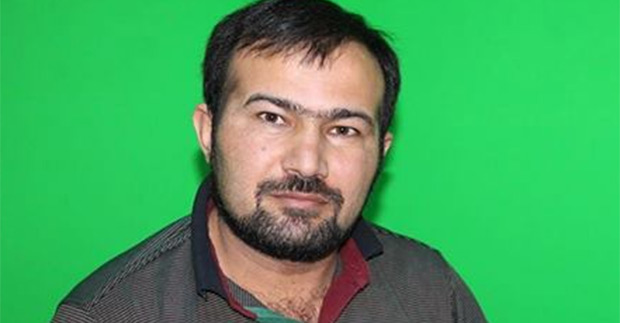
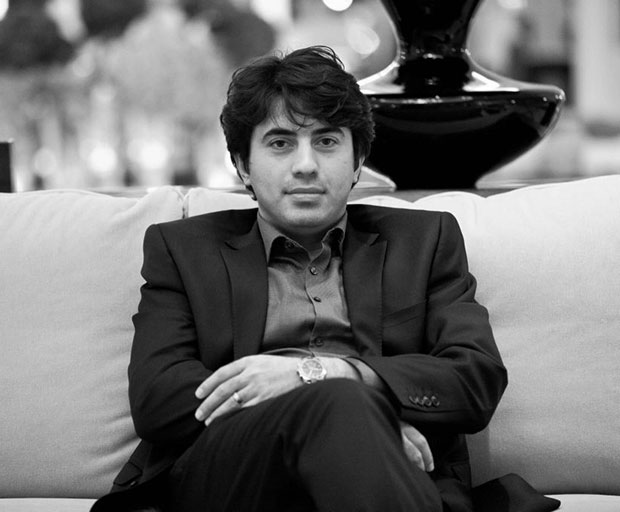
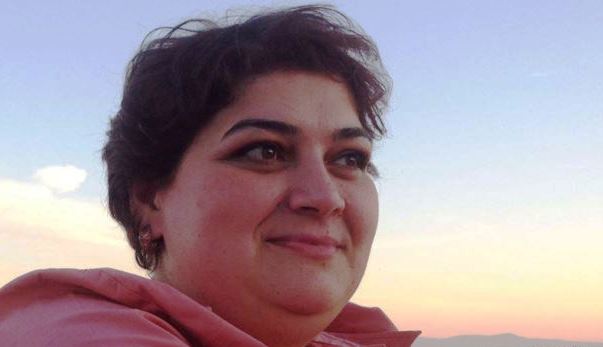
Rafael Marques de Morais, Safa Al Ahmad, Amran Abdundi, Mouad “El Haqed” Belghouat and Tamas Bodokuy (Photo: Alex Brenner for Index on Censorship)
A Kenyan woman standing up for women’s rights in one of the world’s most dangerous regions. A Hungarian journalist and his investigative news site. A documentary filmmaker who exposed an unreported uprising in Saudi Arabia. An Angolan journalist who has been repeatedly prosecuted for his work uncovering government and industry corruption. A Moroccan rapper whose music tackles widespread poverty and endemic government corruption.
These were the five individuals named Index on Censorship Freedom of Expression Award winners on 18 March 2015. Three months later, here are updates on their ongoing work.
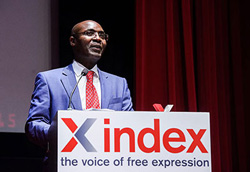
Rafael Marques de Morais / Journalism
Rafael Marques de Morais (Photo: Alex Brenner for Index on Censorship)
International signatories, from Tiffany & Co and Leber Jewellers to Oscar-winning film director Steve McQueen, and from Blood Diamond film stars David Harewood and Michael Sheen to journalist Sir Harold Evans, recently called on Angolan president José Eduardo dos Santos to abandon the prosecution of investigative journalist Rafael Marques de Morais.
The campaigning journalist returned from collecting his award in London to face trial linked to his book Blood Diamonds. He filed a criminal complaint against a group of generals who he held morally responsible for human rights abuses he uncovered within the country’s diamond trade. For this, they filed a series of libel suits against him in Angola and Portugal.
The media attention that Marques won off the back of his award “helped a great deal” he said. “It raised my profile in the days before my trial and maybe helped to make it an international cause.” In a rare sight for Angola, a number of anti-corruption protesters publicly gathered outside of the Luanda courthouse as his trial opened and covert protests have continued under the cover of darkness since.
Marques’ trial played out in a Kafkaesque way over the subsequent weeks, with behind-the-scenes negotiations leading to criminal defamation charges first being dropped, only for him to suddenly discover that he would instead be sentenced for the alternative crime of malicious prosecution.
The American Bar Association, who monitored the trial throughout, published a report stating that the court had failed to meet international fair trial standards on at least three counts. The ABA Center for Human Rights report found that “throughout the proceedings, the defendant was denied the right to present a defense, induced to make a statement on the basis of false pretenses and compelled to bear the burden of proving his innocence, all in violation of international law.”
Marques’ sentence finally came down on 25 May: six-months imprisonment, suspended for a term of two years. Marques is now appealing against this punishment that effectively seeks to silence him until 2017; coincidentally the same year as Angola’s next elections.
The court also attempted to censor Marques’ book from republication and further distribution but these efforts have blatantly failed with copies of the book widely circulated online and an English language version becoming available for the first time less than a week after his sentence.
Despite the international attention, the situation for Marques and his peers in Angola’s human rights and journalism communities remains grim. Recounting the experience of taking his car to the local garage for repairs recently, the fear is palpable in his voice. “There were two members of the ruling party there, by coincidence. They walked across to the mechanic and warned him not to fix my car unless he wanted to risk becoming collateral damage.”
Marques’ email has also recently been repeatedly hacked and his website www.makaangola.org is presently subject to over 250 attacks per day, forcing him to desist from updating it for the time being.
Marques continues to work closely with Index on Censorship and a number of other international organisations. His recent report on the massacre of a sect at Mount Sumi was published by The Guardian, he continues to keep a close eye on both the persecution of journalists and corruption at the highest levels in Angola, and he is expecting to hear back from the Supreme Court about his appeal in the next few weeks.
Hugely grateful for the support of the international community, Marques remains determined “to continue the good fight for change”.
“I have only the interests of my people at heart,” he says, “and to experience all this persecution, it must mean you are doing something positive, something right.”
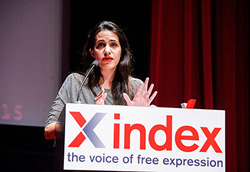
Safa Al Ahmad (Photo: Alex Brenner for Index on Censorship)
Joint winner of the Index on Censorship Freedom of Expression Award for Journalism, Safa Al Ahmad has spent much of the past three months in the editing studio.
Applauded for her documentary Saudi’s Secret Uprising, Al Ahmad’s new film The Rise of the Houthis – first distributed at this year’s Index on Censorship Freedom of Expression Awards Gala and since screened by both the BBC and PBS Frontline – has won wide critical acclaim.
Next month, on 6 July, BBC worldwide will also premiere a follow-up film that Al Ahmad has produced and directed, with Gaith Abdulahad exploring the present situation in the south of Yemen.
Now regularly invited to attend international public meetings, from Copenhagen to Geneva to Washington DC, Al Ahmad says she thinks that the award has brought more exposure – both for credible investigative journalism from Saudi Arabia, and for her work.
Is that a good thing for a journalist who has made her name through operating undercover? It is a challenge, she says, to find ways to do credible journalism about Saudi Arabia and the region without being on the ground. But there are complex stories, beyond TV, that Al Ahmad would increasingly like to focus on.
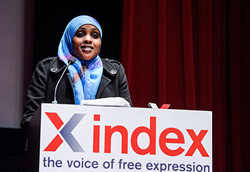
Abdundi, who knows many students from the college, immediately joined with other women leaders to organise strong community protests against Al-Shabaab.
“It was a barbaric attack done by a crazy group who have no respect for human life,” she said. “It was a sad day for the people of Kenya and the victims of the attack. But it will not scare [the] people of northern Kenya as we will continue and fight to overcome them”.
Abdundi hopes to help further through her ongoing work with her grassroots community organisation Frontier Indigenous Rights Network, tracking arms movements across the dangerous border with Sudan and travelling to meetings in Nairobi to report observations. “Security is improving now,” says Abdundi.
Winning the Index on Censorship Freedom of Expression Award for Campaigning, and sharing the story of the people of northern Kenya with the wider world, “made me so happy” she says. “The award ceremony was aired by all community radios in northern Kenya and reached many people. I am happy because it will give women courage to stand up for their rights”.
Spending a week in Index on Censorship’s office in London was “an opportunity to see how you work” Abdundi said, and has inspired her to want to develop a new website for her work, helping her to “spread her message to all corner[s] of northern Kenya”.
Tamas Bodoky (Photo: Alex Brenner for Index on Censorship)
Atlatszo.hu, Tamas Bodoky’s investigative news website in Hungary has continued to gather praise and acclaim, including another award, the Theodor Heuss Medal.
“All of this recognition is very helpful,” said Bodoky. “We are always afraid of retaliation and this offers us a level of protection… Hungarian authorities are very aware of this international attention and it is less likely that they will attack as we continue with our investigative projects.”
Atlatszo continues to publish three to four articles and numerous blog posts each week, including an English newsletter, often drawing on FOI requests to try to bring more transparency to Hungarian public life.
The campaigning journalists scored a major recent success with their campaign to demand political party foundations make information on their beneficiaries, income and spending publicly available. When political party Jobbik’s foundation refused to comply, Atlatszo took action. It began legal proceedings that proved sufficient to make them capitulate.
Bodoky’s organisation is now using this newly available information to research deeper, exploring “far right networks” and, he says, some curious connections between governing party Fidesz and football club Ferencvarosi TC.
As he looks ahead, Bodoky is especially concerned by the looming threat of a foreign NGO law – holding all NGO’s with foreign funding “accountable and transparent” by forcing them to register.
“We don’t know exactly when they will seek to expose and limit foreign funding, but the Russian recipe is definitely on the table,” says Bodoky. Fortunately his organisation has been totally open and transparent since 2013.
Rapper El Haqed (Photo: Alex Brenner for Index on Censorship)
Rapper Mouad Belghouat, better known as El Haqed (“the enraged” in Arabic) continues to rail against the endemic corruption and widespread poverty he says he sees in Morocco.
Imprisoned three times since 2011, El Haqed was not only prohibited from performing publicly in his homeland but had also been struggling to obtain visas to travel or perform internationally.
The good news is that his visit to the UK has helped him to overcome this obstacle, recently spending five weeks touring Norway, Sweden and Denmark. Highlights included performing live during Oslo’s 1 May celebrations and working with the organisation Freemuse to record a new Fela Kuti cover as part of a group of Arab and Iranian revolutionary artists (listen here). “It was much easier to be there because I went to England and came back,” said Belghouat.
Until recently limited to publishing and sharing his work via YouTube and Facebook, El Haqed has also begun something of an offline resurgence back home. Approached by promoters in his home town of Casablanca after winning the Index on Censorship Freedom of Expression Arts Award brought him widespread local media coverage, El Haqed now hopes to stage his first live concert on home soil in a long time this Friday 19 June. (Update 22 June 2015: Morocco: Police block concert by Index award-winning rapper El Haqed)
“Usually people find many excuses not to work with him,” according to Belghouat’s brother and manager Abderrahim Belghouat, “but so far this time no people have yet come and told the venue ‘don’t work with him’…”
Update 23 June 2015: El Haqed has now cancelled his planned tour of five of Morocco’s least affluent towns. The planned series of concerts would have teamed El Haqed with six other local musicians to “bring joy to poorer people in cities without theatres, cinemas and cultural areas, in the old Moroccan way, by making music for free outdoors”.
El Haqed is determinedly hopeful, “the Index award has shown Moroccan authorities that you can’t stop me,” he said, “the more of an effort they make to silence me, the more my voice arrives everywhere.”
Lithuania has banned a Russian TV channel for “inciting discord, warmongering [and] spreading disinformation” according to the country’s media regulator.
RTR Planeta, the international broadcasting service for the All-Russia State Television and Radio Broadcasting Company (VGTRK), a powerful state run media empire that operates more than a dozen TV channels and radio stations, will be taken off the air after alleged “incitements to hatred” during the Sunday Evening With Vladimir Solovjev program.
“This program has repeatedly spread such information, therefore its broadcast was suspended for three months,” Birute Kersiene, a spokesperson for the Radio and Television Commission of Lithuania told AFP.
According to Euro News, which is part-owned by RTR Planeta’s parent company, VGTRK, one bone of contention was the continued presence of firebrand, ultra-nationalist Russian politician Vladimir Zhirinovsky who is know for his inflammatory statements on Solovjev’s show.
Last year he was, according to Lithuanian media reports, quoted in an interview with Rossiya 24 as saying: “The Baltic States, Poland – they are doomed. They will be swept away. Nothing will remain there. They should sober up, the leaders of these dwarf nations … Eastern European countries are exposing themselves to, shall I say, the danger of complete annihilation.”
VGTRK is run by one Oleg Dobrodeev, a staunch Putin ally who was appointed chairman in 2000, the same year Putin came to power. “Dobrodeev was one of the founding members of the independent NTV Channel, but under Putin drastically changed his attitude to independent television in Russia,” wrote Oleg Panfilov, a dissident Russian journalist in his 2005 paper titled Putin and the Press: The Revival of Soviet-style Propaganda for London based think tank The Foreign Policy Centre. “Dobrodeev started to consolidate all state provincial television and radio companies, thus creating a massive and powerful propaganda network.”
The ban is the latest move in a rapidly cooling media environment in the Baltic States, where significant numbers of Russian speakers live and whom get most of their news from Russian sources. To counter what they see as pro-Russian propaganda, the three countries – with the help of the European Union – have vowed to set up supposedly impartial Russian language TV stations.
Whilst Russia has frequently been accused by international media watchdogs for its restrictions on the freedom of the press, governments from the Baltic states have responded by threatening suspensions of TV stations and banning prominent pro-Russian journalists, politicians and even singers from entering their borders.
On 9 March a coalition of press freedom groups including the World Association of Newspapers and News Publishers and the World Press Freedom Committee decried the potential banning of Russian language TV stations in Lithuania. “While we do understand that the objection to their broadcasts is that in the current tense situation in Eastern Europe they are seen as propagandistic and polemical, we view their banning as the wrong approach to counteracting their messages,” they wrote in a letter to Lithuania’s president. “Not only is this in contradiction with Article 19 of the Universal Declaration of Human Rights and other international free speech standards, but we also consider such bans to be counterproductive.”
If any ban was put into effect, the letter continued, they “would almost inevitably be seized upon by the Russian authorities to justify bans on broadcasts by independent news media from other countries”.
But the RTR Planeta ban was confirmed anyway, causing further complications as the station is registered in Sweden, an EU state. The EU has strict rules regulating broadcast freedoms.
When contacted by the Index on Censorship before the ban was announced, the Radio and Television Commission of Lithuania stated that they had contacted their Swedish counterparts about RTR Planeta and reaffirmed their belief that RTR Planeta had broken EU broadcasting rules.
While Article 3 of the EU’s Audiovisual Media Services Directive strictly prohibits the banning of retransmitted programmes, Lithuania’s regulator pointed to Article 6, which states that EU countries must ensure no programmes “contain any incitement to hatred based on race, sex, religion or nationality.”
“It is the first time in the history of the European Union that a regulatory body has taken the decision to take the whole channel completely off-air,” the chairman of Lithuania’s media regulator, Edmundas Vaitiekunas, told Euro News. “Maybe someone will argue over the subtleties of the case, but we think that we addressed all the legal criteria.”
In January, Index on Censorship reported on the beginning of the trial of human rights activist Rasul Jafarov, who is being tried on spurious charges. The Azerbaijani embassy has written to Index on Censorship responding to that article. This is the Index response to the embassy.
Dear Ambassador Tahir Taghizadeh,
Thank you for your letter in response to our report on the beginning of the trial of human rights and democracy activist Rasul Jafarov.
In your letter, you wrote:
“In my country, human rights and fundamental freedoms are ensured in full compliance with the national and international commitments that Azerbaijan has subscribed to. No one is persecuted for his/her political views and activities as proved by Azerbaijan’s vibrant political process and free and diverse media.”
We beg to differ with your point of view.
Azerbaijan’s record on human rights and a free press has been discussed with great concern at the international level many times in recent years.
In March 2012, Index on Censorship joined with Article 19, Human Rights House Foundation, International Federation of Journalists, Media Diversity Institute, Norwegian Helsinki Committee, Reporters Without Borders and World Association of Newspapers and News Publishers to co-produce Running Scared: Azerbaijan’s Silenced Voices. The report opened with this stark warning: “The current state of freedom of expression in Azerbaijan is alarming, as the cycle of violence against journalists and impunity for their attackers continues; journalists, bloggers, human rights defenders and political and civic activists face increasing pressure, harassment and interference from the authorities; and many who express opinions critical of the authorities – whether through traditional media, online, or by taking to the streets in protest – find themselves imprisoned or otherwise targeted in retaliation.”
In December 2012, the Parliamentary Assembly of the Council of Europe issued a monitoring report that included the comments that the “situation with regard to basic freedoms, including freedom of expression, freedom of assembly and freedom of association is preoccupying. The committee expresses its alarm at reports by human rights defenders and domestic and international NGOs about the alleged use of so-called fabricated charges against activists and journalists. The combination of the restrictive implementation of freedoms with unfair trials and the undue influence of the executive results in the systemic detention of people who may be considered prisoners of conscience. Alleged cases of torture and other forms of ill-treatment at police stations, as well as the impunity of perpetrators, raise major concern”.
In April 2013, the Human Rights Council of the United Nations work group issued its report from Azerbaijan’s universal periodic review. Among the recommendations were suggestions for improvements on human rights and more specifically freedom of expression:
• Ensure the full enjoyment of the right to freedom of expression in line with country’s international commitments (Slovakia)
• Guarantee the rights to freedom of expression, association and peaceful assembly particularly by allowing peaceful demonstrations in line with the obligations stemming from the International Covenant on Civil and Political Rights (Switzerland);
• Put in place additional and fitting measures to ensure respect for freedom of expression and of the media (Cyprus);
• Ensure that Azerbaijani media regulations uphold diversity among media outlets, as per international standards and best practices (Cyprus);
• Expand media freedoms across print, online and, in particular, broadcast platforms, notably by ending its ban on foreign broadcasts on FM radio frequencies and eliminating new restrictions on the broadcast of foreign language television programs (Canada);
• Take effective measures to ensure the full realization of the right to freedom of expression, including on the Internet, of assembly and of association as well as to ensure that all human rights defenders, lawyers and other civil society actors are able to carry out their legitimate activities without fear or threat of reprisal (Czech Republic);
• Ensure that human rights defenders, lawyers and other civil society actors are able to carry out their legitimate activities without fear or threat of reprisal, obstruction or legal and administrative harassment (Sweden);
• Put an end to direct and indirect restrictions on freedom of expression and take effective measures to ensure the full realization of the right to freedom of expression and of assembly (Poland);
• Ensure the full exercise of freedom of expression for independent journalists and media, inter alia, by taking into due consideration the recommendations of the Council of Europe Commissioner for Human Rights (Italy);
• Ensure that journalists and media workers are able to work freely and without governmental intimidation (Germany);
• Ensure that journalists and writers may work freely and without fear of retribution for expressing critical opinions or covering topics that the Government may find sensitive (Slovenia);
• Protect and guarantee freedoms of expression and association in order to enable human rights defenders, NGOs and other civil society actors to be able to conduct their activities without fear of being endangered or harassed (France);
• Strengthen measures to guarantee a safe and conducive environment for the free expression of civil society (Chile);
• Remove all legislative and practical obstacles for the registration, funding and work of NGOs in Azerbaijan (Norway);
• Ensure that all human rights violations against human rights defenders and journalists are investigated effectively and transparently, with perpetrators being promptly brought to justice, including pending unresolved cases requiring urgent attention (United Kingdom);
• Ensure prompt, transparent and impartial investigation and prosecution of all alleged attacks against independent journalists, ensuring that
the media workers do not face reprisals for their publications (Slovakia);
Though Azerbaijan has the modern legal framework in place to respond to these suggestions from the international community, the respect for the rule of law is sorely lacking.
We wish that was the end of the story, that our insistence that Azerbaijan respect free of expression was based on outdated information or thoroughly implemented international recommendations.
But in 2014 the assault against journalists and human rights activists accelerated with detentions of well-respected individuals with international profiles and the temerity to speak some uncomfortable truths to the government of Azerbaijan.
These are just a few of the cases against journalists and human rights activists that we follow:
Anar Mammadli and Bashir Suleymanli
Anar Mammadli and Bashir Suleymanli — sentenced to 5.5 and 3.5 years respectively in May 2014 — are prominent human rights activists and founders of the Election Monitoring and Democracy Studies Centre. They were arrested and jailed in 2013, following outspoken criticism of presidential elections in October 2013, despite international protests. Those are the same polls that invited election observers from the OSCE found lacking. On 29 September 2014, Mammadli was awarded the Václav Havel Award for Human Rights by the Council of Europe.
Arif and Leyla Yunus (Photo: HRHN)
Leyla Yunus — arrested 30 July 2014 — is the director of the Peace and Democracy Institute, which among other things works to establish rule of law in Azerbaijan. She has been charged with state treason (article 274 of the Criminal Code of the Republic of Azerbaijan), large-scale fraud (article 178.3.2), forgery (article 320), tax evasion (article 213), and illegal business (article 192). On 18 February, her pre-trial detention was extended for another five months. Her husband Arif Yunus was arrested 5 August 2014. Arif Yunus is facing charges of state treason and fraud. Both have had their initial three month pre-trial detentions extended.
Human rights and democracy activist Rasul Jafarov (Photo: Melody Patry)
Rasul Jafarov — arrested 2 August 2014 — one of the initiators and coordinators of the campaign “Sing for Democracy” and “The Art of Democracy”, advocated for the rights of political prisoners, actively participated in the International Platform “Civil Solidarity.” He is accused of: tax evasion (Article 192), illegal business (Article 213) and malpractice (Article 308). The charges carry a possible sentence of 12 years.
Lawyer Intigam Aliyev
Intigam Aliyev — arrested 8 August 2014 — is a human rights defender and a lawyer specialized in defending rights of citizens in the European Court of Human Rights. He is charged with Articles 213.1 (tax evasion), 308.2 (malpractice) и 192.2 (illegal business) of the Criminal Code. Index was heartened to hear that Aliyev was at least allowed to sit with his lawyers in court on Feb 3.
Journalist Seymur Hezi
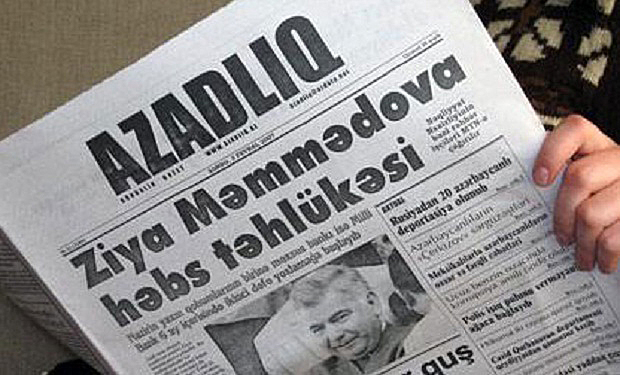
Seymur Hezi — arrested 29 August 2014 — works for independent newspaper Azadliq and host of the news programme “Azerbaijan Hour”. He is a member of the opposition Popular Front Party. Index reported on January 29 that Hezi was sentenced to a five-year prison sentence on charges of “aggravated hooliganism” on 29 January.
Emin Huseynov, journalist and human rights defender, director of the Azerbaijani Institute for Reporters’ Freedom and Safety (IRFS)
Emin Huseynov — went into hiding in August 2014 — is an internationally recognised human rights defender and leader of the Institute for Reporters’ Freedom and Safety (IRFS). IRFS is the leading media rights organisation in Azerbaijan and one of the main partner organisations of the Human Rights House Network in the country. Huseynov was charged with tax evasion, illegal business and abuse of authority after he went into hiding at the Swiss embassy. Florian Irminger, head of advocacy at the Human Rights House Foundation (HRHF), of which Index is a network member, called on Switzerland to continue to host Huseynov. “His location at the embassy is justified by the level of the repression in the country, the bogus charges brought against human rights defenders in Azerbaijan and the impossibility for them to defend themselves in court, due to the lack of independence of the judiciary and the harassment of their lawyers.”
Khadija Ismayilova
Khadija Ismayilova — arrested on 5 December — is an investigative journalist and radio host who is currently working for the Azerbaijani service of Radio Free Europe/Radio Liberty. She is a member of the Organized Crime and Corruption Reporting Project. She was arrested under charges of incitement to suicide, a charge widely criticised by human rights organizations. Ismayilova is currently being supported by two petition campaigns by Index on Censorship and Reporters Without Borders. On 13 Feb, lawyer Fariz Namazly told Contact.az that new charges have been filed. According to him, Ismayilova is charged under the Article: 179.3.2 (large-scale embezzlement), 192.2.2 (illegal business), 213.1 (tax evasion) and 308.2 (abuse of power.) The charges carry a possible sentence of 12 years.
In November, Nils Muižnieks, the Council of Europe Commissioner for Human Rights, called his autumn 2014 mission to Azerbaijan one of the most difficult of his tenure. He wrote, “In late October I was in Azerbaijan, the oil-rich country in the South Caucasus, which just finished holding the rotating chairmanship of the 47-member Council of Europe. Most countries chairing the organisation, which prides itself as the continent’s guardian of human rights, democracy and the rule of law, use their time at the helm to tout their democratic credentials. Azerbaijan will go down in history as the country that carried out an unprecedented crackdown on human rights defenders during its chairmanship.”
You mention in your letter that individuals are not being arrested for their human rights work but it seems an astonishing coincidence that all these prominent human rights defenders should all be guilty of such an array of financial crimes. And that brings us full circle to the present. Since we received your letter, there have been several developments that we would like to brief you on:
On 29 January 2015, a provisional resolution before the CoE called attention to the cases of investigative journalist Khadija Ismayilova, human rights activist Emin Huseynov and the closure of Radio Free Europe/Radio Liberty. Further on in the resolution PACE was being asked to call on Azerbaijan to properly investigate the murders of journalists Elmar Huseynov (2005) and Rafiq Tagi (2011).
On 3 Feb, President Aliyev signed an amended media law that restricts press freedom by making it easier to shutter media outlets.
Just today, Reporters Without Borders released its World Press Freedom Index 2015, which places Azerbaijan at 162. That’s down 2 spots from last 2014.
We wish Azerbaijan’s commitment to a “free and diverse media” was more than just words and we will continue to report on these detentions – as we do globally – for as long as these words are not translated into action.
Best regards
Jodie Ginsberg
Chief Executive
Index on Censorship
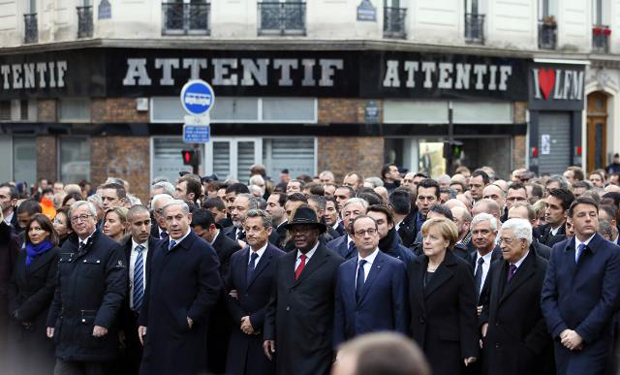
World leaders march in Paris following the recent attacks in France (Photo: European Council)
Jacob Mchangama is the founder and executive director of Justitia, a Copenhagen-based think tank focusing on human rights and the rule of law. He has written and commented on human rights in international media including Foreign Policy, Foreign Affairs, The Economist, BBC World, Wall Street Journal Europe, MSNBC, and The Times. He has written and narrated the short documentary film “Collision! Free Speech and Religion”. He tweets @jmchangama
The brutal attack against Charlie Hebdo has seen European leaders rally round the fundamental value of freedom of expression.
French President Francois Hollande led the way by stating: “Today it is the Republic as a whole that has been attacked. The Republic equals freedom of expression.” Prime Minister David Cameron vowed that Britain will “never give up” the values of freedom of speech, and German Chancellor Angela Merkel called the events in Paris “an attack on freedom of expression and the press — a key component of our free democratic culture.” European Union President Donald Tusk stressed that “the European Union stands side by side with France after this terrible act. It is a brutal attack against our fundamental values, against freedom of expression which is a pillar of our democracy.”
This unified commitment to freedom of expression is both admirable and crucial in the aftermath of the killing of cartoonists armed with nothing more than ink, humour and courage. It is also true that freedom of expression is a fundamental European value and that (Western) Europe allows for a much freer debate than most other places in the world. However, European governments and institutions have long compromised this freedom through statements and laws that narrow the limits on permissible speech. Ironically some of these statements and laws target the very kind of offence that Charlie Hebdo excelled in.
Donald Tusk’s principled defence of freedom of expression stands in stark contrast to a 2012 joint statement issued by then EU High Representative for Foreign Affairs Catherine Ashton, as well as the Organisation of Islamic Cooperation and the Arab League that “condemn[ed] any advocacy of religious hatred … While fully recognising freedom of expression, we believe in the importance of respecting all prophets”. The statement followed the furore over the crude anti-Islamic film “The Innocence of Muslims”, and suggests that mocking prophets is tantamount to religious hatred prohibited under international human rights law and thus exempted from the protection of freedom of expression.
The controversy over The Innocence of Muslims prompted none other than Charlie Hebdo to print its own depictions of Mohammed, including one showing Islam’s prophet naked. That decision drew stern condemnations from the French government. Then Foreign Minister Laurent Fabius remarked that “in the present context, given this absurd video that has been aired, strong emotions have been awakened in many Muslim countries. Is it really sensible or intelligent to pour oil on the fire?”
While Charlie Hebdo has won a number of lawsuits other French figures have been convicted or censored under French law. Last year comedian Dieudonné M’bala M’bala was banned from performing his comedy shows publicly, due to their anti-semitic content. And France is not alone. Swedish shock artist Dan Park was sentenced to six months imprisonment in 2014, over a number of purportedly racist posters deemed “gratuitously offensive” to minority groups by a Swedish court. The owner of the gallery that had displayed the cartoons was also convicted and the posters ordered destroyed.
In 2011, a prominent Austrian Islam-critic was convicted of “denigration of religious beliefs” for stating that the prophet Mohammed “had a thing for little girls”. An elderly Austrian man was found guilty of the same offence for yodelling while his Muslim neighbour was praying. In the United Kingdom, an atheist who left caricatures of the Pope, Mohammed and Jesus in a prayer room in John Lennon Airport was similarly convicted and sentenced to six months imprisonment, though the sentence was suspended. A TV personality’s disparaging social media comments about Scotland and Scots recently prompted Scottish police to tweet that it would “thoroughly investigate any reports of offensive or criminal behaviour online and anyone found to be responsible will be robustly dealt with”.
France and numerous other European countries also have bans against Holocaust denial. In 2010, a Muslim group claiming to expose free speech double standards in the aftermath of the Danish cartoon controversy was convicted after publishing a cartoon suggesting that Jews have made up the Holocaust.
When it comes to countering terrorism, European states increasingly target not only expression that incites terrorism but also expression that may constitute “glorification”. Exactly a week after the attack against Charlie Hebdo, Dieudonné once again ran afoul of the law and was detained over a Facebook post. According to Le Monde at least 50 other cases of terror apology have been opened against people in France since the attack. In Denmark, a number of Islamists have been prosecuted for glorifying terrorism following Facebook postings that seemingly approved of terrorism, including the assault on Charlie Hebdo. Recently British Home Secretary Theresa May unveiled plans that would ban “non-violent extremists” from using television and social media to spread their ideology.
While Europe has a sophisticated and elaborate regional system for the protection of human rights, these institutions have frequently sided with the censors over citizens. In 2008 the EU adopted a framework decision obliging all member states to criminalise certain forms of hate speech. The European Court of Human Rights has found the confiscation of a “blasphemous” film, the conviction of a French cartoonist mocking the victims of 9/11, and the banning of religious fundamentalist group Hizb-ut-Tahrir compatible with freedom of expression. The Council of Europe’s current High Commissioner for Human Rights Nils Muižnieks, has called for all 47 member states to enact bans against Holocaust denial and gender based hate speech.
These non-exhaustive examples demonstrate that contemporary Europe’s approach to freedom of expression is far more complicated and far less principled than the statements made by its leading politicians in recent days suggest. It is an approach to freedom of expression based on the premise that social peace in increasingly multicultural societies requires restrictions on freedom of expression in order to avoid offending ethnic and religious groups. Thus in 2004, when Dutch film maker Theo Van Gogh was murdered by an Islamist offended by Van Gogh’s controversial and anti-Islamic film “Submission”, the Dutch minister of justice proposed to revive the country’s blasphemy law which had been disused since 1968. He argued that “if opinions have a potentially damaging effect on society, the government must act … It is not about religion specifically, but any harmful comments in general.”
Such sentiments might appeal to pragmatists in the wake of the tragedy in France. But there is little reason to think that restricting freedom of expression fosters tolerance and social cohesion across a Europe increasingly divided along ethnic and religious lines, and where anti-semitism and other forms of intolerance is on the rise. In fact such laws seem to fuel the feeling of separateness of modern Europe by legally protecting group identities against offence rather than fostering an identity rooted in common citizenship. While minorities may be offended by disparaging comments, insisting that freedom of expression be limited to protect them from racism and offence, is a very dangerous game at a time where far-right movements with questionable commitment to liberal democracy are on the rise. In this context it should not be forgotten that Dutch politician Geert Wilders once proposed banning the Quran and that the leader of Front National Marine Le Pen wants to ban religious head wear, including the Jewish kippah. The freedoms that (sometimes) allow bigots to bait minorities are also the very freedoms that allow Muslims and Jews to practice their faiths freely. By further eroding these freedoms, no one is more than a political majority away from being the target rather than the beneficiary of laws against hatred and offence. Only by reaffirming a genuine and principled defence of freedom of thought, expression and religion can Europe hope to create a society built on real tolerance and respect for diversity, and where cartoonists neither have to fear gunmen nor jail, but only the moral judgment of their fellow citizens.