24 Feb 2023 | Belarus, FEATURED: Jessica Ní Mhainín, News, Ukraine
The people in Belarus are not willing to fight against Ukraine. It won’t be easy to convince them,” Ukrainian president Volodymyr Zelensky told the Munich Security Conference last week amid threats from Belarus that it could join the Russian offensive. The Belarusian regime has supported Russia since the invasion, but their armed forces have not (yet) been directly involved in the conflict.
Like in Russia, anti-war rhetoric has been heavily repressed in Belarus. Last March mothers of Belarusian soldiers were arrested after they gathered in the church to pray for peace. And only last week a 65-year-old garage owner was fined, and his business closed for having called Russian military personnel “occupiers” and refusing to sell them goods.
Nonetheless, some political prisoners have managed to communicate their feelings about the war. “We are one, we used to be at peace […] Hide your pride and shake hands,” Siarhei Sakavets wrote in his poem “22.02.2022” on the eve of the invasion. “There are so many rumours about everything that is happening, and the news on TV. God help me. I am very worried about you,” Larysa Kuzmenka wrote to her daughter and grandson last November.
Reading these letters from Belarusian political prisoners published by Index on Censorship, Pasha Bystrova – a Ukrainian woman who now lives in the Netherlands – says she felt a sense of “extreme injustice”. In different ways, Ukrainians and Belarusians are being deprived of their fundamental rights. They are suffering the consequences of tyranny.
Bystrova, who now works with refugees – including Ukrainian refugees – told Index that she feels that political prisoners and refugees are alike in that they are often perceived as being ‘the other’ by wider society. They are misunderstood because many people have preconceived ideas of who a ‘political prisoner’ or ‘refugee’ is. Having read political prisoners’ letters, Bystrova said: “I felt this could be me, any of us or our loved ones.”
Bystrova feels that the fates of Ukraine and Belarus are intertwined. “I believe the result of this war will greatly influence the situation in Belarus,” Bystrova told Index. “The collapse of the Lukashenka regime is inevitable.” That’s why defending Ukraine is “for our freedom and yours”.
Index on Censorship has so far published letters from 29 of the 1450 political prisoners in Belarus. Read their letters here
21 Feb 2023 | News, Russia, Ukraine
Immediately after Russia’s invasion of Ukraine in February 2022, Chechen leader Ramzan Kadyrov loudly announced the active involvement of Chechen security forces in it. Units of the Russian army and the Interior Ministry for Chechnya, which de facto report to Kadyrov personally, lined the grounds of his residence in the centre of the Chechen capital. Kadyrov said at the time that 12,000 Chechen volunteers were ready to leave for any special operation in the interests of Russia.
Since then, various sources have claimed that about 200 Chechens have been killed. The figure for the number of Chechens fighting for Russia is about 10,000 according to Kadyrov. Russian human rights activists put the number at around 3,000.
In September 2022 several women decided to organise a demonstration against sending Chechens to join Russia’s war. In a voice message that circulated on social media at the time, the organisers called on people to come to the central square of the city of Grozny: “They killed us in two wars, aren’t there enough dead, mutilated and crippled?” the woman in the message asks. On the same day, Kadyrov said on his Telegram channel that the women had been detained, a preventive conversation was held with them, and he promised to send their sons to fight in Ukraine.
This was something of an understatement. The human rights group Memorial has since confirmed that the women were taken to Grozny’s City Hall and their husbands forced to beat them. The son of at least one of the women was sent to Ukraine and her husband died a few days later, seemingly of “a broken heart”.
This kind of harsh reaction had an effect: people became afraid to express their opinions, even in front of their long-time friends. Umar from Grozny says that recently a friend of his sent a meme about the war in Ukraine into a group chat room, and five minutes later deleted it. “This has never happened before, everyone knows everyone in this chat room and before the war everyone trusted each other,” said Umar.
That said, one activist of a Russian human rights organisation believes that the situation of free speech in Chechnya has changed, but not necessarily for the worse. She confirms that people are less likely to express their discontent with the authorities in public, but among trusted circles, criticism of the Chechen authorities has become harsher. She says that even those who used to be apolitical are now speaking out against the actions of the authorities. She believes that the people who fear that their sons who survived the Chechen wars or were born later will die in a new, “alien war”.
According to Marina, a 33-year-old who works at a public institution in Chechnya, “not a single lunch with friends goes by without talking about Ukraine”. She follows all the news from the front and cheers for Ukraine’s victory. Most of Marina’s friends also support Ukraine and want Russia to lose. When she and her friends discuss Ukraine in a café, everyone keeps asking each other to keep their voices down.
“Ukraine is going through the same thing we went through. The same rhetoric, only we were accused of being a nation of terrorists, while the Ukrainians are ‘Nazis’,” Marina said. She is sure that among Chechens there is no patriotism toward Russia. “Where does it come from?” she asked rhetorically.
“The Chechens we see on social networks and state channels talking about love for Russia are people who need something from the authorities. They pursue purely material goals.”
Marina personally knows Chechens who went to Ukraine for money but that was at the very beginning of the war (the minimum amount paid by the Russian government for participation in the war is 195,000 rubles monthly, about $2615),
Umar, 43, a courier from Grozny, tells of his neighbour who was sent to Ukraine recently. “He liked to drink and make noise. He was taken to prison and stayed there for several months. Then he was offered: either you go to Ukraine or we put you in jail for a long time. He agreed to Ukraine. I recently saw a picture of him standing somewhere in the Luhansk region of Ukraine, in a Russian military uniform, with a submachine gun in his hands”. According to Umar, there are many such cases.
There are also those in Chechnya who think differently and support Kadyrov’s army. These are mostly families of Chechens who are fighting on the side of Russia. “They are not rooting for Russia’s victory, but for their family members,” said Tamara, a 49-year-old housewife from a Chechen village. Those whose children have gone to fight in Ukraine sincerely want them to return home and support them. These parents need to explain to themselves that their sons are not risking their lives for nothing, and they speak “the language of television” Tamara said. Most of their rhetoric boils down to a line they’ve been told that Russia was forced to attack and that “the (Russian) government isn’t stupid”.
For the residents of Grozny, which was rebuilt after almost total destruction in the early 2000s, today they live ordinary, peaceful lives. As in other Russian cities, there is almost no indication that the country is waging an aggressive war against its neighbour. It is almost the same war Russia waged against Chechnya in the 1990s and 2000s when it fought for independence. The graffiti on the walls that used to say “Welcome to hell”, left for the Russian soldiers by Chechen fighters for independence, has been replaced by murals depicting Kadyrov and his men. But there is little faith in the sincerity of Kadyrov’s love for the Russian leadership. Marina says:
“Kadyrov has no patriotism for Russia. All he protects is his position and his stability.”
This article is written by a journalist from Chechnya. For their safety they wished to remain anonymous and excluded identifying features of those they spoke to as well
3 Nov 2022 | News, Russia, Ukraine
Unlike English, the Russian language has no use for articles, definite or indefinite. Instead, there is a mutual understanding applied to a particular conversation: the interlocutors simply understand whether they talk about a dog or a house in general, or this exact dog and this exact house. This certainty appears to be just hanging in the air.
The same goes for the war. In the past, the word ‘war’ would inevitably entail the certainty of the 1941–45 war. ‘The war’ always meant the Great Patriotic War. This is no longer the case. Now, if you mention ‘war’ in a conversation, your interlocutor will immediately think of the war in Ukraine or the war with Ukraine. The war that is happening right now.
In 2015 Samokat published my book The Raven’s Children, marking – as it turned out – the beginning of The Leningrad’s Tales series. Set in the period from 1938 to 1946, these books describe what it’s like to grow up in a world that has fallen apart. Shortly after the outbreak of the war in Ukraine, one of the readers reached out to me saying what I was already fearing myself: we are now living on the pages of The Raven’s Children.
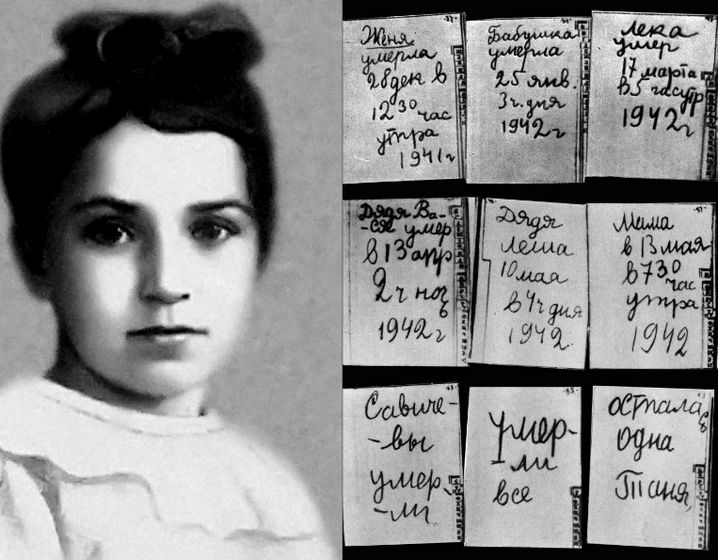
Working on these books, I’ve read many personal testimonies of the period: letters, diaries, and memoirs. One of the most poignant Russian documents of the 1941–45 war was the diary of Tanya Savicheva, a young girl trapped in the Siege of Leningrad. Her last entry is known to almost everyone in St Petersburg: “Everyone is dead, only Tanya is left”. Children’s war testimonies always serve as an indictment of war, even if they are unleashed in the attacking country.
Children nowadays rarely keep dairies. If they do then not on a daily basis. When the war started and the weeks passed one another with no end to it, one thing became very clear: we are experiencing something unimaginable, something unthinkable. That’s when I started talking to children. Asking them questions and gathering the stories of their present lives. What do they see, hear and think? How do they go to school, argue, make friends, read? What do they feel?
I thought, surely, I would see how this war, despite being so far away from them, was seeping into their conversations, their quarrels and making-ups, their growing up. I thought that time would make these stories invaluable. People would be interested in them just like we are interested in lives and thoughts of children in Germany in 1933–1945. But then again, these stories are already invaluable as we speak. After all, the future of Russia is decided not by a 70-year-old president, but by those who are now five or seventeen, eight or thirteen.
This is not an anthropological study, nor a social survey. These are mere conversations recorded during the war, and nothing else. I interviewed about two dozen children myself, just as many filled in a provided questionnaire. The list of questions was compiled to sound as neutral as possible, accommodating different sides of the present situation. But most importantly, it acknowledged the unprecedented split that the war had caused in Russian society. It was not my task to argue, to convince, to persuade or to prove my point of view. Do you support the war? I’m listening. Are you against the war? I’m listening.
Most of my respondents are aged 12 and over. The youngest are just five. I spoke with some independently minded 17-year-olds who can hardly be called ‘children’ anymore. I spoke with their parents beforehand to check what subjects were out of bounds. Some asked to look at the questions in advance, some then walked away.
I found myself faced with numerous dilemmas. What to do when, all of a sudden, a little boy whispers to you: “Can you tell me what actually happened in Bucha, no one would tell me?” Only once a child asked me why I was asking all these questions. I recalled one Icelandic saga, where a troll (if I’m not mistaken) asks the protagonist the very same question to which he replies: “because I want to know.” This answer satisfied both the troll and the child.
I asked a fellow journalist to join me in my little venture. In a way she was right to refuse. “It’s pointless,” she said. Statistically, yes, it is certainly pointless. I could never claim “this is what children in Russia thought”. Then why am I so sure that these stories are invaluable? The answer is very simple: because these children decided so. I didn’t eavesdrop on conversations on the streets. I wasn’t fishing around. I didn’t pretend to be someone I wasn’t. I explained it to everyone loud and clear: because we live in historic times. Because I want to know.
My youngest interviewees were aged around five and six. Of course, they were encouraged to talk to me by their parents. These little ones don’t know there is a war ongoing. They live outside of time, and one needs to look closely into the flow of their innocent speeches to catch a glimpse of the sign of our times, to spot the slippery yet undeniable shadow of the war.
Teenagers, that’s a whole different story. Some were lost, some were angry, giggly, strict, arrogant, provoked. But them wanting to share their experience is their way of showing that they acknowledge the value of both their position and their emotions. They acknowledge the historical value of their experience. And I see something bigger in this acknowledgement. Something that will shape the future society. Something that will shape the future generation.
Я против войны – I’m against the war
Since the first days of the war, the state employed large-scale punitive measures to stop any protest movements and supress societal discussions of the war. In their eyes, discussing means condemning, and that’s what the state is so terribly scared of. The restraints haven’t stopped the protests, but rather turned them into peat fires. Those living in St Petersburg know very well what it’s like: the flames are nowhere to be seen; everything is smouldering. But the smoke gradually thickens. The protest has taken shape of little signs that are shared with each other, shared with the city, with the world, with anyone who is willing to see. Anti-war stickers, graffiti, posters, figurines, price tags, ribbons – they are spread swiftly, on the run, by somebody’s invisible hands. By children’s hands too.
There is a mix of terror and excitement in the words of older children and teenagers when they speak about all this. They are excited because it seems like a game to them. As if they have stepped into a fairy tale about Little Thumb who is trying to fool the ogre. But this game makes your heart pound for real, bringing out the genuine fear. These children already know that the state just sweeps people up randomly, having no soft spot for teenagers either.
They tell me in detail about fines and charges, about administrative detention and delinquency records. It’s not the fines and charges they are afraid of, at least not entirely. They are afraid that Mum will be worried. That Granny will be scared (“it’s not good for her health”). That Dad will say: “See, I’ve warned you.” That the schoolmarm will report them to the FSB (Federal Security Service).
But what scares them the most is being grabbed by strangers’ rough hands, being yelled at, shout at and barked at by grown-ups – overfed men and women in uniforms. When you’re eleven, all grown-ups look big to you.
They’re afraid. Yet it doesn’t stop them. Overcoming the fear empowers them.
“We’ve started tying green ribbons everywhere. They are now appearing in more and more new places. I was just about to tie mine when I saw there was already one. It made me so happy.”
“I wear two bracelets in the colours of the Ukrainian flag.”
“We made those pins ourselves.” “Do you wear them at school?” “Yes, at school. Once we’re outside, we take them off and hide. But it doesn’t mean we change our opinions.”
“Why do you hide them?” “It’s scary.” “What are you afraid of? “That grown-ups will beat us up or say something to us.”
“The war posters on the tube are always covered with stickers or gum.”
The omnipresent face of state propaganda is also overfed. Russian cities are plastered with banners and posters. Government propaganda is produced at printing houses, paid with money. Wrapped, packaged, and delivered – it’s a whole industry. Pure business, nothing personal.
With protests it’s the opposite: everything is handmade, people draw and write by hand in their own way. These signs are imbued with a personal meaning, and most importantly, with a choice. These choices are made by particular people, it’s of their own making. In this small way a person gets to share a fleeting touch with their city, turning these signs into an essential and visible part of the urban life. Coming and going, and then coming back (the street cleaner who can keep up with a teenager hasn’t been born yet), they are like tiny pulsating lights signalling to like-minded people who “are just afraid or can’t speak up.”
Назови ее своим именем – Call her by her name
The girl has a simple Russian name, it’s in the top five of Russia’s most popular ones.
I don’t ask for surnames or school numbers. I don’t keep any video or audio recordings, I just scribble with my pen on paper. Sometimes I pause the conversation: “Hold on, I want to write this down in full detail.” Or “Hold on, I think what you’ve just said is very important.” I ask questions that have no right or wrong answers. It’s the answer itself that matters. In the meantime, the war is going on and to use the word ‘war’ is now punishable by law in Russia. Now it’s not uncommon for schoolteachers to inform on their own students, and for students to rat out their teachers and classmates. The words ‘fear’ and ‘be afraid’ have frequented children’s conversations the way they shouldn’t have. I’m responsible for the stories trusted to me.
“We can give you a different name, what do you say?”
There is a long moment while she thinks. She then shakes her head and says: “No, if my name is ***, then I’m ***.”
I write it down: “***, 11 years old.”
*** tells me how she got into an argument over the war with a classmate. He threatened to beat her up if she wouldn’t shut up. “That’s him admitting his defeat,” she explained. She then hastily adds that she was ready to fight for her beliefs.
As I type the text on my computer, my hands freeze over ***’s words: “just a silly boy”. What if the boy is not that silly after all, and his parents can identify *** and inform on her, and then… I go back and erase her name.
Perhaps, I should just stick with calling my interviewees simply ‘a girl’ or ‘a boy’? Or in doing so would I unknowingly pass the point of no return, succumbing to the state narrative of depersonalisation which inevitably leads to dehumanisation? Russian foreign minister Lavrov referred to people killed in Ukraine as “collateral damage”, while for Putin they are “cannon fodder” and those who don’t agree with him are “midges”.
But she is not a midge. She lives in St. Petersburg, she is eleven years old, and she demanded to be called by her name. And yet here I’m writing “a girl”.
Excerpts from the article by Yulia Yakovleva published by Holod Media. Translated by Ekaterina Shatalova
22 Jun 2022 | Afghanistan, Africa, Americas, Asia and Pacific, Belarus, China, Europe and Central Asia, European Union, Hungary, India, Kenya, Magazine, Magazine Contents, Philippines, Poland, Russia, Turkey, Ukraine, United Kingdom, United States, Volume 51.02 Summer 2022 Extras
The summer issue of Index magazine concentrated its efforts on the developing situation between Russia and Ukraine and consequential effects around Europe and the world.
We decided to give voice to journalists, artists and dissidents who chose to respond to this ruthless war. At the same time, we didn’t forget other attacks on freedoms that haven’t been covered around the globe as much as they should.[/vc_column_text][vc_custom_heading text=”Up front”][vc_column_text]Joining Ukraine’s battle for freedom, by Jemimah Steinfeld: We must stand with the bold and brave against Putin.
The Index: A global tour of free expression, departing from the poll booth and arriving at the journalists reporting under Taliban rule.[/vc_column_text][vc_custom_heading text=”Features”][vc_column_text]Fifty years of pride and prejudice, by Peter Tatchell: Following the rise and
corporate fall of London’s march for LGBT rights, will grassroots voices rise again?
India’s meaty issue, by Aishwarya Jagani: When a burger comes with a side of oppression.
Cartoon, by Ben Jennings: Art imitates life, caveman style.
My three years of hell in an Uyghur ‘re-education’ camp, by Gulbahar Hatiwaj and Rahima Mahmut: As the world stays silent, hear the truth from inside China’s brutal concentration camps.
One step ahead of the game, by Chen Dan: Media criticism of the Chinese government is all part of the power play.
Welcome to the kingdom of impunity, by Michael Deibert: The landscape is dangerous for journalists in Haiti. Murders and kidnappings are a daily risk.
Politically corrected? By Issa Sikiti da Silva: The banned words the Kenyan
government doesn’t want to hear in this election year.[/vc_column_text][vc_custom_heading text=”Special report: The battle for Ukraine”][vc_column_text]Losing battle for truth in Russian lecture halls, by Ilya Matveev: The war has put a new strain on academic freedom. A Russian lecturer laments his lost classroom.
Don’t be afraid to say two plus two is four, by Mark Frary and Alla Gutnikova: As a convicted student journalist speaks out for freedom, do Russian dissidents once again face the gulag?
Emotional baggage, by Slavenka Drakulic: How it feels to pack up a life in Ukraine and become a refugee.
Back to the future, by Martin Bright: The world has been turned
upside down for Ukrainian reporters, and this is their new landscape.
On not being shot, by John Sweeney: Amidst the Kremlin-wrought
wreckage, do we need a new era of journalism?
Russia’s trojan horse moves closer to Europe, by Viktória Serdult: In Hungary, Putin’s right-hand man and Europe’s right-wing firebrand wins again.
Turkey’s newfound russophilia, by Kaya Genç: Putinism is seeping into Turkey, and it spells trouble for future freedoms.
Divided by age and a tv screen, by Hanna Komar: How do you make sure your
family see the truth when they’re blinded by Kremlin propaganda? A Belarus activist speaks out.
Culture in the cross hairs, by Andrey Kurkov: Decades after Soviet rule, Ukrainian culture is once again under threat, as are the lives behind the creative expression.
Bordering on media control, by Kseniya Tarasevich: False information about
Ukraine finds fertile breeding ground in Poland.
Treat tragedies of the Ukraine war with dignity, by Olesya Khromeychuk: The grieving hearts left behind when death becomes news fodder.
Worth a gamble, by Jemimah Steinfeld: When telling the truth is a crime, turn to a criminal spam operation.[/vc_column_text][vc_custom_heading text=”Comment”][vc_column_text]
Cancel Putin, not culture, by Maria Sorenson: Banning Russian artists assumes
that they are all collaborators of the Russian state and goes against artistic freedoms.
Beware the ‘civilisation’ battle, by Emily Couch: Why Europe must reject
anti-Asian racism to fully stand with Ukraine.
The silent minority, by Ruth Smeeth: A tribute to those whose work never saw the light of day.[/vc_column_text][vc_custom_heading text=”Culture”][vc_column_text]‘The light is no longer the light it used to be’, by Lyuba Yakimchuk: The poet on children being indoctrinated and the elderly disorientated in Russia-occupied Ukraine.
A cassandra worth heeding, by Dominic Cavendish: Murdered Russian journalist
Anna Politkovskaya, whose dispatches from Chechnya should be put in the spotlight.
Poetic injustice, by Stephen Komarnyckyj: History is repeating itself
on the pages penned by Ukrainian writers.
Banking on Russia’s poetic spirit, by Maria Bloshteyn and Yulia Fridman: A “piggy bank” of Russian poetry is fighting on the right side of Putin’s war.
Metaphors and madness, by Eduardo Halfon: In Guatemala, truth is best expressed through fiction.
Metal shows its mettle, by Guilherme Osinski: A heavy metal band labelled
“satanic” by Iran is free from prison and taking back the microphone.
America’s coming crucible, by Jo-Ann Mort: Women in the USA might soon be in the dark about their own bodies.