9 Dec 2022 | China, Latvia, Opinion, Russia, Ruth's blog, United States
Every day there seems to be a new public controversy, with clear free speech elements, which dominates our public discourse for a day or two. Each one typically leads to a discussion within Index, our professional staff debating not just whether we should make an intervention and what that could look like. But sometimes, more importantly, the team has the intellectual debate about where the lines on the right to freedom of speech fall. What are the rights and responsibilities we all have towards the societies we live in? Where is the line on incitement, on hate speech, on civility?
From Kanye West, to the revoking of TV Rain’s broadcast licence in Latvia, to the death of Jiang Zemin. All had freedom of expression angles, all were complicated, no part of the reality behind the news was clear cut and nuance in the debate was seemingly lost in the maelstrom of the debate.
Personally I struggle with Kanye West being given a platform by anyone; his words incite violence against a minority and there can be little debate that his public statements amount to hate speech. I have spent the majority of my life campaigning against racism and anti-Jewish hate and Mr West, aka Ye, is clearly a racist who espouses views that I will always challenge. And I struggle to be convinced that he has the right to celebrate and justify his racism on every platform available.
However, there are those within the Index family, including some of our founders, who consider (or considered) free speech to be an absolute right – where no limitations on speech could be tolerated. That freedom of expression enables us to shine a light on extremist views and therefore can act as an antidote to them. Intellectually I can understand that approach, I even have huge sympathy with it. Pushing extremist views to the fringes and making them illicit, gives them a mystery and an appeal that they otherwise might not attract. But there has to be a balance, at least in my opinion.
Which brings me back to the right to speak versus the right to be heard. I have the absolute right to write this blog but you have the absolute right not to read it. I have the right to speak, to draw, to argue, but you have the right to ignore me. Because the Universal Declaration of Human Rights gives me the right to have my own views and to be able to share them without fear or favour – but it doesn’t force anyone to have to listen to them. So the onus is on all of us to find the balance between respecting our freedom of expression and protecting and enhancing the public spaces of the societies we live in.
1 Dec 2022 | Russia, Tyrant of the Year 2022
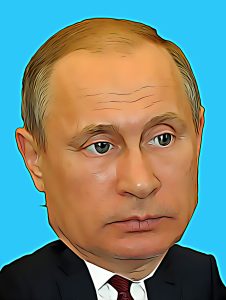 Vladmir Vladimirovich Putin is the tyrant’s tyrant in more ways than one. Over the two decades he has dominated Russian politics as president and prime minister, he has set a new standard in the brutal oppression of opponents at home and abroad. His illegal invasion of Ukraine on 24 February has had a devastating effect on the global economy and turned Russia into a global pariah. But he has also been a consistent champion of other tyrants, whether it is Ayatollah Khamenei, the supreme leader of Iran, President Assad of Syria or his closest ally in the region, President Lukashenska of Belarus.
The horrors perpetrated by the army sent to Ukraine in 2022 by Putin are too many to catalogue here. But they include torture and summary execution, as evidenced from the mass graves of Bucha, the forced deportations of citizens of occupied territories in the east of the country, indiscriminate attacks on civilian targets such as the maternity hospital in Mariupol and sexual violence used as a weapon of war. As winter sets in his forces have targeted power facilities, leaving many Ukrainians without light, heat and water in freezing conditions.
Meanwhile, in Russia itself the independent media has been crushed, with many journalists silenced or forced into exile. New legislation has turned protesters into traitors. Even calling Russia’s intervention in Ukraine a war has been deemed a crime, with anyone convicted of spreading “false information” facing a 15-year prison sentence.
“Most tyrants only brutalise their own people or the countries they invade. But Putin is a truly global tyrant who has made the whole world a poorer place by strangling the supply of Russian oil and gas and Ukrainian grain. And he has made it a more dangerous place by bringing the threat of nuclear war to Europe. Tyrant of the year? More like tyrant of the century,” says Index’s editor-at-large Martin Bright.
1 Dec 2022 | Mexico, Tyrant of the Year 2022
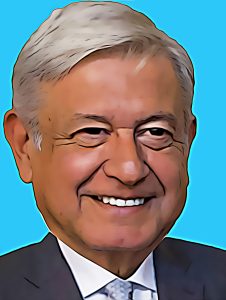 “He who has nothing to hide, has nothing to fear”. These were the words uttered by the Mexican president, Andrés Manuel López Obrador in a February 2022 press conference held the day after Heber López Vásquez, founder and director of the digital news outlets NoticiasWeb and RCP Noticias, was shot and killed. However this was not a call for greater transparency and action to respond to the ever-climbing rate of journalist murders in Mexico. He was publishing what he alleged were the confidential financial details of leading journalist, Carlos Loret de Mola, in response to the journalist’s reporting.
“This act of intimidation and the abuse of the presidential office would be egregious in any circumstance. However In Mexico, against a backdrop of rampant impunity and one of the worst track records for the safety of journalists, it is far worse than that,” says Index’s policy and campaigns officer Nik Williams. “According to the Committee to Protect Journalists, 151 journalists and press workers have been killed in Mexico since 1992. The causes of these murders are complex; but a messy tangle of narco-politics, organised crime, corrupt police and state officials and runaway impunity has made Mexico one of the most dangerous locations to be a journalist outside a warzone. In fact, so far in 2022, Mexico is second only to Ukraine for the number of journalists killed.
Since Obrador only came to power in 2018, it would be overly-simplistic to lay this solely at his feet. However, according to Article 19, attacks on the press have increased by 85% since he took power, with every single Mexican state witnessing such incidents for the first time in 2021.
When there is a culture of impunity and the devaluing of journalists, the scene is set for violence. It is this erosion of the civic fabric that makes Article 19’s director for Mexico and Central America: “His [Obrador’s] speech causes other political actors to replicate his attacks. These actors feel empowered and allowed to attack in the face of a narrative that presents the press as an adversary. We are in a war speech, where the enemy must be annihilated.”
After publicly leaking Carlos Loret de Mola’s alleged salary and potentially violating Article 16 of the Mexican Constitution in the process, Obrador labelled journalists who are critical of him as “thugs, mercenaries, sellouts” and “the real mafia.” This framing establishes a false and dangerous parallel between the free press and criminal enterprises, further emboldening threats that can soon escalate to violence.
Impunity, the like of which is found in Mexico, requires significant and proactive action to address. It is not something that will just right itself when no one is looking. It requires a commitment to the value of free expression. It requires action. According to Human Rights Watch, “[o]f the 105 investigations into killings of journalists conducted by the federal Special Prosecutor for Crimes Against Freedom of Expression (Feadle), since its creation in 2010, just six have led to homicide convictions.” What good is a dedicated prosecutor if the rate of convictions is so low? Not only is this a failure to the family, friends and colleagues of the murdered journalists whose killings are being investigated by Feadle, this is a signal to those seeking to silence critical reporting: you can continue uninterrupted and undisturbed. This weakening of the mechanisms by which journalists can be protected is also seen in the 2020 decision of the Mexican Congress and supported by Obrador, to eliminate the independent funding that supported the Federal Mechanism for the Protection of Human Rights Defenders and Journalists. Now the mechanism is dependent on the Interior Ministry to pay for protection measures, but funds have been consistently cut. Leading media freedom organisations and 14 members of US Congress have raised concerns about this, seemingly to no avail.
Williams says: “What Obrador sees as a war against the elites, we see as a war against journalists, and ultimately free expression. Without Obrador stepping forward and addressing the ingrained climate of fear and impunity, instead of fixating on those who report on uncomfortable facts, Mexican journalists will remain stuck in the crosshairs of those seeking their silence.”
1 Dec 2022 | Belarus, Tyrant of the Year 2022
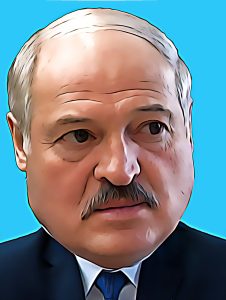 “You can usually tell the quality of a tyrant’s credentials by the number of people he has thrown in jail on spurious grounds and Europe’s last dictator, Alyanksandr Lukashenka, is no exception,” says Index associate editor Mark Frary.
Lukashenka started his fifth term as president in August 2020, following an election that most credible observers believe was neither fair nor free.
According to the human rights organisation Viasna, the list of political prisoners has now grown to 1,442 people. “This includes our former Index colleague Andrei Aliaksandrau and his wife Irina Zlobina, who were sentenced to 14 years and nine years respectively in early October for ‘establishing an extremist formation’,” says Frary.
It seems that even the slightest hint of opposition to Lukashenka can see you head off to the country’s infamous prisons. In November, 69-year-old teacher Ema Stsepulyonak was given a two-year sentence for supposedly insulting the Belarusian leader following a police shoot-out at a Minsk apartment that left two people dead.
Lukashenka is clearly worried by such “extremists”. His government has started a growing list of people who are considered as such and anyone appearing on it are not allowed to hold public office, teach, publish writing or participate in military service. On one day at the end of October, Lukashenka’s regime added a frankly ridiculous 625 extremists to the list. “Belarus must be so dangerous with this many extremists, right?” asks Inna Kavalionak of Politzek.me in the winter 2022 edition of Index on Censorship magazine.
“Lukashenka’s fate is closely tied with that of his friend and neighbour Vladimir Putin,” says Frary. “In the illegal war in Ukraine, Lukashenka has allowed Belarus to be used as a launchpad for Russia’s soldiers into the country’s northern flank. He has also promised that ‘Europe will tremble’ if Belarus is attacked.”
By aligning himself with Putin, Lukashenka is firmly planting himself on the wrong side of history.
