15 Nov 2021 | China, Hong Kong, News
A former food delivery worker calling himself a “second-generation Captain America” and who would turn up at protests in Hong Kong with the Marvel superhero’s instantly recognisable shield has been convicted for violating the country’s national security law (NSL).
On 11 November, Adam Ma Chun-man was sentenced to five years and nine months for inciting secession by chanting pro-independence slogans in public places between August and November 2020.
Evidence cited by a government prosecutor in the court case against Ma included calls for independence he had made in interviews.
Ma becomes the second person to be found guilty under the law imposed by Beijing in July last year. He has lodged an appeal against the verdict.
The first person sentenced under the NSL was former waiter Tong Ying-kit who was jailed in late July for nine years for terrorist activities and inciting secession. Tong was accused of driving his motorcycle into three riot police on 1 July 2020 while carrying a flag with the protest slogan “Liberate Hong Kong. Revolution of our times.”
The watershed ruling on Tong has profound implications for freedom of expression and judicial independence in Hong Kong.
The “Captain America” case has further fuelled fears about the rapid erosion of the city’s room for freedom and the strength of the court in upholding civil liberties.
Like the Tong case, the Ma judgement has significant implications for related cases but the ruling has attracted far less attention. The general public reacted with indifference mixed with a feeling of futility and helplessness. It does not bode well for civil rights and liberties in the city.
The significance of the Ma case lies with the judge’s ruling on what constituted incitement.
Ma’s lawyer said Ma had no intention whatsoever of committing a crime, but was just expressing his views. Merely chanting slogans should not be deemed as a violation of the NSL, the lawyer argued. That he urged people to discuss the issue of independence in schools did not necessarily mean the result of the discussions would be a yes to independence. It could be a no.
Importantly, his lawyer argued Ma had merely expressed his personal views without giving thought of how to make it happen through an action plan. Referring to Ma’s slogan “Hong Kong people building an army”, his lawyer said it was just an empty slogan, again, without a plan.
In sentencing, judge Stanley Chan described the case as serious. He rejected the argument by Ma’s lawyer that the level of incitement in his speeches was minimal, saying Ma could turn more people into the next Ma Chun-man.
Put simply, judge Chan said that although the actual impact of Ma’s speeches in inciting others has been minimal, this was insignificant when determining whether his act constituted incitement.
This view is markedly different from the reaction of the media and the public over Ma’s political antics.
Ma had drawn the attention of journalists when he turned up in protests for obvious reasons. But no more. The lone protester neither had a sizable group of followers nor electrified the sentiments of the crowd at the scene.
The heavy sentencing of Ma will worsen the chilling effect of the national security law on freedom of expression. Importantly, it will have serious implications for a list of incitement cases currently in the process of trial.
In a statement on the sentencing, Kyle Ward, Amnesty International’s deputy secretary general said: “In the warped political landscape of post-national security law Hong Kong, peacefully expressing a political stance and trying to get support from others is interpreted as ‘inciting subversion’ and punishable by years in jail.”
With no sign of an easing of the enforcement of the law 16 months after it took effect, the international human rights group decided to shut down its local and regional offices in the city by the end of the year. They said the Beijing-imposed law made it “effectively impossible” to do its work without fear of “serious reprisals” from the Government.
Hong Kong chief executive Carrie Lam responded by saying no organisation should be worried about the national security law if they are operating legally in Hong Kong, adding Hong Kong residents’ freedoms, including that of speech, association and assembly were guaranteed under Article 27 of the Basic Law, the city’s mini-constitution.
To a lot of Hongkongers, the assurance, which is an integral part of the former British colony’s “one country, two systems” policy, is an empty promise.
The power of the national security law in curtailing freedoms in other aspects of everyday life in Hong Kong has been widely felt.
In October, the legislature rubber-stamped an amendment to the film censorship ordinance, giving powers to the authorities to ban films that are considered as “contrary to the interests of national security.” The phrase, or “red line” in the law, is much broader than the original version, which targeted anything that might “endanger national security.”
Even before the bill was passed, a number of films and documentary films relating to the 2019 protest were not allowed to be shown in public locally. They include the award-winning Inside the Red Brick Wall and Revolution of Our Times, a nominee in the 2021 Taiwan Golden Horse Film Award.
Moves to revive political censorship in film are part of the authorities’ intensified campaign against threats to national security. While targeting political activists, the net has been widened to curb what officials described as “soft confrontation” and “penetration” through films, art and culture and books.
The University of Hong Kong has called for the Pillar of Shame, a sculpture by Danish artist Jens Galschiot, to be removed from the campus, citing concern over the national security law.
On the legislative front, security minister Chris Tang has given clear reminders that more needs to be done to protect national security, pointing to crimes in Basic Law Article 23 that have not been covered in the national security law.
He has vowed to target spying activities and to plug loopholes following the social unrest in 2019. Tang cited the example that helmets and free MTR tickets were distributed free to protesters during the protests, claiming there were state-level organising behaviours, potentially by actors from outside the country.
Both the central and Hong Kong authorities have labelled the movement as a “colour revolution” with hostile foreign forces behind it, without giving concrete evidence.
In addition to spying, a bill on Article 23 will also cover theft of state secrets and links with foreign organisations. Officials gave no timetable. But it is expected to be at the top of the agenda for the new legislature, which is due to be formed after an election is held on 19 December.
Officials are also looking at introducing a law on “fake news” to eliminate what they deem as lies and disinformation, which went viral on social media during the 2019 protest. The Government and the Police claimed they were major victims of this false information.
Looking back to mid-2020 when the idea of a national security law was first mooted, officials assured Hongkongers the law would only “target a very small number of people”.
Nothing can be further from the truth.
22 Oct 2021 | Opinion, Ruth's blog
[vc_row][vc_column][vc_column_text]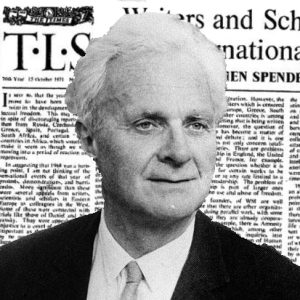 On 15 October 1971, in the depths of the Cold War, the feted British poet Stephen Spender wrote an impassioned appeal for the Times Literary Supplement in which he highlighted the threat of a world without creativity or impartial news as repressive regimes sought to silence dissent.
Writers, academics, journalists and artists were subject to state sanctioned persecution on a daily basis, threatened, arrested and in too many cases murdered as authoritarian leaders moved against their citizens. Watching was no longer enough, letters to the Times and statements of solidarity were no longer sufficient for Spender and a group of his contemporaries.
It was time to act, to provide an international platform for dissidents to publish their work and importantly it was time to make a positive argument for the liberal democratic values of free speech and free expression. It was time to launch Writers and Scholars International and its in-house journal Index on Censorship.
Spender concluded: “The problem of censorship is part of larger ones about the use and abuse of freedom.”
In the 50 years since Spender wrote in the TLS, Index has published the works of thousands of dissidents, their words, their art and their journalistic endeavours. From Havel to Rushdie, from Zaghari-Radcliffe to Ma Jian, their works have found a home in our publication. Their stories have been told and their works published for posterity – a recognition of their plight.
Fifty years later Spender would have hoped for us to be irrelevant, that the fundamental freedom of free expression was not just respected but embraced throughout the world. If only that was the case. Every week there is an attack on academic freedom at home or abroad, a new debate about our online rights and a new report of a systematic attack on those that embody the very principle of free speech.
In 1971 over a third of the world’s population lived under Communist rule with still more living under other forms of totalitarian regime. Today 113 countries, representing 75 per cent of the global population, completely or significantly restrict core human rights.
These aren’t just statistics, there are real people behind each headline.
In Belarus 811 people are currently detained as political prisoners by Lukashenka, including Andrei Aliaksandrau one of Index’s former staff members. In Egypt more than 60,000 people are imprisoned, including our award-winner Abdelrahman Tarek – detained and regularly tortured since the age of 16 for attending democracy demonstrations. In Afghanistan three young female journalists were brutally assassinated as they left work earlier this year. In Hong Kong the 50 leading democracy protestors have been arrested by the CCP and their families threatened.
These brave journalists and campaigners represent millions of people who cannot use their voices without fear of retribution. Every day they face a horrendous choice between demanding democratic rights or being silenced.
Index seeks to be a platform for them – providing a voice for the persecuted, ensuring that no tyrant succeeds in silencing dissent.[/vc_column_text][/vc_column][/vc_row][vc_row][vc_column][three_column_post title=”You may also wish to read” category_id=”41669″][/vc_column][/vc_row]
10 Sep 2021 | Afghanistan, Belarus, Hong Kong, Ruth's blog
[vc_row][vc_column][vc_single_image image=”106069″ img_size=”full” add_caption=”yes”][vc_column_text]Afghanistan. Hong Kong. Belarus.
Every day we’ve learned of a new atrocity. A new act of repression. A new effort to silence. A new law to intimidate.
The news has been awful. There are too many heartbreaking stories, too many images of people being tortured or arrested. Too many things to be angry about. But the reality is, thankfully, as painful as these stories are. They are in the news. They are being covered. And the world knows what is happening – daylight is truly trying to act as a disinfectant.
So as much as I worry about the horrendous restrictions to free expression that we see on the news and the people behind the headlines, every night I find myself fretting about who we’re not reporting on. Who is missing? What other regimes should we be focusing on. Whose story needs to be told. And most importantly how can we help.
In part, the annual Index Freedom of Expression awards is our answer to that question. Shining a light on activists, campaigners, artists, writers and journalists who are being targeted by repressive regimes. Making sure that some of the bravest most inspirational people in the fight for the right to global free expression have their stories told. This weekend we will be announcing our winners. But it’s not just about our winners, it’s about every nominee from Brazil to Nicaragua, from Egypt to Russia. Their stories, their fights deserve the world’s attention. And on Sunday evening we get to share their stories.
So over the weekend please watch our social media for the coverage. But before we get there I want to thank this year’s sponsors, Facebook, Edwardian Hotels, the Times and Sunday Times, Microsoft and Sage publications for enabling us to shine a spotlight on repressive regimes that don’t always dominate the news.[/vc_column_text][/vc_column][/vc_row][vc_row][vc_column][three_column_post title=”You may also want to read” category_id=”41669″][/vc_column][/vc_row]
6 Aug 2021 | Canada, Eritrea, Hong Kong, Netherlands, News, Philippines, Syria, Volume 50.02 Summer 2021, Volume 50.02 Summer 2021 Extras
[vc_row][vc_column][vc_single_image image=”117182″ img_size=”full” add_caption=”yes”][vc_column_text]
The number of journalists killed while doing their work rose in 2020. It’s no wonder, then, that a team of internationally acclaimed lawyers are advising governments to introduce emergency visas for reporters who have to flee for their lives when work becomes too dangerous.
The High Level Panel of Legal Experts on Media Freedom, a group of lawyers led by Amal Clooney and former president of the UK Supreme Court Lord Neuberger, has called for these visas to be made available quickly. The panel advises a coalition of 47 countries on how to prevent the erosion of media freedom, and how to hold to account those who harm journalists.
At the launch of the panel’s report, Clooney said the current options open to journalists in danger were “almost without exception too lengthy to provide real protection”. She added: “I would describe the bottom line as too few countries offer ‘humanitarian’ visas that could apply to journalists in danger as a result of their work.”
The report that includes these recommendations was written by barrister Can Yeğinsu. It has been formally endorsed by the UN special rapporteur on the promotion and protection of the right to freedom of opinion and expression, the Inter-American Commission on Human Rights special rapporteur for freedom of expression, and the International Bar Association’s Human Rights Institute.
As highlighted by the recent release of an International Federation of Journalists report showing 65 journalists and media workers were killed in 2020 – up 17 from 2019 – and 200 were jailed for their work, the issue is incredibly urgent.
Index has spoken to journalists who know what it is like to work in dangerous situations about why emergency visas are vital, and to the lawyer leading the charge to create them.
Syrian journalist Zaina Erhaim, who has worked for the BBC Arabic Service, has reported on her country’s civil war. She believes part of the problem for journalists forced to flee because of their work is that many immigration systems are not set up to be reactive to those kinds of situations, “because the procedures for visas and immigration is so strict, and so slow and bureaucratic”.
Erhaim, who grew up in Idlib in Syria’s north-west, went on to report from rebel-held areas during the civil war, and she also trained citizen journalists.
The journalist, who won an Index award in 2016, has been threatened with death and harassed online. She moved to Turkey for her own safety and has spoken about not feeling safe to report on Syria at times, even from overseas, because of the threats.
She believes that until emergency visas are available quickly to those in urgent need, things will not change. “Until someone is finally able to act, journalists will either be in hiding, scared, assassinated or already imprisoned,” she said.
“Many journalists don’t even need to emigrate when they’re being targeted or feel threatened. Some just need some peace for three or four months to put their mind together, and think what they’ve been through and decide whether they should come back or find another solution.”
Erhaim, who currently lives in the UK, said it was also important to think about journalists’ families.
Eritrean journalist Abraham Zere is living in exile in the USA after fleeing his country. He feels the visa proposal would offer journalists in challenging political situations some sense of hope. “It’s so very important for local journalists to [be able to] flee their country from repressive regimes.”
Eritrea is regularly labelled the worst country in the world for journalists, taking bottom position in RSF’s World Press Freedom Index 2021, below North Korea. The RSF report highlights that 11 journalists are currently imprisoned in Eritrea without access to lawyers.
Zere said: “Until I left the country, for the last three years I was always prepared to be arrested. As a result of that constant fear, I abandoned writing. But if I were able to secure such a visa, I would have some sense of security.”
Ryan Ho Kilpatrick is a journalist formerly based in Hong Kong who has recently moved to Taiwan. He has worked as an editor for the Hong Kong Free Press, as well as for the South China Morning Post, Time and The Wall Street Journal.
“I wasn’t facing any immediate threats of violence, harassment, that sort of thing, [but] the environment for the journalists in Hong Kong was becoming a lot darker and a lot more dire, and [it was] a lot more difficult to operate there,” he said.
He added that although his need to move wasn’t because of threats, it had illustrated how difficult a relocation like that could be. “I tried applying from Hong Kong. I couldn’t get a visa there. I then had to go halfway around the world to Canada to apply for a completely different visa there to get to Taiwan.”
He feels the panel’s recommendation is much needed. “Obviously, journalists around the world are facing politically motivated harassment or prosecution, or even violence or death. And [with] the framework as it is now, journalists don’t really fit very neatly in it.”
As far as the current situation for journalists in Hong Kong is concerned, he said: “It became a lot more dangerous reporting on protests in Hong Kong. It’s immediate physical threats and facing tear gas, police and street clashes every day. The introduction of the national security law last year has made reporting a lot more difficult. Virtually overnight, sources are reluctant to speak to you, even previously very vocal people, activists and lawyers.”
In the few months since the panel launched its report and recommendations, no country has announced it will lead the way by offering emergency visas, but there are some promising signs from the likes of Canada, Germany and the Netherlands. [The Dutch House of Representatives passed a vote on facilitating the issuance of emergency visas for journalists at the end of June.]
Report author Yeğinsu, who is part of the international legal team representing Rappler journalist Maria Ressa in the Philippines, is positive about the response, and believes that the new US president Joe Biden is giving global leadership on this issue. He said: “It is always the few that need to lead. It’ll be interesting to see who does that.”
However, he pointed out that journalists have become less safe in the months since the report’s publication, with governments introducing laws during the pandemic that are being used aggressively against journalists.
Yeğinsu said the “recommendations are geared to really respond to instances where there’s a safety issue… so where the journalist is just looking for safe refuge”. This could cover a few options, such as a temporary stay or respite before a journalist returns home.
The report puts into context how these emergency visas could be incorporated into immigration systems such as those in the USA, Canada, the EU and the UK, at low cost and without the need for massive changes.
One encouraging sign came when former Canadian attorney-general Irwin Cotler said that “the Canadian government welcomes this report and is acting upon it”, while the UK foreign minister Lord Ahmad said his government “will take this particular report very seriously”. If they do not, the number of journalists killed and jailed while doing their jobs is likely to rise.
[This week, 20 UK media organisations issued an open letter calling for emergency visas for reporters in Afghanistan who have been targeted by the Taliban. Ruchi Kumar recently wrote for Index about the threats against journalists in Afghanistan from the Taliban.] [/vc_column_text][/vc_column][/vc_row]
