11 Jan 2016 | Bulgaria, Europe and Central Asia, Mapping Media Freedom, mobile, News
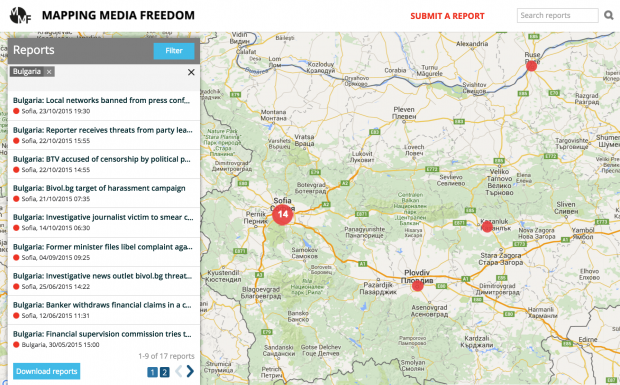
Journalists of the Bulgarian investigative news website Bivol.bg are facing an orchestrated smear campaign that’s unusual even for Bulgaria, the worst-ranking EU member in the 2015 Reporters Without Borders press freedom index.
The attacks can be linked to mainstream media outlets controlled by the Bulgarian media mogul and lawmaker Delyan Peevski, and seem to be a response to a number of investigations published recently by Bivol.bg, all involving Peevski in one way or another.
“Even if it is not like in the beginning, the smear campaign did not end,” Bivol’s editor-in-chief, Atanas Chobanov, told Index on Censorship in December 2015.
During the autumn, articles denigrating Chobanov and Assen Yordanov — Bivol’s founder, co-owner and director — began appearing in media outlets such as the Bulgarian weekly Politika, the Telegraph, Monitor and Trud dailies, as well as the news website Blitz, which are controlled either directly or through proxies by Delyan Peevski, an MP from the parliamentary group of the Turkish minority party, Movement for Rights and Freedoms (MRF).
According to a summary published by OCCRP, the articles allege that Yordanov uses Bivol.bg to publish fake stories to blackmail politicians and business people. The attack pieces allege that Bivol.bg publishes stories about environmental issues to serving the interests of fake eco-activists who pose as people concerned about the environment to extract cash from firms that want to build in the Bulgarian mountains and on the Black Sea coast.
There are allegations saying that Atanas Chobanov is a former Komsomol activist (the youth division of the Bulgarian Communist Party), aspired to a political career, and has links to a businessman whose media strongly oppose Peevski. Some articles insinuate that Chobanov works for foreign intelligence services; and that he lives a luxurious life in Paris where he milks the social welfare system. (The latter allegation is interesting because in 2013, it was Chobanov who uncovered that former planning and investment minister Ivan Danov was collecting €1,800 per month in unemployment benefits in France while working two jobs in Bulgaria.)
The pieces give a thoroughly negative depiction of Chobanov, saying that he is greedy, aggressive, mentally unstable, narcissistic, disliked and unwanted.
The campaign culminated on 10 October, when a crew of the Bulgarian TV Channel 3, a television where Peevski is a co-owner, showed up at the rented apartment in Paris where Chobanov and his family lives.
“I was at the Global Investigative Journalism Conference in Lillehammer, Norway,” Chobanov said, adding that the crew did not try to contact him by phone, e-mail or by any other means in advance. The journalist believes they must have known that he was away because he made a public announcement about his upcoming trip and he was tweeting from Lillehammer.
Although Bivol.bg was the target of similar articles in the past, the ongoing campaign started when the investigative news site published proof that Peevski is a shareholder at the Bulgarian cigarette maker Bulgartabac, a former state-owned company that underwent a controversial privatization process in 2011.
Then the journalists started publishing a story about the disappearance of €26 million ($28.3 million) from an EU food aid program for the poor, where the majority shareholders of Bulgaria’s First Investment Bank (FIB) were implicated. “After the Bulgarian bank crash, Peevski moved his assets, his credits and deposits to this bank, so this investigation also hurts Peevski’s interests,” Chobanov said.
Next, Bivol.bg broke “Yaneva Gate”, a series of stories based on leaked phone conversations between former Sofia City Court president Vladimira Yaneva and fellow judge Roumyana Chenalova over unlawful surveillance warrants that Yaneva had signed.
In those conversations, the judges mentioned Peevski by his first name, Delyan. “The Prosecutor General, one of the men of Peevski, is also involved,” Chobanov pointed out, adding that the story provoked an earthquake in Bulgarian politics, causing justice minister Hristo Ivanov to resign.
“It is a judicial battle now. We are turning to courts to stop the smear campaign, and we are also defending ourselves from legal complaints filed for the investigations we did in the past,” Chobanov said.
Reporters Without Borders expressed support and sympathy for Chobanov, condemning the smear campaign directed against him. “We can only condemn what are clearly attempts to intimidate Bivol’s journalists,” said Alexandra Geneste, the head of the Reporters Without Borders EU/Balkans desk. “Their investigative work is perfectly legitimate and we express our most sincere support and sympathy for them.”
The smear campaign orchestrated by the media outlets controlled by Peevski took an unexpected turn when they accused Xavier Lapeyre de Cabanes, the French Ambassador to Bulgaria with unacceptable meddling in Bulgaria’s affairs after he shared on Twitter a link to the press release by Reporters Without Borders with the comment: “Press freedom has no borders.”
The Bulgarian Association Network for Free Speech also issued a position saying that “the integrity of Bivol’s investigations and publications has not been and is not challenged in any way, despite repeated attempts to pressure our colleagues. (…) We have no reason to doubt the good faith of our colleagues, the journalist from Bivol (…).”
7 Jan 2016 | Campaigns, Europe and Central Asia, France, mobile, Statements
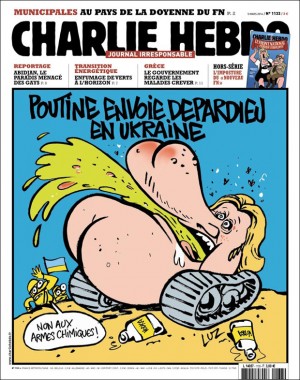
On the anniversary of the brutal attack on the offices of Charlie Hebdo we, the undersigned, reaffirm our commitment to the defence of the right to freedom of expression, even when that right is being used to express views that some may consider offensive.
The Charlie Hebdo attack, which left 11 dead and 12 wounded, was a horrific reminder of the violence to which journalists, artists and other critical voices are subjected in a global atmosphere marked by increasing intolerance of dissent. The killings inaugurated a year that has proved especially challenging for proponents of freedom of opinion.
Non-state actors perpetrated violence against their critics largely with impunity, including the brutal murders of four secular bloggers in Bangladesh by Islamist extremists, and the killing of an academic, M M Kalburgi, who wrote critically against Hindu fundamentalism in India.
Despite the turnout of world leaders on the streets of Paris in an unprecedented display of solidarity with free expression following the Charlie Hebdo murders, artists and writers faced intense repression from governments throughout the year. In Malaysia, cartoonist Zunar is facing a possible 43-year prison sentence for alleged ‘sedition’; in Iran, cartoonist Atena Fardaghani is serving a 12-year sentence for a political cartoon; and in Saudi Arabia, Palestinian poet Ashraf Fayadh was sentenced to death for the views he expressed in his poetry.
Perhaps the most far-reaching threats to freedom of expression in 2015 came from governments ostensibly motivated by security concerns. Following the attack on Charlie Hebdo, 11 interior ministers from European Union countries including France, Britain and Germany issued a statement in which they called on Internet service providers to identify and remove online content ‘that aims to incite hatred and terror.’ In July, the French Senate passed a controversial law giving sweeping new powers to the intelligence agencies to spy on citizens, which the UN Human Rights Committee categorised as “excessively broad”.
This kind of governmental response is chilling because a particularly insidious threat to our right to free expression is self-censorship. In order to fully exercise the right to freedom of expression, individuals must be able to communicate without fear of intrusion by the State. Under international law, the right to freedom of expression also protects speech that some may find shocking, offensive or disturbing. Importantly, the right to freedom of expression means that those who feel offended also have the right to challenge others through free debate and open discussion, or through peaceful protest.
On the anniversary of the Charlie Hebdo attacks, we, the undersigned, call on all Governments to:
- Uphold their international obligations to protect the rights of freedom of expression and information for all, and especially for journalists, writers, artists and human rights defenders to publish, write and speak freely;
- Promote a safe and enabling environment for those who exercise their right to freedom of expression, and ensure that journalists, artists and human rights defenders may perform their work without interference;
- Combat impunity for threats and violations aimed at journalists and others exercising their right to freedom of expression, and ensure impartial, timely and thorough investigations that bring the executors and masterminds behind such crimes to justice. Also ensure victims and their families have expedient access to appropriate remedies;
- Repeal legislation which restricts the right to legitimate freedom of expression, especially vague and overbroad national security, sedition, obscenity, blasphemy and criminal defamation laws, and other legislation used to imprison, harass and silence critical voices, including on social media and online;
- Ensure that respect for human rights is at the heart of communication surveillance policy. Laws and legal standards governing communication surveillance must therefore be updated, strengthened and brought under legislative and judicial control. Any interference can only be justified if it is clearly defined by law, pursues a legitimate aim and is strictly necessary to the aim pursued.
PEN International
ActiveWatch – Media Monitoring Agency
Adil Soz – International Foundation for Protection of Freedom of Speech
Africa Freedom of Information Centre
ARTICLE 19
Bahrain Center for Human Rights
Belarusian Association of Journalists
Brazilian Association for Investigative Journalism
Bytes for All
Cambodian Center for Human Rights
Canadian Journalists for Free Expression
Center for Independent Journalism – Romania
Center for Media Freedom and Responsibility
Comité por la Libre Expresión – C-Libre
Committee to Protect Journalists
Electronic Frontier Foundation
Foundation for Press Freedom – FLIP
Freedom Forum
Fundamedios – Andean Foundation for Media Observation and Study
Globe International Center
Independent Journalism Center – Moldova
Index on Censorship
Initiative for Freedom of Expression – Turkey
Institute for the Studies on Free Flow of Information
Instituto de Prensa y Libertad de Expresión – IPLEX
Instituto Prensa y Sociedad de Venezuela
International Federation of Journalists
International Federation of Library Associations and Institutions
International Press Institute
International Publishers Association
Journaliste en danger
Maharat Foundation
MARCH
Media, Entertainment and Arts Alliance
Media Foundation for West Africa
National Union of Somali Journalists
Observatorio Latinoamericano para la Libertad de Expresión – OLA
Pacific Islands News Association
Palestinian Center for Development and Media Freedoms – MADA
PEN American Center
PEN Canada
Reporters Without Borders
South East European Network for Professionalization of Media
Vigilance pour la Démocratie et l’État Civique
World Association of Community Radio Broadcasters – AMARC
PEN Mali
PEN Kenya
PEN Nigeria
PEN South Africa
PEN Eritrea in Exile
PEN Zambia
PEN Afrikaans
PEN Ethiopia
PEN Lebanon
Palestinian PEN
Turkish PEN
PEN Quebec
PEN Colombia
PEN Peru
PEN Bolivia
PEN San Miguel
PEN USA
English PEN
Icelandic PEN
PEN Norway
Portuguese PEN
PEN Bosnia
PEN Croatia
Danish PEN
PEN Netherlands
German PEN
Finnish PEN
Wales PEN Cymru
Slovenian PEN
PEN Suisse Romand
Flanders PEN
PEN Trieste
Russian PEN
PEN Japan
7 Oct 2015 | Middle East and North Africa, mobile, Morocco, News
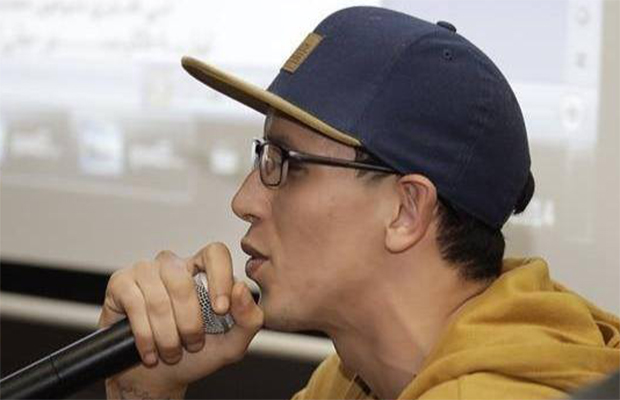
Index on Censorship Arts award winner 2015: Mouad ‘El Haqed’ Belghouat
Generally speaking, Arabic hip hop comes in two categories. There are rappers in the Gulf who like to brag about how great it is to be really, really rich. Then there are artists in places like Palestine and Algeria who use their work to talk about the endemic problems they face in their communities: disenfranchisement, discrimination, destitution and violence.
Index on Censorship Arts award winner Mouad “El Haqed” Belghouat falls under the latter category. Hailing from Morocco, where the youth have been keen consumers of hip hop for many years, El Haqed has had a lot of attention since the Arab Spring. Rapping about poverty, police corruption and oppression in the country, the 24-year old has been felt the full force of the law. Arrested for the first time in 2011, he spent two years in prison before being arrested twice more because of his music.
Index spoke with El Haqed in June when he had just returned to Morocco in high spirits following a tour of Norway, Sweden and Denmark, and was looking forward to performing for the first time in his hometown of Casablanca. Unfortunately, the Moroccan state went to extraordinary lengths — blocking off roads and ordering an electricity company to shut off power — to ensure the concert didn’t go ahead. He is effectively banned from performing live or appearing on TV or radio.
Asked why the Moroccan government wants to silence him so badly, El Haqed said: “Because I continue to speak out against them and fight for freedom of expression.” On several occasions, the authorities have asked El Haqed to renounce his views. “They want me to say that we live in a democracy and that everything is OK, but I have always refused.”
An all too frequent but often unavoidable fact of life as an artist under siege is that there will be times when keeping a low profile seems necessary. While El Haqed is still writing and recording music, he isn’t currently posting to YouTube as he was before. “Publishing music at the minute would only cause more problems,” he explains. He adds, however, that this is only a temporary setback, and publishing on YouTube and to his tens of thousands of social media followers is very much a part of his future plans.
 One area of extreme difficulty has been finding the right people — including a producer — to work with. El Haqed used to write music with other artists in Morocco, but this has become an inconvenience. “Musicians were told by the authorities to stop working with me, or they would be made to,” he says.
Although in the past El Haqed pushed the authorities to give him permission to perform in Morocco, he is resigned to the fact this may never happen. But there is hope. Visa applications pending, he has been invited to spend a week in Florence, Italy, in October for an exchange with Italian musicians, a debate on the music of the new generation and to perform in concert. A major focus of this visit will be to facilitate artistic collaboration.
He has also been invited to perform in Belgium in October by at the 25th anniversary of the Moroccan Association of Human Rights due to his being a “committed musician and human rights defender”.
Like one in five people his age in Morocco, El Haqed doesn’t currently have a job and relies heavily on family and friends for support. While it may be easier if he left Morocco to pursue a career in music, he has no intention of relocating.
“I love my country, and while I want to perform abroad, I will always come back to Morocco,” he says.
Index on Censorship demands Moroccan authorities end their harassment of El Haqed and allow him, and others like him, to perform in the country.
Nominations for the 2016 Index on Censorship Freedom of Expression Awards are currently open. Act now.
27 Jul 2015 | Campaigns, mobile, Morocco, Statements
To Your Majesty Mohammed VI,
At a time when Morocco is advocating openness, democratisation and full respect for human rights as instruments for confronting the future, we receive the news of the hunger strike begun by the journalist Ali Lmrabet. For this reason, we wish to pass on to you our deep concern for the situation of this journalist, who has received dozens of international awards and who is deprived of his national identity documents coinciding with the end of a 10-year ban on exercising the profession of journalist in Morocco and also with his announcement that he wishes to return to professional activity.
Freedom of expression and criticism are fundamental elements for the consolidation of a democratic state that is active against regression and intolerance. Any attempt to restrict freedom of expression degrades the image of Morocco and the credibility of its commitment to the rule of law.
Precisely because, from here, we wish to lend our full support to any effort to transform Morocco developed at different levels of the political world and civil society in the country, we are writing to you to express our serious concern at the current situation of Ali Lmrabet, whose life is in danger.
For all these reasons, we would ask you to reflect on this to give instructions to the administration in your country, and its diplomatic staff in Switzerland in particular, to renew all Ali Lmrabet’s Moroccan citizenship documents.
Without a residence certificate, passport and other documents related to journalistic work, Ali Lmrabet would become the first Moroccan deprived of his civil and political rights.
We do not need to give you, Your Majesty, lessons in the fact that the deprivation of these rights is contrary to all liberties, including fundamental freedoms, freedom of expression and, in the case of Ali, the internationally recognised and acclaimed right to freely exercise the profession of journalist. The only thing we would ask you, Your Majesty, in your capacity as Head of State, is to strictly apply the provisions of the Moroccan Constitution, giving the right to all citizens to fully and freely exercise their profession, in this case as journalist and editor of publications in Morocco.
We look forward to your considered response.
Yours sincerely,
Letter signed by the following:
Míriam Acebillo Baqué, President of Lafede.cat, Organisations for Global Justice
Mariano Aguirre, Director of Norwegian Peacebuilding Resource Centre (Norway)
Cinta Arasa, Coordinator of the Persecuted Writers Committee
Carmen Arenas, President of Catalan PEN
Homero Aridjis, Emeritus President of International PEN
Jordi Armadans, Director of FundiPau (Peace Foundation)
Sion Assidon, former Secretary General of Transparency-Morocco
Margaret Atwood, Vice-President of Canada International PEN, Prince of Asturias Award
Danielle Auroi, MP of the National Assembly of France
Juan Tomás Ávila Laurel, Writer, HM Award International Odón Betanzos Palacios of the New York Circle of Ibero-American writers and poets (Equatorial Guinea)
Malén Aznárez, President of Reporters without Borders (RSF- Spanish section)
Elisabeth Badinter, Philosopher
Ekbal Baraka, Chair of PEN International Women Writers Committee, former president of Egyptian PEN
Isaías Barreñada Bajo, University Professor and Human Rights activist
Ana Barrero Tiscar, Peace Culture Foundation
Mark Barwick, Policy Adviser at Human Rights Without Frontiers International (Switzerland)
David Bassa i Cabanas, Journalist, president of the Barnils Group of Journalists
Lluís Bassets, Deputy director of El Pais (Spain)
Anouar Bassi, Transparency 25 President (Tunisia)
Abdejelil Bedoui, Economist and member of the FTDES Steering committee
Sélim Ben Abdesselem, Former member of the Tunisian National Constituent Assembly
Abdelkader Benali, Writer and journalist, Libris Prize (Netherlands)
Thijs Berman, Former Dutch MP of the European Parliament
Mylène Botbol–Baum, Writer, University professor of philosophy and bioethics
Marian Botsford Fraser, Writer and journalist, Chair of Writers in Prison Committee, PEN International Canada
Jean-Marcel Bouguereau, Journalist Le Nouvel Observateur and former chief editor of Libération
Sfia Bouarfa, Belgian honorary MP and former senator
Jim Boumelha, President of the International Federation of Journalists (IFJ)
François Burgat, Political scientist, Research Director of CNRS
Teresa Cadete, Portuguese writer, board member of PEN International
Lindsay Callaghan, President of PEN South Africa
Maria Cañadas, President of Catalonia Amnesty International (AIC)
Gemma Calvet, MP of Parliament of Catalonia (Spain)
Carles Campuzano, MP of Congreso de los Diputados (Spain)
Marius Carol, Editor of La Vanguardia
Ignacio Cembrero, Journalist, former correspondent of El País in Maghreb
Nadia Chaabane, Former deputy of Tunisian National Constituent Assembly
Alain Chabod, International Consultant, former journalist of France Television
Luc Chartrand, Journalist, Radio-Canada
Larbi Chouikha, University professor; Institut de Presse et des Sciences de l’Information (IPSI) (Tunisia)
John Maxwell Coetzee, Writer, Nobel Prize in Literature 2003, Vicepresident of PEN International
Robert Coover, Writer, William Faulkner Foundation Award, American Academy of Arts and Letters, and National Endowment of the Arts (USA)
Olivier Corten, Professor; Centre of international law of ULB; Brussels
Joan Coscubiela, Deputy of Congreso de los Diputados (Spain)
Olivier Da Lage, Journalist, Vice-president of IFJ, RFI and SNJ
Luc Dardenne, Filmmaker
Eric David, Emeritus professor of International Law; Chairman of The International Law Centre of the ULB
Ascensión de las Heras, MP of Congreso de los Diputados (Spain)
Antonio Della Rocca, President of the Trieste PEN Center, Member of the Board of PEN International (Italy)
Christophe Deloire, Secretary General of Reporters Without Borders
Nicolas Dot Pouillard, Resercher of MAEE
Christos Doulkeridis, President of ECOLO group in the Parliament of the Wallonie-Bruxelles Federation (Belgium)
André du Bus, Deputy of Wallonie-Bruxelles Federation
Josy Dubié, Honorary senator (Belgium), former journalist and ONU official
François Dubuisson, Professor, International Law Centre of ULB (Brussels)
Patrick Dupriez, Co-chair of Ecolo party
Isabelle Durant, Brussels MP (Belgium)
Mohamed El Battiui, President of the Amazigh World Assembly
Najat El Hamchi, Writer, Ramon Llull Prize
Ahmed El Khannous, MP, Brussels Parliament
Mahmoud El May, MP and Member of the National Constituent Assembly (Tunisia)
Isabelle Emmery, Brussels Member of Parliament
Mathias Enard, Writer, Gouncourt Prize 2012
Charles Enderlin, Journalist, former France2 correspondent in Israel
Moris Farhi, MBE Vice-President, PEN International
Halim Feddal, Secretary General of the National Association for the Fights against corruption (Algeria)
Soledad Gallego-Díaz, Journalist of El País
Vicent Garcés, Former Member of the European Parliament
María Caridad García Álvarez, MP of Congreso de los Diputados (Spain)
Lise Garon, Professor, Laval University
Zoé Genot, Ecolo MP, Brussels Regional Parliament
François Gèze, President and chief editor of Éditions La Découverte (France)
Jodie Ginsberg, Chief Executive Officer of Index on Censorship
Henri Goldman, Editor of Politique, revue de débats and MICmag (Belgium)
Eric Goldstein, human rights activist (United States)
Elsa González, FAPE President (Spanish Press Associations Federation)
Juan Goytisolo, Writer, National Prize of Spanish Letters and Miguel de Cervantes Prize
Rafael Grasa Hernández, President of Institut Català Internacional per a la Pau
Ricardo Gutiérrez, Secretary general of European Federation of Journalists (EFJ)
Maher Hanin, Member of steering committee of FTDES
Abderrahmane Hedhili, President of Tunisian Forum for Economic and Social Rights (FTDES)
Seymour M. Hersh, American journalist
Francis Hickel, Coordinator Pâquis Solidarity Space, Geneva
Jesús Iglesias Fernández, Senator (Spain)
Jon Iñárritu García, MP of Congreso de los Diputados (Spain)
Véronique Jamoulle, MP, Brussels Parliament
Jean-Jacques Jespers, University Professor, Université libre de Bruxelles
Oriol Junqueres i Vies, Chairman of the party “Esquerra Republicana de Catalunya” (ERC) and opposition leader in Parliament of Catalonia
Lucina Kathmann, Writer, Vice-president of PEN International (United States)
Salam Kawakibi, Arab Reform Initiative, president of the Initiative for a New Syria
Melek Kefif, Doctor and member of the Steering committee of FTDES
Charefeddine Kellil, Lawyer for the families of martyrs and wounded (Tunisia)
Zakia Khattabi, Co-chair of Ecolo Party (Green Belgian)
Kamel Labidi, Tunisian journalist, former director of Amnesty International in Tunisia and former president of the National Authority to Reform Information and Communication (INRIC)
Luis Las Heras, Editor (Spain)
Gilwon Lee, Poète, Poet, Sang-Byeong Cheon Prize and Dong-Ju Yoon Literary Prize, Board Member, PEN International South Korea
Joanne Leedom-Ackerman, vice-president of PEN International (USA)
Jean-Claude Lefort, Former MP at the French Parliament
Emmanuel Lemieux, Essayist, and investigation journalist (France)
Stefano Liberti, journalist and writer, Luchetta Award to the best journalist and Anello Debole Prize
Jonathan Littell, Writer, Goncourt Award and Grand Prix du Roman of the French Academy
Robert Littell, Writer and journalist, Los Angeles Times Book Prize (USA)
Juan López de Uralde, Executive Commission Equo party, former Greenpeace-Spain Director
Bernabé López García, Professor, former member of Averroes Committee Spain-Morocco
Mehdi Mabrouk, Former Culture Minister (Tunisia)
Noël Mamère, MP of the National Assembly and Mayor of Bègles (France)
Sherif Mansour, MENA Program Coordinator, Committee to Protect Journalists (CPJ)
Christophe Marchand, Lawyer, Brussels (Belgium)
Jean-Paul Marthoz, journalist, correspondent of the Committe to Protect Journalists (CPJ) in the European Union
Sandrine Martins Espinoza, Lawyer and international consultant for elections (Argentine)
Daniel Patrick Maunier, University Professor, New York University
Fernando Maura Barandarián, Spanish MP, European Parliament
Federico Mayor Zaragoza, President of Foundation for a culture of peace, former Director of UNESCO
Daniel Menschaert, Diplomatic, Honorary Officer of the Federation Wallonia-Brussels in Morocco
Manuela Mesa Peinado, CEIPAZ Director, Peace Culture Foundation
Rosa Montero, Writer and journalist, Grinzane Cavour award and National Journalism Award (Spain)
Quim Monzó, Writer, National Literature award (Catalonia)
Alexandre Niyungeko, President of the Burundi Journalists Union (UBJ)
Elisabeth Nordgren, Chair of the Search Committee, PEN International (Finland)
Vida Ognjenovic, Vicepresident, PEN International (Serbia)
Margie Orford, Board Member, PEN International (South Africa)
Mario Orrù, Observer Coordinator at Democracy International
Bechir Ouarda, Journalist, Former Coordinator of the civil coalition in defence of freedom of expression in Tunisia
Rémy Pagani, Administrative Councillor for the city of Geneva
Andrés Perelló, Former Member of the European Parliament, Spain
Rosana Pérez Fernández, MP of the Congreso de los Diputados (Spain)
Tone Peršak, Chair of Writers for Peace Committee, Pen International (Slovenia)
Thomas Pierret, University professor, University of Edinburgh
John Ralston Saul, Writer, president of PEN International
Pedro J. Ramírez, Editor of El Español, former editor of El Mundo
Raul Rivero, Cuban writer, UNESCO / Guillermo Cano Press Freedom Prize
Raül Romeva Rueda, Former Spanish MP, European Parliament
Jean Louis Roumegas, MP of the French Parliament
Elena Ruiz Ruiz, University professor (Spain)
Hélène Ryckmans, Member of the Walloon Parliament and the Parliament of the Federation Wallonia-Brussels, Senator
Messaoud Romdhani, Member of the Executive Committee of the Euro-Mediterranean Network of Human Rights (EMHRN), and vice president of the Tunisian League of Human Rights (LTDH)
Amor Safraoui, Chairman of the Independent National Coordination for Transitional Justice (Tunisia)
Mohamed Salah Kherigi, Trade unionist, Vice-president of the Tunisian League of Human Rights (LTDH)
Raffaella Salierno, General Secretary of PEN Català, Director of the GuestWriter programme
Victoria Salvy, Artist and writer (France)
Gervasio Sánchez Fernández, Journalist, National Photography Award, and Ortega y Gasset Journalism Award (Spain)
Mhamed Seghier, Journalist of Liberté (Algeria)
Màrius Serra, Writer, Ramon Llul and Sant Jordi Awards (Catalonia)
Amira Aleya Sghaier, Tunisian historian and university professor
Mohamed Sheriff, President of PEN Sierra Leona
Ricardo Sixto Iglesias, MP at Congreso de los Diputados (Spain)
Simona Skrabec, Chair of Translation and Linguistic Rights Committee, PEN International
Mohamed Smaïn, Activist in charge of human rights, Algerian League for the Defence of Human Rights (LADDH)
Carles Solà, Journalist, TV3 program Director (Catalonia, Spain)
Carlo Sommaruga, Lawyer, MP of the Swiss parliament
Karima Souid, Former MP of the Tunisians from abroad, member of National Constituent Assembly of Tunisis
Simone Susskind, MP of Brussels – Capital Region
Abdellah Taïa, Moroccan Writer, Flore Award
Alaa Talbi, President of Alternatives, Tunisian Section
Joan Tardà, MP of Congreso de los Diputados (Spain)
Sami Tlili, Tunisian Filmmaker, Cinema and Human Rights Award of Amnesty International and Best documentary of the Arab world Award
Jarkko Tontti, Treasurer of PEN International (Finland)
Manuel Tornare, Swiss MP, former Mayor of Geneva
Carles Torner, Executive Director of PEN International
Estefania Torres, Spanish MP of the European Parliament
Mathew Tree, Writer, Octubre – Andròmina Award
Jane Unrue, Director of the Harvard Scholars at Risk (SAR) Program and Freedom to Write Committee board for PEN, New England (United States)
Miguel Urban, Spanish MP of the European Parliament)
Dominique Vidal, Journalist
Santiago Vidal i Marsal, Judge of Provincial Audience Chamber of Barcelona, Judges for Democracy
Per Wästberg, Writer, President of Nobel Committee for Literature, former President of PEN International
Lawrence Weschler, écrivain, George Polk et Lannan Literary Award (United States)
