29 Apr 2015
May 2015
Journalists and media workers continue to confront relentless pressure as they do their jobs, according to a survey of the verified incidents reported to Index on Censorship’s Mapping Media Freedom project.
|
|
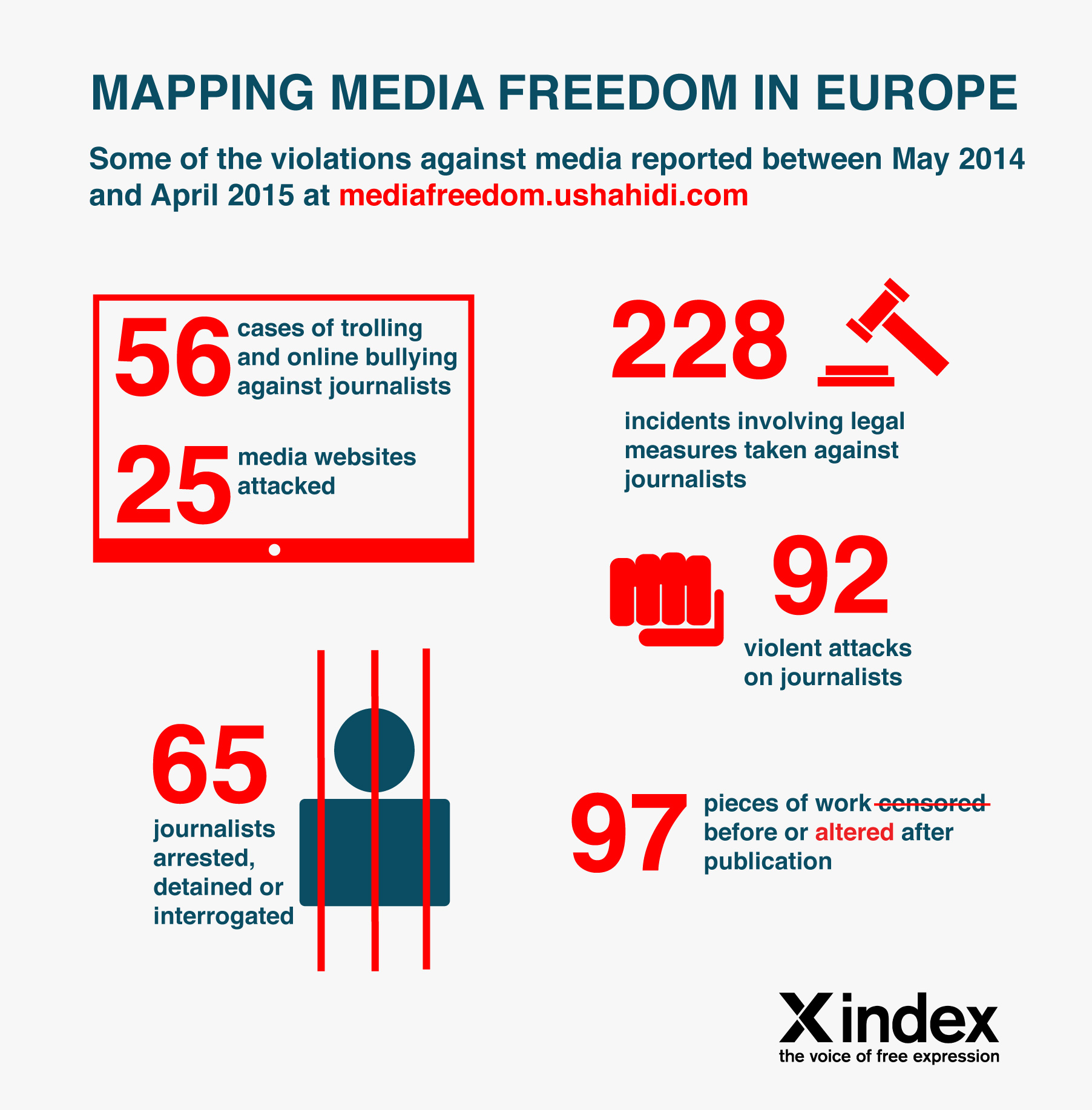
For the past year, Index on Censorship has been recording threats to media freedom in the European Union and candidate countries via its Mapping Media Freedom project. Since the mapping project was launched, over 760 reports — including 89 physical attacks on journalists — from across Europe have been verified and published.
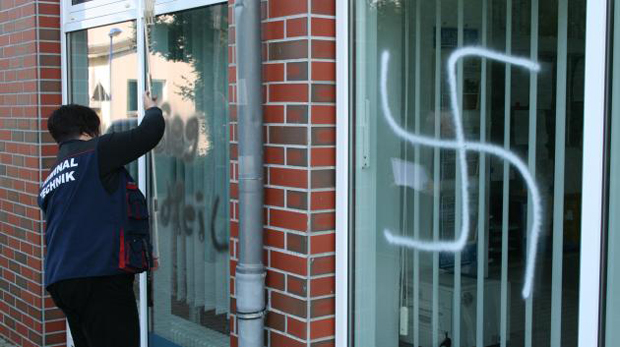
Thirteen media workers have been killed in connection with their jobs. Journalists have been assaulted. Media workers have been threatened with death or bodily harm. Police and government officials have detained and interrogated reporters. Journalists have been burned in effigy, depicted as animals on billboards and subjected to online trolling. Newspaper articles have been spiked in opaque circumstances. Television programmes have been cancelled amid accusations of censorship. Extremist groups have attacked media offices while hackers have knocked news sites off the web.
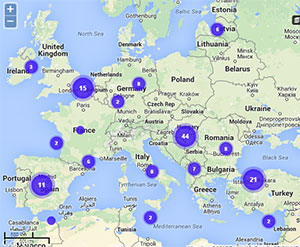
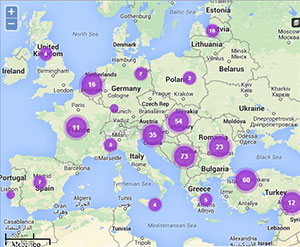
This is the Europe chronicled by the reports published to Mapping Media Freedom — covering European Union member states and candidates for entry — between May 2014 and April 2015. Taken together, these reports show that far from being an isolated problem, press freedom and media professionals face mounting pressure across the continent. |
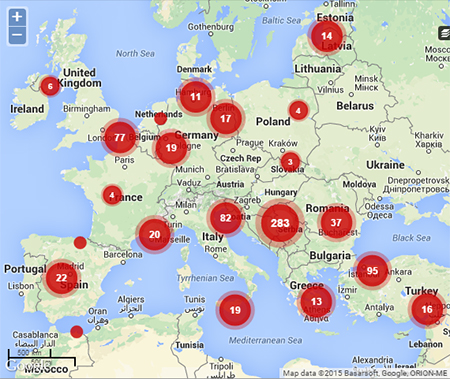 |
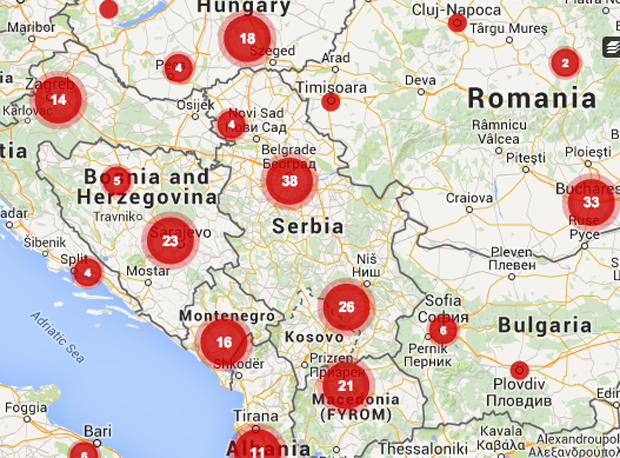
| While no country is immune from pressures on media professionals, the five countries with the most reports were EU candidate country Turkey (114), member state Hungary (93), candidate country Serbia (74), founding member state Italy (71) and founding member state Germany (48). The successor nations to the former Yugoslavia had a combined total of 174 incidents that were verified by correspondents attached to the project.
The map, which was co-funded by the European Commission, launched publicly on 24 May 2014 in cooperaton with Osservatorio Balcani e Caucaso and allows anyone — from members of the public to journalist unions — to submit reports for verification by Index’s eight part-time European Union correspondents.
“The truly frightening thing is that the current 762 reports represent ‘just the tip of the iceberg’, as one of our correspondents put it. More awareness among journalists about media violations is needed, but the reports point to the scale of the problem”, Index Senior Advocacy Officer Melody Patry said.
|
Countries with the most reports in 2014-2015
The 10 countries with the most incidents reported to mappingmediafreedom.org as of April 21 2015. The project includes all European Union member states and potential candidates for entry. Cases cited are the most recent verified report for that country. |
Case Studies
Across Europe, censorship and media violations take different forms depending on the country. These four reports are expanded from incidents that were logged to the map. Read more in-depth reporting. |
Categorisation of violations
Reports can be filtered by the 51 different labels used to organise the incidents reported to mediafreedom.ushahidi.com |
Legal measures
Incidents that involved the threat of or filing of legal actions
|
|
Censorship
Incidents that included partial or complete censorship
|
|
Government threat
Incidents that originated from a government representative or agency
|
|
28 Apr 2015 | Campaigns, Events, mobile
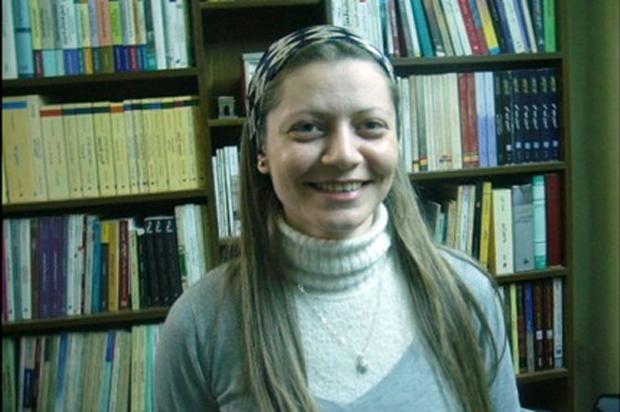
Razan Zaitouneh, above, Samira Khalil, Nazem Hamadi and Wa’el Hamada were abducted on 9 December 2013
To mark the 38th birthday (on April 29) of missing human rights defender and lawyer Razan Zaitouneh, head of the Violations Documentation Centre in Syria (VDC), winner of the 2011 Sakharov Prize for Freedom of Thought and the 2011 Anna Politkovskaya Award of RAW in WAR (Reach All Women In War), the undersigned human rights organizations today reiterate their call for her immediate release, as well as that of her missing colleagues Samira Khalil, Nazem Hamadi and Wa’el Hamada.
On December 9, 2013, the four human rights defenders, collectively known as the “Duma Four”, were abducted during a raid by a group of armed men on the offices of the VDC in Duma, near Damascus. There has been no news of their whereabouts or health since.
The VDC is active in monitoring and reporting on human rights violations in Syria and the undersigned organizations believe that the abduction of the four activists was a direct result of their peaceful human rights work. Their ongoing detention forms part of a wider pattern of threats and harassment by both government forces and non-state actors seeking to prevent human rights defenders exposing abuses.
In the months prior to her abduction Razan Zaitouneh wrote about threats she had been receiving and informed human rights activists outside Syria that they originated from local armed groups in Duma. The most powerful armed group operating in Duma at the time of the abductions is the Army of Islam headed by Zahran Alloush. In April 2014, Razan Zaitouneh’s family issued a statement saying they held Zahran Alloush responsible for her and her colleagues’ wellbeing given the large presence his group maintained in the area.
The undersigned organizations, as well as other activists, have been calling for the release of the “Duma Four” since their abductions. Today they again urge the Army of Islam and other armed groups operating in the area to take immediate steps to release the abducted VDC staff, or investigate their abduction and work for their release. They further urge governments that support these groups, as well as religious leaders and others who may have influence over them, to press for such action, in accordance with United Nations Security Council Resolution 2139, which “strongly condemns” the abduction of civilians and demands and immediate end to this practice.
Razan Zaitouneh has been one of the key lawyers defending political prisoners in Syria since 2001. She has played a key role in efforts to defend the universality of human rights and support independent groups and activists in Syria. Along with a number of other activists, she established the VDC and co-founded the Local Coordination Committees (LCCs), which co-ordinate the work of local committees in various cities and towns across Syria. She also established the Local Development and Small Projects Support Office, which assists non-governmental organizations in besieged Eastern Ghouta.
Samira Khalil has been a long-time political activist in Syria and had been detained on several occasions by the Syrian authorities as a result of her peaceful activism. Before her abduction, she was working to help women in Duma support themselves by initiating small income-generating projects. Wa’el Hamada, an active member of the VDC and co-founder of the LCC network had also been detained by the Syrian authorities. Before his abduction he was working, together with Nazim Hamadi, to provide humanitarian assistance to the residents of besieged Eastern Ghouta.
Signatories:
Alkarama Foundation
Amman Center for Human Rights Studies
Amnesty International
Arab Foundation for Development and Citizenship
Arab Network for Human Rights Information (ANHRI)
Arab Organization for Human Rights in Syria
Badael Foundation
Bahrain Centre for Human Right
Defending prisoners of conscience in Syria Organization
Cairo Center for Development (CCD)
Canadian Journalists for Free Expression (CJFE)
Centre for Democracy and Civil Rights in Syria
Committees for the Defending Democratic Freedoms and Human Rights in Syria
El-Nadeem Center for Rehabilitation of Victims of Violence
Enmaa Center for Democracy and Human Rights
Fraternity Center for Democracy and civil society
Front Line Defenders (FLDs)
Freedom House
Gulf Center for Human Rights
Human Rights Fist Society , Saudi Arabia
Human Rights Organization in Syria – MAF
Human Rights watch (HRW)
Humanist Institute for Co-operation with Developing Countries (HIVOS)
Hand in Hand Organization , Syria
Monitor for Human Rights in Saudi Arabia
Index on Censorship
International Media Support (IMS)
International Centre for Supporting Rights and Freedoms
International Civil Society Action Network (ICAN)
International Service For Human Rights (ISHR)
The Tunisian Initiative for Freedom of Expression
Institute for War and Peace Reporting (IWPR)
International Federation for Human Rights (FIDH) under the Observatory for the Protection of Human Rights Defenders
Iraqi Women Network
Iraqi Journalists Rights Defense Association(IJRDA)
Iraqi Network for social Media
Kurdish Committee for Human Rights in Syria (observer)
Kurdish Organization for Human Rights in Syria (DAD)
Kvinna till Kvinna Foundation
Lawyers for Lawyers
Lulua Center for Human Rights
Madad NGOs
Maharat Foundation
MENA Media Monitoring group
Metro Centre to Defend Journalists in Iraqi Kurdistan
National Organization for Human Rights in Syria
Nazra for Feminist Studies
No Peace Without Justice (NPWJ)
One World Foundation (OWF)
Omani Observatory for Human Rights
World Organization Against Torture (OMCT) under the Observatory for the Protection of Human Rights Defenders
Pax for Peace – Netherland
Pen International
Reach All Women in War (RAW)
Reporters Without Boarders (RSF)
Sentiel Human Rights Defenders
Syrian American Council (SAC)
Syrian Center for Media and Freedom of Expression (SCM)
Syrian Center for Legal Researches & Studies
Syrian Journalists Association
Syrian Network for Human Rights (SNHR)
Syrian League for Citizenship
Violations Documentation Center in Syria (VDC)
Yemeni organization for defending human rights and democratic freedom
16 Apr 2015 | Asia and Pacific, Bangladesh, mobile, News
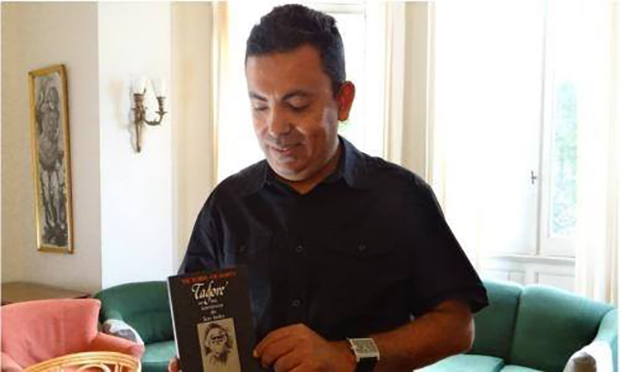
Blogger Avijit Roy was murdered in February. (Photo: Avijit Roy/Facebook)
Washiqur Rahman was murdered because he didn’t believe in God.
On the morning of 30 March 2015, the 27-year-old was set upon by three machete-wielding attackers and hacked to death because he did not believe in God.
The previous month, 42-year-old Avijit Roy was murdered because he didn’t believe in God.
One of the accusations most often levelled at self-proclaimed atheists is that they go on about it too much. What is there even to talk about? Why join, say the British Humanist Association or a university atheist group? What do you do? Go to meetings and drone on about not believing in God? And someone should just get that Richard Dawkins off Twitter, right?
Rahman and Roy were the kind of vocal atheist that tends to prompt eye-rolling in liberal secular countries.
Roy was a frontrunner, a star. He was the creator of Mukto-Mona, which claimed to be the first secular humanist web portal in South Asia. He described Mukto-Mona’s mission as “to build a society which will not be bound by the dictates of arbitrary authority, comfortable superstition, stifling tradition, or suffocating orthodoxy but would rather be based on reason, compassion, humanity, equality and science.”
Based in the US, Roy had returned to Bangladesh to visit his sick mother, despite warnings that the country was no longer safe for him. He was well-known enough to be stopped in the street for autographs. An appearance at a book fair in Dhaka had alerted Islamist extremists to his presence in the country.
Rahman was an up and coming blogger with a big Facebook following. He wrote under the name Kutshit Hasher Chhana (The Ugly Duckling), satirising religion and believers. Like many online activists, he had been horrified by the murder of Roy, and had lent support to a campaign calling for the prosecution of his killers, posting to the #IAmAvijit hashtag.
This, it seems, was enough to get him killed. Suspicion for the killings of both bloggers lies with the Ansarullah Bangla Team, an extremist organisation said to take inspiration from Anwar al-Awlaki, the American preacher killed by a US drone attack in 2011. The group, which was formed in 2013, has been implicated in the murder of atheist blogger Ahmed Rajib Haider in February of that year. The organisation recently hit the headlines in Bangladesh after it called for a jailbreak to free prisoners tied to Jamaat-e-Islami, who are on trial for war crimes that took place during Bangladesh’s war for independence from Pakistan.
The International Crimes Tribunal has been the backdrop for a fraught few years in Bangladesh. The tribunal has been criticised for lacking impartiality, particularly after leaked Skype conversations between the presiding judge, Mohammed Nizamul Huq, and a war crimes activist were published by The Economist, via Oliullah Noman, a journalist for opposition newspaper Amardesh in December 2012.
Increasing divisions were exacerbated by the governing Awami League’s decision to abandon the usual protocol of making way for an interim government to oversee the January 2014 election. The main opposition, the Bangladesh Nationalist Party, boycotted the election in protest, and the Commonwealth, the EU and the US declined to send monitors, calling the legitimacy of the result into question. The political division in Bangladesh operates roughly on a secular/religious line, with the Awami League seen as more secular and the BNP representing a more religious viewpoint.
Amidst all this upheaval, online atheists are under pressure. The two murders this year followed the attacks in 2013. Meanwhile, in spring 2013 four secularist bloggers were arrested for “offending religious sentiment” by denigrating the Prophet Mohammed, a colonial era law which is the closest Bangladesh comes to an official blasphemy statute.
Bangladesh is not Pakistan. It retains a secular identity that is fast slipping (it’s hard now to imagine a Pakistani atheist blogger operating for 13 years, as Roy did). But it cannot be entirely immune to the cross-border influences of extremist Islamism and jihadism unless it protects the free expression of non believers.
That is why the reaction to the murder of Washiqur Rahman from the deputy commissioner of the Dhaka Metropolitan police made depressing reading:
“Those who killed him differed on his ideologies about religion. He was not an atheist. He was a believer. But the way he followed religion was different from the way radical groups insist,” Biplob Kumar Sarkar told the Guardian.
Though Sarkar may have been attempting to calm the situation, the statement is a gross display of disrespect to the murder victim and his views.
Moreover, it’s a refusal to confront the prime motivation for his killing, and that of Ajivit Roy. They were killed because they were atheists who refused to keep quiet about their beliefs.
Washiqur Rahman was murdered because he didn’t believe in God.
Avijit Roy was murdered because he didn’t believe in God.
This column was posted on 16 April 2015 at indexoncensorship.org
27 Mar 2015 | Europe and Central Asia, Mapping Media Freedom, mobile, News, Serbia
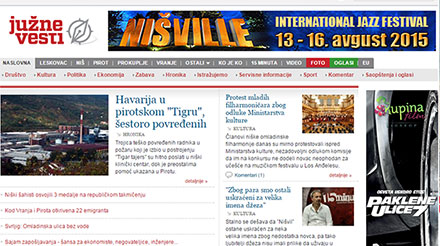
Working as a professional journalist in Serbia is hard. Being one in the country’s inland is even harder. Out of the 58 verified incidents involving Serbian media outlets and professionals reported to Index on Censorship’s European Union-funded Mapping Media Freedom, 30 have occurred outside Belgrade; the country’s political, economic and media capital. Four of these incidents have been directed at Juzne Vesti staff.
Launched in 2010 by journalist Predrag Blagojevic, Juzne Vesti is an independent news site based in Nis, a town of 257.000 in southern Serbia. In just over five years, its journalists have been subjected to verbal harassment or death threats 15 times. Though they have reported the incidents to local authorities, it has not resulted in convictions.
“Nobody has been found guilty and punished for the threats,” Blagojevic, who is also the site’s editor-in-chief, told Index.
According to Blagojevic, the main obstacle to punishing those threatening journalists comes from the prosecutor’s office. While he is quick to complement police in the town for their professional and timely investigations, he blames prosecutors for failing to act on the evidence by filing indictments quickly.
“In two situations from four to six months passed from the time the police filed a criminal charge to the prosecutor’s indictments,” Blagojevic explained.
Juzne Vesti correspondent Dragan Marinkovic from Leskovac received threats on Facebook after he published an article about the death of a woman, in which he questioned the treatment provided by a paramedic. He reported the incident to authorities. Several months later prosecutors decided not to pursue the case, arguing that “you deserve a bullet” is not a threat.
In March 2014 Blagojevic was threatened by the owner of a local football club, yet prosecutors waited until late September to indict the main suspect. The first court hearing was scheduled for December 2014; the next one at the end of this month.
While such delays are frustrating, once in court, judges have taken some dubious positions, Blagojevic said. In one case, the court said that “be careful what you write” or “do not play with fire” were not threats, but words that “merely showed the seriousness of the topic”. In another instance, where the perpetrator asked a Juzne Vesti staffer “Will you be alive in the morning if you wrote something like this in the USA?”, the court said that “the inductee, by placing the action in the foreign country, shows that he is aware that murder is prohibited by Serbian law”.
Outside the legal system, there is another obstacle to independent journalism in Serbia: money. While the Serbian government pays for advertising space, most of the earmarked money is directed at the national press. At the same time, the number of successful companies outside Belgrade and Novi Sad are few, and those that do thrive in the Serbian inland are usually aligned with local political figures. That leaves a tiny pool of advertisers.
“In these circumstances we are left with only very small companies, which are connected with political parties or dependent on municipal budgets. The game is straightforward — only if you are good to us you will get money,” Blagojevic said.
In an interview with SEEMO, Blagojevic described situations where certain media outlets have been financed with taxpayers’ money. With this line of funding, competing outlets are able to offer low rates that distort the advertising market, which puts pressure on independent media to drop their rates.
“The local government in Nis sets aside hundreds of millions of dinars in payment for these PR services,” Blagojevic said. The money is sometimes up to 80 per cent of the budget for these outlets making it even more difficult for independent media to compete.
The Council of Europe’s recent report on the Serbian media situation addressed the issue: “Instead of making efforts to create non-discriminatory conditions for media industry development, the state is blatantly undermining free market competition.”
The last issue confronting Juzne Vesti staff is one that will be familiar to small town journalists around the world — everyone knows everyone. Blagojevic tells of having to convince one journalist to file a complaint because she knew the person who had targeted her. She was reluctant because she had known the person “since they were kids”, he said.
From Blagojevic’s point of view, the toxic mix of money, political pressure and indifference from the courts causes self-censorship among journalists.
“The language from the 90s is back in Serbia. Again, journalists that criticise the work of the government or are reporting on corruption are labelled as foreign mercenaries. Threats like this come from the mouths of the highest state representatives,” he said.
An earlier version of this article stated that Nis has a population of 184,000. The latest census puts the figure at 257.000.
This article was posted on March 27, 2015 at indexoncensorship.org