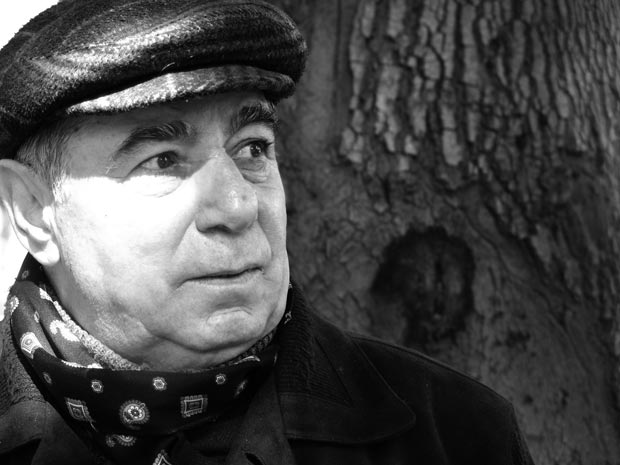
Index reported on 22 April that the case against Azerbaijani writer Akram Aylisli, who previously faced charges of hooliganism after being detained at Baku Haydar Aliyev International Airport on 30 March, has expanded to include charges of resisting the authorities with violence. Under article 315.1 of the criminal code, this is punishable by up to three years in prison.
The move came following an open letter Aylisli sent to Azerbaijani President Ilham Aliyev. In it, he points to the absurdity of the claim that a “78-year-old heart patient, a weak man” could assault a 35-year-old “stocky athlete”. The writer asked the president to intervene and remove the criminal case against him.
Here is the translation of the letter:
President of Azerbaijan Mr. Ilham Aliyev
Dear Mr. President,
The investigation of the “criminal case” against me is about to be finished.
My supposed “crime” is that when I arrived to Baku Heydar Aliyev International Airoport, intending to travel to Venice to take part in literary festival on 30 March-2 April, I supposedly made an act of hooliganism, not captured on any of the video surveillance cameras, and later supposedly assaulted a border service officer, in a room with no surveillance cameras, punching him with such force as to cause bruising.
To convince anyone that a 78 year old, suffering from heart condition, physically weak person can generate such assault physical force against a 35 year old stocky athlete is, most certainly, absolutely impossible and beyond belief. I should most sincerely tell you that, having learned of this absurd accusation in the police department, I absolutely could not believe that it may reach the court of law.
I thought that measures should be taken against such primitive accusations put forward against celebrated writer who was awarded a high order of “independence” for exceptional contribution to Azerbaijan literature. I could not hide from you, Mr. President, that, I expected from you personally, that in this matter your authoritative voice would be heard.
However, unfortunately, my hopes were in vain. Once again I became convinced that top government structures are not interested in me living a tranquil life, continuing my many years of literary work.
It is very difficult for me to understand who would benefit from this unprovoked incident in the airport. However, it is clear that I could not, at all, be the side interested in stirring such an incident.
In the last few years my family had to suffer all kinds of insults and hardship, and I had very strong psychological need for opportunities for peaceful existence in my own country. However, with much regret I must state that the reality is quite opposite, and I have all reasons to believe that the campaign against me and my family, started 3 years ago, is to continue.
In my opinion, Mr. President, there was no need to restart this campaign!
First of all, the reason for that is that my short novel “Stone Dreams”, published several years ago, in the recent times finally left the political context and started to live an appropriate, unbiased literary life. Many well-established publishing houses, not involved in international politics, estimated the book highly just for its artistic and esthetic qualities and decided to publish it. I was very happy that my book is not serving seasonal nationalistic interests, but via its humanistic ideas and high humane values serves the national Azerbaijani literature tradition
I could name globally recognized scientists, artists and politicians who accepted my book as literary work with humanistic and peace-loving perspective.
I often get letters via the internet from ordinary people from many countries. In those unsolicited letters, the literary and esthetic values of the book are emphasized.
For example, I was very touched to read a letter from the 3rd year student of Bratislava University’s Russian and Eastern European Studies faculty, Patrisia Patzelitova, who has written course work and is now writing a bachelor diploma on my long-suffering novel “Stone Dreams”. The author of this letter, who is very far from any kind of political intrigue, who sees no difference between ordinary Armenians and ordinary Azerbaijanis, tries to evaluate the artistic ideas of “Stone Dreams” most objectively.
In my opinion, it would be wrong to speculate that my nomination for Nobel Prize by 13 respected professors from different countries is in any way an Armenia-related initiative. None of those intellectuals are political actors interested in temporary, short-term political intrigue. I was long sure that while we ignore the opinion of the world, the world will also not listen to us.
I could provide many examples of sympathy towards my work from unbiased people that should change the attitude of Azerbaijan’s government towards me. However, unfortunately, it has not changed.
The government, in line with historic precedence, wanted to prove that it could never be wrong. However, I always thought that the government may also be wrong and may try to cover that behind the curtain of pseudo “people’s fury”.
There is nothing strange about this. The history knows that, from time to time, there is misunderstanding between politicians and artists, and those misunderstandings are not without their own reasons.
If the government policy was indeed impeccable, it could not so happen that a short artistic novel, however wrong and harmful it could be, would cause such a disturbance to the state’s ideological life.
Alongside with the need for economic reforms, the need for serious reforms in country’s ideological and political life is as urgent as ever, Mr. President!
It is not hard for me to understand that this work, which caused me much insult and hardship, created certain problems for the current Azerbaijan’s governing ideology. But I could not possibly agree that this work, in any way, discredits Azerbaijani people. In my opinion, the protagonists of the book: Saday Sadagli, Dr. Abbasov and Dr. Farzani are the bearers of high moral standards, who feel compassion towards all people, regardless of their national and religious identity. These are bright members of Azerbaijani people, its intelligencia. Those characters could not possible denigrate the people of Azerbaijan.
I’m 79 years old now, and my days are numbered: not by years, probably by months and days. Now, certainly, I worry more not about my own destiny, but destiny of my family, the plight of my sons who remain unemployed for my supposed “sins”. It would be naïve of me to expect that someone would show mercy and offer jobs to my children in the country of wolfish officials, who nod to every command from the top and differ from robots only by their endless greed and passion for bribes. That these stresses and hardship happened just because of a literary work seems a nightmare to me.
The last three years I live in the environment of psychological terror, and I daily witness the cruel violation of my basic human rights.
Even the doors of my country house are totally locked on me. It is not that I’m worried of disrespect from my countrymen: it is meaningless to be afraid of that, as I’m certain that the attitude of ordinary people towards me has not changed. Those doors are locked because in my small homeland, on each step I’m worried about possible ordered provocations.
As you probably know, “Stone Dreams” is not the first of my works published overseas. This book is a logical continuation of my body of work, and it’s not my fault that “Stone Dreams” only differ from my previous work in its theme. Also it’s not my fault that in other countries the book is judged by different criteria than in Azerbaijan.
It is not by accident that the publishing house that published “Stone Dreams” last year, also became interested in publishing my 1960s trilogy “People and Trees”. The book of my selected works, published in St. Petersburg, Russia in 2014, is also planned for publication in the United States. It should not escape attention that “Stone Dreams” is evaluated in many counties as masterly artful prose.
Mr. President, I have never been the trouble-maker who likes to create public scandals. Neither am I a culprit of such wide coverage of the airport “incident” in the international media.
My emotional address to you comes from my hope and belief that your word will have a decisive role in finding out the truth, establishing and punishing the real culprits of the said incident.
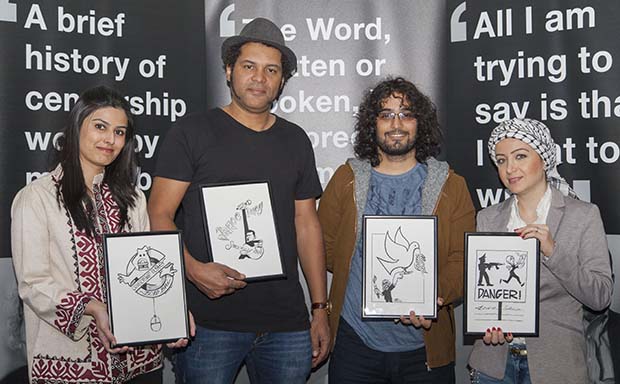
Winners of the 2016 Freedom of Expression Awards: from left, Farieha Aziz of Bolo Bhi (campaigning), Serge Bambara — aka “Smockey” (Music in Exile), Murad Subay (arts), Zaina Erhaim (journalism). GreatFire (digital activism), not pictured, is an anonymous collective. Photo: Sean Gallagher for Index on Censorship
Murad Subay
In 2011, artist Murad Subay took to the streets of Yemen’s capital, Sana’a to protest the country’s dysfunctional economy and institutionalised corruption, and to bring attention to a population besieged by conflict. Choosing street art as his medium of protest, he’s since run five campaigns to promote peace and art, and to discuss sensitive political and social issues in society. Unlike many street artists, all his painting is done in public, during the day, often with passers-by getting involved themselves.
Subay won the 2016 Index on Censorship Freedom of Expression Award for Arts.
Zaina Erhaim
A Syrian-native who was studying journalism in London when war broke out in Syria in 2013, Zaina Erhaim decided to return permanently to report and train citizen journalists in the war-ravaged country. Between the violence and deadly misogyny of IS and the bombing raids of Russian allies of Assad the danger of living in the region as a female reporter is immense. However, Erhaim has trained hundreds of journalists, including many women.
Erhaim won the 2016 Index on Censorship Freedom of Expression Award for Journalism.
Bolo Bhi
Bolo Bhi, which means “speak up” in Urdu, is a non-profit run by a powerful all-female team, fighting for internet access, digital security and privacy in Pakistan and around the world. Founded in 2012 by Sana Saleem and Farieha Aziz, they have since fought tirelessly to challenge Pakistan’s increasingly pervasive internet censorship.
Bolo Bhi won the 2016 Index on Censorship Freedom of Expression Award for Campaigning.
Smockey
Serge Bambara — aka Smockey, meaning “se moquer”, or “to mock” — is a hip-hop artist from Burkina Faso, who has had a marked impact on political and social developments there.
Smockey is the inaugural recipient of the Music in Exile Fund Fellowship.
GreatFire
GreatFire was set up in 2011 by three anonymous individuals to counter the “Great Firewall of China”, the systematic blocking by the Chinese government of any website deemed controversial, including any that touch on news, human rights, democracy or religion.
GreatFire is the winner of the 2016 Index on Censorship Freedom of Expression Award for Digital Campaigning. We spoke to a GreatFire representative Charlie Smith, a pseudonym.
What does this award mean to GreatFire?
“It’s a great honour. Working in China, GreatFire has a pretty difficult job and we often feel we’re on our own. It means a lot to us to get this award. It’s like feedback; it’s very nice.”
What’s standing in your way?
“Our adversary is not just the Chinese authorities. There are dominant foreign internet companies that are putting obstacles in our way. They could be helping us more. It’s sometimes harder to deal with the major internet players than the Chinese authorities.”
What kinds of pressures does GreatFire face?
“Last year, in New York, we organised an art show and events. One of the events we organised was around feminism. Participants’ families were threatened at home in China. It makes it quite unsafe for people.”
Is the situation getting worse?
“Recently, there have been tons of arrests and detentions. People I speak to in other organisations agree. No one has ever seen anything like this. The Chinese authorities are trying to disrupt networks. More sites have been blocked. There’s more domestic censorship. It is getting worse.
“Telegram was blocked by China after realised that activist lawyers were using it to communicate with their clients. When it was blocked the lawyers were using WeChat to communicate with their clients. The authorities sat back and watched the connections. They arrested 100 people on a Friday night.”
What’s GreatFire’s biggest challenge?
Funding is our biggest challenge. We’re a victim of our own success. The more people use the app, the more it costs us. Our solution is based on collateral freedom. The more people are using it the more collateral freedom costs. China knows that there is an economic cost to shutting us down [because we are using systems that generate revenues for Chinese companies]. But it costs us money to run. It costs us 20 cents per user per month.
People can make donations through freebrowser.org.
It’s our hope that we don’t exist next year because the Chinese censorship system will be gone.
A year after returning from exile, Honduran gay rights activist Donny Reyes still fears a murderous attack at any minute.
“I’ve been imprisoned on many occasions. I’ve suffered torture and sexual violence because of my activism, and I’ve survived many assassination attempts,” he said, in an interview with Index on Censorship.
Activists in Honduras must contend with a constant barrage of threats and, often fatal, attacks. Reyes, the coordinator of the Honduran lesbian, gay, bisexual, and transgender advocacy group Arcoíris (Rainbow), had spent 10 months abroad for his own safety, but felt an obligation to return to the frontline of the fight against discrimination.
“To be able to continue with my personal life and my work I have to be conscious that [death] could come at any moment,” he said. “The truth is it doesn’t worry me anymore. What worries me is that things won’t change.”
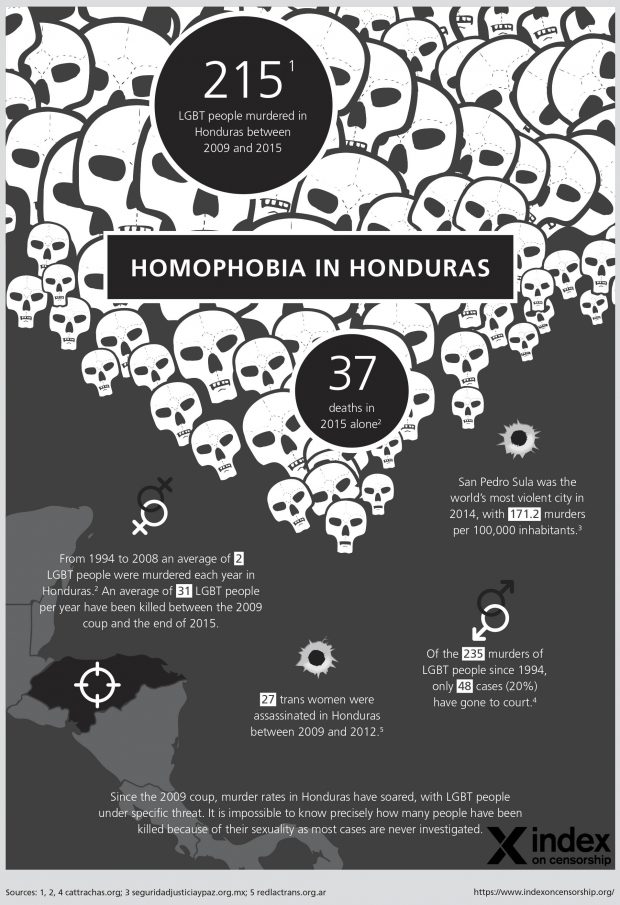
Dozens of LGBT Hondurans are murdered each year, with few of the killers brought to justice, according to figures from respected Honduran NGO Cattrachas. Journalists and activists who speak out are often attacked. One of these was Juan Carlos Cruz Andara who died after being stabbed 25 times by unknown assailants last June.
Arcoíris reported 15 security incidents against its members during the second half of 2015, including surveillance, harassment, arbitrary detentions, assaults, robberies, theft, threats, sexual assault and even murder. Other LGBT activists have experienced forced evictions, fraudulent charges, defamation, enforced disappearances and restrictions of right to assembly.
The activists consulted by Index all said that the level of homophobic violence exploded after the ousting of liberal President Manuel Zelaya in the military coup of 2009. The election of right-wing candidate Porfirio Lobo Sosa the following year coincided with the militarisation of Honduras, a rise in gang-related violence, and a clampdown on human rights.
The records from Cattrachas show that on average two LGBT people were murdered each year in the country from 1994 to 2008. After the 2009 coup that rate rocketed to an average 31 murders per year, according to figures from Arcoíris. In early 2016 there were signs the situation was escalating further with the murder of Paola Barraza, a member of Arcoiris’s group, on 24 January. In reality though it is impossible to know precisely how many people have been killed because of their sexuality because the vast majority of cases remain unsolved.
Erick Martínez Salgado, who volunteers with LGBT advocacy group Kukulcanhn, told Index that gay activists protested heavily against discrimination and the coup. He believes the government came to view his group as a threat to the traditional social order and started targeting them to “send a message” to other protesters.
One of the most prominent gay rights activists of the time, Walter Tróchez, was killed in a drive-by shooting in December 2009. Human rights groups noted that he had previously been kidnapped, beaten and threatened for demonstrating against the coup and advocating for gay rights. Four years later, Tróchez’s friend and fellow gay rights activist Germán Mendoza was arrested and charged with his murder.
Mendoza told Index he was held in deplorable conditions and repeatedly tortured in a bid to make him plead guilty. Eventually he was released after proving his innocence last year. Mendoza believes he was arrested because the government wanted to use him “as a scapegoat to wash their hands of the responsibility” for Tróchez’s death, which remains unsolved. The Honduran government did not respond to requests for comment.
Gang warfare was a massive contributor to Honduras status as the nation with the world’s highest murder rate in 2012, however the gay community’s main concern is not gangs, but the state security forces.
“The police constitute the primary perpetrator of violations of the rights of the LGBT community,” the Coalition Against Impunity, an alliance of 29 Honduran NGOs, warned last year, citing alleged “police policy of frequent threats, arbitrary arrests, harassment, sexual abuse, discrimination, torture and cruel or degrading treatment”.
As a result many vulnerable activists are reluctant to ask for protection, for fear that contact with the police would expose them to greater security risks or reprisals.
The journalists who document homophobic violence in Honduras also risk their lives. Dina Meza, an independent investigative reporter who has covered the issue extensively, was nominated for an Index on Censorship Freedom of Expression Award in 2014 for her journalism. Meza said the country’s mainstream media often portrays the LGBT community in a negative light.
Meza, who launched the independent news site Pasos de Animal Grande last year to draw attention to the hardships facing the most vulnerable sectors of society, said reporters who cover violence against the LGBT community are also targeted. She said not only do journalists get physically assaul-ted by the security forces and expelled from public events, but they are also targets of government-led smear campaigns.
“It’s extremely common here for them to link human rights defenders to drug trafficking and organised crime, in a bid to sow doubts in people’s minds about the work that we’re doing,” she explained. “If we speak out at an international level they say we’re trying to undermine Honduras, discourage investment and see the country burn.”
Peter Tatchell, director of the London-based LGBT campaigning group the Peter Tatchell Foundation, called for the world to pay more attention to the killings. He said: “This extensive, shocking mob violence against LGBT Hondurans is almost unreported in the rest of the world. The big international LGBT organisations tend to focus on better-known homophobic repression in countries like Egypt, Russia, Iran and Uganda. What’s happening in Honduras is many times worse. Is this neglect because it is a tiny country with few resources and no geo-political weight? The UN, Organisation of American States and foreign aid providers need to do more to press the Honduran government to crackdown on anti-LGBT hate crime and to educate the public on LGBT issues to combat prejudice.”
Meza and the activists interviewed by Index also believe that Catholic and Evangelical Christian groups have become increasingly influential in Honduran society. Reyes from Arcoíris described the state, the church and the mainstream media as a triumvirate which has fuelled “impunity, fundamentalism, machismo and misogyny” across the country, with disastrous consequences for the LGBT community.
“At home and at school are the first two places where we’re attacked and discriminated. We flee home at very young ages because the family is built on religious values. Our families punish us in a cruel manner and this has a terrible psychological impact,” Reyes said. “Our educational and employment opportunities are diminished every day. We can be sex workers or street vendors, or stay in the closet in the hope of getting a job, but if they find out about your sexual orientation you’ll almost certainly be fired.”
Despite the risks he and his fellow activists face, Reyes said the drastic need for change is what gives them the strength to keep fighting discrimination: “We need a Honduras that’s free from violence and homophobia. We believe it’s our responsibility to fight for this so the next generation have a space to live in a better world.”
This article is from the latest issue of Index on Censorship magazine. Order your copy here, or take out a digital subscription via Exact Editions (free trial or £18 for the year). Copies are also available at the BFI and Serpentine Gallery (London), News from Nowhere (Liverpool), Home (Manchester) and on Amazon. Each magazine sale helps Index on Censorship fight for free expression worldwide.
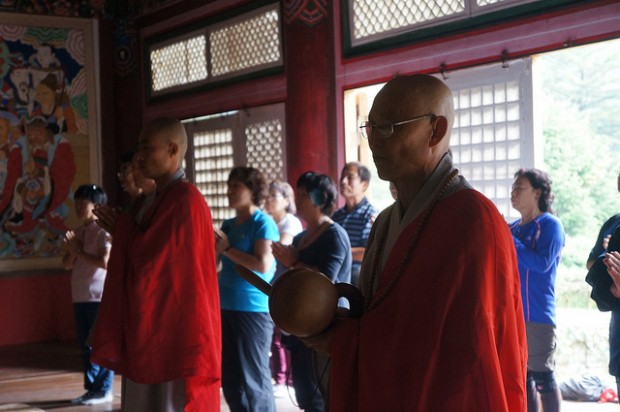
Pohyon Temple in the Myohyang mountains, once a national center for Korean Buddhism. Credit: Uri Tours / Flickr
After the United States Commission on International Religious Freedom, an independent organisation created by the US Congress to evaluate religious freedom conditions around the world, released its 2015 report, it became clear that an insufficient amount of progress had been made since Index on Censorship last reported on the issue.
Here’s a roundup of some the most appalling religious freedom violations from across the globe.
Burma
Bigotry and intolerance continue to scorch the lives of religious and ethnic minorities in Burma, particularly Rohingya Muslims. The Burmese government demonstrated little effort toward intervening or properly investigating claims of abuse, including those carried out by religious figures in the Buddhist community. As internet availability spread throughout the country, social media played a role in promoting a platform of hate and proposed violence against minority populations. Rohingya Muslims in the country face a unique level of discrimination and persecution. The government denies them citizenship and the right to identify as Rohingya. Additionally, four discriminatory race and religion bills could further the prejudices affecting religious minorities.
North Korea
North Korea is a nation where genuine freedom of religion or belief is non-existent; it remains one of the most oppressive regimes and worst violators of human rights. Punishment comes to those who pose difficult questions while the government maintains its control through a constant threat of imprisonment, torture and even death for those who break the law regarding religion. Estimates suggest up to 200,000 North Koreans are currently suffering in labor camps, tens of thousands of whom are there for practicing heir faith. In February 2014, the Commission of Inquiry on Human Rights in the Democratic People’s Republic of Korea released its report documenting the systematic, severe violations of human rights in the country. It found “an almost complete denial of the right to freedom of thought, conscience”.
Saudi Arabia
Officially an Islamic state with eight to ten million expatriate workers of different faiths, Saudi Arabia continues to restrict most forms of public religious expression inconsistent with its interpretation of Sunni Islam. The government continues to use criminal charges of blasphemy to suppress any dialogue between dissenting viewpoints, with a new law helping drive home the goal of silence. The Penal Law for Crimes of Terrorism and its Financing criminalises virtually all forms of peaceful dissent and free expression, including criticising the government’s view of Islam. Lastly, authorities continue to discriminate grossly against dissident clerics and members of the Shia community.
Sudan
The Sudanese government continues to engage in massive violations of freedom of religion, due to president Omar al-Bashir’s policies of Islamisation and restrictive interpretation of sharia law. Despite 97% of the population being Muslim, there is a wide range of other religions practiced. The country’s turmoil from religious persecution rests on the 1991 Criminal Code, the 1991 Personal Status Law of Muslims, and state-level “public order” laws, which have restricted freedom for all Sudanese. The laws – which contradict the country’s constitutional and international commitments to human rights and freedom of religion – allow death sentences for apostasy, stoning for adultery, cross-amputations for theft, prison sentences for blasphemy and floggings for undefined “offences of honor, reputation and public morality”. Since 2011, more than 170 people have been arrested and charged with apostasy.
Article continues below
[/vc_column_text][/vc_column][/vc_row][vc_row][vc_column][vc_custom_heading text=”Join the Index mailing list and get an exclusive gift” font_container=”tag:p|font_size:28|text_align:left” use_theme_fonts=”yes”][vc_separator color=”black”][/vc_column][/vc_row][vc_row][vc_column width=”1/2″][vc_column_text]
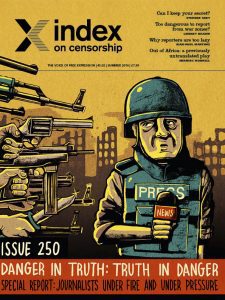
Index on Censorship’s summer magazine 2016
We’ll send you our weekly emails and periodic updates on our events. We won’t share your personal information with anyone outside Index.
You’ll also get access to an exclusive collection of articles from our landmark 250th issue of Index on Censorship magazine exploring journalists under fire and under pressure. Your downloadable PDF will include reports from Lindsey Hilsum, Laura Silvia Battaglia and Hazza Al-Adnan.[/vc_column_text][/vc_column][vc_column width=”1/2″][gravityform id=”20″ title=”false” description=”false” ajax=”false”][/vc_column][/vc_row][vc_row][vc_column][vc_separator color=”black”][/vc_column][/vc_row][vc_row][vc_column][vc_column_text]Uzbekistan
In Uzbekistan, the government imprisons individuals for not conforming to officially prescribed practices or whom it claims are extremist, including as many as 12,000 Muslims. A highly restrictive religion law is imposed, the 1998 Law on Freedom of Consciences and Religious Organisations, which severely limits the rights of all religious groups and facilitates Uzbek government control over religious activity. Many who don’t fit into the framework of officially approved practices are regularly repressed. Additionally, the government has continued a campaign against independent Muslims, targeting those linked to the May 2005 protests in Andijan; 231 are still imprisoned in connection to the events, and ten have died. All the while, Uzbekistan has pressured countries to return Uzbek refugees who fled during the Andijan tragedy.
Turkmenistan
In an environment of nearly inescapable government information control, severe religion freedom breaches persist in Turkmenistan. Continuing police raids and harassment of registered and unregistered religious groups matched with laws and policies that violate international human rights norms has the nation as one of the year’s biggest offenders. With an estimated total population of 5.1 million, the US government projects that the country is 85% Sunni Muslim, 9% Russian Orthodox, and a 2% total that includes Jehovah’s Witnesses, Jews, and evangelical Christians. Despite Turkmenistan’s constitutionally guaranteed religious freedom and separation of religion from the state, the 2003 religion law negates these provisions while setting intrusive registration criteria for individuals. It also requires that the government is informed of all foreign financial support, forbids worship in private homes and places discriminatory restrictions on religious education.
China
While the Chinese constitution guarantees freedom of religion, this idea really only applies to “normal religions”, better known as the five state-sanctioned “patriotic religious associations” associated with Buddhism, Taoism, Islam, Catholicism and Protestantism. Even still, the government monitors religious activities unfairly, and there has been an increased religious persecution of Uighur Muslims in the name of fighting terrorism. All around repression in China worsened in 2014, including the governmental push for controlling Tibet, Xinjiang, and even Hong Kong, as well as controls on the internet, social media, human rights defenders, activists and journalists.
Eritrea
Ongoing religious freedom abuses have continued in Eritrea, including torture or ill-treatment of religious prisoners, random arrests without charges and banning’s on public religious activities. The situation is especially serious for Evangelical and Pentecostal Christians and Jehovah’s Witnesses, and the government suppresses Muslim religious activities and those opposed to the government-appointed head of the community. In 2002, the government increased its control over religion by imposing a registration requirement on all religious groups other than the Coptic Orthodox Church of Eritrea, Sunni Islam, the Roman Catholic Church and the Evangelical Church of Eritrea. The requirements mandated that the non-preferred religious communities provide detailed information about their finances, membership, activities, and benefit to the country. Additionally, released religious prisoners have reported to USCIRF that they were confined in crowded conditions, and subjected to extreme temperature fluctuations. The government continued to arrest and detain followers of unregistered religious communities. Recent estimates suggest 1,200 to 3,000 people are imprisoned on religious grounds in Eritrea, the majority of whom are Evangelical or Pentecostal Christians.
Iran
Poor religious freedom in Iran continued to worsen in 2014, particularly for minority groups like Bahá’ís, Christian converts, and Sunni Muslims. The government is still engaging in systematic violations, including prolonged detention, torture, and executions based on the religion of the accused. Despite Christians, Jews, and Zoroastrians being recognised as protected minorities, the government has consistently discriminated against its citizens on the basis of religion. Killings, arrests, and physical abuse of detainees have increased in recent years, including for religious minorities and Muslims who are perceived as threatening the government’s legitimacy.[/vc_column_text][/vc_column][/vc_row][vc_row][vc_column][vc_basic_grid post_type=”post” max_items=”12″ style=”load-more” items_per_page=”4″ element_width=”6″ grid_id=”vc_gid:1493906845781-a7b9ac80-f77d-2″ taxonomies=”1742″][/vc_column][/vc_row]