5 Jun 2019 | Academic Freedom, News, Scholar at Risk, Turkey
[vc_row][vc_column][vc_column_text]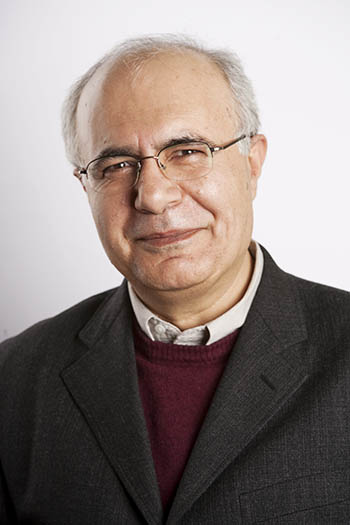 Academics for Peace unites 2,237 people supporting peace in Turkey’s mostly Kurdish-populated south-eastern provinces. Many are among the 1,128 signatories of a 2016 petition — We Will Not Be a Party To This Crime — calling for an end to violence in the region. The petition condemned state violence against the Kurds and Turkey’s violation of its own laws and international treaties.
As of 29 May 2019, 724 members of Academics for Peace are on trial and facing imprisonment. So far, 180 sentences – ranging from between 15 and 36 months – have been handed down.
One of the signatories of the petition, professor Füsun Üstel, began her 15-month jail term on 8 May 2019. She is the first of the signatories to begin her sentence.
In April, professor Tuna Altınel of Claude Bernard University in Lyon had his passport confiscated when he returned to Turkey for the Easter holidays. On 11 May, he was detained when he went to the police station to inquire about his passport. He remains in custody on charges relating to a conference he organised in Lyon on 21 February 2019 in solidarity with the Kurds.
Mehmet Ugur, a member of Academics for Peace and professor of economics and Institutions at University of Greenwich, spoke with Index on Censorship about the current situation for Turkish academics.
Jessica Ní Mhainín: Professor Füsun Üstel began her sentence on 8 May. How has this affected the members of Academics for Peace and particularly the signatories of the petition?
Mehmet Ugur: The Academics for Peace were very disappointed with the decision to imprison Fusun Ustel, although it wasn’t totally unexpected since the AFP trials have so far demonstrated that the courts are following strict directions from the government. Fusun Ustel is a highly respected professor of law, whose democratic credentials are as good as her academic ones. Her imprisonment created anger among the AFP community and beyond. The recent social media campaign has focused on efforts to free her, or to at least transfer her to an open prison [where there would be less restrictions on her movements and activities]. So on one hand, AFP have reacted with disappointment and anger, but on the other hand they have shown that they are resilient.
Ní Mhainín: In 2016, you wrote that the international scholarly community should “take practical, meaningful steps to express their solidarity with Academics for Peace and their commitment to academic freedom more broadly”. Do you think that academics in Europe have been supporting their Turkish colleagues?
Ugur: I am very proud to be part of an international academic community that has shown incredible support for AFP. When we asked for signatures, thousands of academics signed. When we asked for condemnation, many wrote individual letters. Some went the extra mile by helping those academics who managed to leave Turkey (before their passports were confiscated) by mentoring them and providing them with research fellowships. We are so grateful for that.
But we have also observed that the academic community could do more given the dangers posed by the violation of academic freedom in Turkey. The resilience of the global higher education system against political interventions is at stake. Some European institutions have been partnering with the Council of Higher Education (YÖK) or the Scientific and Technological Research Council (Tübi̇tak), despite the fact that these institutions have been directly complicit in the violation of academic freedom in Turkey. Incentivised by the Turkish government’s funding, some organisations and institutions continue to hold conferences and strike quick-return partnerships with universities that were complicit in the violation of academic freedom.
The academic community is not a uniform body; there are different views and tendencies. Still, I would urge my peers to think twice before accepting offers from complicit Turkish universities or higher education funding bodies. We need to be concerned about the resilience of global higher education system against populist, authoritarian, and managerialist threat – in Turkey and beyond.
Ní Mhainín: You have decided to not return to Turkey, at least for the foreseeable future. How have you come to this decision?
Ugur: I have made a decision not to return to Turkey because of legal uncertainties brought about by the Turkish courts’ reliance on flimsy evidence to arrest and imprison people. I was imprisoned in Turkey in the early 1980s after the military coup. The conditions were very harsh but we knew what charges we would face and what sentence we would get. The Justice and Development Party (AKP)’s regime is so unpredictable – and it is aided by the pro-government media (95% of the media outlets in Turkey), by an army of trolls who act both as informers and secret witnesses, and above all, by a compliant judiciary, who are driven by both career incentives and ideological enmity against progressive politics. This is why I feel that it would be unsafe to go to Turkey.
Having said that, many of my colleagues who are signatories to the peace petition are going to Turkey. Some are returning safe but some of them, as we know from the case of Tuna Altınel, are not. It all depends on whether someone complains about you on social media or if a speech you made some years ago has re-surfaced and caught the attention of the authorities. The uncertainty makes me feel that it is not worth going. But I would not say that my assessment is applicable to everyone.
Ní Mhainín: On 9 May 2019 the Constitutional Court ruled that the imprisonment of Ayşe Çelik, who had been convicted of “disseminating propaganda” in favour of a terrorist organisation for calling on the media to “not keep silent” about the killings in South East Turkey, constituted a violation of freedom of expression. This ruling might offer Academics for Peace some hope. How has news of the court’s ruling been received?
Ugur: In the case of Ayşe Çelik, not only did the court rule that her call for peace in the Kurdish region didn’t constitute propaganda for a terrorist organisation, but it went further by saying that even if someone is spreading terrorist propaganda, it should be considered freedom of expression unless it incites terrorist action. Ayşe Çelik was convicted under the same article that has been used to sentence AFP signatories: article 7.2 of the Anti-terror Law, which carries a heavier sentence than article 3(1) of the Turkish Penal Code (contempt against the Turkish state), which had also been considered by the judiciary.
The AFP have already submitted an application to the Constitutional Court indicating that the actions of the AFP signatories should also be considered freedom of expression rather than terrorist propaganda. The court met on 29 May 2019 but failed to make a decision. There appears to be some tension between the court and the government, but I’m not very optimistic. If the court rules in AFP’s favour, we will celebrate of course, but if it doesn’t then the charade of the Turkish legal system will be proven at another level.
Ní Mhainín: How do you see the situation in Turkey progressing over the coming months and years?
Ugur: It’s very difficult to predict the future, but I think that in the short-term, the situation will continue to be bad for defenders of democracy and freedom in Turkey. This is because of the alliance that keeps the government in power, which is based on two parties: the AKP and the Nationalist Action Party (MHP). The AKP is informed by a synthesis of religion and nationalism, while the MHP originates from a fascistic tradition going back to the 1950s. The current political establishment is against improving academic freedom, democracy or human rights, hence why you have academics, journalists, and people like Osman Kavala being tried and imprisoned.
The government has so far been using the Kurds to maintain its authoritarian, anti-democratic regime but I think that the set-up is increasingly becoming unsustainable. I believe that people are no longer as affected by the fear and intimidation campaigns that the government is instigating. The results of the local election [31 March 2019], along with the economic crisis, have weakened their campaigns. So there are some signs that this authoritarian regime is running out of steam – and this is a good sign! But I wouldn’t jump to celebrate yet; you need to have a critical mass of people gelling together into a collective assessment that the regime is no longer sustainable. However, I feel that this looks more likely now than it did before the local elections.
I think we will eventually see a gradual erosion of the authoritarian, nationalist and fascist elements in Turkey. Where will it lead? I can’t tell. Changing and rebuilding the institutions will be a massive task. I’m not clear about how that can be done — it will be a challenge.[/vc_column_text][/vc_column][/vc_row][vc_row][vc_column][vc_basic_grid post_type=”post” max_items=”4″ element_width=”6″ grid_id=”vc_gid:1559732361631-5b64146f-397d-7″ taxonomies=”55″][/vc_column][/vc_row]
22 Mar 2018 | Austria, Europe and Central Asia, Mapping Media Freedom, Media Freedom, media freedom featured, News
[vc_row][vc_column][vc_column_text]
The new populist government wants to bring major change to Austrian society. Major shifts are expected in the country’s media landscape.
Many experts such as the president of the Austrian Journalism Club (ÖJC), Fred Turnheim, voiced their concerns and warned of the dangers of a democracy-hostile information policy: “This enforced conformity of information coming from the individual ministries and departments of the Federal Government is an authoritarian measure of the Federal Chancellery and contradicts pluralistic media work in a democratic society.”
Since the government’s inauguration in December 2018, journalists have been publicly attacked by politicians and media outlets defamed for critical journalism. Financial cuts on public media outlets are also on the government’s agenda. Hannes Tretter, co-founder of the think tank Boltzmann Institute of Human Rights, says: “According to Article 10 of the European Convention of Human Rights and Article 11 of the EU Charter of Fundamental Rights, governments must not only respect but guarantee the freedom of the media that is based on the principles of pluralism, diversity, tolerance and broadmindedness. Only these principles can enable citizens to have access to a variety of information and opinions which is essential for a living democratic society. Thus, any attacks against journalists have to be examined diligently on the basis of these measures.”
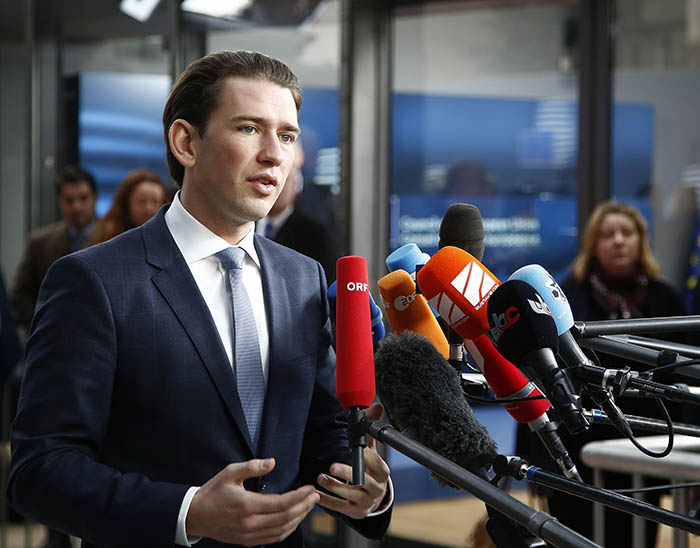
Changes in Austria’s media policy became apparent at the first joint press conference of Austrian chancellor Sebastian Kurz of the People’s Party (ÖVP) and vice-chancellor Heinz-Christian Strache of the far-right Freedom Party (FPÖ), when they announced they would no longer meet directly with the press, as has been the tradition in Austria. Instead, former diplomat Peter Launsky-Tieffenthal has been named an official government spokesperson. While this structure is not uncommon around the world, the Austrian arm of Reporters Without Borders and ÖJC raised concerns, saying that the decision could be a way for politicians to avoid questions and undermine the public’s right to information. ÖJC president Fred Turnheim addressed the chancellor directly in a press release: “As journalists, our work is based on first-hand information. If you want to avoid false interpretations, you need to dissolve the function of the governmental spokesperson.”
Concerns for restrictions on access to information for journalists intensified in February 2018 when Kurz declared the dissolution of the Federal Press Service (Bundespressedienst), which was founded in 1920 and serves as the focal point of communication between the Federal Chancellery and the press.
Concerning the former far-right opposition party, FPÖ has been well known for criticising the press for what it sees as a liberal bias and lack of objectivity. This criticism of the media came as the party has appointed the former editor-in-chief of online portal unzensuriert.at, Alexander Höferl, as head of communications at the interior ministry. Unzensuriert publishes a stream of manipulative and conspiracy-driven news pieces that mainly target migrants, Muslims and political opponents of the FPÖ, as an analysis of the magazine Profil shows.
Now, as a coalition partner, FPÖ threatens to use its clout in the government to significantly cut Austria’s public media as indicated in the government programme. President of Reporters Without Borders, Rubina Möhring, tells Media Mapping Freedom: “The established professionalised media policy hampers access to information and is as much concerning as the attacks of public media outlets. It is important to note that public media, which is not to be confused with state media, holds the mandate of political independence in service of informing the public and needs to be protected.”
Defaming media outlets and accusing them of manipulating information or suppressing the word of the state has become a tactic to diminish the public’s trust in the press. Several FPÖ ministers, including the infrastructure minister, have declared their dislike for government funding of the country’s public service broadcasting corporation ORF. The vice-chancellor has been most direct by calling the ORF “a place where lies become news”, as Index on Censorship’s Media Mapping Freedom project reported. Terms like “fake news” and “lügenpresse” (lying press) have been taken up not only by nationalist movements but have found their way into Austrian public debates and online forums.
ORF — Austria’s largest media outlet with up to four million viewers in a country of 8.7 million people — is primarily financed through a tax, which the government wants to scrap. While ÖVP has only confirmed plans to reform ORF as indicated in the government programme, Strache said: “We want to abolish the ORF excise tax. This is one of the major goals of this government”. ORF editor committee, as well as journalists such as Daniela Kittner, suspect that this is part of the government’s — in particular FPÖ’s — intention to gain political influence through the media sector. On 20 February 2018 the chairmanship of the new ORF supervisory board was consigned to the FPÖ. The current executive committee, which was put in place by the last government, is planned to be restructured as well. Some expect these structural changes of ORF to be part of an effort to weaken public-service broadcasting altogether as media minister Gernot Blümel publicly announced on several occasions that the government intends to strengthen private broadcasters while remaining vague on plans regarding ORF reforms.
Print media — the second biggest source of information in Austria — is also facing difficulties. Wiener Zeitung, the country’s oldest daily newspaper, derives most of its income from public notices that all companies must publish. The coalition government has announced that it intends to end the mandatory requirement. Additionally, the concentrated ownership of the existing 14 daily newspapers and strength of tabloid newspapers undermine the country’s media plurality. The dominant newspaper, tabloid Kronenzeitung, reaches about a third of Austrians. Along with many other print media outlets in Austria, it is reliant on government and political advertising. In 2016 around €16 million was spent by government ministries for advertisement in media outlets. In comparison, Germany spent slightly less despite its significant size difference. Altogether, government ministries, public institutions and enterprises invested around €177 million in political and economic media advertisements in 2016. On the top of the list of beneficiaries is Kronenzeitung. Between April and June 2017, they received €5 million, followed by ORF with €4.9 million. The other two other major tabloid newspapers Österreich and Heute received $3 million each. While concentrated ownership is a structural obstacle to a free and pluralistic media, the large-scale political and economic advertisement industry in Austria adds to the vulnerability of the press to influence by the interests of their donors.
Harald Fiedler, a journalist for Der Standard who regularly writes about the media, highly doubts that Wiener Zeitung will be able to survive. Wolfgang Riedler, the executive director of the newspaper, confirmed in an interview with the newspaper Der Standard that immediate restructuring would be necessary “should the mandatory announcements of companies be abolished. […] If you do not want to lose a quality medium that appears all over Austria, you have to look for a model that will ensure further funding”.
According to anonymous sources of the left-leaning weekly newspaper Der Falter, which itself is continually attacked for its investigative journalism and dismissed as “lügenpresse”, the government plans to close down the public national radio station FM4 due to its “failure to fulfil its educational mandate”. FM4 is well known as an alternative radio station to ORF for young people. While the alleged plans have been dismissed by the ORF and the government, the NGO #aufstehn and Reporters without Borders Austria have started a petition against FM4’s potential shutdown.
Aside from threats to the country’s public media outlets, individual journalists have been singled out for defamation, cyberbullying and restricted access to information.
In the first few weeks of 2018, FPÖ and affiliated youth organisations have published photos and contact details of journalists and actively encouraged its followers to target journalists online. The articles, which were mostly written by far-right media outlets such as Wochenblick, Info-Direkt and unzensuriert.at, were then shared on Facebook by high-ranking FPÖ politicians, including the vice chancellor. As a result, the journalists involved received numerous difficulties, including Colette Schmidt, a journalist at newspaper Der Standard, and Hanna Herbst, deputy editor-in-chief of the news outlet Vice in Austria, who were both subject to cyberbullying campaigns.
“It is clear to me that the intention is to silence journalists who are critical of the new government. FPÖ in particular has a strong network online which it uses systematically to intimidate journalists. This is the first time I have received threats of such an intensity,” Herbst told Mapping Media Freedom.
She characterised the harassment as gender specific. “Female journalists are more likely to be objectified and sexually harassed, but to me, it is important to show that those attacks won’t silence me. I have received a lot of solidarity and I plan to take legal action in order to show the illegitimacy of such acts.”
Tretter adds: “Uncovering anti-Semitic and racist statements and activities of fraternities is a legally required obligation of the State, which is based on the Austrian Prohibition Act of 1947 and the International Convention on the Elimination of All Forms of Racial Discrimination. Since it is the media’s task in a democratic society to serve as a ‘public watchdog’, journalists shall not be hindered in fulfilling their role.”
In another troubling development, selected media outlets are being excluded from political meetings. Starting in October 2017, when ÖVP denied photographers access to proximity talks, the Social Democratic Party (SPÖ) has now denied two newspapers access to a background discussion regarding a topic which both newspapers have previously critically reported on.
Rubina Möhring, president of Reporters without Borders Austria, voices her concerns for the government’s new political direction, but hopes for a strong civil movement to hold against the new political wind. “Attacks on journalists and media outlets are attacks against the right to information and attempts of intimidation are the first steps to an enforced conformity of the media,” she tells Mapping Media Freedom. “During World War II, Austria was stripped of press freedom as the protection of censorship by law was repealed. Critical journalism was brutally silenced while the Nazis made excessive use of propaganda news. We don’t want history to repeat itself. This is why now, more than ever, it is important to stand up for our rights as journalists and citizens.”
This article was updated on 9 April 2018 to reflect the correct title of an FPO minister. [/vc_column_text][/vc_column][/vc_row][vc_row][vc_column][vc_basic_grid post_type=”post” max_items=”4″ element_width=”6″ grid_id=”vc_gid:1523273223680-be701832-3026-6″ taxonomies=”6564″][/vc_column][/vc_row]
12 Sep 2016
Index on Censorship öffnet Nominierungen für die 2017 Freedom of Expression Awards und Stipendium
- Preise ehren Journalisten, Aktivisten, Digitalaktivisten und Künstler, die gegen Zensur weltweit kämpfen
- Nominieren Sie auf indexoncensorship.org/nominations
- Nominierungen sind offen vom 12. September bis 11. Oktober 2016
Ab heute sind Nominierungen für die Index on Censorship Freedom of Expression Awards offen. Jetzt im 17. Jahr die Preise ehren einige der außergewöhnlich sten Kämpfer für freie Meinungsäußerung der Welt. Vorherige Gewinner sind unter anderem die chinesische Digitalaktivisten GreatFire, der syrische Cartoonist Ali Farzat und angolanische Enthüllungsjournalist Rafael Marques de Morais.
Index auffordert das große Publikum, Bürgergesellschafts organisationen, Non-Profit-Organisationen und Medienorganisationen Kandidaten zu nominieren, die sie glauben gefeiert und unterstützt werden sollen in ihre Arbeit gegen Zensur weltweit.
Es gibt vier Kategorien in den Index on Censorship Freedom of Expression Awards:
- Kunst für Künstler (jeder Art) und Kunsthersteller, deren Arbeit Unterdrückung und Unrecht in Frage stellt und freie künstlerische Ausdruck feiert.
- Aktivismus für Aktivisten, die eine deutliche Wirkung im Kampf gegen Zensur haben und Ausdrucksfreiheit fördern.
- Digitalaktivismus für innovative Verwendungen von Technologie um Zensur umzugehen und den freien und unabhängigen Austausch von Informationen zu ermöglichen.
- Journalismus für mutige, wirkungsvolle und zielstrebige Journalismus (jeder Art), der Zensur und Bedrohungen für freie Meinungsäußerung enthüllt.
Relevante Kandidaten sind auch berechtigt für das Music in Exile Fellowship, das Musiker, deren Arbeit ist bedroht, unterstützt.
Als Stipendiaten bekommen alle Gewinner eine Woche Networking, Fortbildung und Beratung in London (April 2017), gefolgt von 12 Monate Maßunterstützung ihre wertvolle Arbeit für freie Meinungsäußerung weltweit zu verstärken und aufrechtzuerhalten.
Jodie Ginsberg, Geschäftsführer von Index, sagte: „Die Freedom of Expression Awards nicht nur präsentieren sondern auch stärken Gruppe und Personen die mutige und hervorragende Arbeit machen, Ausdrucksfreiheit weltweit zu verbessern. Diese sind echte Helden – Menschen, die oft immense Hindernisse überwinden müssen und große Gefahr entgegentreten, nur für das Recht sich auszudrücken. Ich dränge jeder ihr Held der freie Meinungsäußerung zu nominieren. Stellen Sie sicher, dass ihre Stimme gehört wird.“
Die 2017 Shortlist wird spät Januar veröffentlicht. Die Preisträger werden am 19. April 2017 an einem Galaabend am Unicorn Theatre in London angekündigt.
Für mehr Informationen auf den Awards und Stipendium, bitte [email protected] kontaktieren oder +44 (0)207 963 7262 anrufen.
Also available in: Arabic, English, French, Italian, Mandarin, Portuguese (Brazil), Portuguese (Portugal), Russian, Spanish, Turkish
12 Sep 2016
Index on Censorship annonce l’ouverture des nominations pour l’obtention des prix et bourse de la liberté d’expression de l’année 2017.
- les récompenses sont attribuées aux journalistes, militants et activistes digitaux luttant contre la censure à un niveau mondial
- il est possible de soumettre ses nominations sur indexoncensorship.org/nominations
- ouverture des nominations du 12 septembre au 11 octobre 2016
A partir d’aujourd’hui, sont ouvertes les nominations pour la remise des prix et de la bourse de la liberté d’expression d’Index on Censorship. Depuis 17 ans maintenant, ces prix honorent quelques uns des héros de la liberté d’expression les plus remarquables. Parmi les gagnants des précédentes années, figurent le collectif Great Fire, activistes digitaux chinois, le caricaturiste syrien Ali Farzat ainsi que le journaliste d’investigation d’Angola Rafel Marques de Morais.
Dès à présennt, Index On Censorship invite le public en général, les organisations de la société civile, les associations à but non-lucratifs et autres organismes de media à nominer quiconque participe de la lutte contre la censure dans le monde et dont le travail mériterait d’être soutenu et célébré.
Il existe quatre catégories pouvant prétendre aux prix de la liberté d’expression d’Index on Censorship :
- la catégories arts, regroupant des artistes et des producteurs artistiques dont le travail s’érige contre la répression et célèbre l’expression artistique libre,
- la catégorie campagne, composée d’activistes et de militants ayant oeuvré de manière décisive contre la censure et pour la liberté d’expression,
- la catégorie activisme digital, qui recouvre l’utilisation innovante de toute forme de technologie destinée à contourner la censure et assurer l’indépendance et la liberté des échanges d’informations,
- la catégorie journalisme, représentant toute forme de journalisme courageux, déterminé et à grand impact s’employant à exposer la censure et son cortège de menaces à la liberté d’expression.
Les nominés dont le profil s’y prête sont également en liste pour l’attribution de la bourse Musique en exil, qui soutient les musiciens et leurs œuvres quand ils sont menacés.
Tous ceux ayant remporté un prix se voient offrir une semaine de résidence à Londres (avril 2017) pendant laquelle ils reçoivent des conseils en formation, en création de réseaux et en gestion. S’y ajoutent ensuite 12 mois d’aide et d’accompagnement leur garantissant la possibilité de perpétrer et étendre leur précieux travail de défense de la libre expression à travers le monde.
« Non seulement l’attribution des prix de la liberté d’expression assure une visibilité aux personnes et aux groupes dont le travail brillant et valeureux n’a de cesse de promouvoir la liberté d’expression à l’échelle internationale, mais cela consolide également leurs structures et leur organisation », dit Jodie Ginsbberg, PDG de Index. « Ces gens sont de véritables héros. Des gens qui, souvent, doivent faire face à de considérables obstacles et à un danger immense et bien réel, dans le simple but de faire valoir leur libre expression. J’incite vivement tout un chacun à nous soumettre le nom de leur champion de la libre expression, il faut s’assurer que leur voix soit entendue. »
La liste des prétendants aux prix 2017 sera annoncée fin janvier. Les noms des gagnants seront révélés lors d’une cérémonie de gala le 19 avril 2017 à Londres au Unicorn Theatre.
Pour plus d’informations quant aux prix et à la bourse, veuillez contacter [email protected] ou appeler le +44 (0)207 963 7262.
Also available in: Arabic, English, German, Italian, Mandarin, Portuguese (Brazil), Portuguese (Portugal), Russian, Spanish, Turkish