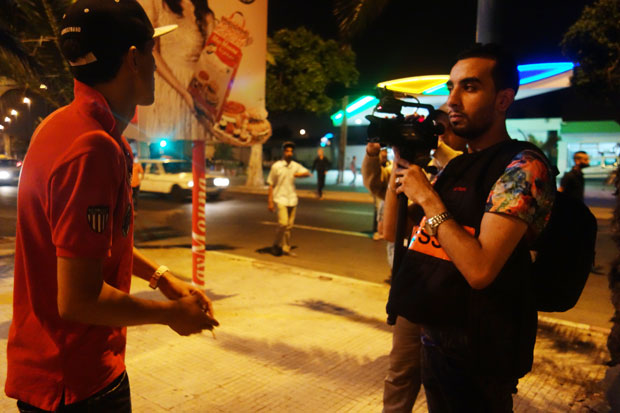
Open letter to the King of Morocco in support of Ali Lmrabet
To Your Majesty Mohammed VI,
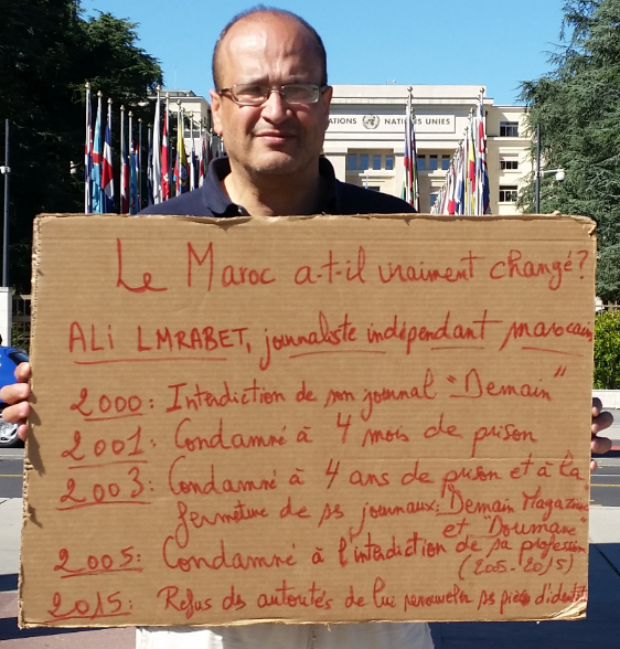
At a time when Morocco is advocating openness, democratisation and full respect for human rights as instruments for confronting the future, we receive the news of the hunger strike begun by the journalist Ali Lmrabet. For this reason, we wish to pass on to you our deep concern for the situation of this journalist, who has received dozens of international awards and who is deprived of his national identity documents coinciding with the end of a 10-year ban on exercising the profession of journalist in Morocco and also with his announcement that he wishes to return to professional activity.
Freedom of expression and criticism are fundamental elements for the consolidation of a democratic state that is active against regression and intolerance. Any attempt to restrict freedom of expression degrades the image of Morocco and the credibility of its commitment to the rule of law.
Precisely because, from here, we wish to lend our full support to any effort to transform Morocco developed at different levels of the political world and civil society in the country, we are writing to you to express our serious concern at the current situation of Ali Lmrabet, whose life is in danger.
For all these reasons, we would ask you to reflect on this to give instructions to the administration in your country, and its diplomatic staff in Switzerland in particular, to renew all Ali Lmrabet’s Moroccan citizenship documents.
Without a residence certificate, passport and other documents related to journalistic work, Ali Lmrabet would become the first Moroccan deprived of his civil and political rights.
We do not need to give you, Your Majesty, lessons in the fact that the deprivation of these rights is contrary to all liberties, including fundamental freedoms, freedom of expression and, in the case of Ali, the internationally recognised and acclaimed right to freely exercise the profession of journalist. The only thing we would ask you, Your Majesty, in your capacity as Head of State, is to strictly apply the provisions of the Moroccan Constitution, giving the right to all citizens to fully and freely exercise their profession, in this case as journalist and editor of publications in Morocco.
We look forward to your considered response.
Yours sincerely,
Letter signed by the following:
Míriam Acebillo Baqué, President of Lafede.cat, Organisations for Global Justice
Mariano Aguirre, Director of Norwegian Peacebuilding Resource Centre (Norway)
Cinta Arasa, Coordinator of the Persecuted Writers Committee
Carmen Arenas, President of Catalan PEN
Homero Aridjis, Emeritus President of International PEN
Jordi Armadans, Director of FundiPau (Peace Foundation)
Sion Assidon, former Secretary General of Transparency-Morocco
Margaret Atwood, Vice-President of Canada International PEN, Prince of Asturias Award
Danielle Auroi, MP of the National Assembly of France
Juan Tomás Ávila Laurel, Writer, HM Award International Odón Betanzos Palacios of the New York Circle of Ibero-American writers and poets (Equatorial Guinea)
Malén Aznárez, President of Reporters without Borders (RSF- Spanish section)
Elisabeth Badinter, Philosopher
Ekbal Baraka, Chair of PEN International Women Writers Committee, former president of Egyptian PEN
Isaías Barreñada Bajo, University Professor and Human Rights activist
Ana Barrero Tiscar, Peace Culture Foundation
Mark Barwick, Policy Adviser at Human Rights Without Frontiers International (Switzerland)
David Bassa i Cabanas, Journalist, president of the Barnils Group of Journalists
Lluís Bassets, Deputy director of El Pais (Spain)
Anouar Bassi, Transparency 25 President (Tunisia)
Abdejelil Bedoui, Economist and member of the FTDES Steering committee
Sélim Ben Abdesselem, Former member of the Tunisian National Constituent Assembly
Abdelkader Benali, Writer and journalist, Libris Prize (Netherlands)
Thijs Berman, Former Dutch MP of the European Parliament
Mylène Botbol–Baum, Writer, University professor of philosophy and bioethics
Marian Botsford Fraser, Writer and journalist, Chair of Writers in Prison Committee, PEN International Canada
Jean-Marcel Bouguereau, Journalist Le Nouvel Observateur and former chief editor of Libération
Sfia Bouarfa, Belgian honorary MP and former senator
Jim Boumelha, President of the International Federation of Journalists (IFJ)
François Burgat, Political scientist, Research Director of CNRS
Teresa Cadete, Portuguese writer, board member of PEN International
Lindsay Callaghan, President of PEN South Africa
Maria Cañadas, President of Catalonia Amnesty International (AIC)
Gemma Calvet, MP of Parliament of Catalonia (Spain)
Carles Campuzano, MP of Congreso de los Diputados (Spain)
Marius Carol, Editor of La Vanguardia
Ignacio Cembrero, Journalist, former correspondent of El País in Maghreb
Nadia Chaabane, Former deputy of Tunisian National Constituent Assembly
Alain Chabod, International Consultant, former journalist of France Television
Luc Chartrand, Journalist, Radio-Canada
Larbi Chouikha, University professor; Institut de Presse et des Sciences de l’Information (IPSI) (Tunisia)
John Maxwell Coetzee, Writer, Nobel Prize in Literature 2003, Vicepresident of PEN International
Robert Coover, Writer, William Faulkner Foundation Award, American Academy of Arts and Letters, and National Endowment of the Arts (USA)
Olivier Corten, Professor; Centre of international law of ULB; Brussels
Joan Coscubiela, Deputy of Congreso de los Diputados (Spain)
Olivier Da Lage, Journalist, Vice-president of IFJ, RFI and SNJ
Luc Dardenne, Filmmaker
Eric David, Emeritus professor of International Law; Chairman of The International Law Centre of the ULB
Ascensión de las Heras, MP of Congreso de los Diputados (Spain)
Antonio Della Rocca, President of the Trieste PEN Center, Member of the Board of PEN International (Italy)
Christophe Deloire, Secretary General of Reporters Without Borders
Nicolas Dot Pouillard, Resercher of MAEE
Christos Doulkeridis, President of ECOLO group in the Parliament of the Wallonie-Bruxelles Federation (Belgium)
André du Bus, Deputy of Wallonie-Bruxelles Federation
Josy Dubié, Honorary senator (Belgium), former journalist and ONU official
François Dubuisson, Professor, International Law Centre of ULB (Brussels)
Patrick Dupriez, Co-chair of Ecolo party
Isabelle Durant, Brussels MP (Belgium)
Mohamed El Battiui, President of the Amazigh World Assembly
Najat El Hamchi, Writer, Ramon Llull Prize
Ahmed El Khannous, MP, Brussels Parliament
Mahmoud El May, MP and Member of the National Constituent Assembly (Tunisia)
Isabelle Emmery, Brussels Member of Parliament
Mathias Enard, Writer, Gouncourt Prize 2012
Charles Enderlin, Journalist, former France2 correspondent in Israel
Moris Farhi, MBE Vice-President, PEN International
Halim Feddal, Secretary General of the National Association for the Fights against corruption (Algeria)
Soledad Gallego-Díaz, Journalist of El País
Vicent Garcés, Former Member of the European Parliament
María Caridad García Álvarez, MP of Congreso de los Diputados (Spain)
Lise Garon, Professor, Laval University
Zoé Genot, Ecolo MP, Brussels Regional Parliament
François Gèze, President and chief editor of Éditions La Découverte (France)
Jodie Ginsberg, Chief Executive Officer of Index on Censorship
Henri Goldman, Editor of Politique, revue de débats and MICmag (Belgium)
Eric Goldstein, human rights activist (United States)
Elsa González, FAPE President (Spanish Press Associations Federation)
Juan Goytisolo, Writer, National Prize of Spanish Letters and Miguel de Cervantes Prize
Rafael Grasa Hernández, President of Institut Català Internacional per a la Pau
Ricardo Gutiérrez, Secretary general of European Federation of Journalists (EFJ)
Maher Hanin, Member of steering committee of FTDES
Abderrahmane Hedhili, President of Tunisian Forum for Economic and Social Rights (FTDES)
Seymour M. Hersh, American journalist
Francis Hickel, Coordinator Pâquis Solidarity Space, Geneva
Jesús Iglesias Fernández, Senator (Spain)
Jon Iñárritu García, MP of Congreso de los Diputados (Spain)
Véronique Jamoulle, MP, Brussels Parliament
Jean-Jacques Jespers, University Professor, Université libre de Bruxelles
Oriol Junqueres i Vies, Chairman of the party “Esquerra Republicana de Catalunya” (ERC) and opposition leader in Parliament of Catalonia
Lucina Kathmann, Writer, Vice-president of PEN International (United States)
Salam Kawakibi, Arab Reform Initiative, president of the Initiative for a New Syria
Melek Kefif, Doctor and member of the Steering committee of FTDES
Charefeddine Kellil, Lawyer for the families of martyrs and wounded (Tunisia)
Zakia Khattabi, Co-chair of Ecolo Party (Green Belgian)
Kamel Labidi, Tunisian journalist, former director of Amnesty International in Tunisia and former president of the National Authority to Reform Information and Communication (INRIC)
Luis Las Heras, Editor (Spain)
Gilwon Lee, Poète, Poet, Sang-Byeong Cheon Prize and Dong-Ju Yoon Literary Prize, Board Member, PEN International South Korea
Joanne Leedom-Ackerman, vice-president of PEN International (USA)
Jean-Claude Lefort, Former MP at the French Parliament
Emmanuel Lemieux, Essayist, and investigation journalist (France)
Stefano Liberti, journalist and writer, Luchetta Award to the best journalist and Anello Debole Prize
Jonathan Littell, Writer, Goncourt Award and Grand Prix du Roman of the French Academy
Robert Littell, Writer and journalist, Los Angeles Times Book Prize (USA)
Juan López de Uralde, Executive Commission Equo party, former Greenpeace-Spain Director
Bernabé López García, Professor, former member of Averroes Committee Spain-Morocco
Mehdi Mabrouk, Former Culture Minister (Tunisia)
Noël Mamère, MP of the National Assembly and Mayor of Bègles (France)
Sherif Mansour, MENA Program Coordinator, Committee to Protect Journalists (CPJ)
Christophe Marchand, Lawyer, Brussels (Belgium)
Jean-Paul Marthoz, journalist, correspondent of the Committe to Protect Journalists (CPJ) in the European Union
Sandrine Martins Espinoza, Lawyer and international consultant for elections (Argentine)
Daniel Patrick Maunier, University Professor, New York University
Fernando Maura Barandarián, Spanish MP, European Parliament
Federico Mayor Zaragoza, President of Foundation for a culture of peace, former Director of UNESCO
Daniel Menschaert, Diplomatic, Honorary Officer of the Federation Wallonia-Brussels in Morocco
Manuela Mesa Peinado, CEIPAZ Director, Peace Culture Foundation
Rosa Montero, Writer and journalist, Grinzane Cavour award and National Journalism Award (Spain)
Quim Monzó, Writer, National Literature award (Catalonia)
Alexandre Niyungeko, President of the Burundi Journalists Union (UBJ)
Elisabeth Nordgren, Chair of the Search Committee, PEN International (Finland)
Vida Ognjenovic, Vicepresident, PEN International (Serbia)
Margie Orford, Board Member, PEN International (South Africa)
Mario Orrù, Observer Coordinator at Democracy International
Bechir Ouarda, Journalist, Former Coordinator of the civil coalition in defence of freedom of expression in Tunisia
Rémy Pagani, Administrative Councillor for the city of Geneva
Andrés Perelló, Former Member of the European Parliament, Spain
Rosana Pérez Fernández, MP of the Congreso de los Diputados (Spain)
Tone Peršak, Chair of Writers for Peace Committee, Pen International (Slovenia)
Thomas Pierret, University professor, University of Edinburgh
John Ralston Saul, Writer, president of PEN International
Pedro J. Ramírez, Editor of El Español, former editor of El Mundo
Raul Rivero, Cuban writer, UNESCO / Guillermo Cano Press Freedom Prize
Raül Romeva Rueda, Former Spanish MP, European Parliament
Jean Louis Roumegas, MP of the French Parliament
Elena Ruiz Ruiz, University professor (Spain)
Hélène Ryckmans, Member of the Walloon Parliament and the Parliament of the Federation Wallonia-Brussels, Senator
Messaoud Romdhani, Member of the Executive Committee of the Euro-Mediterranean Network of Human Rights (EMHRN), and vice president of the Tunisian League of Human Rights (LTDH)
Amor Safraoui, Chairman of the Independent National Coordination for Transitional Justice (Tunisia)
Mohamed Salah Kherigi, Trade unionist, Vice-president of the Tunisian League of Human Rights (LTDH)
Raffaella Salierno, General Secretary of PEN Català, Director of the GuestWriter programme
Victoria Salvy, Artist and writer (France)
Gervasio Sánchez Fernández, Journalist, National Photography Award, and Ortega y Gasset Journalism Award (Spain)
Mhamed Seghier, Journalist of Liberté (Algeria)
Màrius Serra, Writer, Ramon Llul and Sant Jordi Awards (Catalonia)
Amira Aleya Sghaier, Tunisian historian and university professor
Mohamed Sheriff, President of PEN Sierra Leona
Ricardo Sixto Iglesias, MP at Congreso de los Diputados (Spain)
Simona Skrabec, Chair of Translation and Linguistic Rights Committee, PEN International
Mohamed Smaïn, Activist in charge of human rights, Algerian League for the Defence of Human Rights (LADDH)
Carles Solà, Journalist, TV3 program Director (Catalonia, Spain)
Carlo Sommaruga, Lawyer, MP of the Swiss parliament
Karima Souid, Former MP of the Tunisians from abroad, member of National Constituent Assembly of Tunisis
Simone Susskind, MP of Brussels – Capital Region
Abdellah Taïa, Moroccan Writer, Flore Award
Alaa Talbi, President of Alternatives, Tunisian Section
Joan Tardà, MP of Congreso de los Diputados (Spain)
Sami Tlili, Tunisian Filmmaker, Cinema and Human Rights Award of Amnesty International and Best documentary of the Arab world Award
Jarkko Tontti, Treasurer of PEN International (Finland)
Manuel Tornare, Swiss MP, former Mayor of Geneva
Carles Torner, Executive Director of PEN International
Estefania Torres, Spanish MP of the European Parliament
Mathew Tree, Writer, Octubre – Andròmina Award
Jane Unrue, Director of the Harvard Scholars at Risk (SAR) Program and Freedom to Write Committee board for PEN, New England (United States)
Miguel Urban, Spanish MP of the European Parliament)
Dominique Vidal, Journalist
Santiago Vidal i Marsal, Judge of Provincial Audience Chamber of Barcelona, Judges for Democracy
Per Wästberg, Writer, President of Nobel Committee for Literature, former President of PEN International
Lawrence Weschler, écrivain, George Polk et Lannan Literary Award (United States)
 Index on Censorship is one of 21 members of the Arts Rights Justice network who have signed the following statement: