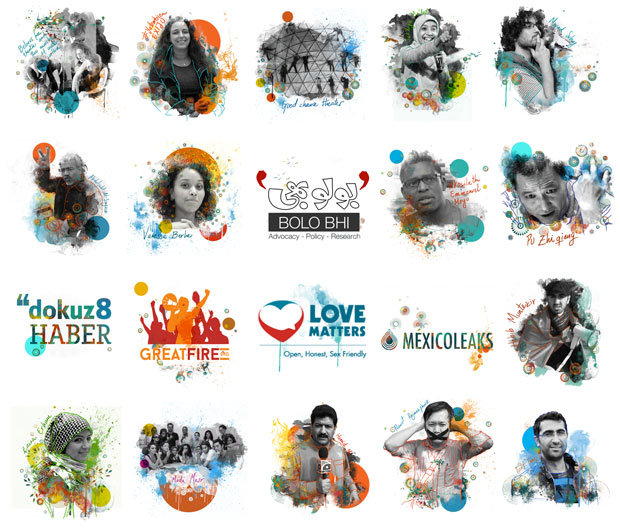
From a journalist who trains women to tell the story of Syria’s civil war and a comedian who uses her routines to campaign for women’s rights in Indonesia, to a women-led campaigning group taking on the fight against internet censorship in Pakistan, the shortlist for the 2016 Index on Censorship Freedom of Expression Awards showcases women with leadership and bravery.
On International Women’s Day we celebrate the amazing women on our shortlist.
While many fled, Syrian-native journalist Zaina Erhaim returned to her war-ravaged country in 2013 to ensure those left behind were not forgotten. She is now one of the few female journalists braving the twin threat of violence from both IS and Syrian president, Bashar al-Assad.
Arts nominee Sakdiyah Ma’ruf is a stand-up comedian from Indonesia whose routines challenge Islamic fundamentalism. Born to a conservative Muslim family in Java, Ma’ruf went against her father’s wishes and started using comedy to speak about religious-based violence and extremism, ethnic extremism and xenophobia, as well as fear, terror and violence against women.
Artist Tania Bruguera was arrested after an attempt to stage her performance piece #YoTambienExijo in Havana in late 2014. Mounted soon after the apparent thaw in US-Cuban relations, Bruguera’s piece offered members of the public the chance of one minute of “censor-free” expression in Havana’s Plaza de la Revolución.
Campaigning nominee nineteen-year-old Vanessa Berhe continues to fight for the release of her uncle, journalist Seyoum Tsehaye, who has been imprisoned in Eritrea for the last 15 years. She also launched the campaign Free Eritrea to draw the world’s attention to a little-reported country with one of the worst track records for free speech.
Lina Attalah, chief editor, is just one of the women and men — friends and journalists — who in 2013 founded an independent news collective Mada Masr after newspaper Egypt Independent was censored into bankruptcy. Mada Masr was launched as a media co-operative that aims to hold those in power accountable.
Bolo Bhi are a digital campaigning group who have orchestrated an impressive ongoing fight against attempts to censor the internet in Pakistan. The all-women management team have launched internet freedom programmes, published research papers, tirelessly fought for government transparency and run numerous innovative digital security training programmes.
Belarus Free Theatre, co-founded by Natalia Kaliada, have been using their creative and subversive art to protest the dictatorial rule of Aleksandr Lukashenko for a decade. Despite pressure from authorities since their inception, the group thrived underground, with performances in apartments, basements and forests despite continued arrests and brutal interrogations. In 2011, while on tour, they were told they were unable to return home. Refusing to be silenced, the group set up headquarters in London and continued to direct projects in Belarus.
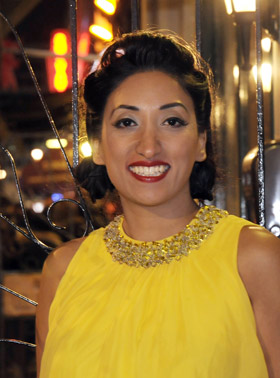
This year, the Index awards gala on 13 April will be hosted by stand-up comedian and writer Shazia Mirza, whose outspoken and taboo-busting comedy explores Islamic fundamentalism and women’s rights. Mirza is fresh from her sell-out London run and in the midst of her current UK tour.
Mr. Zeid Ra’ad Al Hussein, Mr. David Kaye, Mr. Joseph Cannataci, Mr. Maina Kiai, Mr. Michel Forst, Ms. Faith Pansy Tlakula, and Ms. Reine Alapini-Gansou
cc: African Union
African Peer Review Mechanism (APRM) Secretariat
Common Market for Eastern and Southern Africa Secretariat
Domestic & International Election Observer Missions to the Republic of Uganda
East African Community Secretariat
International Conference on the Great Lakes Region Secretariat
New Partnership for Africa’s Development (NEPAD) Secretariat
Uganda Communications Commission
Uganda Electoral Commission
Uganda Ministry of Information and Communications Technology
23 February 2016
Re: Internet shutdown in Uganda and elections
Your Excellencies,
We are writing to urgently request your immediate action to condemn the internet shutdown in Uganda, and to prevent any systematic or targeted attacks on democracy and freedom of expression in other African nations during forthcoming elections in 2016. [1]
On February 18, Ugandan internet users detected an internet outage affecting Twitter, Facebook, and other communications platforms. [2] According to the Uganda Communications Commission (UCC), blocking was carried out on orders of the Electoral Commission, for security reasons. [3] The shutdown coincided with voting for the presidential election, and remained in place until the afternoon of Sunday, February 21. During this period, two presidential candidates were detained under house arrest. [4] The telco MTN Uganda confirmed the UCC directed it to block “Social Media and Mobile Money services due to a threat to Public Order & Safety.” [5] The blocking order also affected the telcos Airtel, Smile, Vodafone, and Africel. President Museveni admitted to journalists on February 18 that he had ordered the block because “steps must be taken for security to stop so many (social media users from) getting in trouble; it is temporary because some people use those pathways for telling lies.” [6]
Research shows that internet shutdowns and state violence go hand in hand. [7] Shutdowns disrupt the free flow of information and create a cover of darkness that allows state repression to occur without scrutiny. Worryingly, Uganda has joined an alarming global trend of government-mandated shutdowns during elections, a practice that many African Union member governments have recently adopted, including: Burundi, Congo-Brazzaville, Egypt, Sudan, the Central African Republic, Niger, Democratic Republic of Congo. [8], [9], [10], [11], [12], [13], [14]
Internet shutdowns — with governments ordering the suspension or throttling of entire networks, often during elections or public protests — must never be allowed to become the new normal. Justified for public safety purposes, shutdowns instead cut off access to vital information, e-financing, and emergency services, plunging whole societies into fear and destabilizing the internet’s power to support small business livelihoods and drive economic development.
Uganda’s shutdown occurred as more than 25 African Union member countries are preparing to conduct presidential, local, general or parliamentary elections. [15]
A growing body of jurisprudence declares shutdowns to violate international law. In 2015, various experts from the United Nations (UN) Organization for Security and Co-operation in Europe (OSCE), Organization of American States (OAS), and the African Commission on Human and Peoples’ Rights (ACHPR), issued an historic statement declaring that internet “kill switches” can never be justified under international human rights law, even in times of conflict. [16] General Comment 34 of the UN Human Rights Committee, the official interpreter of the International Covenant on Civil and Political Rights, emphasizes that restrictions on speech online must be strictly necessary and proportionate to achieve a legitimate purpose. Shutdowns disproportionately impact all users, and unnecessarily restrict access to information and emergency services communications during crucial moments.
The internet has enabled significant advances in health, education, and creativity, and it is now essential to fully realize human rights including participation in elections and access to information.
We humbly request that you use the vital positions of your good offices to:
call upon the Ugandan government to provide redress to victims of the internet shutdown, and pledge not to issue similar orders in the future;
call on African states to uphold their human rights obligations, and not to take disproportionate responses like issuing shutdown orders, especially during sensitive moments like elections;
investigate shutdowns, in their various forms, in order to produce public reports that examine this alarming trend and its impact on human rights, and make recommendations to governments and companies on how to prevent future disruptions;
encourage telecommunications and internet services providers to respect human rights and resist unlawful orders to violate user rights, including through public disclosures and transparency reports;
encourage the African Commission on People’s and Human Rights, the United Nations Human Rights Council, and the UN General Assembly to resolve that Internet Shutdowns violate freedom of expression per se and without legal justification.
We are happy to assist you in any of these matters.
Sincerely,
Access Now African Centre for Democracy and Human Rights Studies (ACDHRS)
Association for Progressive Communications (APC)
Article 19 East Africa
Chapter Four Uganda
CIPESA
CIVICUS
Committee to Protect Journalists
DefendDefenders (The East and Horn of Africa Human Rights Defenders Project)
Electronic Frontier Foundation (EFF)
Global Partners Digital
Hivos East Africa
ifreedom Uganda
Index on Censorship
Integrating Livelihoods thru Communication Information Technology (ILICIT Africa)
International Commission of Jurists Kenya
ISOC Uganda
KICTANet (Kenya ICT Action Network)
Media Rights Agenda
Paradigm Initiative Nigeria
The African Media Initiative (AMI)
Unwanted Witness
Web We Want Foundation
Women of Uganda Network (WOUGNET)
Zimbabwe Human Rights NGO Forum
An Aleppo-based journalist training women to report on the crisis in war-torn Syria, an Indonesian comic who jokes about Islamic extremism and a 19-year-old campaigner against repression in Eritrea are among those shortlisted for the 2016 Index on Censorship Freedom of Expression Awards.
Drawn from more than 400 crowdsourced nominations, the Index awards shortlist celebrates artists, writers, journalists and campaigners tackling censorship and fighting for freedom of expression. Many of the 20 shortlisted nominees are regularly targeted by authorities or by criminal and extremist groups for their work: some face regular death threats, others criminal prosecution.
Judges for this year’s awards are Nobel Prize-winning author Wole Soyinka, pianist James Rhodes, tech entrepreneur Bindi Karia, Colombian journalist Maria Teresa Ronderos, human rights lawyer Kirsty Brimelow QC and Bahraini campaigner Nabeel Rajab.
“Censorship is not something that happens ‘somewhere else’,” said Jodie Ginsberg, CEO of Index on Censorship. “It occurs on a daily basis in every country, in every part of the world. The shortlist honours those who are among the bravest and most creative in tackling such threats.”
Awards are offered in four categories: journalism; arts; campaigning; and digital activism.
Nominees include Good Chance Theatre who work in the infamous “Jungle” refugee camp in Calais, France; imprisoned Bahraini academic and blogger Dr Abduljalil Al-Singace, who has continued to protest in prison despite being subjected to torture and abuse for daring to speak out on human rights abuses in his country; GreatFire, an anonymous group that battles China’s severe web censorship; and Pravit Rojanaphruk, a veteran reporter who was arrested, interrogated and forced out of his job for criticising Thailand’s military government.
Other nominees include Zaina Erhaim, who returned to her native Syria to report on the conflict and train women to tell unreported stories; Sakdiyah Ma’ruf, a female Muslim stand-up comedian from Indonesia; and campaigner Nkosilathi Emmanuel Moyo, a Zimbabwean who fights corruption in his country, currently in hiding after sending Robert Mugabe a prison uniform for his 92nd birthday this month.
“How do you fight for free expression beyond a moment? How do you keep it alive? You must remember how stressful it is for people on the ground. This fellowship, following us for a year, it is a good idea,” said Rafael Marques de Morais, Freedom of Expression Award winner for Journalism in 2015.
Notes for editors:
Index on Censorship is a UK-based non-profit organisation that publishes work by censored writers and artists and campaigns against censorship worldwide.
More detail about each of the nominees is included below.
The winners will be announced at a ceremony at The Unicorn Theatre, London, on 13 April.
For more information, or to arrange interviews with any of those shortlisted, please contact: David Heinemann on 0207 260 2660. More biographical information and photos of the nominees are available at awards.indexoncensorship.org
Index on Censorship Freedom of Expression Awards nominees 2016 Arts Belarus Free Theatre and The Ministry of Counterculture (UK/Belarus)
Ten-year-old Belarus Free Theatre has been using their creative and subversive art to protest the dictatorial rule of Aleksandr Lukashenko for a decade Tania Bruguera (Cuba)
American-Cuban artist Tania Bruguera, who uses art to campaign for greater openness in Cuban society, was arrested after attempting to stage her play #YoTambienExijo at a festival in Havana. It is now a global movement Good Chance Theatre (UK)
Good Chance works in the infamous Jungle refugee camp in Calais, France, to provide a space for refugees to express themselves Sakdiyah Ma’ruf (Indonesia)
Sakdiyah Ma’ruf is a female Muslim stand-up comedian from Indonesia who challenges Islamic fundamentalism and advocates for women’s rights Murad Subay (Yemen)
Artist Murad Subay uses his country’s streets as a canvas to protest Yemen’s war, institutionalised corruption and forced “disappearings”
Campaigning
Abduljalil Al-Singace (Bahrain)
Dr. Abduljalil Al- Singace is an imprisoned Bahraini human rights activist, academic and blogger who has not let prison stop him from calling attention to his country’s human rights practices Vanessa Berhe (US)
University student Vanessa Berhe is fighting for the release of her uncle, Eritrean journalist Seyoum Tsehaye, and for freedom of expression in Eritrea, one of the world’s worst most censored countries Bolo Bhi (Pakistan)
A women-lead digital rights campaigning group who have orchestrated an impressive effort to turn back the Pakistani government’s draconian attempt to censor the internet Nkosilathi Emmanuel Moyo (Zimbabwe)
Prolific author and activist Nkosilathi Emmanuel Moyo campaigned against political corruption and worked with young people to foster human rights Pu Zhiqiang (China)
A human rights lawyer who represented Ai Weiwei, Pu Zhiqiang has been targeted by China’s authorities for his unwavering support of free speech
Digital Advocacy
Dokuz8 Haber and Gökhan Biçici (Turkey)
Journalist Gökhan Biçici launched citizen news agency Dokuz8Haber to foster uncensored information and strengthen Turkish democracy, circumventing intense press censorship GreatFire (China)
GreatFire campaigns for transparency of Chinese censorship by providing numerous effective circumvention tools to the “Great Firewall” Love Matters (international)
An international platform dedicated to opening up conversation about sexual health in countries where such subjects are censored or taboo Mexicoleaks (Mexico)
An anonymous news-sharing platform seeking to bring more transparency to Mexico’s society by uncovering corruption Hebib Muntezir (Azerbaijan)
An exiled Azerbaijani activist and blogger, who works with Meydan TV, mobilising social media to get uncensored news to a surprising number of his fellow citizens
Journalism
Zaina Erhaim (Syria)
One of the few female journalists still reporting from Syria, Zaina Erhaim of Aleppo works to train women to tell the story of the war-ravaged country Mada Masr (Egypt)
Mada Masr is an independent news cooperative launched to offer an alternative narrative to government-controlled media Hamid Mir (Pakistan)
Hamid Mir, a television journalist whose 30-year-career has been punctuated by threats, physical assaults, abductions and assassination attempts for taking on unchallenged powers in Pakistan Pravit Rojanaphruk (Thailand)
Pravit Rojanaphruk is a veteran reporter who was arrested, interrogated and forced to resign for speaking out against Thailand’s lèse majesté law and military government Ferit Tunç (Turkey)
Ferit Tunç is a Kurdish journalist who set up an independent newspaper in eastern Turkey and used inventive methods including publishing recipes with hidden messages to challenge censorship of his reporting on corruption
As the annual Index on Censorship Freedom of Expression Awards gala approaches, we’ve highlighted five of those who have won or been nominated for free expression awards, including the Freemuse Awards. From a Moroccan rapper to an Iranian folk singer, these artists refuse to be censored and continue to fight to have their voices heard.
El Haqed, Morocco
Winner of the 2015 Index on Censorship Freedom of Expression Award for arts
Mouad Belghouat, aka El Haqed, faced repression from the Moroccan government, including multiple arrests since the Arab Spring. His music focuses on poverty, oppression and political corruption in his country. He is currently living in Belgium, where he continues to write music.
Mayam Mahmoud, Egypt
Winner of the 2014 Index on Censorship Freedom of Expression Award for arts
Mayam Mahmoud, one of Egypt’s first and bravest female hip-hop artists, uses music to address some of the grievances in her country, from a lack of women’s rights to sexual harassment. After competing on the TV show Arabs Got Talent, she used her prominence to speak out against the misogyny she has witnessed and experienced.
Ferhat Tunç, Turkey
2010 Freemuse Award winner
Despite years of attempted censorship by the Turkish government, Ferhat Tunç has continued to release music and promote human rights in his homeland. He has released more than 20 albums, undeterred by numerous court summons and a prison sentence.
Songhoy Blues, Mali
Nominees for the 2015 Index on Censorship Freedom of Expression Award for arts
A group of musicians that fled northern Mali after the occupation by militant Islamist groups in spring 2012, Songhoy Blues are a rowdy blend of blues and rock. After Islamists banned music in their region, they went into exile and have since gone on to tour with Julian Casablancas and Damon Albarn. The band released their debut album, Music in Exile, in February 2015.
Pussy Riot, Russia
Nominees for the 2013 Index on Censorship Freedom of Expression Award for arts In February 2012, members of the feminist punk band Pussy Riot staged a brief demonstration through music at Moscow’s Christ the Saviour Cathedral, condemning the Russian Orthodox Church’s close ties to Vladimir Putin. In August of that year, three members were sentenced to two years in jail for hooliganism motivated by religious hatred. The verdict was a bitter blow for freedom of expression in Russia, which continues to be under attack today.
Index on Censorship has teamed up with the producers of an award-winning documentary about Mali’s musicians, They Will Have To Kill Us First, to create the Music in Exile Fund to support musicians facing censorship globally. You can donate here, or give £10 by texting “BAND61 £10” to 70070.

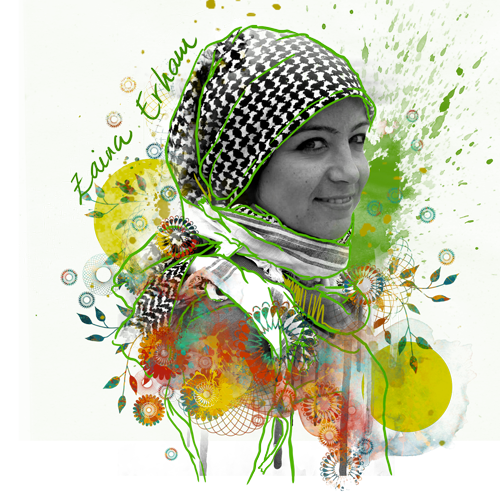 While many fled, Syrian-native journalist Zaina Erhaim returned to her war-ravaged country in 2013 to ensure those left behind were not forgotten. She is now one of the few female journalists braving the twin threat of violence from both IS and Syrian president, Bashar al-Assad.
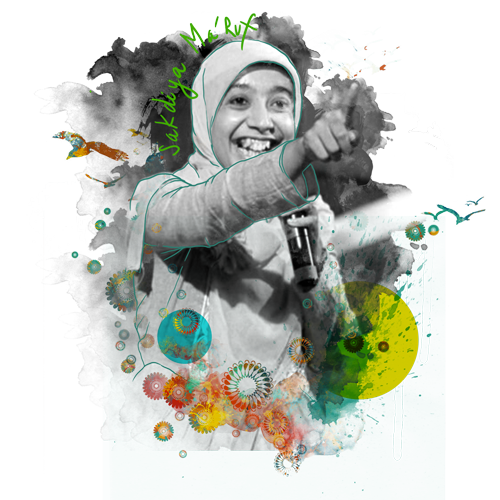 Arts nominee Sakdiyah Ma’ruf is a stand-up comedian from Indonesia whose routines challenge Islamic fundamentalism. Born to a conservative Muslim family in Java, Ma’ruf went against her father’s wishes and started using comedy to speak about religious-based violence and extremism, ethnic extremism and xenophobia, as well as fear, terror and violence against women.
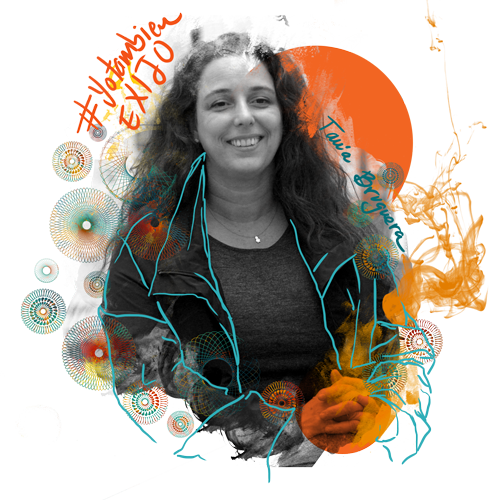 Artist Tania Bruguera was arrested after an attempt to stage her performance piece #YoTambienExijo in Havana in late 2014. Mounted soon after the apparent thaw in US-Cuban relations, Bruguera’s piece offered members of the public the chance of one minute of “censor-free” expression in Havana’s Plaza de la Revolución.
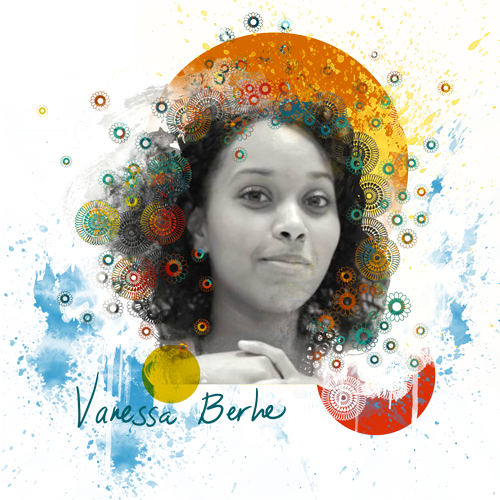 Campaigning nominee nineteen-year-old Vanessa Berhe continues to fight for the release of her uncle, journalist Seyoum Tsehaye, who has been imprisoned in Eritrea for the last 15 years. She also launched the campaign Free Eritrea to draw the world’s attention to a little-reported country with one of the worst track records for free speech.
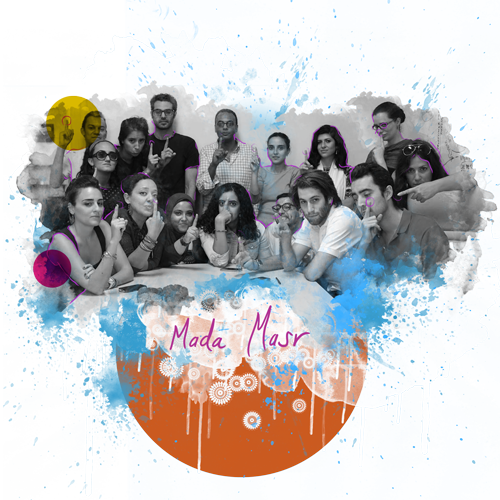 Lina Attalah, chief editor, is just one of the women and men — friends and journalists — who in 2013 founded an independent news collective Mada Masr after newspaper Egypt Independent was censored into bankruptcy. Mada Masr was launched as a media co-operative that aims to hold those in power accountable.
 Bolo Bhi are a digital campaigning group who have orchestrated an impressive ongoing fight against attempts to censor the internet in Pakistan. The all-women management team have launched internet freedom programmes, published research papers, tirelessly fought for government transparency and run numerous innovative digital security training programmes.
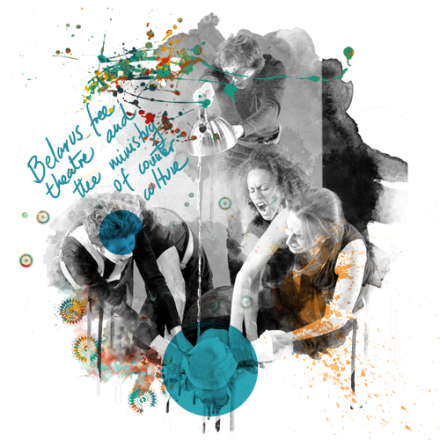 Belarus Free Theatre, co-founded by Natalia Kaliada, have been using their creative and subversive art to protest the dictatorial rule of Aleksandr Lukashenko for a decade. Despite pressure from authorities since their inception, the group thrived underground, with performances in apartments, basements and forests despite continued arrests and brutal interrogations. In 2011, while on tour, they were told they were unable to return home. Refusing to be silenced, the group set up headquarters in London and continued to direct projects in Belarus.