
Contents – The beautiful game? Qatar, football and freedom
The autumn issue of Index takes as its central theme the FIFA World Cup that will take place in Qatar in November and December 2022.
A country where human rights are constantly under threat, Qatar is under the spotlight and many are calling for a boycott of the tournament.
Index spoke to journalists, human rights activists and philosophers for the latest issue to understand their view on the tangled relationship between football and human rights. Is football really the beautiful game?
Upfront
The Qatar conundrum, by Jemimah Steinfeld: The World Cup is throwing up questions.
Features
Chasing after rights, by Ben Rogers: The activist on being followed by Chinese police.
Special report: The beautiful game?
Victim of its own success? By Simon Barnes: Blame the populists, not the game.
The stench of white elephants, by Jamil Chade: Brazil’s World Cup swung open Pandora’s Box.
The real game is politics, by Issa Sikiti da Silva: Is politics welcome on the pitch in Kenya?
Comment
Much ado about critics, by Lyn Gardner: A theatre objects to an offensive Legally Blonde review.
On reputation laundering, by Ruth Smeeth: Beware those who want to control their own narrative.
Culture
Statement of support for Ukraine
We, the undersigned organisations, stand in solidarity with the people of Ukraine, but particularly Ukrainian journalists who now find themselves at the frontlines of a large-scale European war.
We unequivocally condemn the violence and aggression that puts thousands of our colleagues all over Ukraine in grave danger.
We call on the international community to provide any possible assistance to those who are taking on the brave role of reporting from the war zone that is now Ukraine.
We condemn the physical violence, the cyberattacks, disinformation and all other weapons employed by the aggressor against the free and democratic Ukrainian press.
We also stand in solidarity with independent Russian media who continue to report the truth in unprecedented conditions.
Join the statement of support for Ukraine by signing it here.
#Журналісти_Важливі
Signed:
- Justice for Journalists Foundation
- Index on Censorship
- International Foundation for Protection of Freedom of Speech “Adil Soz”
- International Media Support (IMS)
- Yerevan Press Club
- Turkmen.news
- Free Press Unlimited
- Human Rights Center “Viasna”
- Albanian Helsinki Committee
- Media Rights Group, Azerbaijan
- European Centre for Press and Media Freedom
- Association of European Journalists
- School of Peacemaking and Media Technology in Central Asia
- Human Rights Center of Azerbaijan
- Reporters Without Borders, RSF
- Association of Independent Press of Moldova, API
- Public Association “Dignity”, Kazakhstan
- PEN International
- Human Rights House Foundation, Norway
- IFEX
- UNITED for Intercultural Action
- Human Rights House Yerevan
- Helsinki Citizens’ Assembly – Vanadzor, Armenia
- Rafto Foundation for Human Rights, Norway
- Society of Journalists, Warsaw
- The Swedish OSCE-network
- Hungarian Helsinki Committee
- Legal policy research centre, Kazakhstan
- Public Foundation Notabene – Tajikistan
- HR NGO “Citizens’ Watch – St. Petersburg, Russia
- English PEN
- Public organization “Dawn” – Tajikistan
- International Press Institute (IPI)
- The Union of Journalists of Kazakhstan
- ARTICLE 19
- Human Rights House Tbilisi
- Rights Georgia
- Election Monitoring and Democracy Studies Center, Azerbaijan
- International Service for Human Rights (ISHR)
- Bulgarian Helsinki Committee
- Global Forum for Media Development (GFMD)
- European Federation of Journalists
- Social Media Development Center, Georgia
- Independent Journalists’ Association of Serbia
- OBC Transeuropa
- The Bureau of Investigative Journalism
- Journalists Union YENI NESIL, Azerbaijan
- Media and Law Studies Association (MLSA) , Istanbul
- Baku Press Club
- Centre for Journalism Innovation and Development
- Union Sapari
- The Coalition For Women In Journalism (CFWIJ)
- Committee to Protect Freedom of Expression, Armenia
- FEDERATIA SINDICATELOR DIN SOCIETATEA ROMANA DE RADIODIFUZIUNE, Bucharest, ROMANIA
- CD FILMS (FRANCE)
- CFDT-Journalistes
- Belarusian Association of Journalists
- SafeJournalists network
- Association of Journalists of Kosovo
- Association of Journalists of Macedonia
- BH Journalists Association
- Croatian Journalists’ Association
- Independent Journalists Association of Serbia
- Trade Union of Media of Montenegro
- Analytical Center for Central Asia (ACCA)
- Trade Union of Croatian Journalists
- European Press Prize
- Ethical Journalism Network
- European Journalism Centre
- Slovene Association of Journalists
- Investigative Studios
- PEN Belarus
- Public Media Alliance (PMA)
- Estonian Association of Journalists
- Federación de Sindicatos de Periodistas (FeSP) (Spain)
- DJV, German Journalist Federation
- Free Russia Foundation
- Association for Human Rights in Central Asia – AHRCA
- “Human Rights Consulting Group” Public Foundation, Kazakhstan
- Committee to Protect Journalists
- Ski Club of International Journalists (SCIJ)
- Women In Journalism Institute, Canada – associate of CFWIJ
- Romanian Trade Union of Journalists MediaSind
- Romanian Federation Culture and Mass-Media FAIR, MediaSind
- New Generation of Human Rights Defenders Coalition, Kazakhstan
- Coalition for the Security and Protection of Human Rights Defenders, Activists, Kazakhstan
- Legal policy Research Centre, Kazakhstan
- Eurasian Digital Foundation, Kazakhstan
- Legal Analysis and Research Public Union, Azerbaijan
- German Journalists Union
- Digital Rights Expert Group, Kazakhstan
- Bella Fox, LRT/Bellarus Media, Lithuania
- Syndicat national des journalistes CGT (SNJ-CGT), France
- Karin Wenk, Editor in Chief Menschen Machen Medien
- Press Emblem Campaign
- Federacion de Servicios, Consumo y Movilidad (FeSMC) – UGT (Spain)
- Sindicato dos Jornalistas, Portugal
- International media project Август2020/August2020 (august2020.info), Belarus
- Independent Association of Georgian Journalists (journalist.ge)
- Independent Trade Union of Journalists and Media Workers, Macedonia
- Adam Hug, Director, Foreign Policy Centre
- Zlatko Herljević, Croatian journalist, lecturer of journalism at University VERN, Zagreb, Croatia
- Independent Journalists’ and Media Workers’ Union (JMWU), Russia
- The Daphne Caruana Galizia Foundation
- Hungarian Press Union (HPU), Hungary
- Lithuanian Journalists Union
- National Union of Journalists UK & Ireland
- Federazione Nazionale Stampa Italiana (Italy)
- Dutch Association of Journalists (NVJ)
- Uzbek Forum for Human Rights
- Association of Journalists, Turkey
- Slovak Syndicate of Journalist, Slovakia
- GAMAG Europe (European Chapter of the Global Alliance for Media and Gender)
- Slovenian Union of Journalists (SNS)
- Federación de Asociaciones de Periodistas de España (FAPE)
- Syndicate of Journalists of Czech Republic
- 360 Degrees, Media outlet, North Macedonia
- Frontline, Skopje, North Macedonia
- Community Media Solutions (UK)
- The Norwegian Union of Journalists, Norway
- Rentgen Media (Kyrgyz Republic)
- Union of Journalists in Finland (UJF)
- Syndicat National des Journalistes (SNJ), France
- The Swedish Union of Journalists, Sweden
- Asociación Nacional de Informadores de la Salud. ANIS. España
- Association Générale des Journalistes professionnels de Belgique (AGJPB/AVBB)
- Macedonian Institute for Media (MIM), North Macedonia
- Lithuanian Journalism Centre, Lithuania
- Club Internacional de Prensa (CIP), España
- Periodical and Electronic Press Union
- Fojo Media Institute, Sweden
- Mediacentar Sarajevo
- Media Diversity Institute
- Impressum – les journalistes suisses
- Agrupación de Periodistas FSC-CCOO
- South East European Network for Professionalization of Media (SEENPM)
- TGS, Turkey
- Investigative Journalism Center, Croatia
- Verband Albanischer Berufsjournalisten der Diaspora, Schweiz
- IlijašNet
- Journalists Union of Macedonia and Thrace (Greece)
- The Union of Journalists of Armenia (UJA)
- Associació de Periodistes Europeus de Catalunya (APEC)
- International Association of Public Media Researchers (IAPMR)
- FREELENS e.V. – German Association of Photojournalists & Photographers
- LawTransform (CMI-UiB Centre on Law & Social Transformation, Bergen, Norway)
- Bangladesh NGOs Network for Radio & Communication
- Platform for Independent Journalism (P24), Turkey
- Novi Sad School of Journalism (Serbia)
- Col·legi de Periodistes de Catalunya (Catalunya)
UK whistleblower Jonathan Taylor finally freed from extradition torment almost one year on
[vc_row][vc_column][vc_column_text]
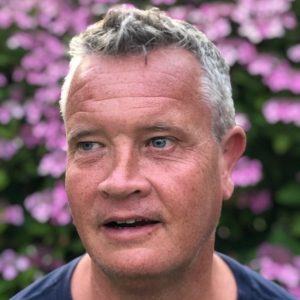
Whistleblower Jonathan Taylor
We are delighted to announce that on Wednesday 7 July 2021, Croatian Justice Minister Ivan Malenica formally rejected the request by Monaco to extradite UK whistleblower Jonathan Taylor. Jonathan Taylor’s Support Group extends its gratitude to the Minister for taking the right decision.
The move comes following sustained calls for the past 11 months from human rights and civil liberties campaigners across Europe – and UK MPs – for his immediate release and safe return home. Legal experts backing the release of Jonathan Taylor said there was no proper legal basis for Monaco to seek Mr. Taylor’s extradition and the process was retaliatory in nature. Lawyers acting on behalf of Jonathan Taylor argued that it constituted an abuse of process.
Jonathan Taylor was arrested whilst on a family holiday in Croatia last July, and has been restrained there since. He has been isolated, away from his family, and unable to support himself or his family, all of which have taken an extreme toll on his mental wellbeing.
A former in-house lawyer for oil firm SBM Offshore based in Monaco, Jonathan Taylor blew the whistle in 2013 on a massive bribery scheme. Jonathan’s whistleblowing disclosures led to SBM Offshore paying over $800 million in fines in the US, Netherlands and Brazil and investigations which led to successful prosecutions of two former CEOs for fraud-related offences.
Yet nine years later, he was arrested on a questionable Interpol Red Notice whilst on holiday, and wanted for questioning in Monaco over allegations made by his former employer over his settlement. The Red Notice was withdrawn by Monaco last December on the eve of Interpol making a determination on its validity. Jonathan denies wrongdoing and his lawyers have long argued there is no legal basis for extraditing him for questioning as he is neither charged nor convicted of any offences.
“I am of course elated that justice has finally prevailed and I am appreciative that Minister of Justice Ivan Malenica was able to pay regard to the salient legal arguments of my lawyers that were seemingly overlooked by the Courts in making his decision to reject Monaco’s flawed attempt at extraditing me,” states Jonathan Taylor.
“Special thanks go to all my supporters in Europe, overseas and in Croatia who somehow kept me sane in my year of need! Be assured that I remain resolute and proud of exposing serious wrongdoing at SBM Offshore and I will never be intimidated by the corrupt and those that shamefully seek retaliation against me for exposing them. I continue to stand ready to assist the Monaco Prosecutor in the event that a decision is made to pursue those responsible for SBM Offshore’s illicit business practices instead of me.”
We agree with Jonathan. The Minister of Justice of Croatia, Ivan Malenica, carefully considered the position of Jonathan Taylor as a whistleblower and a protected witness. His decision in this case has wider implications for the rule of law in Europe: it is a victory for the public’s right to know about wrongdoing by protecting the messengers of that information. Whistleblowers play a vital role in Europe’s fight against global corruption. Croatia has demonstrated its commitment to the rule of law and to the protection of whistleblowers.
We now call on Monaco to drop any further proceedings against Jonathan Taylor and to focus on the actions of SBM Offshore as a proper target for their investigations.
We wish Jonathan a safe return to the UK where he can begin to rebuild his life.
European Centre for Press and Media Freedom (ECPMF)
Whistleblowing International Network (WIN)
Martin Bright, Editor, Index on Censorship (United Kingdom)
Protect (United Kingdom)
Guernica 37 International Justice Chambers (United Kingdom)
Centre for Free Expression (Canada)
Free Press Unlimited
The Government Accountability Project (USA)
ARTICLE 19
The Platform to Protect Whistleblowers in Africa (PPLAAF)
Transparency International EU
The Daphne Caruana Galizia Foundation (Malta)
Pištaljka (Serbia)
Blueprint for Free Speech (Germany and Australia)
The Signals Network (USA/France)
Transparency International – Bulgaria
Transparency International Italy
SpeakOut SpeakUp Ltd
European Organisation of Military Associations and Trade Unions (EUROMIL)
Transparency International Secretariat
Access Info Europe
GlobaLeaks
European Federation of Journalists (EFJ)
Eurocadres – Council of European Professional & Managerial Staff
Professor David Lewis, Middlesex University (UK)
Osservatorio Balcani Caucaso Transeuropa (OBCT)
Sherpa (France)
WhistleblowersUK
Baroness Kramer, Co-Chair of the All Party Parliamentary Group on Whistleblowing (UK)
Mary Robinson MP, Co-Chair of the All Party Parliamentary Group on Whistleblowing (UK)[/vc_column_text][/vc_column][/vc_row]