Drawn from more than 400 crowdsourced nominations, this year’s nominees include artists, journalists, campaigners and digital activists tackling censorship and fighting for freedom of expression. Many of the 16 shortlisted are regularly targeted by authorities or by criminal and extremist groups for their work: some face regular death threats, others criminal prosecution.
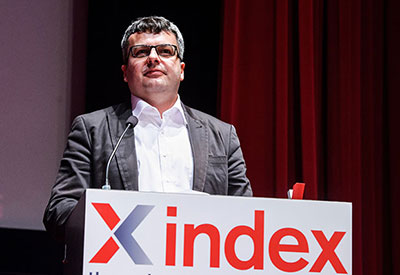
The gala takes place Wednesday 19 April at the Unicorn Theatre in London and will be hosted by comedian, actor and writer Katy Brand. If you aren’t lucky enough to be attending, you can catch the night’s events by tuning into coverage and a live Periscope stream @IndexCensorship beginning at 7:30PM BST.
We will be live tweeting throughout the evening on @IndexCensorship. Get involved in the conversation using the hashtag #IndexAwards2017.
Index on Censorship Freedom of Expression Awards nominees 2017
Arts
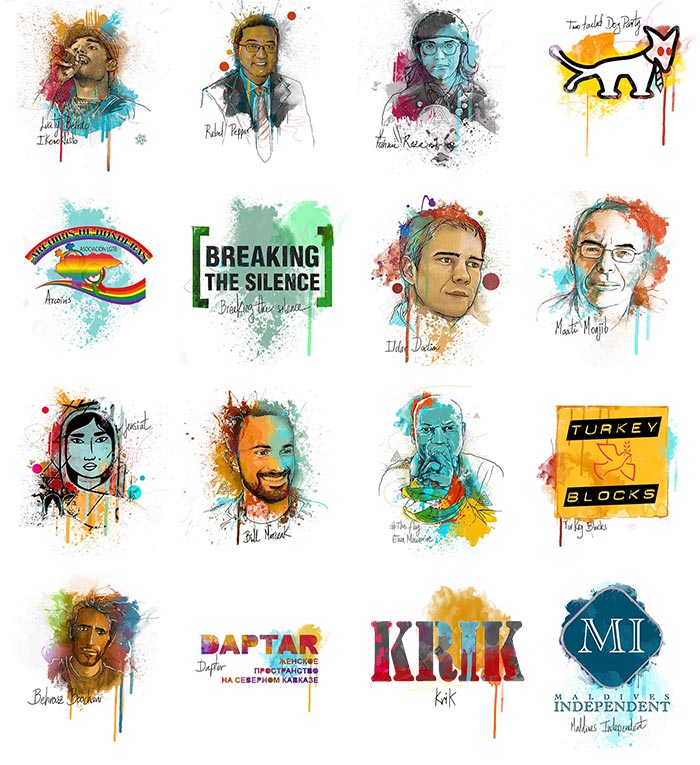
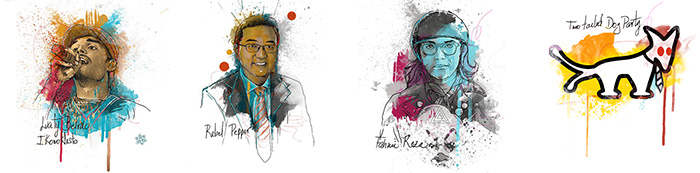
Luaty Beirão, Angola
Rapper Luaty Beirão, also known as Ikonoklasta, has been instrumental in showing the world the hidden face of Angolan President José Eduardo dos Santos’s rule. For his activism Beirão has been beaten up, had drugs planted on him and, in June 2015, was arrested alongside 14 other people planning to attend a meeting to discuss a book on non-violent resistance. Since being released in 2016, Beirão has been undeterred attempting to stage concerts that the authorities have refused to license and publishing a book about his captivity entitled “I Was Freer Then”, claiming “I would rather be in jail than in a state of fake freedom where I have to self-censor”.
Rebel Pepper, China
Wang Liming, better known under the pseudonym Rebel Pepper, is one of China’s most notorious political cartoonists. For satirising Chinese Premier Xi Jinping and lampooning the ruling Communist Party, Rebel Pepper has been repeatedly persecuted. In 2014, he was forced to remain in Japan, where he was on holiday, after serious threats against him were posted on government-sanctioned forums. The Chinese state has since disconnected him from his fan base by repeatedly deleting his social media accounts, he alleges his conversations with friends and family are under state surveillance, and self-imposed exile has made him isolated, bringing significant financial struggles. Nonetheless, Rebel Pepper keeps drawing, ferociously criticising the Chinese regime.
Fahmi Reza, Malaysia
On 30 January 2016, Malaysian graphic designer Fahmi Reza posted an image online of Prime Minister Najib Razak in evil clown make-up. From T-shirts to protest placards, and graffiti on streets to a sizeable public sticker campaign, the image and its accompanying anti-sedition law slogan #KitaSemuaPenghasut (“we are all seditious”) rapidly evolved into a powerful symbol of resistance against a government seen as increasingly corrupt and authoritarian. Despite the authorities’ attempts to silence Reza, who was banned from travel and has since been detained and charged on two separate counts under Malaysia’s Communications and Multimedia Act, he has refused to back down.
Two-tailed Dog Party, Hungary
A group of satirists and pranksters who parody political discourse in Hungary with artistic stunts and creative campaigns, the Two-tailed Dog Party have become a vital alternative voice following the rise of the national conservative government led by Viktor Orban. When Orban introduced a national consultation on immigration and terrorism in 2015, and plastered cities with anti-immigrant billboards, the party launched their own mock questionnaires and a popular satirical billboard campaign denouncing the government’s fear-mongering tactics. Relentlessly attempting to reinvigorate public debate and draw attention to under-covered or taboo topics, the party’s efforts include recently painting broken pavement to draw attention to a lack of public funding.
Campaigning
Arcoiris, Honduras
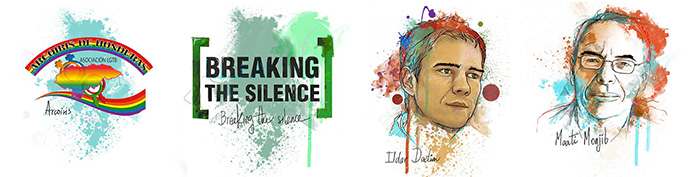
Established in 2003, LGBT organisation Arcoiris, meaning ‘rainbow’, works on all levels of Honduran society to advance LGBT rights. Honduras has seen an explosion in levels of homophobic violence since a military coup in 2009. Working against this tide, Arcoiris provide support to LGBT victims of violence, run awareness initiatives, promote HIV prevention programmes and directly lobby the Honduran government and police force. From public marches to alternative awards ceremonies, their tactics are diverse and often inventive. Between June 2015 and March 2016, six members of Arcoiris were killed for this work. Many others have faced intimidation, harassment and physical attacks. Some have had to leave the country because of threats they were receiving.
Breaking the Silence, Israel
Breaking the Silence, an Israeli organisation consisting of ex-Israeli military conscripts, aims to collect and share testimonies about the realities of military operations in the Occupied Territories. Since 2004, the group has collected over 1,000 (mainly anonymous) statements from Israelis who have served their military duty in the West Bank and Gaza. For publishing these frank accounts the organisation has repeatedly come under fire from the Israeli government. In 2016 the pressure on the organisation became particularly pointed and personal, with state-sponsored legal challenges, denunciations from the Israeli cabinet, physical attacks on staff members and damages to property. Led by Israeli politicians including the prime minister, and defence minister, there have been persistent attempts to force the organisation to identify a soldier whose anonymous testimony was part of a publication raising suspicions of war crimes in Gaza. Losing the case would set a precedent that would make it almost impossible for Breaking the Silence to operate in the future. The government has also recently enacted a law that would bar the organisation’s widely acclaimed high school education programme.
Ildar Dadin, Russia
A Russian opposition and LGBT rights activist, Ildar Dadin was the first, and remains the only, person to be convicted under a notorious 2014 public assembly law. Aimed at punishing anyone who breaks strict rules on protest, the law was enacted to silence dissent after a wave of demonstrations following Putin’s last election victory. Dadin’s crime was to stage a series of one-man pickets, often standing silently with a billboard, attempting to duck the cynical law and push for free expression. For his solo enterprise, Dadin was arrested and sentenced to three years imprisonment in December 2015. In November 2016, website Meduza published a letter smuggled from Dadin to his wife, exposing torture he claimed he was suffering alongside fellow prisoners. The letter, a brave move for a serving prisoner, was widely reported. A government investigation was prompted, and Dadin was transferred – against his will – to an undisclosed new location. A wave of public protest led to Dadin’s new location in a Siberian prison colony being revealed in January 2017. In February 2017, Russia’s constitutional and Supreme Courts suddenly quashed Dadin’s conviction, ruling he should be released and afforded opportunity for rehabilitation.
Maati Monjib, Morocco
A well-known academic who teaches African studies and political history at the University of Rabat since returning from exile, Maati Monjib co-founded Freedom Now, a coalition of Moroccan human rights defenders who seek to promote the rights of Moroccan activists and journalists in a country ranked 131 out of 180 on the Reporters Without Borders Press Freedom Index. His work campaigning for press freedom – including teaching investigative journalism workshops and using of a smartphone app called Story Maker designed to support citizen journalism – has made him a target for the authorities who insist that this work is the exclusive domain of state police. For his persistent efforts, Monjib is currently on trial for “undermining state security” and “receiving foreign funds.”
Digital Activism
Jensiat, Iran
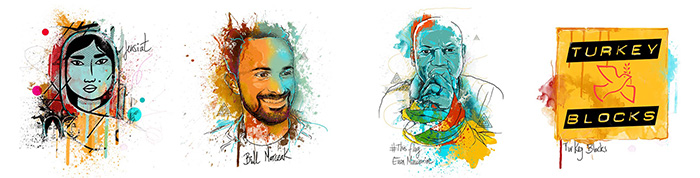
Despite growing public knowledge of global digital surveillance capabilities and practices, it has often proved hard to attract mainstream public interest in the issue. This continues to be the case in Iran where even with widespread VPN usage, there is little real awareness of digital security threats. With public sexual health awareness equally low, the three people behind Jensiat, an online graphic novel, saw an an opportunity to marry these challenges. Dealing with issues linked to sexuality and cyber security in a way that any Iranian can easily relate to, the webcomic also offers direct access to verified digital security resources. Launched in March 2016, Jensiat has had around 1.2 million unique readers and was rapidly censored by the Iranian government.
Bill Marczak, United States
A schoolboy resident of Bahrain and PhD candidate in computer science at the University of California, Berkeley, Bill Marczak co-founded Bahrain Watch in 2013. Seeking to promote effective, accountable and transparent governance, Bahrain Watch works by launching investigations and running campaigns in direct response to social media posts coming from activists on the front line. In this context, Marczak’s personal research has proved highly effective, often identifying new surveillance technologies and targeting new types of information controls that governments are employing to exert control online, both in Bahrain and across the region. In 2016 Marczak investigated several government attempts to track dissidents and journalists, notably identifying a previously unknown weakness in iPhones that had global ramifications.
#ThisFlag and Evan Mawarire, Zimbabwe
In May 2016, Baptist pastor Evan Mawarire unwittingly began the most important protest movement in Zimbabwe’s recent history when he posted a video of himself draped in the Zimbabwean flag, expressing his frustration at the state of the nation. A subsequent series of YouTube videos and the hashtag Mawarire used, #ThisFlag, went viral, sparking protests and a boycott called by Mawarire, which he estimates was attended by over eight million people. A scale of public protest previously inconceivable, the impact was so strong that private possession of Zimbabwe’s national flag has since been banned. The pastor temporarily left the country following death threats and was arrested in early February as he returned to his homeland.
Turkey Blocks, Turkey
In a country marked by increasing authoritarianism, a strident crackdown on press and social media as well as numerous human rights violations, Turkish-British technologist Alp Toker brought together a small team to investigate internet restrictions. Using Raspberry Pi technology they built an open source tool able to reliably monitor and report both internet shut downs and power blackouts in real time. Using their tool, Turkey Blocks have since broken news of 14 mass-censorship incidents during several politically significant events in 2016. The tool has proved so successful that it has begun to be implemented elsewhere globally.
Journalism
Behrouz Boochani, Manus Island, Papua New Guinea/Australia
Iranian Kurdish journalist Behrouz Boochani fled the city of Ilam in Iran in May 2013 after the police raided the Kurdish cultural heritage magazine he had co-founded, arresting 11 of his colleagues. He travelled to Australia by boat, intending to claim asylum, but less than a month after arriving he was forcibly relocated to a “refugee processing centre” in Papua New Guinea that had been newly opened. Imprisoned alongside nearly 1000 men who have been ordered to claim asylum in Papua New Guinea or return home, Boochani has been passionately documenting their life in detention ever since. Publicly advertised by the Australian Government as a refugee deterrent, life in the detention centre is harsh. For the first 2 years, Boochani wrote under a pseudonym. Until 2016 he circumvented a ban on mobile phones by trading personal items including his shoes with local residents. And while outside journalists are barred, Boochani has refused to be silent, writing numerous stories via Whatsapp and even shooting a feature film with his phone.
Daptar, Dagestan, Russia
In a Russian republic marked by a clash between the rule of law, the weight of traditions, and the growing influence of Islamic fundamentalism, Daptar, a website run by journalists Zakir Magomedov and Svetlana Anokhina, writes about issues affecting women, which are little reported on by other local media. Meaning “diary”, Daptar seeks to promote debate and in 2016 they ran a landmark story about female genital mutilation in Dagestan, which broke the silence surrounding that practice and began a regional and national conversation about FGM. The small team of journalists, working alongside a volunteer lawyer and psychologist, also tries to provide help to the women they are in touch with.
KRIK, Serbia
Crime and Corruption Reporting Network (KRIK) is a new independent investigative website which was founded by a team of young Serbian journalists intent on exposing organised crime and extortion in their country which is ranked as having widespread corruption by Transparency International. In their first year they have published several high-impact investigations, including forcing Serbia’s prime minister to admit that senior officials had been behind nocturnal demolitions in a Belgrade neighbourhood and revealing meetings between drug barons, the ministry of police and the minister of foreign affairs. KRIK have repeatedly come under attack online and offline for their work –threatened and allegedly under surveillance by state officials, defamed in the pages of local tabloids, and suffering abuse including numerous death threats on social media.
Maldives Independent, Maldives
Website Maldives Independent, which provides news in English, is one of the few remaining independent media outlets in a country that ranks 112 out of 180 countries on the Reporters Without Borders Press Freedom Index. In August 2016 the Maldives passed a law criminalising defamation and empowering the state to impose heavy fines and shut down media outlets for “defamatory” content. In September, Maldives Independent’s office was violently attacked and later raided by the police, after the release of an Al Jazeera documentary exposing government corruption that contained interviews with editor Zaheena Rasheed, who had to flee for her safety. Despite the pressure, the outlet continues to hold the government to account.
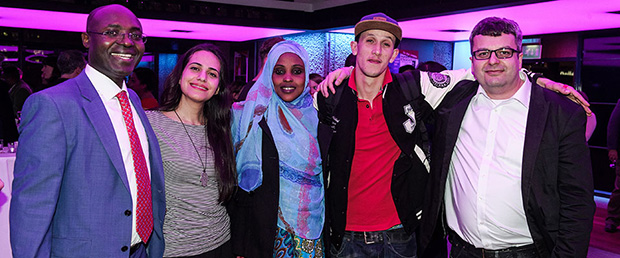
Rafael Marques de Morais, Safa Al Ahmad, Amran Abdundi, Mouad “El Haqed” Belghouat and Tamas Bodokuy (Photo: Alex Brenner for Index on Censorship)
When times get tough, freedom of expression can quickly fall down the list of priorities. But it is exactly in these circumstances when the ability to communicate and express yourself is most important. For this reason, we continue to draw inspiration from last year’s Index on Censorship Freedom of Expression Awards fellows and their struggles to keep freedom of expression alive and well.
As we look forward to the 2016 Index awards, here is our latest reminder of just how important a job our past winners do in the fight for free speech.
Tamas Bodoky, Atlatszo.hu / Digital Activism
Last year was a positive one for the Hungarian investigative journalism site and NGO Atlatszo. The site’s yearly report reveals that funding was on the up and readership remained high.
The website’s project for tracking down hate crime gained traction in 2014, and last year expanded to include “violent football hooligan groups and clergymen, who are close to the far-right,” the site’s executive director Tamas Bodoky told Index on Censorship.
“Unfortunately, some people became very hostile to our refugee crisis reporting last year, saying things like ‘go to hell, Atlatszo, for helping them’,” he added.
Atlatszo made 90 freedom of information requests as an organisation — plus hundreds of requests submitted by staff in their own names. Around 50% of Atlatszo’s requests were at least partially granted. Of those that weren’t, the site has initiated court proceedings to obtain the information, with almost half so far being successful, with several others pending.
Going forward, Atlatszo has plans to expand by working with more bloggers and developing a new website allowing Hungarian citizens to “question representatives of Hungary in EU, members of the Hungarian Parliament and — in the long run — representatives of the local governments”. The kepviselom.hu (my representative) project is currently seeking donors through crowdfunding.
“The Index award certainly helped get more international recognition over the last year,” Bodoky said. “As a very small news organisation, we constantly struggle for visibility, and Index on Censorship was instrumental in raising the visibility of our cause.”
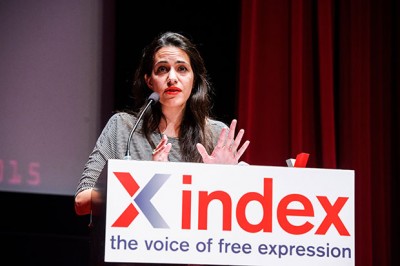
Safa Al Ahmad / Journalism With the political crisis in Yemen steadily getting worse since last year, any plans Safa Al Ahmed had to switch focus were sidelined as she returned to the battle-scarred country.
“I filmed events in Aden and then Taiz, which is currently besieged,” the award-winning journalist told Index on Censorship. “I’m going to be producing two separate films for both cities because north and south have very different dynamics.”
Actually getting into Yemen is a real task in itself. Al Ahmed and her crew took a boat from Djibouti to Aden, which took 34 hours, and then travelled for another day off-road and across mountainous terrain, passing snipers along the way.
With the execution of the prominent Shia cleric Nimr al-Nimr, Al Ahmad’s own country Saudi Arabia was briefly catapulted back into international focus at the start of 2016, but it didn’t last. “There is very little investigative journalism being done on the ground, which makes reporting difficult as there isn’t very much to build on,” Al Ahmed says.
Citing the flogging of blogger Raif Badawi as an example of how brutal the Saudi regime is of critical voices, Al Ahmad describes the state of free speech in Saudi Arabia as “frightening”. “The government have passed really wide rulings and laws so they can stop or arrest anyone for the simplest of reasons, including talking about the war in Yemen, which has been banned,” she explains.
The big difference between now and 2014 is that people are currently receiving death sentences, which is “a whole different level of intimidation”.
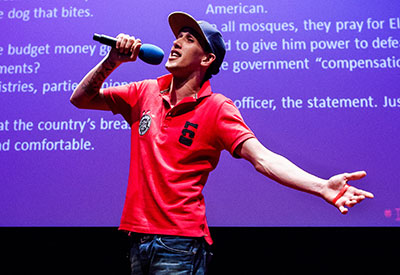
Mouad Belghouat aka El Haqed / Arts
Last time we caught up with Moroccan rapper Mouad Belghouat, aka El Haqed, in October, he was in his home country keeping a low profile, while looking forward to performances in Florence, Italy, and at the 25th anniversary of the Moroccan Association of Human Rights in Brussels. Since November 2015, he has been living in Belgium, having applied for refugee status.
“In Morocco I felt threatened and under constant control,” he told Index this month. “It’s been hard, because already I miss the place where I grew up; I miss my family and my friends.” The situation in Morocco “deteriorates more and more every day, at all levels”, he explains, but vows one day to return.
He has now been cleared to work in Belgium, and has also turned his attention to creating more music. “I’m trying to finish the album I’ve been writing based on my experiences in prison in Morocco, and — as the last set of concerts have gone so well — I will be performing in Belgium in March and am looking to tour Norway come April.”
There are also plans for a biography based on his experiences from 2011, when his music became an anthem for many Moroccans involved in the Arab Spring, right up to his persecution at the hands of the authorities, right up to his eventual self-imposed exile.
As for the Index award, he said: “Through Index, I met many great people from all over the world who share the same principles as me, and word of my case has spanned the breadth of the world.”
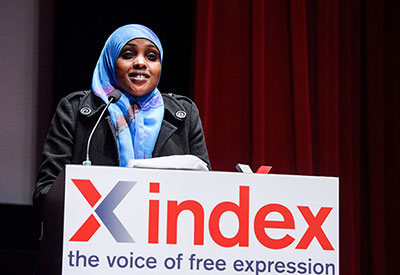
Amran Abdundi / Campaigning
During our last conversation with Amran Abdundi, we discussed the attack in her native Kenya by Al-Shabaab linked terrorists on Garissa University College, in which 148 people were murdered. Abdundi, who knows many students from the college, immediately joined with other women leaders to organise strong community protests against Al-Shabaab.
Last month, Abdundi attended the re-opening ceremony for Garissa University College. “I was happy to meet victims who I offered counselling to after the attack, and see them now back on their feet, ready to study and achieve their dreams,” she told Index.
She has also been busy recently with the upcoming launch of the new Frontier Indigenous Network website and implementing a new social media strategy to foster better connections between Kenyan women and the rest of the world.
As part of this new development plan, 2016 is packed with new projects, including an education programme on non-violence to counter violent extremism and radicalisation. The project will bring together Christians and Muslims together in “preaching peace and reconciliation”.
“All of this wouldn’t have been possible without the Index award and the support I have received from Index on Censorship, which led me to meet key individuals, such as Kenya’s woman minister, Anne Waigiru.”
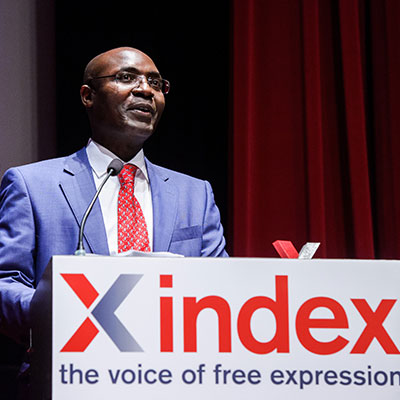
Rafael Marques de Morais / Journalism
President José Eduardo dos Santos has been in power in Angola for over 35 years and his regime faces criticism on many fronts for, among other things, land grabbing, human rights abuses in Angolan prisons and the divvying up of the country’s resources to his family “like it was their inheritance”. These are just some of the issues Index award winner Rafael Marques de Morais is focusing on his activism and writing.
“This kind of work generates all sorts of troubles, because when you speak out against the president, you become suspect,” de Morais told Index on Censorship.
Being a high-profile activist within the country, there is a misconception that de Morais doesn’t feel the full force of the regime. “I might be ‘free’ but I can’t go anywhere; when I went for a drink recently the person I was with noticed we were being watched,” he explains. When he tried to enter a courtroom in December to observe the case involving the 15 Angolan bloggers now under house arrest, he was denied access. “Immediately the news on television was that I tried to enter the court illegally, because being high profile, the main thing they can attack is your reputation.”
Coupled with the ongoing economic crisis in Angola preventing citizens from taking money out of the bank, times are tough. “How is one supposed to survive and keep going?” he asks.
But go on he does. The attention from home and abroad, including that generated by the Index award, have provided some solace. “It’s always refreshing to know that people are interested,” he explains. “The award provides great encouragement for one to keep going.”
“But that’s it. The next day, you are back to struggling for survival.”
As the annual Index on Censorship Freedom of Expression Awards gala approaches, we’ve highlighted five of those who have won or been nominated for free expression awards, including the Freemuse Awards. From a Moroccan rapper to an Iranian folk singer, these artists refuse to be censored and continue to fight to have their voices heard.
El Haqed, Morocco
Winner of the 2015 Index on Censorship Freedom of Expression Award for arts
Mouad Belghouat, aka El Haqed, faced repression from the Moroccan government, including multiple arrests since the Arab Spring. His music focuses on poverty, oppression and political corruption in his country. He is currently living in Belgium, where he continues to write music.
Mayam Mahmoud, Egypt
Winner of the 2014 Index on Censorship Freedom of Expression Award for arts
Mayam Mahmoud, one of Egypt’s first and bravest female hip-hop artists, uses music to address some of the grievances in her country, from a lack of women’s rights to sexual harassment. After competing on the TV show Arabs Got Talent, she used her prominence to speak out against the misogyny she has witnessed and experienced.
Ferhat Tunç, Turkey
2010 Freemuse Award winner
Despite years of attempted censorship by the Turkish government, Ferhat Tunç has continued to release music and promote human rights in his homeland. He has released more than 20 albums, undeterred by numerous court summons and a prison sentence.
Songhoy Blues, Mali
Nominees for the 2015 Index on Censorship Freedom of Expression Award for arts
A group of musicians that fled northern Mali after the occupation by militant Islamist groups in spring 2012, Songhoy Blues are a rowdy blend of blues and rock. After Islamists banned music in their region, they went into exile and have since gone on to tour with Julian Casablancas and Damon Albarn. The band released their debut album, Music in Exile, in February 2015.
Pussy Riot, Russia
Nominees for the 2013 Index on Censorship Freedom of Expression Award for arts In February 2012, members of the feminist punk band Pussy Riot staged a brief demonstration through music at Moscow’s Christ the Saviour Cathedral, condemning the Russian Orthodox Church’s close ties to Vladimir Putin. In August of that year, three members were sentenced to two years in jail for hooliganism motivated by religious hatred. The verdict was a bitter blow for freedom of expression in Russia, which continues to be under attack today.
Index on Censorship has teamed up with the producers of an award-winning documentary about Mali’s musicians, They Will Have To Kill Us First, to create the Music in Exile Fund to support musicians facing censorship globally. You can donate here, or give £10 by texting “BAND61 £10” to 70070.
First as prime minister and now as president, Recep Tayyip Erdogan has been waging a methodical crackdown on the media in Turkey for years. Erdogan is persecuting journalists of all colours in an increasingly ferocious manner in the name of combatting terrorism and defending state security. The Erdogan regime’s arrests, threats and intimidation are unworthy of a democracy.
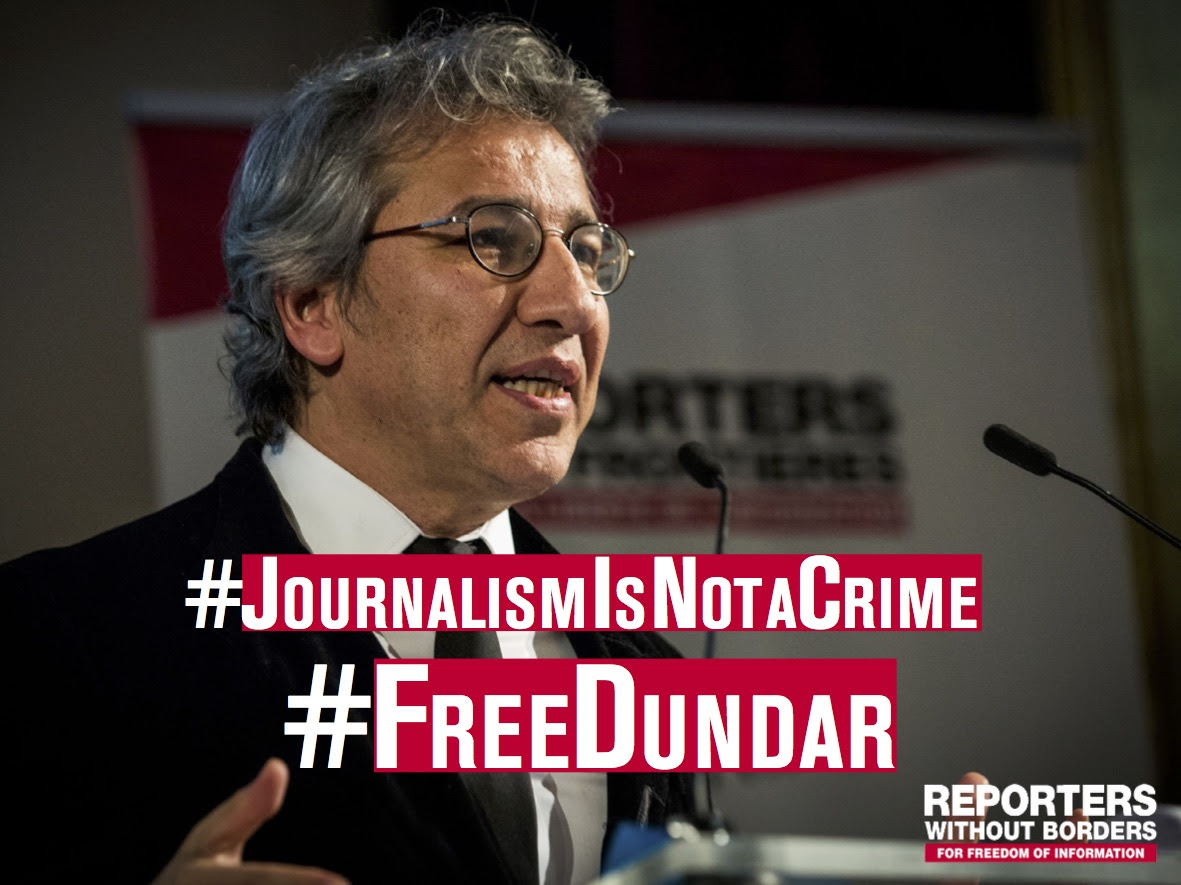
Can Dündar, the editor-in-chief of the Turkish daily Cumhuriyet, and his Ankara bureau chief, Erdem Gül, have been held since the evening of 26 November. They are charged with spying and terrorism because last May they published evidence of arms deliveries by the Turkish intelligence services to Islamist groups in Syria. Both are exemplars of journalism, the search for truth and the defence of freedoms. President Erdogan publicly said that Dündar “will pay for this.” But Cumhuriyet’s journalists just did their job, publishing information that was in the public interest.
At a time when international terrorism is at the centre of everyone’s concerns, it is unacceptable that political prosecutions are used to suppress investigative reporting and exposés. The arrest of these two journalists is the latest extreme to which political use of the Turkish judicial system has been taken. Many journalists have been detained on spurious charges of terrorist propaganda and insulting President Erdogan. The regime has also been using economic levers to put growing pressure on the media, while draconian laws have been passed.
We, public figures, media freedom NGOs and unions, reject the blatant erosion of media freedom in Turkey. The country is ranked 149th out of 180 countries in the Reporters Without Borders press freedom index. Index’s Mapping Media Freedom project has recorded 178 verified reports of media violations since May 2014.
We appeal to the Turkish authorities to free Can Dündar and Erdem Gül without delay, to drop all charges against them, and to free all other journalists who are currently detained in connection with their journalism or the opinions they have expressed.
We also urge the institutions and governments of democratic countries to face up to their responsibilities to respond to President Erdogan’s increasingly authoritarian excesses.
SIGNATORIES
Public figures
Günter Wallraff, journalist, Germany
Noam Chomsky, linguist, USA
Edgar Morin, sociologist, France
Carl Bernstein, journalist, USA
Zülfü Livaneli, writer, Turkey
Ali Dilem, cartoonist, Algeria
Thomas Piketty, economist, France
Claudia Roth, politician, Germany
Paul Steiger, journalist, United States
Kamel Labidi, journalist, Tunisia
John R McArthur, media executive, USA
Fazil Say, pianist, Turkey
Peter Price, media executive, USA
Edwy Plenel, media executive, France
Jim Hoagland, journalist, USA
Ahmet İnsel, political analyst, Turkey
Eric Chol, newspaper editor, France
Nedim Gürsel, writer, Turkey
Cem Özdemir, Green Party copresident, Germany
Hakan Günday, writer, Turkey
Mikis Theodorakis, composer, Greece
Per Westberg, writer, Sweden
Louise Belfrage, journalist, Sweden
Ali Anouzla, journalist, Morocco
Omar Bellouchet, journalist, Algeria
Jack Lang, former government minister, France
Omar Brouksy, journalist, Morocco
Pierre Haski, journalist, France
Jay Weissberg, cinema critic, USA
NGOs
Reporters Without Borders (RSF)
Committee to Project Journalists, (CPJ)
PEN International
International Press Institute (IPI)
World Association of Newspapers and News Publishers (WANIFRA)
Index on Censorship
World Press Freedom Committee (WPFC)
International Federation of Journalists (IFJ)
European Federation of Journalists (EFJ)
Ethical Journalism Network (EJN)
Global Editors Network (GEN)
Turkish Association of Journalists (TGC)
Turkish Union of Journalists (TGS)
DISK Basinİş

 Arcoiris, Honduras
 Jensiat, Iran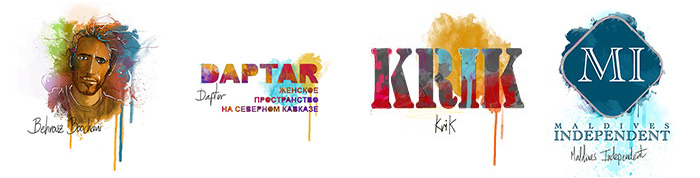
 With the political crisis in Yemen steadily getting worse since last year, any plans
  Last time we
  During our
  President José Eduardo dos Santos has been in power in Angola for over 35 years and his regime faces criticism on many fronts for, among other things, land grabbing, human rights abuses in Angolan prisons and the divvying up of the country’s resources to his family “like it was their inheritance”. These are just some of the issues Index award winner