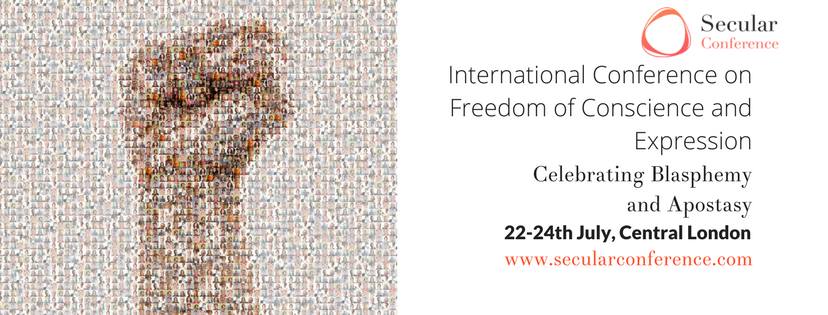
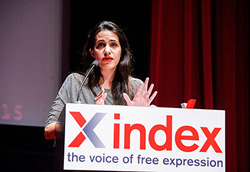
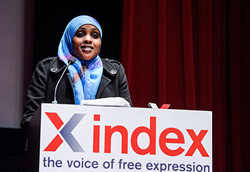
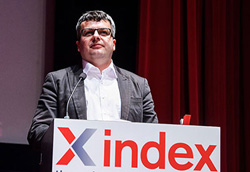
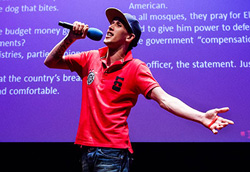
Join notable free-thinkers from around the world for a weekend of discussions and debates on freedom of conscience and expression in the 21st century at a spectacular venue in central London during 22-23 July 2017.
On 24 July, an activist strategy meeting will be followed by body-painting in support of ex-Muslims, which will be open to the public.
The two-day conference will discuss censorship and blasphemy laws, freedom of and from religion, apostasy, the limits of religion’s role in society, LGBT and women’s rights, atheism, secular values and more.
Speakers from countries or the Diaspora as diverse as Afghanistan, Algeria, Bangladesh, Canada, Egypt, France, India, Iran, Iraq, Iraqi Kurdistan, Ireland, Lebanon, Malaysia, Morocco, Nigeria, Norway, Pakistan, Palestinian Territories, Poland, Saudi Arabia, Sudan, Sweden, Switzerland, Syria, Turkey, Tunisia, UK, Ukraine, US and Yemen will gather in London to defend freedom of conscience and expression and argue that freedoms are not western but universal.
The conference will highlight the voices of people on the frontlines of resistance – many of them persecuted and exiled – as well as address challenges faced by activists and freethinkers, elaborate on the links between democratic politics and free expression and conscience, promote secular and rights-based alternatives, and establish priorities for collective action.
Art and culture will be integral to the event as will lively debate with the dauntless use of the free word.
Confirmed Distinguished Speakers:
A C Grayling, Philosopher
Aliaa Magda Elmahdy, Egyptian Feminist Activist
Alya Al-Sultani, British-Iraqi Vocalist and Composer
Ani Zonneveld, Founder and President of Muslims for Progressive Values
Annie Laurie Gaylor and Dan Barker, Co-Presidents of the Freedom From Religion Foundation
Armin Navabi, Founder of Atheist Republic
Asher Fainman, President of Goldsmiths Atheist Society
Benjamin David, Editor-in-Chief of Conatus News
Bonya Ahmed, Activist, Writer and Blogger at Mukto-Mona
Cemal Knudsen Yucel, Co-Founder and Chair of Ex-Muslims of Norway
Chris Moos, Secular Activist
Damon Conlan and Neil Edwards, Magicians
Dave Silverman, President of American Atheists
Deeyah Khan, Filmmaker
Djemila Benhabib, Author and Activist
Elham Manea, Yemeni-born Author and Human Rights Campaigner
Fariborz Pooya, Bread and Roses TV Presenter and Editor
Fauzia Ilyas, Founder of Atheist & Agnostic Alliance Pakistan
Gina Khan, One Law for All Spokesperson
Gita Sahgal, Director of Centre for Secular Space
Gona Saed, Co-Founder of Kurdistan Secular Centre
Gurpreet Kaur Bhatti, Award-winning Playwright
Halima Begum, Ex-Muslim Feminist Researcher and Blogger
Hassan Radwan, Agnostic Muslim Khutbahs blog
Houzan Mahmoud, Culture Project Co-Founder
Imad Iddine Habib, Founder of Council of Ex-Muslims of Morocco
Inna Shevchenko, FEMEN Leader
Iram Ramzan, Journalist and Founder of Sedaa
Ismail Mohamed, Egyptian Atheist and Founder of Black Ducks Talk Show
Jane Donnelly and Michael Nugent, Atheist Ireland’s Human Rights Officer and Chairperson
Jodie Ginsberg, CEO of Index on Censorship
Karima Bennoune, UN Special Rapporteur in the Field of Cultural Rights
Karrar D. Al Asfoor, Co-founder of Atheist Alliance Middle East and North Africa
Kate Smurthwaite, Comedian
Kenan Malik, Author and Broadcaster
London Humanist Choir
Maajid Nawaz, Founding Chairman of Quilliam Foundation
Marieme Helie Lucas, Algerian Sociologist and Founder of Secularism is a Women’s Issue
Mario Ramadan, Co-Founder of Freethought Lebanon
Maryam Namazie, Iranian-born Rights Activist, Writer and Conference Organiser
Nadia El Fani, Tunisian Filmmaker
Nasreen Rehman, Co-Founder and Chair of British Muslims for Secular Democracy
Nina Sankari, Polish Atheist Activist
Noura Embabi, Muslim-ish President
Peter Tatchell, Human Rights Campaigner
Pragna Patel, Director of Southall Black Sisters
Rana Ahmad, Head of the RDF Arab Atheist Community
Rayhana Sultan, ExMuslimBecause
Richard Dawkins, Author and Scientist (subject to availability)
Sadia Hameed, Spokesperson of the Council of Ex-Muslims of Britain
Sanal Edamaruku, Founder and President of Rationalist International
Sarah Haider, Co-Founder of Ex-Muslims of North America
Sarah Peace, Nigerian Artist and Director of Fireproof Library
Savin Bapir Tardy, Counselling Psychologist for The Iranian and Kurdish Women’s Rights Organisation
Shabana Rehman, Performance Artist and Human and Animal Rights Advocate
Shelley Segal, Singer/Songwriter
Tasneem Khalil, Swedish-Bangladeshi Journalist and Editor of Independent World Report
Teresa Gimenez Barbat, MEP, Group of the Alliance of Liberals and Democrats for Europe and Euromind
Victoria Gugenheim, Award-winning Body Artist
Waleed Al Husseini, Palestinian Writer and Founder of Council of Ex-Muslims of France
Yasmine Mohammed, Confessions of an ExMuslim
Yasmin Rehman, Women’s Rights Campaigner
Zehra Pala, President of Atheism Association of Turkey
Zineb El Rhazoui, Moroccan-born Columnist for Charlie Hebdo
The conference is sponsored by: Alliance of Liberals and Democrats for Europe; Atheist International Alliance; Bread and Roses TV; Center for Inquiry; Centre for Secular Space; Council of Ex-Muslims of Britain; Culture Project; Euromind; Equal Rights Now; Fitnah; Freedom from Religion Foundation; National Secular Society; One Law for All; Richard Dawkins Foundation for Reason and Science; Southall Black Sisters; and Secularism is a Women’s Issue.[/vc_column_text][/vc_column][/vc_row][vc_row][vc_column][vc_column_text]
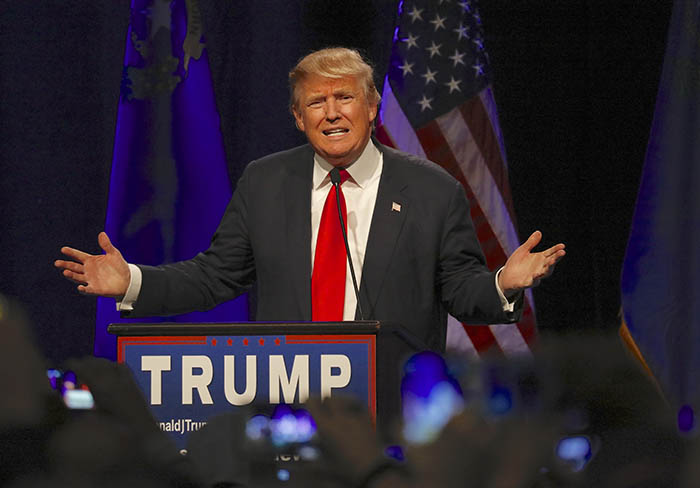
Today, more than thirty cultural institutions and human rights organisations around the world, including international arts, curators’ and critics’ associations, organisations protecting free speech rights, as well as US based performance, arts and creative freedom organisations and alliances, issued a joint statement opposing United States President Donald J. Trump’s immigration ban. Read the full statement below.
On Friday, January 27th, President Trump signed an Executive Order to temporarily block citizens of seven predominantly Muslim countries from entering the United States. This order bars citizens of Iran, Iraq, Libya, Somalia, Sudan, Syria, and Yemen from entering the United States for 90 days. It also suspends the entry of all refugees for 120 days and bars Syrian refugees indefinitely.
The organisations express grave concern that the Executive Order will have a broad and far-reaching impact on artists’ freedom of movement and, as a result, will seriously inhibit creative freedom, collaboration, and the free flow of ideas. US border regulations, the organisations argue, must only be issued after a process of deliberation which takes into account the impact such regulations would have on the core values of the country, on its cultural leadership, and on the world as a whole.
Representatives of several of the participating organisations issued additional statements on the immigration ban and its impact on writers and artists:
Helge Lunde, Executive Director of ICORN, said, “Freedom of movement is a fundamental right. Curtailing this puts vulnerable people, people at risk and those who speak out against dictators and aggressors, at an even greater risk.”
Svetlana Mintcheva, Director of Programs at the US National Coalition Against Censorship (NCAC), said, “In a troubled and divided world, we need more understanding, not greater divisions. It is the voices of artists that help us understand, empathise, and see the common humanity underlying the separations of political and religious differences. Silencing these voices is not likely to make us any safer.”
Suzanne Nossel, Executive Director of PEN America, said, “The immigration ban is interfering with the ability of artists and creators to pursue their work and exercise their right to free expression. In keeping with its mission to defend open expression and foster the free flow of ideas between cultures and across borders, PEN America vows to fight on behalf of the artists affected by this Executive Order.”
Diana Ramarohetra, Project Manager of Arterial Network, said, “A limit on mobility and limits on freedom of expression has the reverse effect – to spur hate and ignorance. Artists from Somalia and Sudan play a crucial role in spreading the message to their peers about human rights, often putting themselves at great risk in countries affected by ongoing conflict. Denying them safety is to fail them in our obligation to protect and defend their rights.”
Ole Reitov, Executive Director of Freemuse, said, “This is a de-facto cultural boycott, not only preventing great artists from performing, but even negatively affecting the US cultural economy and its citizens rights to access important diversity of artistic expressions.”
Shawn Van Sluys, Director of Musagetes and ArtsEverywhere, said, “Musagetes/ArtsEverywhere stands in solidarity with all who protect artist rights and the freedom of mobility. It is time for bold collective actions to defend free and open inquiry around the world.”
A growing number of organisations continue to sign the statement.
JOINT STATEMENT REGARDING THE IMPACT OF THE US IMMIGRATION BAN ON ARTISTIC FREEDOM
Freedom of artistic expression is fundamental to a free and open society. Uninhibited creative expression catalyses social and political engagement, stimulates the exchange of ideas and opinions, and encourages cross-cultural understanding. It fosters empathy between individuals and communities, and challenges us to confront difficult realities with compassion.
Restricting creative freedom and the free flow of ideas strikes at the heart of the core values of an open society. By inhibiting artists’ ability to move freely in the performance, exhibition, or distribution of their work, United States President Trump’s January 27 Executive Order, blocking immigration from seven countries to the United States and refusing entry to all refugees, jettisons voices which contribute to the vibrancy, quality, and diversity of US cultural wealth and promote global understanding.
The Executive Order threatens the United States safe havens for artists who are at risk in their home countries, in many cases for daring to challenge repressive regimes. It will deprive those artists of crucial platforms for expression and thus deprive all of us of our best hopes for creating mutual understanding in a divided world. It will also damage global cultural economies, including the cultural economy of the United States.
Art has the power to transcend historical divisions and socio-cultural differences. It conveys essential, alternative perspectives on the world. The voices of cultural workers coming from every part of the world – writers, visual artists, musicians, filmmakers, and performers – are more vital than ever today, at a time when we must listen to others in the search for unity and global understanding, when we need, more than anything else, to imagine creative solutions to the crises of our time.
As cultural or human rights organisations, we urge the United States government to take into consideration all these serious concerns and to adopt any regulations of United States borders only after a process of deliberation, which takes into account the impact such regulations would have on the core values of the country, on its cultural leadership, as well as on the world as a whole.
African Arts Institute (South Africa)
Aide aux Musiques Innovatrices (AMI) (France)
Alliance for Inclusion in the Arts (USA)
Arterial (Africa)
Artistic Freedom Initiative (USA)
ArtsEverywhere (Canada)
Association of Art Museum Curators and Association of Art Museum Curators Foundation
Association Racines (Morocco)
Bamboo Curtain Studio (Taiwan)
Cartoonists Rights Network International
Cedilla & Co. (USA)
Culture Resource – Al Mawred Al Thaqafy (Lebanon)
International Committee for Museums and Collections of Modern Art (CIMAM)
College Art Association (USA)
European Composer and Songwriter Alliance (ECSA)
European Council of Artists
Freemuse: Freedom of Expression for Musicians
Index on Censorship: Defending Free Expression Worldwide
Independent Curators International
International Arts Critics Association
International Network for Contemporary Performing Arts
The International Cities of Refuge Network (ICORN)
Levy Delval Gallery (Belgium)
Geneva Ethnography Museum (Switzerland)
National Coalition Against Censorship (USA)
New School for Drama Arts Integrity Initiative (USA)
Observatoire de la Liberté de Création (France)
On the Move | Cultural Mobility Information Network
PEN America (USA)
Queens Museum (USA)
Roberto Cimetta Fund
San Francisco Art Institute (USA)
Stage Directors and Choreographers Society (SDC) (USA)
Tamizdat (USA)
Vera List Center for Art and Politics, New School (USA)[/vc_column_text][/vc_column][/vc_row][vc_row][vc_column][vc_basic_grid post_type=”post” max_items=”4″ element_width=”6″ grid_id=”vc_gid:1486570424977-7a30af48-045a-3″ taxonomies=”3784″][/vc_column][/vc_row]
Mr. Zeid Ra’ad Al Hussein, Mr. David Kaye, Mr. Joseph Cannataci, Mr. Maina Kiai, Mr. Michel Forst, Ms. Faith Pansy Tlakula, and Ms. Reine Alapini-Gansou
cc: African Union
African Peer Review Mechanism (APRM) Secretariat
Common Market for Eastern and Southern Africa Secretariat
Domestic & International Election Observer Missions to the Republic of Uganda
East African Community Secretariat
International Conference on the Great Lakes Region Secretariat
New Partnership for Africa’s Development (NEPAD) Secretariat
Uganda Communications Commission
Uganda Electoral Commission
Uganda Ministry of Information and Communications Technology
23 February 2016
Re: Internet shutdown in Uganda and elections
Your Excellencies,
We are writing to urgently request your immediate action to condemn the internet shutdown in Uganda, and to prevent any systematic or targeted attacks on democracy and freedom of expression in other African nations during forthcoming elections in 2016. [1]
On February 18, Ugandan internet users detected an internet outage affecting Twitter, Facebook, and other communications platforms. [2] According to the Uganda Communications Commission (UCC), blocking was carried out on orders of the Electoral Commission, for security reasons. [3] The shutdown coincided with voting for the presidential election, and remained in place until the afternoon of Sunday, February 21. During this period, two presidential candidates were detained under house arrest. [4] The telco MTN Uganda confirmed the UCC directed it to block “Social Media and Mobile Money services due to a threat to Public Order & Safety.” [5] The blocking order also affected the telcos Airtel, Smile, Vodafone, and Africel. President Museveni admitted to journalists on February 18 that he had ordered the block because “steps must be taken for security to stop so many (social media users from) getting in trouble; it is temporary because some people use those pathways for telling lies.” [6]
Research shows that internet shutdowns and state violence go hand in hand. [7] Shutdowns disrupt the free flow of information and create a cover of darkness that allows state repression to occur without scrutiny. Worryingly, Uganda has joined an alarming global trend of government-mandated shutdowns during elections, a practice that many African Union member governments have recently adopted, including: Burundi, Congo-Brazzaville, Egypt, Sudan, the Central African Republic, Niger, Democratic Republic of Congo. [8], [9], [10], [11], [12], [13], [14]
Internet shutdowns — with governments ordering the suspension or throttling of entire networks, often during elections or public protests — must never be allowed to become the new normal. Justified for public safety purposes, shutdowns instead cut off access to vital information, e-financing, and emergency services, plunging whole societies into fear and destabilizing the internet’s power to support small business livelihoods and drive economic development.
Uganda’s shutdown occurred as more than 25 African Union member countries are preparing to conduct presidential, local, general or parliamentary elections. [15]
A growing body of jurisprudence declares shutdowns to violate international law. In 2015, various experts from the United Nations (UN) Organization for Security and Co-operation in Europe (OSCE), Organization of American States (OAS), and the African Commission on Human and Peoples’ Rights (ACHPR), issued an historic statement declaring that internet “kill switches” can never be justified under international human rights law, even in times of conflict. [16] General Comment 34 of the UN Human Rights Committee, the official interpreter of the International Covenant on Civil and Political Rights, emphasizes that restrictions on speech online must be strictly necessary and proportionate to achieve a legitimate purpose. Shutdowns disproportionately impact all users, and unnecessarily restrict access to information and emergency services communications during crucial moments.
The internet has enabled significant advances in health, education, and creativity, and it is now essential to fully realize human rights including participation in elections and access to information.
We humbly request that you use the vital positions of your good offices to:
call upon the Ugandan government to provide redress to victims of the internet shutdown, and pledge not to issue similar orders in the future;
call on African states to uphold their human rights obligations, and not to take disproportionate responses like issuing shutdown orders, especially during sensitive moments like elections;
investigate shutdowns, in their various forms, in order to produce public reports that examine this alarming trend and its impact on human rights, and make recommendations to governments and companies on how to prevent future disruptions;
encourage telecommunications and internet services providers to respect human rights and resist unlawful orders to violate user rights, including through public disclosures and transparency reports;
encourage the African Commission on People’s and Human Rights, the United Nations Human Rights Council, and the UN General Assembly to resolve that Internet Shutdowns violate freedom of expression per se and without legal justification.
We are happy to assist you in any of these matters.
Sincerely,
Access Now African Centre for Democracy and Human Rights Studies (ACDHRS)
Association for Progressive Communications (APC)
Article 19 East Africa
Chapter Four Uganda
CIPESA
CIVICUS
Committee to Protect Journalists
DefendDefenders (The East and Horn of Africa Human Rights Defenders Project)
Electronic Frontier Foundation (EFF)
Global Partners Digital
Hivos East Africa
ifreedom Uganda
Index on Censorship
Integrating Livelihoods thru Communication Information Technology (ILICIT Africa)
International Commission of Jurists Kenya
ISOC Uganda
KICTANet (Kenya ICT Action Network)
Media Rights Agenda
Paradigm Initiative Nigeria
The African Media Initiative (AMI)
Unwanted Witness
Web We Want Foundation
Women of Uganda Network (WOUGNET)
Zimbabwe Human Rights NGO Forum
Rafael Marques de Morais, Safa Al Ahmad, Amran Abdundi, Mouad “El Haqed” Belghouat and Tamas Bodokuy (Photo: Alex Brenner for Index on Censorship)
A Kenyan woman standing up for women’s rights in one of the world’s most dangerous regions. A Hungarian journalist and his investigative news site. A documentary filmmaker who exposed an unreported uprising in Saudi Arabia. An Angolan journalist who has been repeatedly prosecuted for his work uncovering government and industry corruption. A Moroccan rapper whose music tackles widespread poverty and endemic government corruption.
These were the five individuals named Index on Censorship Freedom of Expression Award winners on 18 March 2015. Three months later, here are updates on their ongoing work.
Rafael Marques de Morais / Journalism
Rafael Marques de Morais (Photo: Alex Brenner for Index on Censorship)
International signatories, from Tiffany & Co and Leber Jewellers to Oscar-winning film director Steve McQueen, and from Blood Diamond film stars David Harewood and Michael Sheen to journalist Sir Harold Evans, recently called on Angolan president José Eduardo dos Santos to abandon the prosecution of investigative journalist Rafael Marques de Morais.
The campaigning journalist returned from collecting his award in London to face trial linked to his book Blood Diamonds. He filed a criminal complaint against a group of generals who he held morally responsible for human rights abuses he uncovered within the country’s diamond trade. For this, they filed a series of libel suits against him in Angola and Portugal.
The media attention that Marques won off the back of his award “helped a great deal” he said. “It raised my profile in the days before my trial and maybe helped to make it an international cause.” In a rare sight for Angola, a number of anti-corruption protesters publicly gathered outside of the Luanda courthouse as his trial opened and covert protests have continued under the cover of darkness since.
Marques’ trial played out in a Kafkaesque way over the subsequent weeks, with behind-the-scenes negotiations leading to criminal defamation charges first being dropped, only for him to suddenly discover that he would instead be sentenced for the alternative crime of malicious prosecution.
The American Bar Association, who monitored the trial throughout, published a report stating that the court had failed to meet international fair trial standards on at least three counts. The ABA Center for Human Rights report found that “throughout the proceedings, the defendant was denied the right to present a defense, induced to make a statement on the basis of false pretenses and compelled to bear the burden of proving his innocence, all in violation of international law.”
Marques’ sentence finally came down on 25 May: six-months imprisonment, suspended for a term of two years. Marques is now appealing against this punishment that effectively seeks to silence him until 2017; coincidentally the same year as Angola’s next elections.
The court also attempted to censor Marques’ book from republication and further distribution but these efforts have blatantly failed with copies of the book widely circulated online and an English language version becoming available for the first time less than a week after his sentence.
Despite the international attention, the situation for Marques and his peers in Angola’s human rights and journalism communities remains grim. Recounting the experience of taking his car to the local garage for repairs recently, the fear is palpable in his voice. “There were two members of the ruling party there, by coincidence. They walked across to the mechanic and warned him not to fix my car unless he wanted to risk becoming collateral damage.”
Marques’ email has also recently been repeatedly hacked and his website www.makaangola.org is presently subject to over 250 attacks per day, forcing him to desist from updating it for the time being.
Marques continues to work closely with Index on Censorship and a number of other international organisations. His recent report on the massacre of a sect at Mount Sumi was published by The Guardian, he continues to keep a close eye on both the persecution of journalists and corruption at the highest levels in Angola, and he is expecting to hear back from the Supreme Court about his appeal in the next few weeks.
Hugely grateful for the support of the international community, Marques remains determined “to continue the good fight for change”.
“I have only the interests of my people at heart,” he says, “and to experience all this persecution, it must mean you are doing something positive, something right.”
Safa Al Ahmad (Photo: Alex Brenner for Index on Censorship)
Joint winner of the Index on Censorship Freedom of Expression Award for Journalism, Safa Al Ahmad has spent much of the past three months in the editing studio.
Applauded for her documentary Saudi’s Secret Uprising, Al Ahmad’s new film The Rise of the Houthis – first distributed at this year’s Index on Censorship Freedom of Expression Awards Gala and since screened by both the BBC and PBS Frontline – has won wide critical acclaim.
Next month, on 6 July, BBC worldwide will also premiere a follow-up film that Al Ahmad has produced and directed, with Gaith Abdulahad exploring the present situation in the south of Yemen.
Now regularly invited to attend international public meetings, from Copenhagen to Geneva to Washington DC, Al Ahmad says she thinks that the award has brought more exposure – both for credible investigative journalism from Saudi Arabia, and for her work.
Is that a good thing for a journalist who has made her name through operating undercover? It is a challenge, she says, to find ways to do credible journalism about Saudi Arabia and the region without being on the ground. But there are complex stories, beyond TV, that Al Ahmad would increasingly like to focus on.
Abdundi, who knows many students from the college, immediately joined with other women leaders to organise strong community protests against Al-Shabaab.
“It was a barbaric attack done by a crazy group who have no respect for human life,” she said. “It was a sad day for the people of Kenya and the victims of the attack. But it will not scare [the] people of northern Kenya as we will continue and fight to overcome them”.
Abdundi hopes to help further through her ongoing work with her grassroots community organisation Frontier Indigenous Rights Network, tracking arms movements across the dangerous border with Sudan and travelling to meetings in Nairobi to report observations. “Security is improving now,” says Abdundi.
Winning the Index on Censorship Freedom of Expression Award for Campaigning, and sharing the story of the people of northern Kenya with the wider world, “made me so happy” she says. “The award ceremony was aired by all community radios in northern Kenya and reached many people. I am happy because it will give women courage to stand up for their rights”.
Spending a week in Index on Censorship’s office in London was “an opportunity to see how you work” Abdundi said, and has inspired her to want to develop a new website for her work, helping her to “spread her message to all corner[s] of northern Kenya”.
Tamas Bodoky (Photo: Alex Brenner for Index on Censorship)
Atlatszo.hu, Tamas Bodoky’s investigative news website in Hungary has continued to gather praise and acclaim, including another award, the Theodor Heuss Medal.
“All of this recognition is very helpful,” said Bodoky. “We are always afraid of retaliation and this offers us a level of protection… Hungarian authorities are very aware of this international attention and it is less likely that they will attack as we continue with our investigative projects.”
Atlatszo continues to publish three to four articles and numerous blog posts each week, including an English newsletter, often drawing on FOI requests to try to bring more transparency to Hungarian public life.
The campaigning journalists scored a major recent success with their campaign to demand political party foundations make information on their beneficiaries, income and spending publicly available. When political party Jobbik’s foundation refused to comply, Atlatszo took action. It began legal proceedings that proved sufficient to make them capitulate.
Bodoky’s organisation is now using this newly available information to research deeper, exploring “far right networks” and, he says, some curious connections between governing party Fidesz and football club Ferencvarosi TC.
As he looks ahead, Bodoky is especially concerned by the looming threat of a foreign NGO law – holding all NGO’s with foreign funding “accountable and transparent” by forcing them to register.
“We don’t know exactly when they will seek to expose and limit foreign funding, but the Russian recipe is definitely on the table,” says Bodoky. Fortunately his organisation has been totally open and transparent since 2013.
Rapper El Haqed (Photo: Alex Brenner for Index on Censorship)
Rapper Mouad Belghouat, better known as El Haqed (“the enraged” in Arabic) continues to rail against the endemic corruption and widespread poverty he says he sees in Morocco.
Imprisoned three times since 2011, El Haqed was not only prohibited from performing publicly in his homeland but had also been struggling to obtain visas to travel or perform internationally.
The good news is that his visit to the UK has helped him to overcome this obstacle, recently spending five weeks touring Norway, Sweden and Denmark. Highlights included performing live during Oslo’s 1 May celebrations and working with the organisation Freemuse to record a new Fela Kuti cover as part of a group of Arab and Iranian revolutionary artists (listen here). “It was much easier to be there because I went to England and came back,” said Belghouat.
Until recently limited to publishing and sharing his work via YouTube and Facebook, El Haqed has also begun something of an offline resurgence back home. Approached by promoters in his home town of Casablanca after winning the Index on Censorship Freedom of Expression Arts Award brought him widespread local media coverage, El Haqed now hopes to stage his first live concert on home soil in a long time this Friday 19 June. (Update 22 June 2015: Morocco: Police block concert by Index award-winning rapper El Haqed)
“Usually people find many excuses not to work with him,” according to Belghouat’s brother and manager Abderrahim Belghouat, “but so far this time no people have yet come and told the venue ‘don’t work with him’…”
Update 23 June 2015: El Haqed has now cancelled his planned tour of five of Morocco’s least affluent towns. The planned series of concerts would have teamed El Haqed with six other local musicians to “bring joy to poorer people in cities without theatres, cinemas and cultural areas, in the old Moroccan way, by making music for free outdoors”.
El Haqed is determinedly hopeful, “the Index award has shown Moroccan authorities that you can’t stop me,” he said, “the more of an effort they make to silence me, the more my voice arrives everywhere.”