Both as a journalist and human rights activist, Rafael Marques de Morais has exposed government and industry corruption in Angola – speaking out for those whose human rights have been violated in his country. Despite repeated arrests and threats, including a 40-day detention without charge during which he was denied food and water for days, Marques de Morais has continued his investigations, most recently detailing human rights abuses within Angola’s diamond companies – including 500 cases of torture and 100 murders of villagers living in the vicinity. After filing charges of crimes against humanity against seven Angolan generals, Marques do Morais is now being counter-sued for $1.6 (£1.09) million. Undeterred, he continues to write on corruption in Angola. He is the joint recipient of the 2015 Index on Censorship Freedom of Expression Award for Journalism.
With an award comes a greater responsibility. It is therefore my privilege to accept this journalism award, and dedicate it to my fellow Ethiopian colleagues Eskinder Nega, Reeyot Alemo, and the Zone 9 bloggers. They are in jail, currently serving some of the harshest sentences in Africa, for the crime of exercising their right to freedom of expression. For over a year, the Ethiopian government has denied adequate health care to Reeyot Alemu, who is in desperate need.
Ethiopia is the seat of the African Union, and its regime is one of the worst offenders for upholding the freedoms of the press and of expression. When a regime in Africa succeeds in trampling their citizens’ rights with impunity, and enjoys such good international standing and legitimacy as Ethiopia, it becomes a textbook case for other authoritarian regimes.
I believe in the power of solidarity. I have experienced troubles of my own. It has been the solidarity of others that has helped to strengthen my courage and resolve to continue my journey.
Back in 1996, being in London and aghast at press censorship in Angola, I decided to bring it to international attention. Because I could not speak English, I fumbled through an organization’s directory, and found Index on Censorship. I could understand the word Censorship. I called them and attended a meeting on Africa. My remarks were most convincing and incredibly short! “Censorship in Angola bad. Dos Santos [the president] bad. Very bad!” Then, a few months later I had an article translated and published in Index’s magazine. It was disseminated through other publications in a number of countries.
On my return to Angola from this trip, I will be sitting in court, on 24 March, as the defendant on 11 separate charges of defamation brought against me by seven powerful generals and four of their business associates. I wrote a book that exposed human rights abuses in the diamond industry, in which the plaintiffs are major shareholders and whose private security company has executed many of the violations.
I am proud and honored to stand up against such a mighty power to enable many of the victims to speak out through my reports, which I have been producing for the past 10 years. I will come out of this trial stronger and empowered by the experience.
Thank you very much for this wonderful occasion.
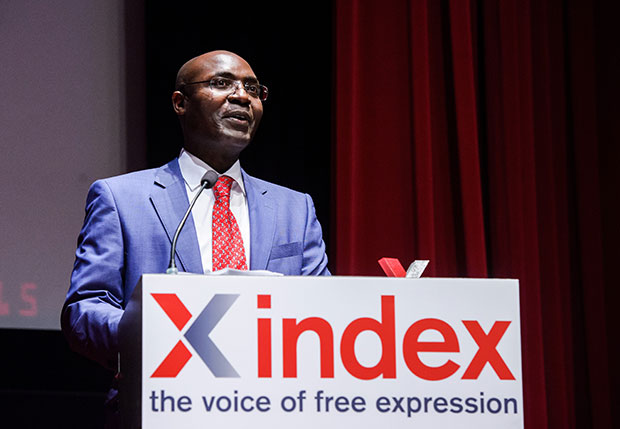
Journalist and human rights activist Rafael Marques de Morais (Photo: Alex Brenner for Index on Censorship)
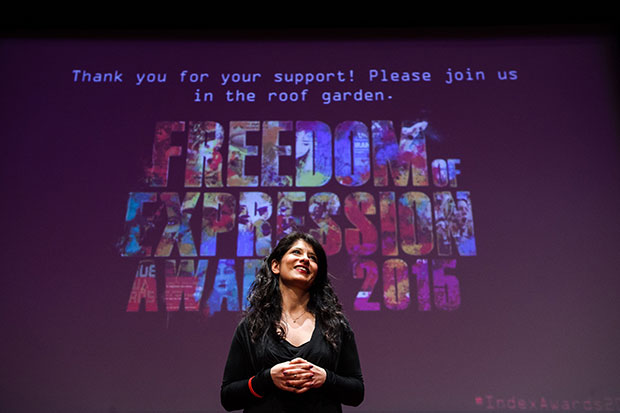
Comedian Shappi Khorsandi, the host of this year’s Index on Censorship Freedom of Expression Awards, understands the effects of censorship first hand.
Her father, Iranian writer and comic Hadi Khorsandi, was forced to flee to Britain in 1979 with his family, including a young Shappi, following the Iranian revolution and his criticism of the new regime. Even in the UK, Khorsandi continued to receive death threats.
“During the 1979 revolution against the Shah, there were crowds calling for my father’s execution because of his satirical writings. The only way to stay in Iran was to toe the party line. He chose exile, a profound experience for a writer,” Khorsandi says.
Khorsandi speaks movingly of the effects of exile on writers, saying: “They have to leave their home country to be able to express themselves freely in their native language. Censorship was a huge thing in my family.”
Once in Britain, Hadi Khorsandi continued writing and also published a satirical newspaper: “Because of this there was a plot to assassinate him in 1984,” says his daughter.
Many of those shortlisted for this year’s freedom of expression awards have experienced similar attempts to silence them. Lirio Abbate, an Italian journalist who faces constant threat of attack because of his investigations into the mafia, has 24-hour police protection. Others, like Angolan journalist Rafael Marques de Morais, Moroccan rapper El Haqed, or Ecuadorian cartoonist Bonil, are repeatedly threatened with jail for challenging powerful government and business interests.
Index on Censorship magazine featured Hadi Khorsandi’s work in two of its 1986 issues, describing his humour as “aimed at the follies and absurdities of the present Iranian regime and giving the reader a vivid picture of life in a country where ideology and zeal have been allowed to reign unchecked.” The October issue in which Hadi Khorsandi’s work features also includes an essay by Nobel Prize-winning author Gabriel Garcia Marquez.
“I’ve known about Index on Censorship for years – there were always Index logos in our house because of my father’s work,” says Khorsandi. “It’s quite an honour to have been asked to host the awards, one I accept on my father’s behalf.”
The 15th Index on Censorship Freedom of Expression Awards were held on March 18 at the Barbican, London.
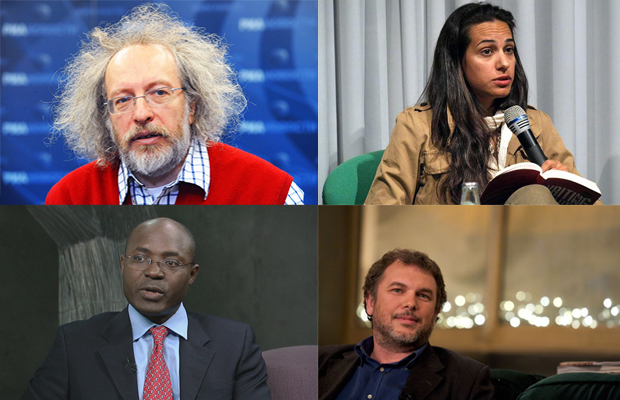
This week we will be showcasing our shortlisted nominees from the journalism category. This year’s nominees include Lirio Abbate, an Italian journalist whose investigations into the mafia mean he requires round-the-clock police protection; Safa Al Ahmad, whose documentary exposed details of an unreported mass uprising in Saudi Arabia; radio station Echo of Moscow, one of Russia’s last remaining independent media outlets; and Rafael Marques de Morais, an Angolan reporter repeatedly prosecuted for his work exposing government and industry corruption.
Tuesday: Documentary maker Safa Al Ahmad
Wednesday: Investigative journalist Lirio Abbate
Thursday: Journalist and human rights activist Rafael Marques de Morais
Friday: Radio station Ekho Moskvy
In 2003, internationally recognised journalist Fergal Keane was the first to win an award under the journalism category, however, the previous year Russian journalist Anna Politkovskaya, who was killed in 2006, won the Defence of Free Expression award. In 2001 the same award was given to Iranian journalist, Mashallah Shamsolvaezin.
In January, Index on Censorship reported on the beginning of the trial of human rights activist Rasul Jafarov, who is being tried on spurious charges. The Azerbaijani embassy has written to Index on Censorship responding to that article. This is the Index response to the embassy.
Dear Ambassador Tahir Taghizadeh,
Thank you for your letter in response to our report on the beginning of the trial of human rights and democracy activist Rasul Jafarov.
In your letter, you wrote:
“In my country, human rights and fundamental freedoms are ensured in full compliance with the national and international commitments that Azerbaijan has subscribed to. No one is persecuted for his/her political views and activities as proved by Azerbaijan’s vibrant political process and free and diverse media.”
We beg to differ with your point of view.
Azerbaijan’s record on human rights and a free press has been discussed with great concern at the international level many times in recent years.
In March 2012, Index on Censorship joined with Article 19, Human Rights House Foundation, International Federation of Journalists, Media Diversity Institute, Norwegian Helsinki Committee, Reporters Without Borders and World Association of Newspapers and News Publishers to co-produce Running Scared: Azerbaijan’s Silenced Voices. The report opened with this stark warning: “The current state of freedom of expression in Azerbaijan is alarming, as the cycle of violence against journalists and impunity for their attackers continues; journalists, bloggers, human rights defenders and political and civic activists face increasing pressure, harassment and interference from the authorities; and many who express opinions critical of the authorities – whether through traditional media, online, or by taking to the streets in protest – find themselves imprisoned or otherwise targeted in retaliation.”
In December 2012, the Parliamentary Assembly of the Council of Europe issued a monitoring report that included the comments that the “situation with regard to basic freedoms, including freedom of expression, freedom of assembly and freedom of association is preoccupying. The committee expresses its alarm at reports by human rights defenders and domestic and international NGOs about the alleged use of so-called fabricated charges against activists and journalists. The combination of the restrictive implementation of freedoms with unfair trials and the undue influence of the executive results in the systemic detention of people who may be considered prisoners of conscience. Alleged cases of torture and other forms of ill-treatment at police stations, as well as the impunity of perpetrators, raise major concern”.
In April 2013, the Human Rights Council of the United Nations work group issued its report from Azerbaijan’s universal periodic review. Among the recommendations were suggestions for improvements on human rights and more specifically freedom of expression:
• Ensure the full enjoyment of the right to freedom of expression in line with country’s international commitments (Slovakia)
• Guarantee the rights to freedom of expression, association and peaceful assembly particularly by allowing peaceful demonstrations in line with the obligations stemming from the International Covenant on Civil and Political Rights (Switzerland);
• Put in place additional and fitting measures to ensure respect for freedom of expression and of the media (Cyprus);
• Ensure that Azerbaijani media regulations uphold diversity among media outlets, as per international standards and best practices (Cyprus);
• Expand media freedoms across print, online and, in particular, broadcast platforms, notably by ending its ban on foreign broadcasts on FM radio frequencies and eliminating new restrictions on the broadcast of foreign language television programs (Canada);
• Take effective measures to ensure the full realization of the right to freedom of expression, including on the Internet, of assembly and of association as well as to ensure that all human rights defenders, lawyers and other civil society actors are able to carry out their legitimate activities without fear or threat of reprisal (Czech Republic);
• Ensure that human rights defenders, lawyers and other civil society actors are able to carry out their legitimate activities without fear or threat of reprisal, obstruction or legal and administrative harassment (Sweden);
• Put an end to direct and indirect restrictions on freedom of expression and take effective measures to ensure the full realization of the right to freedom of expression and of assembly (Poland);
• Ensure the full exercise of freedom of expression for independent journalists and media, inter alia, by taking into due consideration the recommendations of the Council of Europe Commissioner for Human Rights (Italy);
• Ensure that journalists and media workers are able to work freely and without governmental intimidation (Germany);
• Ensure that journalists and writers may work freely and without fear of retribution for expressing critical opinions or covering topics that the Government may find sensitive (Slovenia);
• Protect and guarantee freedoms of expression and association in order to enable human rights defenders, NGOs and other civil society actors to be able to conduct their activities without fear of being endangered or harassed (France);
• Strengthen measures to guarantee a safe and conducive environment for the free expression of civil society (Chile);
• Remove all legislative and practical obstacles for the registration, funding and work of NGOs in Azerbaijan (Norway);
• Ensure that all human rights violations against human rights defenders and journalists are investigated effectively and transparently, with perpetrators being promptly brought to justice, including pending unresolved cases requiring urgent attention (United Kingdom);
• Ensure prompt, transparent and impartial investigation and prosecution of all alleged attacks against independent journalists, ensuring that
the media workers do not face reprisals for their publications (Slovakia);
Though Azerbaijan has the modern legal framework in place to respond to these suggestions from the international community, the respect for the rule of law is sorely lacking.
We wish that was the end of the story, that our insistence that Azerbaijan respect free of expression was based on outdated information or thoroughly implemented international recommendations.
But in 2014 the assault against journalists and human rights activists accelerated with detentions of well-respected individuals with international profiles and the temerity to speak some uncomfortable truths to the government of Azerbaijan.
These are just a few of the cases against journalists and human rights activists that we follow:
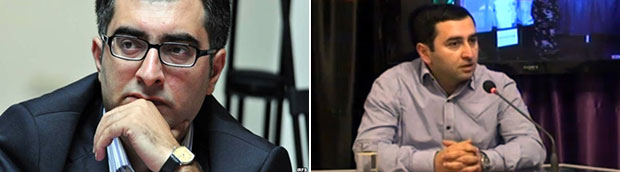
Anar Mammadli and Bashir Suleymanli
Anar Mammadli and Bashir Suleymanli — sentenced to 5.5 and 3.5 years respectively in May 2014 — are prominent human rights activists and founders of the Election Monitoring and Democracy Studies Centre. They were arrested and jailed in 2013, following outspoken criticism of presidential elections in October 2013, despite international protests. Those are the same polls that invited election observers from the OSCE found lacking. On 29 September 2014, Mammadli was awarded the Václav Havel Award for Human Rights by the Council of Europe.
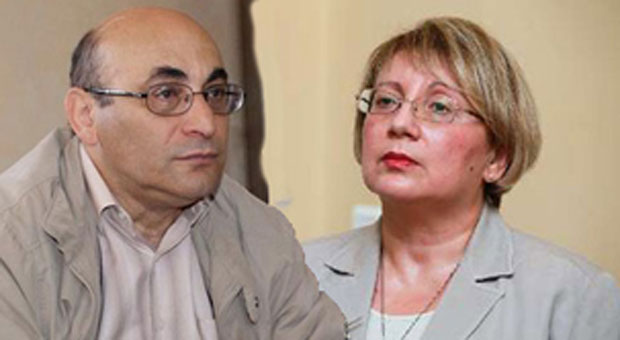
Arif and Leyla Yunus (Photo: HRHN)
Leyla Yunus — arrested 30 July 2014 — is the director of the Peace and Democracy Institute, which among other things works to establish rule of law in Azerbaijan. She has been charged with state treason (article 274 of the Criminal Code of the Republic of Azerbaijan), large-scale fraud (article 178.3.2), forgery (article 320), tax evasion (article 213), and illegal business (article 192). On 18 February, her pre-trial detention was extended for another five months. Her husband Arif Yunus was arrested 5 August 2014. Arif Yunus is facing charges of state treason and fraud. Both have had their initial three month pre-trial detentions extended.
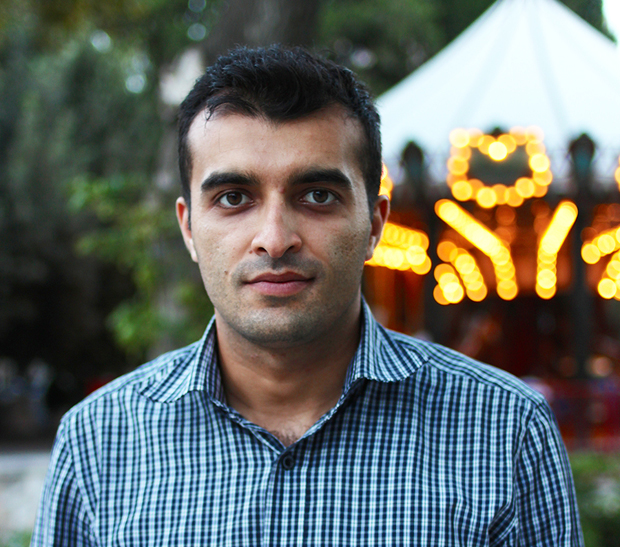
Human rights and democracy activist Rasul Jafarov (Photo: Melody Patry)
Rasul Jafarov — arrested 2 August 2014 — one of the initiators and coordinators of the campaign “Sing for Democracy” and “The Art of Democracy”, advocated for the rights of political prisoners, actively participated in the International Platform “Civil Solidarity.” He is accused of: tax evasion (Article 192), illegal business (Article 213) and malpractice (Article 308). The charges carry a possible sentence of 12 years.
Lawyer Intigam Aliyev
Intigam Aliyev — arrested 8 August 2014 — is a human rights defender and a lawyer specialized in defending rights of citizens in the European Court of Human Rights. He is charged with Articles 213.1 (tax evasion), 308.2 (malpractice) и 192.2 (illegal business) of the Criminal Code. Index was heartened to hear that Aliyev was at least allowed to sit with his lawyers in court on Feb 3.
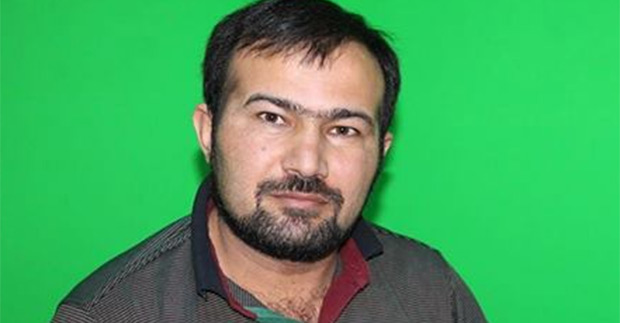
Journalist Seymur Hezi
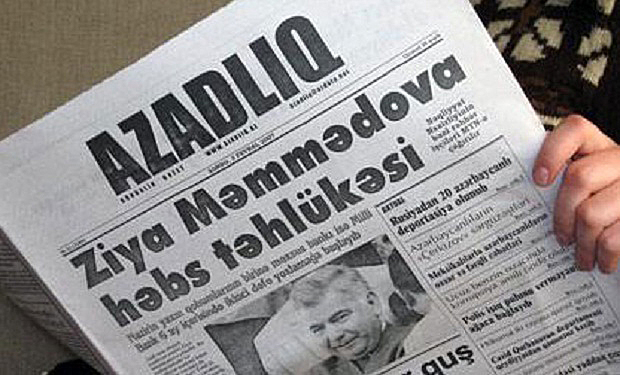
Seymur Hezi — arrested 29 August 2014 — works for independent newspaper Azadliq and host of the news programme “Azerbaijan Hour”. He is a member of the opposition Popular Front Party. Index reported on January 29 that Hezi was sentenced to a five-year prison sentence on charges of “aggravated hooliganism” on 29 January.
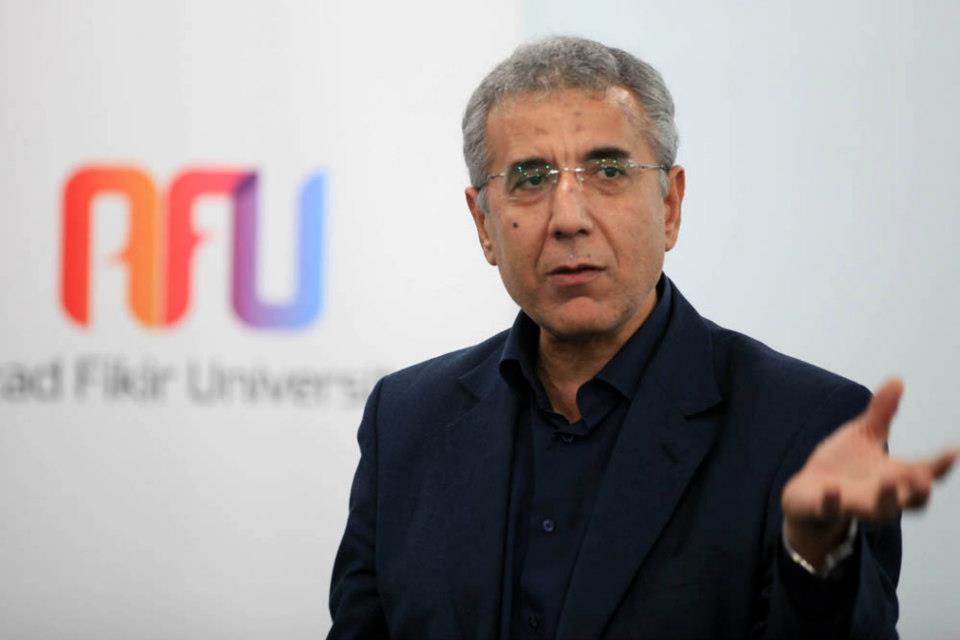
Emin Huseynov, journalist and human rights defender, director of the Azerbaijani Institute for Reporters’ Freedom and Safety (IRFS)
Emin Huseynov — went into hiding in August 2014 — is an internationally recognised human rights defender and leader of the Institute for Reporters’ Freedom and Safety (IRFS). IRFS is the leading media rights organisation in Azerbaijan and one of the main partner organisations of the Human Rights House Network in the country. Huseynov was charged with tax evasion, illegal business and abuse of authority after he went into hiding at the Swiss embassy. Florian Irminger, head of advocacy at the Human Rights House Foundation (HRHF), of which Index is a network member, called on Switzerland to continue to host Huseynov. “His location at the embassy is justified by the level of the repression in the country, the bogus charges brought against human rights defenders in Azerbaijan and the impossibility for them to defend themselves in court, due to the lack of independence of the judiciary and the harassment of their lawyers.”
Khadija Ismayilova
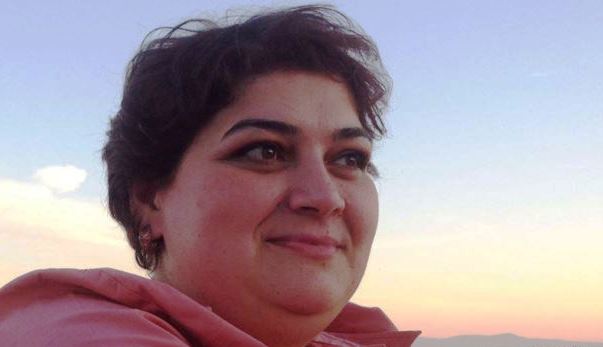
Khadija Ismayilova — arrested on 5 December — is an investigative journalist and radio host who is currently working for the Azerbaijani service of Radio Free Europe/Radio Liberty. She is a member of the Organized Crime and Corruption Reporting Project. She was arrested under charges of incitement to suicide, a charge widely criticised by human rights organizations. Ismayilova is currently being supported by two petition campaigns by Index on Censorship and Reporters Without Borders. On 13 Feb, lawyer Fariz Namazly told Contact.az that new charges have been filed. According to him, Ismayilova is charged under the Article: 179.3.2 (large-scale embezzlement), 192.2.2 (illegal business), 213.1 (tax evasion) and 308.2 (abuse of power.) The charges carry a possible sentence of 12 years.
In November, Nils Muižnieks, the Council of Europe Commissioner for Human Rights, called his autumn 2014 mission to Azerbaijan one of the most difficult of his tenure. He wrote, “In late October I was in Azerbaijan, the oil-rich country in the South Caucasus, which just finished holding the rotating chairmanship of the 47-member Council of Europe. Most countries chairing the organisation, which prides itself as the continent’s guardian of human rights, democracy and the rule of law, use their time at the helm to tout their democratic credentials. Azerbaijan will go down in history as the country that carried out an unprecedented crackdown on human rights defenders during its chairmanship.”
You mention in your letter that individuals are not being arrested for their human rights work but it seems an astonishing coincidence that all these prominent human rights defenders should all be guilty of such an array of financial crimes. And that brings us full circle to the present. Since we received your letter, there have been several developments that we would like to brief you on:
On 29 January 2015, a provisional resolution before the CoE called attention to the cases of investigative journalist Khadija Ismayilova, human rights activist Emin Huseynov and the closure of Radio Free Europe/Radio Liberty. Further on in the resolution PACE was being asked to call on Azerbaijan to properly investigate the murders of journalists Elmar Huseynov (2005) and Rafiq Tagi (2011).
On 3 Feb, President Aliyev signed an amended media law that restricts press freedom by making it easier to shutter media outlets.
Just today, Reporters Without Borders released its World Press Freedom Index 2015, which places Azerbaijan at 162. That’s down 2 spots from last 2014.
We wish Azerbaijan’s commitment to a “free and diverse media” was more than just words and we will continue to report on these detentions – as we do globally – for as long as these words are not translated into action.
Best regards
Jodie Ginsberg
Chief Executive
Index on Censorship