13 Jul 2018 | Magazine, News, Volume 47.02 Summer 2018
[vc_row][vc_column][vc_column_text]
In the summer 2018 issue of Index on Censorship magazine Caroline Muscat takes a closer look at the truths this year’s European Capital of Culture, Valetta in Malta, is hiding
[/vc_column_text][vc_single_image image=”101057″ img_size=”large” add_caption=”yes” alignment=”center”][vc_column_text]
The sprawl of construction sites represents the reality of Malta. It’s a sign of progress, never mind the fact that planning laws are farcical. The country’s affluence is shown by the number of cars on the road, never mind the traffic congestion. Its freedom is evidenced in the number of media outlets and news portals, never mind the fact that they all offer similar content. It’s all about appearance, not substance. Scratch beneath the surface and the problems start to appear.
“National pride has reached historic levels,” Prime Minister Joseph Muscat told more than 100,000 people who flocked to the nation’s capital, Valletta, for its inauguration as Europe’s Capital of Culture 2018. The announcement was made as the country was grappling with the assassination of its most prominent journalist, Daphne Caruana Galizia, and as accusations of a collapse in the rule of law continued to haunt Malta.
Restaurants offering mouth-watering dishes are found across the length and breadth of Malta’s islands, but while digging into a bruschetta few stop to question the sudden influx of Sicilian restaurants that are suspected of being money-laundering fronts for the Sicilian mafia.
Operation Beta, led by the Italian authorities in 2017, culminated in the arrest of 30 people as part of a major clampdown on illegal gaming activities and money laundering linked to a Sicilian family, the Santapaola-Erculanos, linked to the mafia by the Italian media. Almost a year later, Italian police cracked an operation involving Sicilians, Maltese and Libyans smuggling Libyan fuel into the European market. Once again, a link to the Santapaola-Erculano family emerged. A look at the histories of the mafia clans reveals deep family connections to Malta as a hub from which to extend their reach and profits.
The links date back to 1974, when a Sicilian man and his bride went to the Maltese island of Gozo on their honeymoon. They loved the island so much they frequently returned. To the locals who interacted with him in Pjazza San Frangisk, in Victoria, he was known simply as Toto.
But Toto was Salvatore Riina, the mafia boss who terrorised Sicily and made the Italian State tremble while making friends in Malta.
Over the years, Malta has continued to attract shady characters, including politically exposed politicians, from countries including India, Ukraine and Azerbaijan. There are clear risks in probing too deeply into the shadows of modern Malta – not that this is obvious to anyone landing in the country for a fortnight of sun and sea. Popular events, such as the annual music festival the Isle of MTV, continue to offer a distraction on the islands that were once a safe haven for tourists and locals. But the recent release of the Panama Papers linked a Maltese minister, Konrad Mizzi, and the prime minister’s chief of staff, Keith Schembri, to $1.6m payments to Dubai companies. Both deny the claims of payments.
It is now clear that a political party elected in 2013 on the promise of change was not thinking of adding transparency or media freedom. Since the Panama Papers revelations, journalists have piled up stories of scandals, but nothing has changed. Deals selling off the country’s assets continue to be made, shrouded in secrecy. And in the midst of all this, calls for justice for an assassinated journalist continue to echo in the air.
[/vc_column_text][/vc_column][vc_column][/vc_column][vc_column][/vc_column][/vc_row][vc_row][vc_column width=”1/4″][vc_icon icon_fontawesome=”fa fa-quote-left” color=”custom” align=”right” custom_color=”#dd3333″][/vc_column][vc_column width=”3/4″][vc_custom_heading text=”Few stop to question the sudden influx of Sicilian restaurants that are suspected to be money laundering fronts” google_fonts=”font_family:Libre%20Baskerville%3Aregular%2Citalic%2C700|font_style:400%20italic%3A400%3Aitalic”][/vc_column][/vc_row][vc_row][vc_column][vc_column_text]
Daphne Caruana Galizia was killed because of what she exposed. Seven months later, the institutions that failed to protect her are the same institutions that are failing to bring those who ordered her killing to justice. Every month, on the date marking her death, citizens gather to call for justice in the country’s capital. They gather in front of a makeshift memorial before the law courts as a reminder that justice has not been served. Every time, they know they will see each other the following month because nothing will have changed. Yet their presence, and the flowers and candles placed at the foot of the monument, serve as a reminder to the authorities that they will never forget.
Those who mention her name, those who refuse to bow to a society bent by corruption, are insulted and threatened. Journalists and activists keep being reminded of the untold damage they are doing to the country’s reputation. Malta’s image is everything, but it is not what it seems.
When confronted by the news that the European Parliament was sending a delegation to investigate Malta’s anti-money laundering rules, Muscat said: “I invite them to come over to see what a fantastic country we are.” But the Paradise Papers had already shown just how “fantastic” Malta s by casting a dark cloud over its economic miracle.
While workers in other countries have borne the brunt of austerity, the Maltese have never had it so good, shielded by an economic system which relies partly on enticing shell companies to Malta by offering a favourable fiscal regime, in addition to a growing dependence on i-gaming and construction. In addition, Malta’s controversial “sale” of European passports continues, despite concerns about the erosion of democracy.
Living in Malta as a journalist one experiences the stark reality of it all. Those exposing corruption are ostracised and vilified. Their voices are drowned out by the millions spent on the marketing machine to promote Malta and clean its image. Journalism is undermined through an almost complete domination of the narrative by the government – millions of euros spent on PR ridicules weeks of investigative journalism. Government advertising drowns out calls for a democracy that ends corruption and protects freedom of speech.
On 16 May, Labour MP Rosianne Cutajar stood up in parliament and spent 30 minutes criticising the publication of a six-month investigation by The Shift News that exposed pro-government secret Facebook groups with thousands of members posting threats against activists. These posts included threats towards anti-corruption activist Tina Urso, whose home address was also published on the site. Urso filed two complaints with the police, but wasn’t offered any protection.
The MP also said I was sowing the seeds of hatred left behind by Caruana Galizia by attacking the government. Compare this with the exposé of anti-Semitism in the UK Labour Party and the media scandal that followed. In Malta, the scandal was the journalist who dared to speak truth to power.
Caruana Galizia had written: “Malta is in a dangerous place, and now we can no longer say that it is corrupt politicians who have brought it to this point, for it can no longer be denied that those corrupt politicians are a reflection of society.”
In this scenario, the protection of journalists is critical in a landscape that is intolerant of independent thought.
[/vc_column_text][/vc_column][/vc_row][vc_row][vc_column][vc_column_text]
Caroline Muscat is the co-founder of The Shift News, based in Malta
This article was originally published in the Summer 2018 issue of Index on Censorship magazine. Click here to read about the other articles in the issue.
The latest issue of Index on Censorship magazine, Trouble in Paradise, Escape from Reality: what holidaymakers don’t know about their destinations is out now. Buy a subscription. Buy a print copy from bookshops including BFI, Serpentine and MagCulture (London), News from Nowhere (Liverpool), Home (Manchester), and Red Lion Books (Colchester), or via Amazon. Digital versions available via exacteditions.com or iTunes.
Finally, don’t miss our regular quarterly magazine podcast, also on Soundcloud, including an interview with the founder of the Rough Guides, Mark Ellingham. Come by and visit us.
[/vc_column_text][/vc_column][/vc_row][vc_row][vc_column][vc_custom_heading text=”From the Archives”][vc_row_inner][vc_column_inner width=”1/3″][vc_single_image image=”89160″ img_size=”213×287″ alignment=”center” onclick=”custom_link” link=”http://journals.sagepub.com/doi/pdf/10.1080/03064229108535157″][vc_custom_heading text=”Do not disturb” font_container=”tag:p|font_size:24|text_align:left” link=”url:http%3A%2F%2Fjournals.sagepub.com%2Fdoi%2Fpdf%2F10.1177%2F0306422011399822|||”][vc_column_text]2011
In 2011, Charles Young reported that writers, journalists and even DJs are falling foul of Malta’s censorious laws[/vc_column_text][/vc_column_inner][vc_column_inner width=”1/3″][vc_single_image image=”64776″ img_size=”213×287″ alignment=”center” onclick=”custom_link” link=”http://journals.sagepub.com/doi/pdf/10.1080/03064220008536796″][vc_custom_heading text=”Social disturbance” font_container=”tag:p|font_size:24|text_align:left” link=”url:http%3A%2F%2Fjournals.sagepub.com%2Fdoi%2Fpdf%2F10.1177%2F0306422015571882|||”][vc_column_text]March 2015
News footage provided by readers and viewers has entered a new era, where we’re faced with more propaganda, hoaxes and graphic detail than ever before. Vicky Baker looks at the increasingly tough verification process at the BBC’s user-generated content department[/vc_column_text][/vc_column_inner][vc_column_inner width=”1/3″][vc_single_image image=”99282″ img_size=”full” alignment=”center” onclick=”custom_link” link=”http://journals.sagepub.com/doi/pdf/10.1080/03064229308535477″][vc_custom_heading text=”Index around the world” font_container=”tag:p|font_size:24|text_align:left” link=”url:http%3A%2F%2Fjournals.sagepub.com%2Fdoi%2Fpdf%2F10.1177%2F0306422018769585|||”][vc_column_text]Spring 2018
Attacks on journalists are escalating in areas formerly seen as safe,
including the USA and the European Union, says Danyaal Yasin[/vc_column_text][/vc_column_inner][/vc_row_inner][vc_separator][/vc_column][/vc_row][vc_row content_placement=”top”][vc_column width=”1/3″][vc_custom_heading text=”Trouble in Paradise” font_container=”tag:p|font_size:24|text_align:left” link=”url:https%3A%2F%2Fwww.indexoncensorship.org%2F2018%2F04%2Fthe-abuse-of-history%2F|||”][vc_column_text]The summer 2018 issue of Index on Censorship magazine takes you on holiday, just a different kind of holiday. From Malta to the Maldives, we explore how freedom of expression is under attack in dream destinations around the world.
With: Martin Rowson, Jon Savage, Jonathan Tel [/vc_column_text][/vc_column][vc_column width=”1/3″][vc_single_image image=”100843″ img_size=”medium” alignment=”center” onclick=”custom_link” link=”https://www.indexoncensorship.org/2018/06/trouble-in-paradise/”][/vc_column][vc_column width=”1/3″ css=”.vc_custom_1481888488328{padding-bottom: 50px !important;}”][vc_custom_heading text=”Subscribe” font_container=”tag:p|font_size:24|text_align:left” link=”url:https%3A%2F%2Fwww.indexoncensorship.org%2Fsubscribe%2F|||”][vc_column_text]In print, online. In your mailbox, on your iPad.
Subscription options from £18 or just £1.49 in the App Store for a digital issue.
Every subscriber helps support Index on Censorship’s projects around the world.
 SUBSCRIBE NOW[/vc_column_text][/vc_column][/vc_row][vc_row][vc_column][/vc_column][/vc_row]
19 Apr 2018 | Awards, News
[vc_row][vc_column][vc_column_text]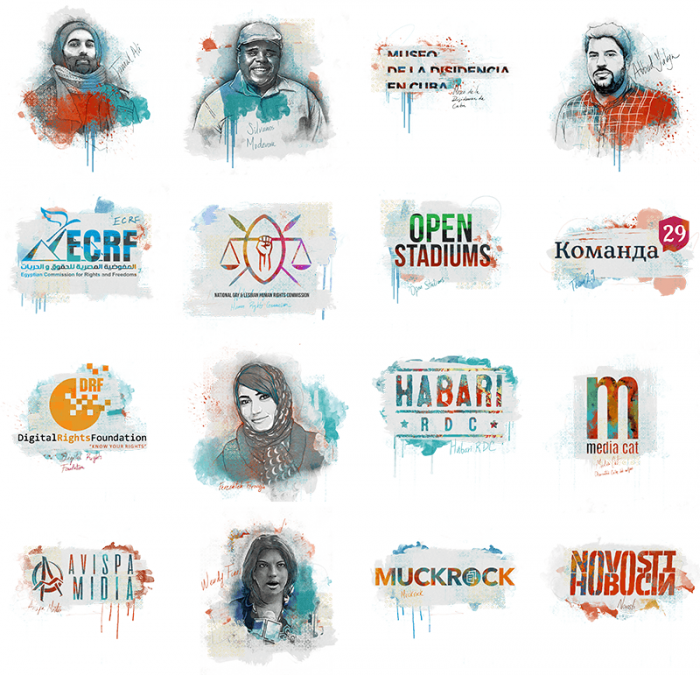
Each year, the Index on Censorship Freedom of Expression Awards gala honours courageous champions who fight for free speech around the world.
Drawn from more than 400 crowdsourced nominations, this year’s nominees include artists, journalists, campaigners and digital activists tackling censorship and fighting for freedom of expression. Many of the 16 shortlisted are regularly targeted by authorities or by criminal and extremist groups for their work: some face regular death threats, others criminal prosecution.
The gala takes place on Thursday 19 April in London and will be hosted by stand-up poet Kate Fox.
We will be live tweeting throughout the evening on @IndexCensorship. Get involved in the conversation using the hashtag #IndexAwards2018. Listen LIVE beginning at 7:30pm BST on Resonance FM
Index on Censorship Freedom of Expression Awards nominees 2018
Arts
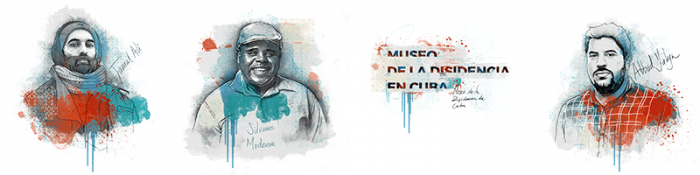
Jamal Ali, Azerbaijan
Jamal Ali is an exiled rap musician with a history of challenging Azerbaijan’s authoritarian regime. Ali was one of many who took to the streets in 2012 to protest spending around the country’s hosting of the Eurovision song contest. Detained and tortured for his role in the protests, he went into exile after his life was threatened. Ali has persisted in challenging the government by releasing music critical of the country’s dynastic leadership. Following the release of one song, Ali’s mother was arrested in a senseless display of aggression. In provoking such a harsh response with a single action, Ali has highlighted the repressive nature of the regime and its ruthless desire to silence all dissent.
Full profile
Silvanos Mudzvova, Zimbabwe
Playwright and activist Silvanos Mudzvova uses performance to protest against the repressive regime of recently toppled President Robert Mugabe and to agitate for greater democracy and rights for his country’s LGBT community. Mudzvova specialises in performing so-called “hit-and-run” actions in public places to grab the attention of politicians and defy censorship laws, which forbid public performances without police clearance. His activism has seen him be traumatically abducted: taken at gunpoint from his home he was viciously tortured with electric shocks. Nonetheless, Mudzvova has resolved to finish what he’s started and has been vociferous about the recent political change in Zimbabwe.
Full profile
The Museum of Dissidence, Cuba
The Museum of Dissidence is a public art project and website celebrating dissent in Cuba. Set up in 2016 by acclaimed artist Luis Manuel Otero Alcántara and curator Yanelys Nuñez Leyva, their aim is to reclaim the word “dissident” and give it a positive meaning in Cuba. The museum organises radical public art projects and installations, concentrated in the poorer districts of Havana. Their fearlessness in opening dialogues and inhabiting public space has led to fierce repercussions: Nuñez was sacked from her job and Otero arrested and threatened with prison for being a “counter-revolutionary.” Despite this, they persist in challenging Cuba’s restrictions on expression.
Full profile
Abbad Yahya, Palestine
Abbad Yahya is a Palestinian author whose novel, Crime in Ramallah, was banned by the Palestinian Authority in 2017. The book tackles taboo issues such as homosexuality, fanaticism and religious extremism. It provoked a rapid official response and all copies of the book were seized. The public prosecutor issued a summons for questioning against Yahya while the distributor of the novel was arrested and interrogated. Yahya also received threats and copies of the book were burned. Despite this, he has spent the last year raising awareness of freedom of expression and the lives of young people in the West Bank and Gaza, particularly in relation to their sexuality.
Full profile
Campaigning
Egyptian Commission for Rights and Freedoms, Egypt
The Egyptian Commission for Rights and Freedoms is one of the few human rights organisations still operating in a country which has waged an orchestrated campaign against independent civil society groups. Egypt is becoming increasingly hostile to dissent, but ECRF continues to provide advocacy, legal support and campaign coordination, drawing attention to the many ongoing human rights abuses under the autocratic rule of President Abdel Fattah-el-Sisi. Their work has seen them subject to state harassment, their headquarters have been raided and staff members arrested. ECRF are committed to carrying on with their work regardless of the challenges.
Full profile
National Gay and Lesbian Human Rights Commission, Kenya
The National Gay and Lesbian Human Rights Commission is the only organisation in Kenya challenging and preventing LGBTI discrimination through the country’s courts. Even though homosexuality isn’t illegal in Kenya, homosexual acts are. Homophobia is commonplace and men who have sex with men can be punished by up to 14 years in prison, and while no specific laws relate to women, former Prime Minister Raila Odinga has said lesbians should also be imprisoned. NGLHRC has had an impact by successfully lobbying MPs to scrap a proposed anti-homosexuality bill and winning agreement from the Kenya Medical Association to stop forced anal examination of clients.
Full profile
Open Stadiums, Iran
The women behind Open Stadiums risk their lives to assert a woman’s right to attend public sporting events in Iran. The campaign challenges the country’s political and religious regime, and engages women in an issue many human rights activists have previously thought unimportant. Iranian women face many restrictions on using public space. Open Stadiums has generated broad support for their cause in and out of the country. As a result, MPs and people in power are beginning to talk about women’s rights to attend sporting events in a way that would have been taboo before.
Full profile
Team 29, Russia
Team 29 is an association of lawyers and journalists that defends those targeted by the state for exercising their right to freedom of speech in Russia. It is crucial work in a climate where hundreds of civil society organisations have been forced to close and where increasingly tight restrictions have been placed on public protest and political dissent since mass demonstrations rocked Russia in 2012. Team 29 conducts about 50 court cases annually, many involving accusations of high treason. Aside from litigation, they offer legal guides for activists and advice on what to do when summoned by state security for interrogation.
Full profile
Digital Activism

Digital Rights Foundation, Pakistan
In late 2016, the Digital Rights Foundation established a cyber-harassment helpline that supported more than a thousand women in its first year of operation alone. Women make up only about a quarter of the online population in Pakistan but routinely face intense bullying including the use of revenge porn, blackmail, and other kinds of harassment. Often afraid to report how badly they are treated, women react by withdrawing from online spaces. To counter this, DRF’s Cyber Harassment Helpline team includes a qualified psychologist, digital security expert, and trained lawyer, all of whom provide specialised assistance.
Full profile
Fereshteh Forough, Afghanistan
Fereshteh Forough is the founder and executive director of Code to Inspire, a coding school for girls in Afghanistan. Founded in 2015, this innovative project helps women and girls learn computer programming with the aim of tapping into commercial opportunities online and fostering economic independence in a country that remains a highly patriarchal and conservative society. Forough believes that with programming skills, an internet connection and using bitcoin for currency, Afghan women can not only create wealth but challenge gender roles and gain independence.
Full profile
Habari RDC, Congo
Launched in 2016, Habari RDC is a collective of more than 100 young Congolese bloggers and web activists, who use Facebook, Twitter and YouTube to give voice to the opinions of young people from all over the Democratic Republic of Congo. Their site posts stories and cartoons about politics, but it also covers football, the arts and subjects such as domestic violence, child exploitation, the female orgasm and sexual harassment at work. Habari RDC offers a distinctive collection of funny, angry and modern Congolese voices, who are demanding to be heard.
Full profile
Mèdia.cat, Spain
Mèdia.cat is a Catalan website devoted to highlighting media freedom violations and investigating under-reported stories. Unique in Spain, it was a particularly significant player in 2017 when the disputed independence referendum brought issues of censorship and the impartiality of news under the spotlight. The website provides an online platform that systematically catalogues censorship perpetrated in the region. Its map on censorship offers a way for journalists to report on abuses they have personally suffered.
Journalism
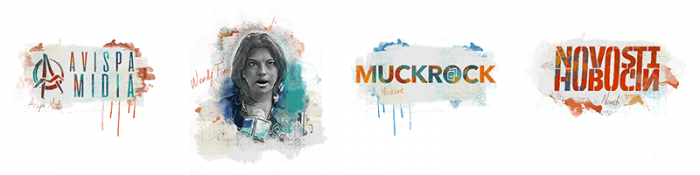
Avispa Midia, Mexico
Avispa Midia is an independent online magazine that prides itself on its use of multimedia techniques to bring alive the political, economic and social worlds of Mexico and Latin America. It specialises in investigations into organised crime and the paramilitaries behind mining mega-projects, hydroelectric dams and the wind and oil industry. Many of Avispa’s reports in the last 12 months have been focused on Mexico and Central America, where the media group has helped indigenous and marginalised communities report on their own stories through audio and video training.
Wendy Funes, Honduras
Wendy Funes is an investigative journalist from Honduras who regularly risks her life for her right to report on what is happening in the country, an extremely harsh environment for reporters. Two journalists were murdered in 2017 and her father and friends are among those who have met violent deaths in the country – killings for which no one has ever been brought to justice. Funes meets these challenges with creativity and determination. For one article she had her own death certificate issued to highlight corruption. Funes also writes about violence against women, a huge problem in Honduras where one woman is killed every 16 hours.
MuckRock, United States
MuckRock is a non-profit news site used by journalists, activists and members of the public to request and share US government documents in pursuit of more transparency. MuckRock has shed light on government surveillance, censorship and police militarisation among other issues. MuckRock produces its own reporting, and helps others learn more about requesting information. Last year the site produced a Freedom of Information Act 4 Kidz lesson plan to help educators to start discussions about government transparency. Since then, they have expanded their reach to Canada. The organisation hopes to continue increasing their impact by putting transparency tools in the hands of journalists, researchers and ordinary citizens.
Novosti, Croatia
Novosti is a weekly Serbian-language magazine in Croatia. Although fully funded as a Serb minority publication by the Serbian National Council, it deals with a whole range of topics, not only those directly related to the minority status of Croatian Serbs. In the past year, the outlet’s journalists have faced attacks and death threats mainly from the ultra-conservative far-right. For its reporting, the staff of Novosti have been met with protest under the windows of the magazine’s offices shouting fascist slogans and anti-Serbian insults, and told they would end up killed like Charlie Hebdo journalists. Despite the pressure, the weekly persists in writing the truth and defending freedom of expression.[/vc_column_text][/vc_column][/vc_row][vc_row][vc_column][vc_basic_grid post_type=”post” max_items=”12″ style=”load-more” items_per_page=”4″ element_width=”6″ grid_id=”vc_gid:1524073803130-58a2be32-5f5a-7″ taxonomies=”8935″][/vc_column][/vc_row]
9 Apr 2018 | Azerbaijan, Azerbaijan News, Germany, Mapping Media Freedom, Media Freedom, media freedom featured, News, Russia, Turkey, Uzbekistan
[vc_row][vc_column][vc_column_text]
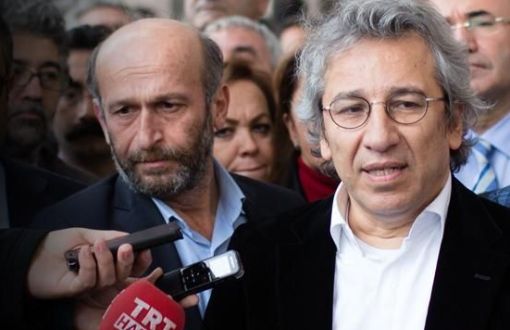
Journalists Erdem Gül and Can Dündar (Photo: Bianet)
Can Dündar, editor-in-chief of Cumhuriyyet, one of Turkey’s most popular newspapers, was awaiting an appeal on his case in Turkey from Germany when the news of the coup d’etat in his homeland came. Scores of arrests followed, and his lawyer advised that Dündar, who had just narrowly escaped an assassination attempt in May 2016 outside a courtroom and was facing over five years in prison for allegedly leaking state secrets, stay in Germany.
He recalls that it was the hardest decision in his life, 40 years of which he had devoted to working as a journalist in Turkey.
“I thought it was impossible to go back, decided to stay and work from Germany, and about a year ago I with a small team started a media organization here, Özgürüz.”
When it’s time to leave
As shocking as Dündar’s story is, it is hardly unusual in the Eurasian region, where, according to International Media Support, there was a steady decline in freedom of expression in Eurasia since 2011. While for years the Committee to Protect Journalists named Turkey the biggest jailer of journalists globally, there are other nations competing for this dubious title.
For some journalists, the alternative to being jailed is an exile. According to Yavuz Baydar, chief editor of Ahval Online, a Turkey-oriented news site based in Germany, “That’s an inevitable result of oppression in any country because as long as the conventional media are suffocated and put under the yoke of the powers, it leaves journalists with no other choice than leaving the profession altogether or moving abroad.”
However, only a select few survive the shock and reemerge as viable journalists continuing to work in exile.
Some of the most successful examples of the media in exile emerged from the region and operating in the more permissive environment of Western Europe, according to Jens Uwe Thomas with RSF Germany, are Meduza, Amurburg and Spektr, Russia-oriented news portals, as well as MeydanTV, an Azerbaijani multimedia outlet in exile, Dündar’s Özgürüz and Baydar’s Ahval Online.
Challenges of exile
Thomas says that upon settling in exile, the first step for the journalists is usually to legalize their status, and then they start looking for opportunities to establish their outlets.
“The most important thing is to support these media abroad in terms of their registration,” says Bektour Iskander, editor of Kyrgyz media Kloop, who monitors exiled media and is in the process of creating a digital resources kit for them, adding that oftentimes, the media can’t relocate abroad due to lack of financial resources or visas.
“In 2010 we were threatened by the special services because of our investigative reporting about the son of president Bakiyev [of Kyrgyzstan]. But we had no opportunity to leave the country. Only now I realize that we were facing scary consequences, even assassination. We were so clueless as to how to do that, or find the resources for that, we were saved by the miracle, a revolution happened in the country and the threat disappeared,” he recalls.
One common thread for these media across the board is that while their editorial teams operate in exile, they have networks of journalists working for them from inside their home country, says Thomas, adding that secure communication and creating collaborative work environment in such circumstances is often a challenge.
“Those are operating under the great risks, which causes a lot of hurdles and obstacles for continuity and consistency in the content quality,” Baydar adds. MeydanTV founder Emin Milli agrees, “Unfortunately, journalists and their family members are under pressure. The ones who work with us have been attacked, some tortured. Some parents of theirs were fired”. Galima Bukhabrayeva, former editor of exiled Uznews web site that was allegedly hacked by the Uzbek government and is now defunct, says: “In our case, the best journalists in Uzbekistan worked with us, because in our case it wasn’t enough to be a journalist, one had to be a patriot and a citizen, and a brave person, at that.”
But the relocation doesn’t always pose a challenge, says Aleksandr Kushnar, editor of Russian exiled media Amurburg. Commenting on the success of Meduza, he says, “It makes more sense for them to be located where they are for the reasons of safety of the editorial staff [because] their geographic location doesn’t affect the quality of their content.”
Uniformly, the exiled media representatives bemoan the perception in their home countries that these media lack the situational awareness on the ground. One example of successfully solving this challenge is MeydanTV, says Iskander, adding that “they encourage citizen journalism, their readers [are] often involved in the content creation, they send photos, videos, materials.”
Another challenge all of the exiled media managers interviewed for this article cite is the lack of funding, which poses a constant problem on the back of everybody’s mind. What complicates things for the managers of these outlets is the stipulation set forward by the international donors that the medium be located in-country in order to satisfy the funding criteria, which is impossible to abide by for those operating in exile.
Silver linings
But not all is hopeless for the uprooted journalists and media managers, and alongside obvious challenges, there are reasons for cautious optimism. There are quite a few success stories among the outlets who learned to capitalise on the advantages of operating from free environments.
Kushnar says attaining success is very difficult in reality, and he attributes it to the issues of funding, resources and teams. Speaking of the outlets, he says that “Their capabilities are seriously restricted. Oftentimes, they cannot compete with the leading news agencies that are funded very generously. We all know very well how RT is funded all over the world. The goal for these media is to identify the niches where they still can get in and tell the truth. It’s very difficult when pro-Kremlin outlets have an audience of 40 million, and your budget is a thousand times smaller.”
The upsides are quite self-evident, according to Anton Lysenkov, editor of Latvia-based Spektr: “Our situation is beneficial. We are not subjected to constant audits and provocations. Our work environment is much more peaceful. I admire those who continue to work from Russia, and we are trying to help them,” he adds.
According to Baydar, “The upside is you can see everything with a bird’s eye, in a free domain, analyse things much more clearly in a macro way which gives a lot of advantages to focus on the main areas that need to be covered.”
Some media in exile not only survive, but they manage to thrive and even increase their audiences, like Meduza. “They have millions of unique visitors a month, and it’s been rising year to year. They’re trusted,” says Milli. “They can work freely in Russia and come and go as they please. They’re a successful model.”
Galina Timchenko, Meduza’s editor-in-chief, cannot attribute the success of her outfit to any one strategy: “Unfortunately, there are no long-term plans and effective strategies for success in the current political climate. So far, we are not considering the possibility of moving to Russia because we cannot remain oblivious to the rising risks in that case. The media market in Russia is almost completely controlled by the state, and we don’t see a place for ourselves within such a market in the short term perspective,” she adds.
Preserving and rehearsing for the return
But what is the purpose of the media in exile and what is their end game?
While Kushnar says, exiled media preserve the freedom of the press in a dictatorship, Lysenkov adds that their goal is to supply the population with propaganda-free and less emotionally-charged content. Milli sees the enormous power of the free media to change the society for the better. “People have big hopes and need this, too. That’s why we keep working”.
Others see their ultimate goal as return home. Iskander cautions that “when a dictatorship in their home country comes to an end and [the media in exile] return home, their ratings start falling sharply. Because the credit of trust has been disintegrating, because the rhetoric could change from “at least someone is trying to do some good, even if it is from abroad” to “where have you been all these years while we were suffering?”
Despite such dangers, Bukharbayeva says, the ultimate goal of the exiled media is the return home. She points out that one loses focus and ability to write accurately when unable to visit their home country for over a decade, but “exiled media cannot exist indefinitely, and we must try to return because the time has come.”
Dündar, who has also started publishing a print magazine and opened a publishing house, is looking into opening a TV channel. He says his team’s current work is like a rehearsal in preparations for the future.
“It’s impossible to be in Turkey. But like the German Jews in WWII [who] came to Turkey, rehearsed there, came up with new ideas, and then went back to Germany after the war, we, Turks, are rehearsing and preparing for a better day in Turkey to return there”. [/vc_column_text][/vc_column][/vc_row][vc_row][vc_column][vc_basic_grid post_type=”post” max_items=”10″ grid_id=”vc_gid:1523289736466-bd3f6e90-fdac-9″ taxonomies=”8607″][/vc_column][/vc_row]

 [/vc_column_text][/vc_column_inner][/vc_row_inner][/vc_column][/vc_row][vc_row][vc_column][vc_column_text]