19 Apr 2018 | Awards, News
[vc_row][vc_column][vc_column_text]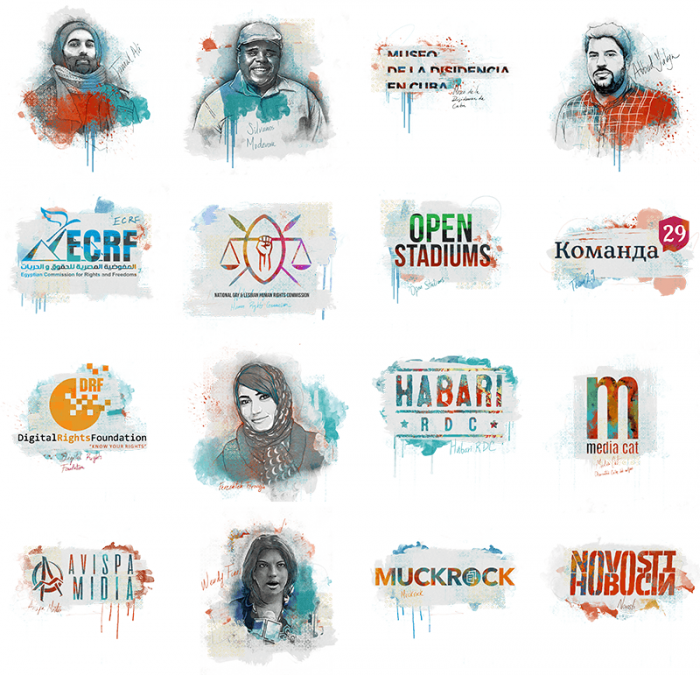
Each year, the Index on Censorship Freedom of Expression Awards gala honours courageous champions who fight for free speech around the world.
Drawn from more than 400 crowdsourced nominations, this year’s nominees include artists, journalists, campaigners and digital activists tackling censorship and fighting for freedom of expression. Many of the 16 shortlisted are regularly targeted by authorities or by criminal and extremist groups for their work: some face regular death threats, others criminal prosecution.
The gala takes place on Thursday 19 April in London and will be hosted by stand-up poet Kate Fox.
We will be live tweeting throughout the evening on @IndexCensorship. Get involved in the conversation using the hashtag #IndexAwards2018. Listen LIVE beginning at 7:30pm BST on Resonance FM
Index on Censorship Freedom of Expression Awards nominees 2018
Arts
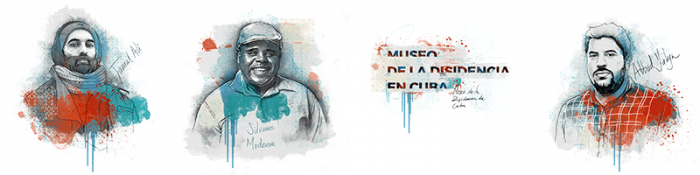
Jamal Ali, Azerbaijan
Jamal Ali is an exiled rap musician with a history of challenging Azerbaijan’s authoritarian regime. Ali was one of many who took to the streets in 2012 to protest spending around the country’s hosting of the Eurovision song contest. Detained and tortured for his role in the protests, he went into exile after his life was threatened. Ali has persisted in challenging the government by releasing music critical of the country’s dynastic leadership. Following the release of one song, Ali’s mother was arrested in a senseless display of aggression. In provoking such a harsh response with a single action, Ali has highlighted the repressive nature of the regime and its ruthless desire to silence all dissent.
Full profile
Silvanos Mudzvova, Zimbabwe
Playwright and activist Silvanos Mudzvova uses performance to protest against the repressive regime of recently toppled President Robert Mugabe and to agitate for greater democracy and rights for his country’s LGBT community. Mudzvova specialises in performing so-called “hit-and-run” actions in public places to grab the attention of politicians and defy censorship laws, which forbid public performances without police clearance. His activism has seen him be traumatically abducted: taken at gunpoint from his home he was viciously tortured with electric shocks. Nonetheless, Mudzvova has resolved to finish what he’s started and has been vociferous about the recent political change in Zimbabwe.
Full profile
The Museum of Dissidence, Cuba
The Museum of Dissidence is a public art project and website celebrating dissent in Cuba. Set up in 2016 by acclaimed artist Luis Manuel Otero Alcántara and curator Yanelys Nuñez Leyva, their aim is to reclaim the word “dissident” and give it a positive meaning in Cuba. The museum organises radical public art projects and installations, concentrated in the poorer districts of Havana. Their fearlessness in opening dialogues and inhabiting public space has led to fierce repercussions: Nuñez was sacked from her job and Otero arrested and threatened with prison for being a “counter-revolutionary.” Despite this, they persist in challenging Cuba’s restrictions on expression.
Full profile
Abbad Yahya, Palestine
Abbad Yahya is a Palestinian author whose novel, Crime in Ramallah, was banned by the Palestinian Authority in 2017. The book tackles taboo issues such as homosexuality, fanaticism and religious extremism. It provoked a rapid official response and all copies of the book were seized. The public prosecutor issued a summons for questioning against Yahya while the distributor of the novel was arrested and interrogated. Yahya also received threats and copies of the book were burned. Despite this, he has spent the last year raising awareness of freedom of expression and the lives of young people in the West Bank and Gaza, particularly in relation to their sexuality.
Full profile
Campaigning
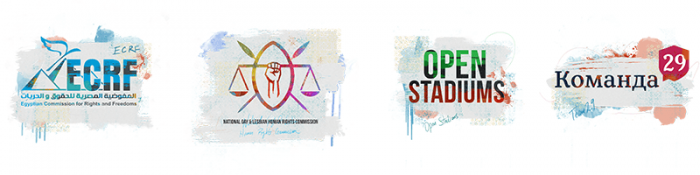
Egyptian Commission for Rights and Freedoms, Egypt
The Egyptian Commission for Rights and Freedoms is one of the few human rights organisations still operating in a country which has waged an orchestrated campaign against independent civil society groups. Egypt is becoming increasingly hostile to dissent, but ECRF continues to provide advocacy, legal support and campaign coordination, drawing attention to the many ongoing human rights abuses under the autocratic rule of President Abdel Fattah-el-Sisi. Their work has seen them subject to state harassment, their headquarters have been raided and staff members arrested. ECRF are committed to carrying on with their work regardless of the challenges.
Full profile
National Gay and Lesbian Human Rights Commission, Kenya
The National Gay and Lesbian Human Rights Commission is the only organisation in Kenya challenging and preventing LGBTI discrimination through the country’s courts. Even though homosexuality isn’t illegal in Kenya, homosexual acts are. Homophobia is commonplace and men who have sex with men can be punished by up to 14 years in prison, and while no specific laws relate to women, former Prime Minister Raila Odinga has said lesbians should also be imprisoned. NGLHRC has had an impact by successfully lobbying MPs to scrap a proposed anti-homosexuality bill and winning agreement from the Kenya Medical Association to stop forced anal examination of clients.
Full profile
Open Stadiums, Iran
The women behind Open Stadiums risk their lives to assert a woman’s right to attend public sporting events in Iran. The campaign challenges the country’s political and religious regime, and engages women in an issue many human rights activists have previously thought unimportant. Iranian women face many restrictions on using public space. Open Stadiums has generated broad support for their cause in and out of the country. As a result, MPs and people in power are beginning to talk about women’s rights to attend sporting events in a way that would have been taboo before.
Full profile
Team 29, Russia
Team 29 is an association of lawyers and journalists that defends those targeted by the state for exercising their right to freedom of speech in Russia. It is crucial work in a climate where hundreds of civil society organisations have been forced to close and where increasingly tight restrictions have been placed on public protest and political dissent since mass demonstrations rocked Russia in 2012. Team 29 conducts about 50 court cases annually, many involving accusations of high treason. Aside from litigation, they offer legal guides for activists and advice on what to do when summoned by state security for interrogation.
Full profile
Digital Activism
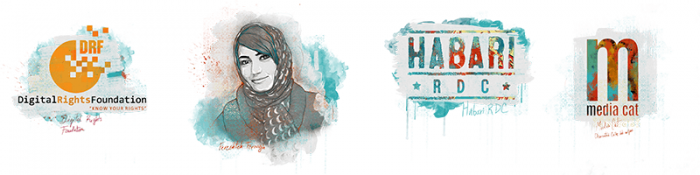
Digital Rights Foundation, Pakistan
In late 2016, the Digital Rights Foundation established a cyber-harassment helpline that supported more than a thousand women in its first year of operation alone. Women make up only about a quarter of the online population in Pakistan but routinely face intense bullying including the use of revenge porn, blackmail, and other kinds of harassment. Often afraid to report how badly they are treated, women react by withdrawing from online spaces. To counter this, DRF’s Cyber Harassment Helpline team includes a qualified psychologist, digital security expert, and trained lawyer, all of whom provide specialised assistance.
Full profile
Fereshteh Forough, Afghanistan
Fereshteh Forough is the founder and executive director of Code to Inspire, a coding school for girls in Afghanistan. Founded in 2015, this innovative project helps women and girls learn computer programming with the aim of tapping into commercial opportunities online and fostering economic independence in a country that remains a highly patriarchal and conservative society. Forough believes that with programming skills, an internet connection and using bitcoin for currency, Afghan women can not only create wealth but challenge gender roles and gain independence.
Full profile
Habari RDC, Congo
Launched in 2016, Habari RDC is a collective of more than 100 young Congolese bloggers and web activists, who use Facebook, Twitter and YouTube to give voice to the opinions of young people from all over the Democratic Republic of Congo. Their site posts stories and cartoons about politics, but it also covers football, the arts and subjects such as domestic violence, child exploitation, the female orgasm and sexual harassment at work. Habari RDC offers a distinctive collection of funny, angry and modern Congolese voices, who are demanding to be heard.
Full profile
Mèdia.cat, Spain
Mèdia.cat is a Catalan website devoted to highlighting media freedom violations and investigating under-reported stories. Unique in Spain, it was a particularly significant player in 2017 when the disputed independence referendum brought issues of censorship and the impartiality of news under the spotlight. The website provides an online platform that systematically catalogues censorship perpetrated in the region. Its map on censorship offers a way for journalists to report on abuses they have personally suffered.
Journalism
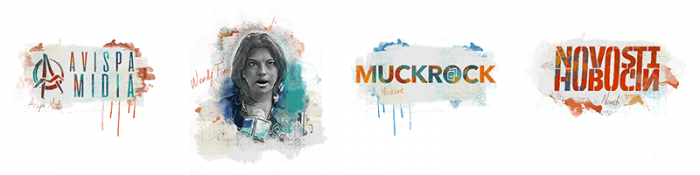
Avispa Midia, Mexico
Avispa Midia is an independent online magazine that prides itself on its use of multimedia techniques to bring alive the political, economic and social worlds of Mexico and Latin America. It specialises in investigations into organised crime and the paramilitaries behind mining mega-projects, hydroelectric dams and the wind and oil industry. Many of Avispa’s reports in the last 12 months have been focused on Mexico and Central America, where the media group has helped indigenous and marginalised communities report on their own stories through audio and video training.
Wendy Funes, Honduras
Wendy Funes is an investigative journalist from Honduras who regularly risks her life for her right to report on what is happening in the country, an extremely harsh environment for reporters. Two journalists were murdered in 2017 and her father and friends are among those who have met violent deaths in the country – killings for which no one has ever been brought to justice. Funes meets these challenges with creativity and determination. For one article she had her own death certificate issued to highlight corruption. Funes also writes about violence against women, a huge problem in Honduras where one woman is killed every 16 hours.
MuckRock, United States
MuckRock is a non-profit news site used by journalists, activists and members of the public to request and share US government documents in pursuit of more transparency. MuckRock has shed light on government surveillance, censorship and police militarisation among other issues. MuckRock produces its own reporting, and helps others learn more about requesting information. Last year the site produced a Freedom of Information Act 4 Kidz lesson plan to help educators to start discussions about government transparency. Since then, they have expanded their reach to Canada. The organisation hopes to continue increasing their impact by putting transparency tools in the hands of journalists, researchers and ordinary citizens.
Novosti, Croatia
Novosti is a weekly Serbian-language magazine in Croatia. Although fully funded as a Serb minority publication by the Serbian National Council, it deals with a whole range of topics, not only those directly related to the minority status of Croatian Serbs. In the past year, the outlet’s journalists have faced attacks and death threats mainly from the ultra-conservative far-right. For its reporting, the staff of Novosti have been met with protest under the windows of the magazine’s offices shouting fascist slogans and anti-Serbian insults, and told they would end up killed like Charlie Hebdo journalists. Despite the pressure, the weekly persists in writing the truth and defending freedom of expression.[/vc_column_text][/vc_column][/vc_row][vc_row][vc_column][vc_basic_grid post_type=”post” max_items=”12″ style=”load-more” items_per_page=”4″ element_width=”6″ grid_id=”vc_gid:1524073803130-58a2be32-5f5a-7″ taxonomies=”8935″][/vc_column][/vc_row]
10 Apr 2018 | Magazine, News, Volume 47.01 Spring 2018
[vc_row][vc_column][vc_column_text]
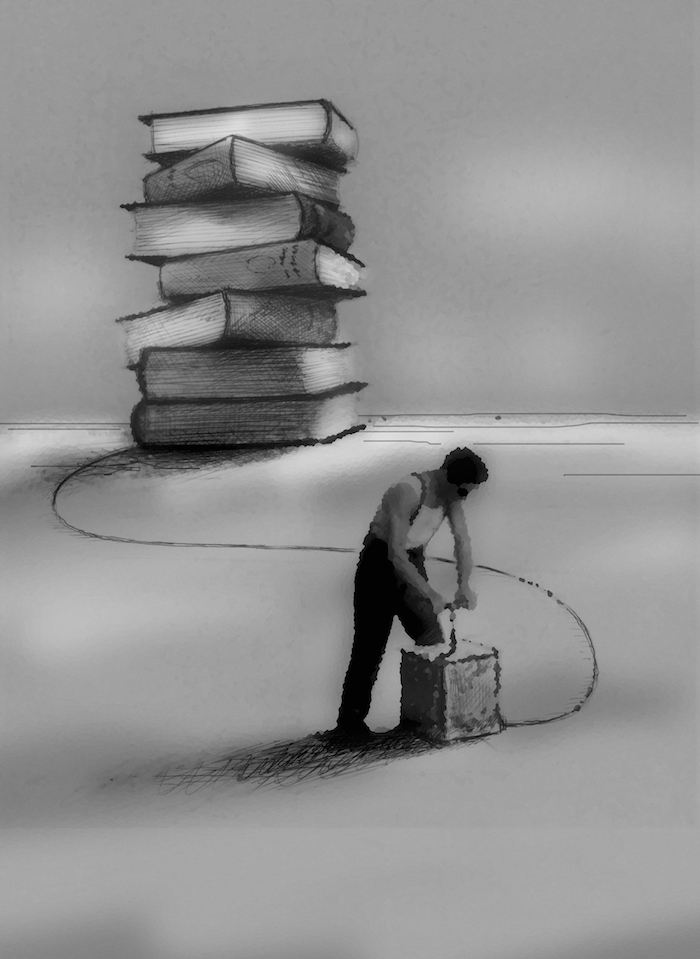
Authoritarian leaders know their history. They also know the history they would like you to know. They are aware, perhaps more than anyone else, that choosing images and stories from the past to align and amplify the ways a country is run can be a terribly powerful tool.
As Canadian historian Margaret MacMillan discussed with Index for this issue, dictators have been aware of the power of history to make their arguments for centuries. From the first Chinese emperors to today’s leaders – China’s Xi Jinping and Turkey’s Recep Tayyip Erdogan, among others – the selection of historical stories which reflect their view of the world is revealing.
“The thing about history is if people know only one version then it seems to validate the people in power,” said MacMillan.
But if you know more, you can use that information to make informed decisions about what worked in the past – and what didn’t – allowing people to learn and move on.
And right now, historical validation is an active part of the political playbook. In Russia, Vladimir Putin is a big fan of the tale of the great and powerful Russia. And what he doesn’t like are people who don’t sign up to his version of history.
Even asking questions about the past can provoke anger at the top. It interferes with the control, you see.
In 2014, Dozhd TV had an audience poll about whether Leningrad should have surrendered to the Nazis during World War II. Immediately there were complaints, as Index reported at the time. The station changed the wording of the question almost immediately, but within months various cable and satellite companies had dropped Dozhd from their schedules. Question and you shall be pushed out into the cold.
From the start, this magazine has covered how different countries have attempted to control the historical knowledge their citizens receive by limiting the pipeline (rewriting textbooks or taking history off the syllabus completely, for instance); using social pressure to make certain views taboo; and, in extreme cases, locking up historians or making them too afraid to teach the facts.
In our Winter 2015 issue, we covered the story of a Palestinian teacher who took his students to visit Nazi concentration camps in Poland because he felt they should know about the Holocaust. But not everyone agreed. While he was on the trip, there were demonstrations against him, his office was stormed and his car was torched. Later there were threats against his family. To escape the danger, he and his family had to move abroad. The teacher, Mohammed Dajani Daoudi, who wrote about his experiences for the magazine, said: “My duty as a teacher is to teach – to open new horizons for my students, to guide them out of the cave of misconceptions and see the facts, to break walls of silence, to demolish fences of taboos.”
What an incredibly brave vision for a teacher to have in the face of a mob of people who would seek to damage his life, and that of his family, to show how much they disapproved of what he was trying to do.
[/vc_column_text][/vc_column][/vc_row][vc_row][vc_column width=”1/4″][vc_icon icon_fontawesome=”fa fa-quote-left” color=”custom” align=”right” custom_color=”#dd3333″][/vc_column][vc_column width=”3/4″][vc_custom_heading text=”But censoring history is not the only way to go about establishing inaccuracies and ill-informed attitudes about the past. Another option is to spin it.” google_fonts=”font_family:Libre%20Baskerville%3Aregular%2Citalic%2C700|font_style:400%20italic%3A400%3Aitalic”][/vc_column][/vc_row][vc_row][vc_column][vc_column_text]
Dajani Daoudi is not alone in fighting against the odds to bring research, open thinking and a wide base of knowledge to students. But, as our Spring 2018 issue shows, the odds are starting to stack up against people like him in an increasing number of places.
In 2010, Maureen Freely wrote a piece called Secret Histories for this magazine, about Turkish laws that had kept most of its citizens in the dark about the killings of a million Armenians in the last years of the Ottoman empire, and how those laws were enforced by making certain things – including criticising the legacy of modern Turkey’s founding father, Mustafa Kemal Atatürk – illegal.
Turkey’s government today has just passed a law making mention of the word “genocide” an offence in parliament, as our Turkish correspondent, Kaya Genç, reports on page 22.
But censoring history is not the only way to go about establishing inaccuracies and ill-informed attitudes about the past. Another option is to spin it.
Resisting Ill Democracies in Europe, the excellent report from the Human Rights House Network, acknowledges that a common thread in countries where democracy is weakening is the “reshaping of the historical narrative taught in schools”. In Poland, the introduction of a Holocaust law means possible imprisonment for anyone who suggests Polish involvement in the Holocaust or that the concentration camps were Polish. In Hungary, the rhetoric of the ruling party is to water down involvement of its citizens in the Holocaust and to rehabilitate the reputation of former head of state Miklós Horthy.
At the same time as undermining public trust in the media, governments in this spin cycle seek to stigmatise academics, as well as close down places where open or vigorous debate might take place. The result is often the creation of a “them and us” mentality, where belief in the avowed historical take is a choice of being patriotic or not.
As the HRHN report suggests, “space for critical thinking, independent research and reporting and access to objective and accurate information are pre-requisites for informed participation in pluralistic and diverse societies” and to “debunk myths”.
However, if your objective is not having your myths debunked then closing down discussions and discrediting opposition voices is the ideal way to make sure the maximum number of people believe the stories you are telling.
That’s why historians, like journalists, are often on the sharp end of a populist leader’s attack. Creating a nostalgia for a time where supposedly the garden was rosy and citizens were happy beyond belief often forms another part of the political playbook, alongside creating a false history.
Another tactic is to foster a sense that the present is difficult and dangerous because of change and because of threats to “traditional” values; and a sense that history shows a country as greater than it is today. The next step is to find a handy enemy (migrants and LGBT people are often targets) to blame for that change and to stoke up anger.
Access to the past matters. Knowledge of what happened, the ability to question the version you are receiving, and probing and prodding at the whys and wherefores are essentials in keeping society and the powerful on their toes.
In this issue of Index on Censorship magazine, we carry a special report about how history is being abused. It includes interviews with some of the world’s leading historians – Lucy Worsley, Margaret MacMillan, Charles van Onselen, Neil Oliver and Ed Keazor (p31).
We look at how history is being reintroduced into schools in Colombia (p60) and how efforts continue to recognise the victims of General Franco’s dictatorship in Spain (p72). We also ask Hannah Leung and Matthew Hernon to talk to young people in China and Japan to discover what they learned at school about the contentious Nanjing massacre. Find out what happened on page 38.
Omar Mohammed, aka Mosul Eye, writes on page 47 about his mission to retain information about Iraq’s history, despite risk to his life, while Isis set out to destroy historical icons.
[/vc_column_text][/vc_column][/vc_row][vc_row][vc_column][vc_column_text]
Rachael Jolley is editor of Index on Censorship. She tweets @londoninsider. This article is part of the latest edition of Index on Censorship magazine, with its special report on The Abuse of History.
Index on Censorship’s spring 2018 issue, The Abuse of History, focuses on how history is being manipulated or censored by governments and other powers.
Look out for the new edition in bookshops, and don’t miss our Index on Censorship podcast, with special guests, on Soundcloud.
[/vc_column_text][/vc_column][/vc_row][vc_row][vc_column][vc_custom_heading text=”From the Archives”][vc_row_inner][vc_column_inner width=”1/3″][vc_single_image image=”89164″ img_size=”213×287″ alignment=”center” onclick=”custom_link” link=”http://journals.sagepub.com/doi/pdf/10.1080/03064229108535157″][vc_custom_heading text=”Brave new words” font_container=”tag:p|font_size:24|text_align:left” link=”url:http%3A%2F%2Fjournals.sagepub.com%2Fdoi%2Fpdf%2F10.1080%2F03064229108535157|||”][vc_column_text]2010
In 2010, Maureen Freely wrote a piece called Secret Histories for this magazine, about Turkish laws that had kept most of its citizens in the dark about the killings of a million Armenians in the last years of the Ottoman empire[/vc_column_text][/vc_column_inner][vc_column_inner width=”1/3″][vc_single_image image=”90649″ img_size=”213×287″ alignment=”center” onclick=”custom_link” link=”http://journals.sagepub.com/doi/pdf/10.1080/03064220008536796″][vc_custom_heading text=”Censorship in China” font_container=”tag:p|font_size:24|text_align:left” link=”url:http%3A%2F%2Fjournals.sagepub.com%2Fdoi%2Fpdf%2F10.1177%2F0306422013495334|||”][vc_column_text]September 2000
How China attempts to censor, using different methods[/vc_column_text][/vc_column_inner][vc_column_inner width=”1/3″][vc_single_image image=”71995″ img_size=”full” alignment=”center” onclick=”custom_link” link=”http://journals.sagepub.com/doi/pdf/10.1080/03064229308535477″][vc_custom_heading text=”Taboos” font_container=”tag:p|font_size:24|text_align:left” link=”url:http%3A%2F%2Fjournals.sagepub.com%2Fdoi%2Fpdf%2F10.1177%2F0306422013513103|||”][vc_column_text]Winter 2015
We tell the story of a Palestinian teacher who took his students to visit Nazi concentration camps in Poland because he felt they should know about the Holocaust. But not everyone agreed.[/vc_column_text][/vc_column_inner][/vc_row_inner][vc_separator][/vc_column][/vc_row][vc_row content_placement=”top”][vc_column width=”1/3″][vc_custom_heading text=”The abuse of history” font_container=”tag:p|font_size:24|text_align:left” link=”url:https%3A%2F%2Fwww.indexoncensorship.org%2F2018%2F04%2Fthe-abuse-of-history%2F|||”][vc_column_text]The spring 2018 issue of Index on Censorship magazine takes a special look at how governments and other powers across the globe are manipulating history for their own ends
With: Simon Callow, David Anderson, Omar Mohammed [/vc_column_text][/vc_column][vc_column width=”1/3″][vc_single_image image=”99282″ img_size=”medium” alignment=”center” onclick=”custom_link” link=”https://www.indexoncensorship.org/2018/04/the-abuse-of-history/”][/vc_column][vc_column width=”1/3″ css=”.vc_custom_1481888488328{padding-bottom: 50px !important;}”][vc_custom_heading text=”Subscribe” font_container=”tag:p|font_size:24|text_align:left” link=”url:https%3A%2F%2Fwww.indexoncensorship.org%2Fsubscribe%2F|||”][vc_column_text]In print, online. In your mailbox, on your iPad.
Subscription options from £18 or just £1.49 in the App Store for a digital issue.
Every subscriber helps support Index on Censorship’s projects around the world.
 SUBSCRIBE NOW[/vc_column_text][/vc_column][/vc_row]
9 Apr 2018 | Awards, Fellowship, Fellowship 2018, News
[vc_row][vc_column][vc_column_text]Wendy Funes is an investigative journalist from Honduras who regularly risks her life for her right to report on what is going on in the country.
She is a courageous female voice, writing in a violent and corrupt society where two journalists have been killed this year and where women are regularly subjected to severe domestic violence and often killed.
Funes is an inventive and passionate human rights reporter. For one article she got her own death certificate issued so that she could show up the corruption in the civil registration office. For another she dressed as a beggar for an investigation into children being forced to beg on the streets of the country’s capital.
She writes about violence against women, a huge problem in Honduras where one woman is killed every 16 hours, and the number of women killed has increased by more than 260% between 2005 and 2013.
But Funes is also an activist for her profession, which led to her being expelled from the journalism trade union where she had been fighting for labour rights and freedom of expression.
“I have overcome many traumas, including the violent deaths of my father and several friends and fellow journalists, for which no one has been brought to justice,” said Funes. “I will not succumb to despair – every blow has made me a warrior, and every obstacle is a chance to prove that adversity must never stop us. Only those who has suffered dark will search for the light. My way to achieve my life’s purpose is the journalism I love, which quickens my heart in moments of greatest expectation, which brings joy and sorrow. Through independent, self-critical, methodical journalism – the kind that comes from the streets – combined with an academic grounding, I am convinced I can bring change to my country.”
Working for C-Libre, a freedom of expression organisation in Honduras, she highlighted the continued murder of journalists by organising a march which she called the Demonstration of Silence to protest the death of journalists. Protesters carried white cardboard coffins with the faces of each of the journalists on them to the prosecutors’ office in the capital Tegucigalpa.
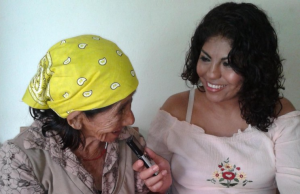
In 2017 Wendy Funes was helped by PressStart, a global crowdfunding platform for reporters in countries where the press cannot report freely, to write an expose of gang rapes of indigenous Lenca women in the La Paz area of Honduras.
On May 31, 2017 Funes retired from C-Libre to found her own research newspaper and promote investigative journalism in her country, using data with a gendered approach and promoting transparency and access to public information.
“This nomination is like an embrace of trust in the darkness of death and risk implied by the asphyxiating level of censorship that the press experiences in Honduras,” said Funes. “It’s like a hand reaching out to me to tell me it’s worth resisting this corrupt and unfair system.”
See the full shortlist for Index on Censorship’s Freedom of Expression Awards 2018 here.
[/vc_column_text][vc_row_inner][vc_column_inner][vc_column_text]
Wendy Funes y su valiente defensa del periodismo de investigación en Honduras
Wendy Funes es una periodista de investigación hondureña que pone su vida en peligro con regularidad: es el precio que paga a cambio de su derecho a informar sobre lo que está pasando en el país.
Es la valerosa voz de una mujer escribiendo en una sociedad violenta y corrupta, en la que dos periodistas han sido asesinados en lo que va de año. Un país en el que las mujeres sufren violencia doméstica extrema a diario y son a menudo asesinadas.
Funes es una reportera pro derechos humanos ingeniosa y apasionada. Hizo que expidieran su propio certificado de defunción para desvelar en un artículo la corrupción del registro civil. Para otro reportaje, se disfrazó de pordiosera para investigar sobre los niños forzados a mendigar en las calles de la capital del país.
Escribe sobre la violencia contra las mujeres, un problema gravísimo en Honduras, donde matan a una mujer cada 16 horas y la cifra de asesinadas se incrementó más de un 260% entre 2005 y 2013.
Funes también es una activista dentro de su profesión, razón por la cual fue expulsada del sindicato de periodismo desde el que había estado luchando por los derechos laborales y la libertad de expresión.
«He superado muchos traumas, entre ellos, las muertes violentas de mi padre y de varios amigos y compañeros periodistas, por las cuales nadie ha sido llevado ante la justicia», declaró Funes. «No sucumbiré a la desesperación: cada golpe me ha hecho una guerrera, y cada obstáculo no es más que una oportunidad de demostrar que la adversidad nunca debe detenernos. Solo quienes han sufrido la oscuridad buscarán la luz. El modo que tengo para cumplir mi propósito en la vida es el periodismo al que amo, el que hace que se me acelere el corazón en momentos de inmensa esperanza, el que me trae alegrías y tristezas. Con periodismo independiente, autocrítico, metódico —el tipo de periodismo que viene de las calles—, combinado con conocimientos académicos, estoy convencida de que puedo traer el cambio a mi país».
Cuando trabajaba para C-Libre, una organización por la libertad de expresión en Honduras, organizó una marcha a la que llamó la Manifestación del Silencio en protesta contra los continuos asesinatos de periodistas. Los manifestantes cargaron con ataúdes de cartón blanco con retratos de cada uno de los periodistas asesinados hasta la fiscalía de la capital, Tegucigalpa.
En 2017 Wendy Funes recibió apoyo de PressStart, una plataforma de crowdfunding global para reporteros en países donde la prensa no puede informar libremente, con el cual escribió un reportaje destapando las violaciones grupales de mujeres indígenas lencas en la zona hondureña de La Paz.
El 31 de mayo de 2017, Funes se retiró de C-Libre para fundar su propio periódico de investigación y promover este tipo de periodismo en su país, promoviendo la utilización de los datos desde una perspectiva de género, la transparencia y el acceso a información pública.
«Esta nominación es como un abrazo de confianza en la oscuridad de la muerte y el peligro implícitos en el asfixiante nivel de censura que vive la prensa en Honduras», declaró Funes. «Es como si me hubieran extendido una mano para decirme que merece la pena resistir a este sistema corrupto e injusto».
Traducción de Arrate Hidalgo
Accede a la lista completa de nominados a los Index on Censorship’s Freedom of Expression Awards 2018 aquí.[/vc_column_text][/vc_column_inner][/vc_row_inner][/vc_column][/vc_row][vc_row full_width=”stretch_row_content” equal_height=”yes” el_class=”text_white” css=”.vc_custom_1490258749071{background-color: #cb3000 !important;}”][vc_column width=”1/2″][vc_custom_heading text=”Support the Index Fellowship.” font_container=”tag:p|font_size:28|text_align:center” use_theme_fonts=”yes” link=”url:https%3A%2F%2Fwww.indexoncensorship.org%2Fsupport-the-freedom-of-expression-awards%2F|||”][vc_column_text]
By donating to the Freedom of Expression Awards you help us support
individuals and groups at the forefront of tackling censorship.
Find out more
[/vc_column_text][/vc_column][vc_column width=”1/2″ css=”.vc_custom_1521479845471{background-image: url(https://www.indexoncensorship.org/wp-content/uploads/2017/05/2017-awards-fellows-1460×490-2_revised.jpg?id=90090) !important;background-position: center !important;background-repeat: no-repeat !important;background-size: cover !important;}”][/vc_column][/vc_row][vc_row][vc_column][vc_basic_grid post_type=”post” max_items=”4″ element_width=”6″ grid_id=”vc_gid:1523261771179-2e70bbac-7a3c-3″ taxonomies=”10735″][/vc_column][/vc_row]
5 Apr 2018 | Awards, Fellowship, Fellowship 2018, News
[vc_row][vc_column][vc_video link=”https://youtu.be/qqxJndjCWmg”][vc_column_text]
Launched in 2016, Habari RDC is a collective of more than 100 young Congolese bloggers and web activists, who use Facebook, Twitter and YouTube to give voice to the opinions of young people from all over the Democratic Republic of Congo.
The aim of these citizen bloggers is to bear witness to what is happening in every corner of the country, which is plagued by extreme poverty, corruption, and violence.
Congo has been racked by civil war for the last 20 years. According to the International Red Cross, Congo had almost a million new displacements in 2016 because of conflict and armed attacks — the highest in the world.
The population is also overwhelmingly young. Some 64% of the population in Congo are under 24 and 42.2% under 14. Average life expectancy for men is 47 and 51 for women. The country also receives little international coverage. Newspapers within the country are controlled by political factions, and up until now, radio has been the most reliable source of information.
Against this background, Habari RDC is an incredibly ambitious project led by young, digitally savvy and opinionated Congolese men and women with a belief in free expression and non-violence. For the last year, they have been using the internet and all the technology at their disposal to talk about what their country is really like and how they would like it to be.
“We want to create a society in which young people are tolerant of each other. In which young people are not manipulated by politicians for their personal interests, because young people represent hope for the country. In our societies, young people are unfortunately used and set against each other to serve egotistical old people.We fight for human rights and the participation of young people in the running of the country. We dream of a young president who will work for the country and not a young egoist.” Habari creators told Index.
The site posts stories and cartoons about politics, but it also covers football, the arts and subjects such as domestic violence, child exploitation, the female orgasm, and sexual harassment at work. It is funny, angry, modern: a collection of irreverent, young distinctive Congolese voices, demanding to be heard in the world.
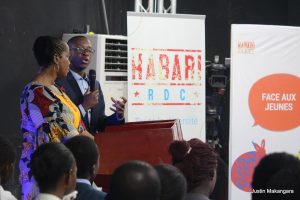
Habari has grown and expanded into an established blogging site and source of activism during 2017, covering a wide range of social and political issues. One of its achievements was encouraging voter registration in Walikale Territory where, in the past, not only has registration been low, but people have disappeared from the register. This eastern part of the country is also very cut off. Habari wrote an article about this on their blogging site and as a result, they reported, a local MP put pressure on the government. In the end, according to Habari, 290,000 people there were registered to vote, including 140,000 women. They also help individuals – for instance raising the plight of a woman who was raped and rejected by her family. And have reported on the suppression of the internet; and the use of road taxes to arm militias.
On their nomination for the Index Awards, Habari creators said, “This award represents for us two things at once: the great honor of a recognition of the work of 100 young Congolese bloggers from 100 different corners of the DRC who want to change the living conditions of their peers by raising their voices thanks to internet . But this award is also a challenge to do more.”
See the full shortlist for Index on Censorship’s Freedom of Expression Awards 2018 here.[/vc_column_text][/vc_column][/vc_row][vc_row full_width=”stretch_row_content” equal_height=”yes” el_class=”text_white” css=”.vc_custom_1490258749071{background-color: #cb3000 !important;}”][vc_column width=”1/2″][vc_custom_heading text=”Support the Index Fellowship.” font_container=”tag:p|font_size:28|text_align:center” use_theme_fonts=”yes” link=”url:https%3A%2F%2Fwww.indexoncensorship.org%2Fsupport-the-freedom-of-expression-awards%2F|||”][vc_column_text]
By donating to the Freedom of Expression Awards you help us support
individuals and groups at the forefront of tackling censorship.
Find out more
[/vc_column_text][/vc_column][vc_column width=”1/2″ css=”.vc_custom_1521479845471{background-image: url(https://www.indexoncensorship.org/wp-content/uploads/2017/05/2017-awards-fellows-1460×490-2_revised.jpg?id=90090) !important;background-position: center !important;background-repeat: no-repeat !important;background-size: cover !important;}”][/vc_column][/vc_row][vc_row][vc_column][vc_basic_grid post_type=”post” max_items=”4″ element_width=”6″ grid_id=”vc_gid:1522917883563-1453e0af-5b06-2″ taxonomies=”10735″][/vc_column][/vc_row]
