9 Jul 2021 | BannedByBeijing, China, Ruth's blog
[vc_row][vc_column][vc_single_image image="117061" img_size="full" add_caption="yes"][vc_column_text]Threats to free speech and free expression come in many guises. In the year since I’ve joined the team at Index, I’ve used this blog to highlight issues as diverse as journalists being assassinated in Afghanistan to the threats of new British legislation on online harms.
One of recurring themes of my blogs has been the way in which authoritarian regimes and groups use every tool at their disposal to repress their populations. From Belarus to Myanmar, from Modi to Trump, we’ve seen global leaders act against their own populations to hold onto power and stop dissent.
For an organisation such as Index it would be easy to think that our job was solely to highlight the worst excesses of these despots, to shine a spotlight on their actions and to celebrate the work and activities of those inspirational people who stand up against this tyranny. And of course, that’s exactly what we were founded to do. But as the world moves on and technology and finance facilitate new ways of communicating to the world, Index also has a responsibility to investigate, analyse and expose the impact of some countries beyond their borders.
Over the course of the last year, Index’s attention has been drawn to the fact that there have been multiple high-profile examples of the Chinese Communist Party (CCP) using its influence beyond its border in order to manipulate the world’s view of China and what it means to be Chinese:
Since the implementation of the National Security Law in Hong Kong in June 2020, universities in the UK and in the US have reportedly had to change the way they teach certain courses - grading papers by number not name, asking students to present anonymised work of others so nothing can be attributed to an individual student and limited debate in lectures. All in order to make sure that the students are protected, and their families aren’t targeted at home in China.
In September 2020 Disney released a new film – Mulan. This film not only represents Mulan as Han Chinese rather than Mongolian as she likely was in the legend, but it was also filmed, in part, in Xinjiang province, home of the persecuted Uighur community. Seemingly an effort to change the narrative on the ongoing Uighur genocide happening in Xinjiang.
In October 2020, a scheduled exhibition on Genghis Khan and the Mongol empire in Nantes, France was postponed – not because of Covid19 but because the CCP reportedly attempted to change the narrative of the exhibition, attempting to rewrite history.
It is clear that the CCP is using soft (sharp) power in a concerted effort to censor dissent and to create a narrative that is in keeping with Xi Jinping’s vision in an effort to secure international support for the CCP, which this year celebrates its 100th anniversary. We have no idea how strategic or vast this level of censorship is. What we do know is that it is happening across Europe and beyond.
It is in this vein that I’m delighted to be able to tell you about a new workstream for Index:
#BannedbyBeijing will seek to analyse and expose the extent to which China is trying to manipulate the conversation abroad.
Next week I’m delighted that we have an amazing panel to get the ball rolling and to establish how big an issue this is.
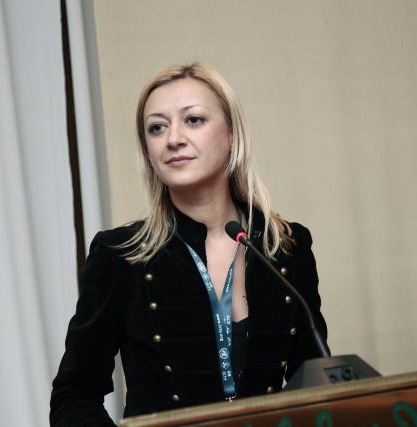
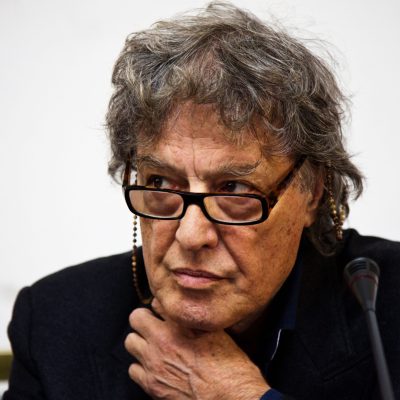
So join Mareike Ohlberg, Tom Tugendhat MP, Edward Lucas and our Chair Trevor Phillips, on Wednesday as they start this vital conversation. You can sign up here >> https://www.eventbrite.co.uk/e/banned-by-beijing-is-china-censoring-europe-tickets-162403107065[/vc_column_text][/vc_column][/vc_row][vc_row][vc_column][three_column_post title="You may also want to read" category_id="41669"][/vc_column][/vc_row]
6 Jul 2021 | Events
[vc_row][vc_column][vc_single_image image="117041" img_size="large"][vc_column_text]
Every time a European university pressures an academic to temper their criticism of the Chinese Communist Party (CCP), every time a filmmaker opts to amend their film to avoid offending the Chinese authorities, and every time a Chinese citizen living in Europe self-censors in an effort to protect themselves or their families in China, the CCP is effectively censoring Europe.
This virtual event will explore the extent to which the CCP is exploiting its growing influence in order to erode freedom of expression in Europe, and will look at what needs to be done to protect our fundamental rights and our democracy.
Speakers:
Mareike Ohlberg, China analyst and co-author of Hidden Hand: How the Chinese Communist Party is Reshaping the World
Tom Tugendhat MP, Chairman of the UK's Foreign Affairs Select Committee
Edward Lucas, journalist and editor of the China Influence Monitor
Trevor Phillips, chair of Index on Censorship (event chair)
Register for tickets here.[/vc_column_text][/vc_column][/vc_row][vc_row][vc_column][/vc_column][/vc_row][vc_row][vc_column][vc_column_text][/vc_column_text][/vc_column][/vc_row]
22 Jun 2021 | China, Hong Kong, Media Freedom, News
[vc_row][vc_column][vc_single_image image="116952" img_size="full" add_caption="yes"][vc_column_text]Ten months after the arrest of Next Digital founder Jimmy Lai and a massive raid at the group’s headquarters in August last year, the Hong Kong Police’s national security department launched a bigger strike against the Apple Daily, the group’s major publication, last Thursday (17 June).
They were alleged of colluding with foreign forces, one of the crimes under the national security law (NSL).
It marks the beginning of the end of the beleaguered newspaper founded by the controversial businessman in 1995. Hit by a government freeze on its bank accounts, the Next Digital’s board of directors said after an emergency meeting on Monday the newspaper will cease operation on Saturday unless the Government releases assets frozen.
Staff were allowed to leave immediately without giving prior notice. As this article went to press, its online operation was largely shut down.
The imminent demise of the media group, inaugurated with the launching of its flagship newspaper Apple Daily in 1995, will deal a body blow to the city’s press freedom.
More importantly, it signifies the deplorable failure of the Chinese Communist Party in honouring its promises to Hong Kong people and the world under the “one country, two systems” policy.
The troubled daily plunged into a deeper crisis after the Government launched the second, now fatal, strike on Thursday. Five top executives and editors were arrested. They were alleged of colluding with foreign forces by the publication of dozens of articles on their newspaper and online platform. Details of the articles have not been revealed.
On the same day, the Police's national security department sent more than 500 officers to raid the newspaper’s headquarters. They took away more than 40 computers from the local news section.Security minister John Lee warned citizens and staff to “cut ties with these criminals,” referring to the newspaper.
The newspaper’s publisher, Cheung Kim-hung, and chief editor Ryan Law, were formally charged on Saturday. Their bail request was denied.
The other three executives were released on bail late Friday. Deputy publisher Chan Pui-man, who is one of them, has vowed to keep publishing.
Beginning in the early hours of Friday, readers snapped up copies of the newspaper to lend their support - and to say no to the authoritarian rule of the Government.
Half a million copies were sold like hot cakes. It was a scene reminiscent of the mass-buying in August following the arrest of Lai and the raid.
This “people power” will not be able to rescue the newspaper against the enormous power given to the national security organ under a law with almost zero checks and balances - even by the judiciary.
Invoking the NSL to take journalists to court for the first time, the case stoked fear of penalising journalists for “speech crime”, which is not uncommon in Communist-ruled China, but is rare in Hong Kong.
The confiscation of journalistic materials during the latest raid also set a damaging precedent. It will seriously shake public confidence in the protection of sources of information by reporters. Citizens will become more reluctant in talking to journalists, not to mention revealing sensitive information.
When the provisions of the NSL were announced about one year ago, journalists voiced their concerns about the profound ramifications on press freedom. That Lai and the Apple Daily have long been seen as a hostile force by the Government and Beijing is an open secret.
Ignited by an extradition bill in 2019, the prolonged months-long protest that was followed by foreign sanctions against top officials in the two governments has prompted the party leadership under Xi Jinping to harden their strategy towards dissenting voices in Hong Kong.
First came the NSL. Then a revamp of the election system. Democrats were arrested and prosecuted en masse. Dozens of them are either in jail after being convicted of other charges or are being held in custody.
On the media front, it is hardly surprising the government-run Radio Television Hong Kong and the Apple Daily have emerged as the immediate targets of a clampdown on press freedom.
The swiftness and ruthlessness of the use of harsh laws and powers have caught many by surprise.
Government officials have sought to allay fears among journalists by saying those who are engaged in “normal journalist work” have nothing to fear.
Speaking at a weekly press briefing on Tuesday, chief executive Carrie Lam rejected criticism that the move was a suppression of press freedom, but ducked the question “what is normal journalist work?”
“I think you are in a better position to answer that question,” she told reporters.
With the NSL taking effect nearly one year ago on 30 June 2020, Lam gave a clear message that they will not soften their approach in upholding national security, at least in the foreseeable future. "We won't let this law be treated as if it doesn't exist."
With Apple Daily closing down, journalists have begun to ask “who’s next?”[/vc_column_text][/vc_column][/vc_row]