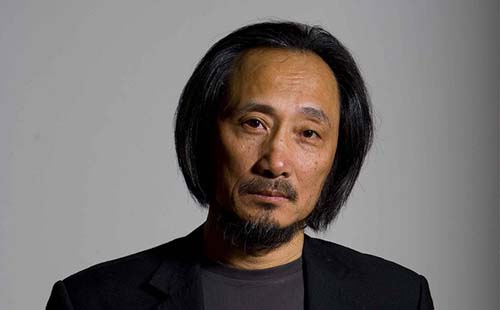
[vc_row][vc_column][vc_column_text]Update: On 13 July 2017 the Chinese Nobel Peace Prize winner Liu Xiaobo, jailed for his pro-democracy work, died in hospital aged 61.
Chinese Nobel Peace Prize laureate and writer Liu Xiaobo, who was imprisoned since 2009 for calling for more freedom in his country, has been diagnosed with terminal liver cancer. He was recently released into hospital for treatment and his state of health is considered critical.
Index calls on the UK government to urge China to release Liu immediately and allow him to travel abroad for treatment. It also calls on the UK ambassador to visit Liu and his wife the poet Liu Xia in the hospital. In the past few days, Liu has reiterated his request to be able to travel to have medical treatment.
Liu’s friends and journalists report trying to visit the couple in the hospital and being beaten by police.
In December 2008, Liu co-drafted Charter 08, a document modelled on Václav Havel’s Charter 77, written in Communist Czechoslovakia 30 years earlier. The document outlines the basic principles and fundamental rights that should govern China’s political landscape including freedom of association. Over 350 intellectuals and activists initially signed it, with a further 10,000 people including academics, journalists and businessmen adding their names to it upon its release. The government’s reaction to Charter 08 was swift and harsh. Liu was initially arrested two days prior to its official publication and later charged with 11 years in prison for incitement to subversion, during a trial in which he said he had no enemies. Index has repeatedly called for his release.[/vc_column_text][/vc_column][/vc_row][vc_row][vc_column][vc_basic_grid post_type=”post” max_items=”4″ element_width=”6″ grid_id=”vc_gid:1499953076038-54c71786-d828-10″ taxonomies=”85″][/vc_column][/vc_row]
Update: On 13 July 2017 the Chinese Nobel Peace Prize winner Liu Xiaobo, jailed for his pro-democracy work, died in hospital aged 61.
When Liu Xiaobo was awarded the Nobel Peace Prize in 2010, Chinese authorities were sent into a state of panic. Liu had been in prison since 2009, following the release of Charter 08, a pamphlet he co-wrote that called for greater democratic freedoms. As the world’s attention was on China and on Liu, all references to Liu and the prize were blocked online and off. Then his wife and many of his acquaintances were detained in an attempt to stop them from going to Oslo and collecting it on his behalf. At the ceremony itself, an empty chair became a stark reminder of his absence and soon the words “empty chair” started to race through the internet. These too were blocked.
Liu has since remained in prison and efforts to stamp out his name continue. But last week he once again made headlines following his release from prison on health grounds. At the time of writing, reports say Liu, who is suffering from late-stage liver cancer, is close to death. For free speech advocates around the world, this news is saddening. No figure has come to represent the fight for Chinese democracy as much as Liu Xiaobo.
Born in 1955 in Jilin province in northeast China, the son of two teachers, Liu went on to become a writer, activist and academic. It was while teaching at Columbia’s Barnard College in New York in 1989 that the Tiananmen Square protests broke out. Liu decided to return to China to take part in them on their final, fateful day. This led to his arrest and imprisonment, the first of four times.
Liu was shunned by China’s academic community when he left prison two years later, but that did not silence him and he continued to build on his reputation within China as an outspoken critic of the Communist Party. He also started a tradition of writing poems about Tiananmen every year to mark the anniversary – a powerful reminder that the government does not have a monopoly on memory.
For Liu the internet was a lifeline. He described it as “God’s gift to the Chinese people” in an essay that was published in Index on Censorship magazine in 2006. The web became his primary portal to publish his thoughts to the outside world and to reach audiences when traditional forms of media were out of bounds. Liu wrote that “the effect of the internet in improving the state of free expression in China cannot be underestimated”.
Liu’s influence peaked in December 2008 with Charter 08, a document modelled on Václav Havel’s Charter 77, written in Communist Czechoslovakia 30 years earlier. The document outlines the basic principles and fundamental rights that should govern China’s political landscape. Over 350 intellectuals and activists initially signed it, with a further 10,000 people including academics, journalists and businessmen adding their names to it upon its released. The government’s reaction to Charter 08 was swift and harsh. Liu was initially arrested two days prior to its official publication and later charged with 11 years in prison for incitement to subversion, during a trial in which he said he had no enemies. Index has repeatedly called for his release.
Isabel Hilton, a leading expert on China, told Index back in 2010 that “when the history of free expression and freedom of ideas is written, he and the other signatories of Charter 08 will be remembered as courageous citizens who sought the best for their country”.
In an interview Liu gave prior to his arrest, he said: “The way I see it, people like me live in two prisons in China. You come out of the small, fenced-in prison, only to enter the bigger, fenceless prison of society.” Since Liu’s arrest almost a decade ago, China has continued to change at breakneck speed. When it comes to human rights and free speech, sadly this change has been predominantly for the worse. The bigger, fenceless prison that Liu spoke of is today a lot more closed and draconian. China’s current leader, Xi Jinping, has overseen a huge crackdown on dissent. And the internet, God’s gift to China, is more regulated that ever before. Even seemingly innocent entertainment channels are frequently shut down, such as Kuaishou, a video-sharing site, which Index on Censorship reported on in its most recent issue.
Despite this, people continue to fight for greater freedom and rights in China, exploiting loopholes online as and when they can, and showing remarkable courage in the face of extreme adversity. The role of Liu in setting an example and providing inspiration cannot be underplayed. Liu’s Nobel chair might still be empty, but he is never forgotten, nor will he ever be.
2017 Freedom of Expression Arts Award-winning Rebel Pepper was presented an illustration created by cartoonist Aseem Trivedi
Wang Liming, better known under the pseudonym Rebel Pepper, is one of China’s most notorious political cartoonists. For satirising Chinese Premier Xi Jinping and lampooning the ruling Communist Party, Rebel Pepper has been repeatedly persecuted. In 2014, he was forced to remain in Japan, where he was on holiday, after serious threats against him were posted on government-sanctioned forums. The Chinese state has since disconnected him from his fan base by repeatedly deleting his social media accounts, he alleges his conversations with friends and family are under state surveillance, and self-imposed exile has made him isolated, bringing significant financial struggles. Nonetheless, Rebel Pepper keeps drawing, ferociously criticising the Chinese regime.
Hello everybody, my name is Wang Liming and I am a Chinese political cartoonist who is currently living in exile in Japan. I am also known as “Rebel Pepper”. I am very grateful for the recognition of my works and am very honoured to receive this award. Unfortunately, I am unable to personally attend the awards ceremony and the other activities Index on Censorship has in store as there were some issues with my visa.
China has little to no freedom of speech and its people are constantly living in fear under this totalitarian regime. The Chinese Communist Party often portray the Chinese administration as being honourable and righteous and delude the people into believing in this false portrayal.
Political cartoons are significant as I can use my works to peel away the mask of false perfection put on by the Chinese government. The humour and satire employed in my works can also help lighten the mood and dispel the fear that the Chinese people have towards the administration. I feel that these are the key reasons why political cartoons play such an important role in China.
Ever since I came to Japan, I have been able to relish freedom of speech to the fullest. As such, my works are no longer limited by any external restrictions save for the boundaries of my own imagination.
I would like to especially thank my wife as I would not have been able to persevere to this day had it not been for her unending support and understanding. I would also like to extend my gratitude to my Chinese friends and comrades who sympathise with my struggles and understand why I do what I do. I would also like to thank my Japanese friends who have given me plenty of opportunities to create and publish my works.
I will continue working hard on creating new cartoons – this is the least I can do towards democratising China. Thank you everyone![/vc_column_text][/vc_column][/vc_row][vc_row][vc_column width=”1/2″][vc_single_image image=”84882″ img_size=”full” alignment=”center”][vc_column_text]
For his one-man protests, Ildar Dadin was sent to prison in December 2015 where he was tortured, before his conviction was quashed in February 2017. Read the full profile.[/vc_column_text][/vc_column][vc_column width=”1/2″][vc_single_image image=”84888″ img_size=”full” alignment=”center”][vc_column_text]
Despite the persecution he faces for his work, Rebel Pepper continues to satirise the Chinese state from a life in exile in Japan. Read the full profile
Established in 2015, Turkey Blocks is an independent digital research organisation that monitors internet access restrictions in Turkey. Read the full profile.
Maldives Independent, the Maldives’ premiere English publication and one of the few remaining independent media outlets, was formed in exile in Sri Lanka in 2004. Read the full profile.
“An epic yet intimate work that deserves to be recognised and to endure as the great Tiananmen novel.” The Financial Times’ review on Ma Jian’s 2008 novel The Beijing Coma was rather positive, and it was not alone. The book, which explores both the contemporary China and the well-known protests on Tiananmen Square in 1989, was also nominated for the Man Booker Prize and in 2009 it received Index on Censorship’s TR Fyvel Book Award. The Chinese Government banned the book, and Ma himself often criticised the government for trying to erase all memory of the thousands of innocent lives lost during the Tiananmen massacre.
Although his works were banned in China, Ma – who is today a British citizen – had been able to return to the country regularly, until 2011, when he was prevented from crossing the border from Hong Kong to the mainland. He was given no reason for the ban, nor any implications of how long it would last. Although his movements were also closely monitored on his previous trips to China, after the ban he said to The Guardian: “The fact that I have been denied entry is an indication of how repressive the regime has become. It is vitally important for me, both personally and for my writing, to be able to return to China freely, so being barred entry has caused me deep concern and distress.”
In spite of the ban, Ma kept on writing about China, and in 2013 he published the novel The Dark Road. In this he explores the costs of China’s one-child policy through the lens of a poor family living in China’s lesser mentioned rural hinterland. According to the New York Times: “In The Dark Road, as in Beijing Coma, Mr. Ma is adept at jolting our senses, transporting us, with a few words about a pain, a taste or an odour, to those parts of China, and millions of people, who exist on the far fringes of the economic miracle.”
Not only does he try to shed light on the lesser known problems in China in his work, Ma Jian often speaks about the country in his public appearances as well. In 2012 when China was selected to be the London Book Fair’s market focus he smeared red paint over his face to protest against China’s censorship policies. He accused the 180 invited Chinese publishers of being the “mouthpieces of the government”, and said: “In this book fair that looks so modern, so impressive, so beautiful, you will not see the ugly reality that lies behind … you will not hear the voices of the writers who are persecuted in China.”
Júlia Bakó is a member of Index on Censorship’s Youth Advisory Board. She is a Hungarian journalist, student and activist currently living in Budapest. After finishing her first degree in Journalism, she has started studying International Relations.[/vc_column_text][/vc_column][/vc_row][vc_row][vc_column width=”1/2″][vc_single_image image=”85476″ img_size=”full” alignment=”center” onclick=”custom_link” link=”https://www.indexoncensorship.org/2016/11/awards-2017/”][/vc_column][vc_column width=”1/2″][vc_column_text]
Index on Censorship Freedom of Expression Awards
Seventeen years of celebrating the courage and creativity of some of the world’s greatest journalists, artists, campaigners and digital activists